Key Points
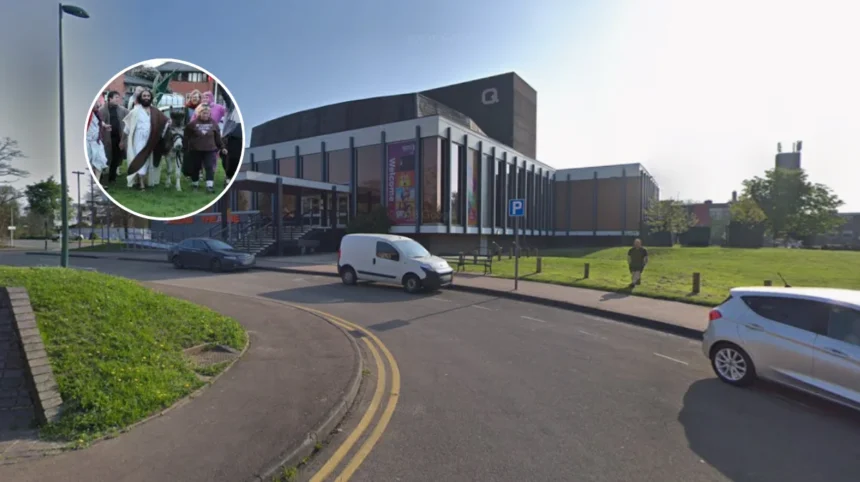
- Hornchurch Passion Play performed open-air on Queen’s Theatre Green in Havering over Easter weekend 2026.
- Originated in 1995 from a prophecy by Ruth and mystic vision of Freddie Sayer; produced every four to five years, except for Covid-19 delays.
- Features a cast, choir, and band of up to 80 volunteers, with nightly audiences in the thousands.
- Jesus portrayed by Shane Mathews, depicted as a Middle-Eastern Jewish man by a person of colour, emphasising vulnerability and humanity.
- Key scenes include The Last Supper, betrayal in Gethsemane, arrest by Roman soldiers in modern army uniforms, crucifixion, and resurrection.
- Immersive format blurs lines between audience and performers, with actors dispersed among crowds.
- Directed by Simon Pugsley, humanising characters like Judas and Pontius Pilate.
- Supported by local volunteers and construction companies, highlighting community investment.
Hornchurch, Havering (East London Times) – April 7, 2026 – Residents of Havering gathered on Queen’s Theatre Green this Easter weekend for the Hornchurch Passion Play, an open-air production that drew thousands nightly with its immersive retelling of Christ’s final days.
- Key Points
- What Made the 2026 Hornchurch Passion Play Extraordinary?
- Who Portrayed Jesus and How Was the Role Depicted?
- What Were the Key Scenes in the Production?
- How Did the Production Humanise Complex Characters?
- Who Directed the Play and What Was the Overall Impact?
- Background of the Hornchurch Passion Play Development
What Made the 2026 Hornchurch Passion Play Extraordinary?
The production, as covered extensively by local media, marked a significant community event in Hornchurch. According to a report by an unnamed correspondent in North London News, the play began in 1995 following a prophecy from a woman named Ruth and the mystic vision of Freddie Sayer. It has been staged every four to five years since, with delays due to the Covid-19 pandemic.
This year’s event underscored the substantial investment of time, energy, logistics, and skill from volunteers and local construction companies in the Havering area.
With a cast, choir, and band numbering up to 80, the play achieved a local triumph, attracting audiences in the thousands each night. The open-air setting on Queen’s Theatre Green allowed for a dynamic, site-specific performance that engaged the community directly.
Who Portrayed Jesus and How Was the Role Depicted?
Shane Mathews delivered a standout performance as Jesus, portraying him as a Middle-Eastern Jewish man through the casting of a person of colour. As noted in the North London News coverage, this choice provided relief from traditional saccharine depictions of Jesus as a
“slightly creepy white man with long silky fair hair.”
Mathews conveyed quiet wisdom alongside fragile emotions, including terrified pleas, faithful acceptance, and loving interpersonal truths. The portrayal positioned Jesus as fun-loving, vulnerable, and human among friends and enemies.
This approach shaped the familiar narrative for a modern audience, emphasising Jesus’ interactions in his last days.
What Were the Key Scenes in the Production?
The story unfolded through iconic moments, heightening emotional impact. These included The Last Supper; the betrayal in the Garden of Gethsemane; the arrest by Roman soldiers clad in modern army uniforms; the harrowing crucifixion; and the hope-filled resurrection.
As detailed in the North London News report, the physical positioning blurred boundaries between audience and performers.
Spectators followed Jesus from stage to stage, with actors dispersed among the crowd, sometimes hurling abuse towards the stage. This proximity prompted reflection on personal responses to truth and justice.
How Did the Production Humanise Complex Characters?
Characters like Judas and Pontius Pilate received nuanced treatment. Pontius Pilate faced an excruciating moral dilemma during Jesus’ trial: his wife’s conviction for Jesus’ release versus a baying mob.
The production suggested that religion’s complications resolve in the maxim to love Jesus by loving each other, delivered in Mathews’ warm, down-to-earth cadence.
It conjured the idea that Judas exists in everyday life, alongside Peter and the wise Mary of Bethany. Jesus challenged lofty holiness prone to hypocrisy, preferring childlike faith and temple gatherings like parties.
Who Directed the Play and What Was the Overall Impact?
Under Simon Pugsley’s direction, the production avoided gaudy retelling of an old story. The North London News account highlighted its textured quality, upholding interpersonal fellowship above personal salvation. Themes offered a fresh access point to Christ’s teachings, whether or not audiences adopted Christian faith.
The event’s scale – from expert stage construction to volunteer efforts – reflected Havering’s community spirit. Nightly crowds experienced a stirring immersion that questioned courage in the face of injustice.
Background of the Hornchurch Passion Play Development
The Hornchurch Passion Play traces its roots to 1995, initiated by Ruth’s prophecy and Freddie Sayer’s mystic vision. Produced intermittently every four to five years, it paused during the Covid-19 pandemic. Each iteration relies on local volunteers, construction firms, and community resources for sets and logistics. The 2026 staging on Queen’s Theatre Green continued this tradition, scaling up to 80 performers and thousands of attendees, building on prior successes in Havering.