Key Points
- Havering Residents Association (HRA) warns it would be “incredibly foolish” to appoint a new leader before the 7 May local elections, in case that individual loses their seat.
- Current leader, Councillor Ray Morgan, announced in February his intention to step down after the elections due to health concerns and plans to retire in Dorset.
- No successor has been named yet; HRA Chair Councillor Gillian Ford stated they will delay announcements until post-election.
- HRA holds 25 seats in a minority administration on Havering Council, three short of a majority; previous coalition with Labour ended in mid-2024 amid defections.
- Conservatives hold 14 seats as official opposition; Reform UK gained presence via defections of ex-Tory councillors Keith Prince, Robert Benham, and Christine Vickery.
- Over 300 candidates across 20 wards for 55 seats; HRA, Conservatives, Labour, Greens, and Reform field full slates.
- Havering is one of Reform’s four main targets in London, following their wins in six county councils last year.
- HRA positions itself as politically independent, operating without “Westminster controls.”
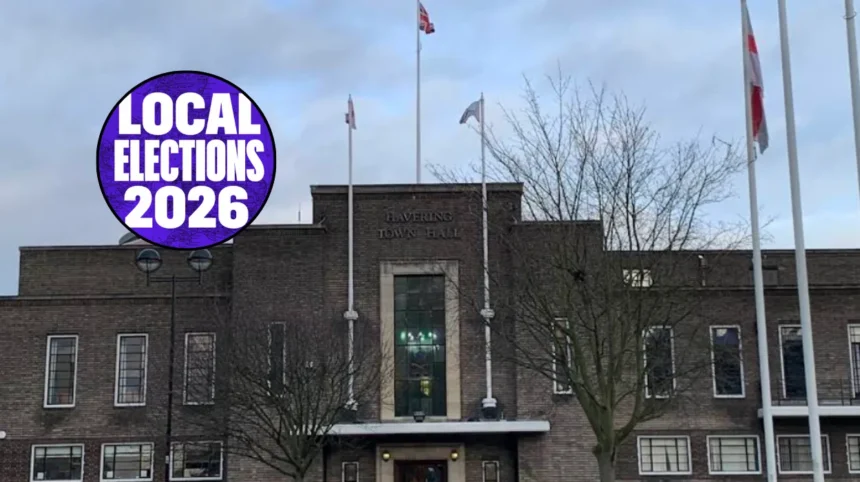
Havering (East London Times) April 28, 2026 –Havering Residents Association has declared it “incredibly foolish” to name a new leader ahead of the 7 May local elections, amid uncertainty over Councillor Ray Morgan’s successor, writes Sebastian Mann, local democracy reporter for Romford Recorder.
- Key Points
- Why Is Havering Residents Association Delaying Leader Announcement Until After Elections?
- What Led to Councillor Ray Morgan’s Decision to Step Down?
- How Did the HRA-Labour Coalition End and What Is the Current Council Makeup?
- Why Is Havering a Key Target for Reform UK in London?
- What Challenges Does the HRA Face in Retaining Council Leadership?
- HRA’s Service Record Under Councillor Ray Morgan
- Background of the Development
- Predictions: How This Development Can Affect Havering Voters
The statement comes as the party, which leads Havering Council in a minority administration, prepares for a contested poll across its 20 wards.
Why Is Havering Residents Association Delaying Leader Announcement Until After Elections?
Councillor Gillian Ford, chair of the HRA and deputy leader of Havering Council, explained the decision directly. As reported by Sebastian Mann of Romford Recorder, Councillor Ford said:
“Councillor Ray Morgan has been the group leader and leader of the council for the last four years and we would like to recognise that and thank him for his service to Havering over the last 24 years.
“Havering Residents Association will not be making any announcements as to who the next leader will be until after the elections on 7th May.
“It would be incredibly foolish to announce a leader, only for them to lose their seat.”
This cautious approach underscores the high stakes for the HRA, which currently commands 25 seats on the 63-seat council – just three shy of an outright majority.
What Led to Councillor Ray Morgan’s Decision to Step Down?
Councillor Ray Morgan assumed leadership of the HRA group and the council in 2022, following the party’s entry into a ruling coalition with Labour. In February 2026, he announced his departure after the May elections.
According to coverage by Sebastian Mann in Romford Recorder, Morgan cited health concerns and a personal desire to retire in Dorset as reasons for stepping down.
No timeline for his exit beyond the elections has been specified, and the HRA has confirmed no successor appointment prior to polling day.
Morgan’s tenure has spanned significant council developments, including navigating the minority administration after the coalition’s collapse.
How Did the HRA-Labour Coalition End and What Is the Current Council Makeup?
The HRA’s partnership with Labour dissolved bitterly in mid-2024, triggered by a series of defections that destabilised the arrangement. This left the HRA to govern as a minority administration.
The Conservatives serve as the official opposition with 14 seats. Reform UK established a foothold earlier this year when former Tory councillors Keith Prince, Robert Benham, and Christine Vickery defected to the party.
As detailed by Sebastian Mann of Romford Recorder, the HRA maintains its political independence, with its administration described as operating “without Westminster controls,” distinguishing it from councils led by Conservatives or Labour.
More than 300 candidates are contesting the elections for 55 seats across Havering’s 20 wards. The HRA, Conservatives, Labour, Greens, and Reform UK are each fielding a full slate of 55 candidates.
Why Is Havering a Key Target for Reform UK in London?
Havering stands out as one of Reform UK’s four primary targets in London for the 7 May elections. This focus follows the party’s success in securing control of six county councils in last year’s separate local elections.
Sebastian Mann’s reporting in Romford Recorder highlights Reform’s recent gains on the council through the defections of Keith Prince, Robert Benham, and Christine Vickery from the Conservatives, signalling momentum in the borough.
The elections occur against a backdrop of national political shifts, with all major parties mobilising fully in Havering.
What Challenges Does the HRA Face in Retaining Council Leadership?
The HRA’s minority status amplifies the risks of the upcoming vote. Losing seats could jeopardise its hold on power, particularly without a coalition partner in sight after the Labour split.
Councillor Ford’s comments, as quoted by Sebastian Mann of Romford Recorder, reflect a strategy to avoid internal disruption by withholding leadership announcements.
The party’s emphasis on independence appeals to voters wary of national party influences, but it must defend its 25 seats against vigorous opposition campaigns.
Voter turnout and ward-specific dynamics will prove decisive, with full candidate slates ensuring competition in every area.
HRA’s Service Record Under Councillor Ray Morgan
Over 24 years in Havering politics, Councillor Ray Morgan has served the borough extensively. His four years as HRA group leader and council head since 2022 have included managing the shift to minority rule.
Councillor Ford’s tribute, per Romford Recorder, acknowledges this long contribution, framing the delayed succession as respect for his legacy.
Background of the Development
The roots of this leadership pause trace to the HRA’s formation and rise in Havering politics. Established as a localist group, the HRA prioritises borough-specific issues over national party lines. Its breakthrough came in 2022 when it formed a coalition with Labour, propelling Councillor Ray Morgan to council leadership.
That partnership held until mid-2024, when defections eroded its stability, forcing a minority administration. Morgan’s February 2026 announcement aligned with personal circumstances, including health and relocation plans to Dorset.
The HRA’s decision to postpone naming a successor builds on its history of pragmatic governance, avoiding risks in a volatile electoral landscape. Coverage by Sebastian Mann in Romford Recorder first detailed these elements on 28 April 2026.
Predictions: How This Development Can Affect Havering Voters
This development can affect Havering voters by maintaining leadership continuity risks during the campaign period. Without a named successor, voters assess the HRA’s platform without speculation on personnel changes, focusing on policy delivery in a minority setup.
It can influence turnout, as independent voters weigh the HRA’s stability against Reform’s surge and Conservative opposition. Post-election, a delayed appointment ensures any new leader holds a secure seat, potentially stabilising council operations for residents reliant on local services.
For the 300-plus candidates and their supporters, it shifts emphasis to ward contests. Havering voters face outcomes where HRA retention hinges on defending 25 seats, with Reform targeting gains that could fragment the administration further.