Key Points
- Newham is a fast‑growing east London borough with a young, ethnically diverse population and an estimated 374,523 residents in 2024.
- The borough is largely urban, combining Victorian terraces, post‑war estates, and modern high‑density developments as part of ongoing regeneration.
- Major neighbourhoods include Canning Town, Stratford, West Ham, Plaistow, Beckton, East Ham and Forest Gate.
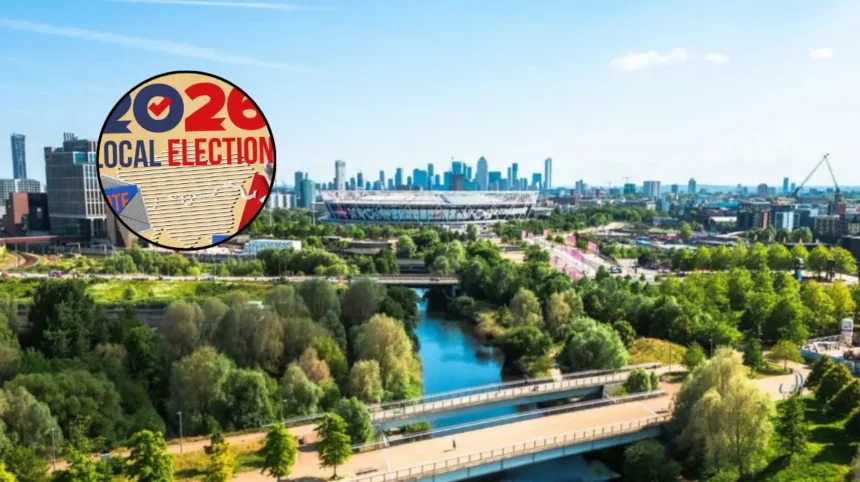
- Newham hosts the Queen Elizabeth Olympic Park, London Stadium, the IFS Cloud Cable Car, Westfield Stratford City and Royal Victoria Dock. These sites anchor the local economy and tourism.
- Queen Elizabeth Olympic Park is a planned “new heart of east London”, with masterplans guiding the creation of residential neighbourhoods, green space and mixed‑use development.
- The former Olympic Stadium has been transformed into the multi‑purpose London Stadium, now home to West Ham United FC, with a roof and seating adapted for up to around 60,000 football fans and more for major events.
- The IFS Cloud Cable Car continues to run as part of Transport for London’s network, with recent status pages indicating good service and no reported disruptions.
- Westfield Stratford City is expanding its residential and entertainment offer, including a large private‑rented‑sector (PRS) housing scheme and new immersive experiences such as Phantom Peak opening in summer 2026.
Newham, (East London Times) April 28, 2026 – the London Borough of Newham is emerging as one of London’s most dynamic boroughs ahead of the 7 May 2025 local elections, with a fast‑growing, young population and a patchwork of Victorian streets, post‑war estates and gleaming new towers that encapsulate the capital’s ongoing transformation.
- Key Points
- How is the Queen Elizabeth Olympic Park changing the look of Newham?
- What role does the London Stadium and West Ham United play in local life?
- How are transport and connectivity shaping Newham’s future?
- What is happening at Westfield Stratford City and the Royal Victoria Dock?
- What is the broader economic and social backdrop for 2025 voters?
- Background to Newham’s recent development
- How this development could affect voters and local audiences
As reported by analysts using Office for National Statistics and borough‑level data, an estimated 374,523 people lived in Newham in 2024, reinforcing its status as one of the most populous boroughs in east London. This growth, the data indicates, is driven by relatively affordable housing options compared with central London, regeneration of former industrial and post‑Olympic land, and a strong mix of education, retail and leisure opportunities.
Local commentators describe Newham as a borough where the majority of residents are from black, Asian and ethnically diverse communities, a demographic profile that shapes the political and policy landscape ahead of the 2025 contests. With areas such as Canning Town, Stratford, West Ham, Plaistow, Beckton, East Ham and Forest Gate offering distinct local identities, candidates are expected to tailor messages to these varied neighbourhoods, from housing and transport to school places and policing.
How is the Queen Elizabeth Olympic Park changing the look of Newham?
Development‑sector reporting explains that the broader plan for the Lower Lea Valley was to redevelop a large area to become
“the new heart of east London”,
knitting together residential neighbourhoods, green space and infrastructure around the valley’s waterways. Masterplans since 2012 have steered the conversion of the Olympic Park into a long‑term urban quarter, with London Legacy Development Corporation (LLDC) documents indicating that around 33,000 new homes are expected to be built by 2036, with almost 35 per cent classed as affordable.
Consultancy overviews of the park’s legacy planning note that the master plan organised five new neighbourhoods around two signature parks, 6,000 units of housing, two miles of naturalised waterways and a network of connections and commons.
These analysts state that the park’s development parcels are seen as key drivers of local property values and footfall, potentially influencing how households in adjacent wards view housing‑market pressures and council‑level planning decisions.
What role does the London Stadium and West Ham United play in local life?
Construction‑sector coverage of the Olympic Stadium’s transformation notes that the venue was re‑engineered into a multi‑purpose sporting hub after the Games, with the roof expanded to cover around 60,000 spectators, a change designed to accommodate West Ham United’s football fixtures.
The stadium’s design now includes retractable seating that can allow up to roughly 80,000 spectators for major events, illustrating how the borough continues to leverage the asset for concerts, athletics and other large‑scale occasions.
As reported by architects and contractors involved in the project, West Ham United is the primary tenant, with the club’s presence boosting match‑day economies in Stratford, West Ham and surrounding areas.
This has implications for local businesses, traffic, policing and licensing debates that often surface in election campaigns, as residents and operators weigh the benefits of stadium‑driven visitor numbers against noise, congestion and anti‑social behaviour.
How are transport and connectivity shaping Newham’s future?
Recent Transport for London status pages show that the IFS Cloud Cable Car operates with good service and no reported disruptions, functioning as a short‑haul link between the Royal Docks and the Greenwich Peninsula. Transport‑focused reporting notes that the cable car complements the DLR and other public‑transport routes, providing a tourism‑oriented but also functionally useful link for commuters and visitors to the Royal Victoria Dock and surrounding areas.
This connectivity is part of a wider picture in which Newham features a mix of tube, Overground, DLR and bus routes, layering on top of the Olympic‑era infrastructure upgrades. For voters, the reliability and capacity of these systems – especially around Stratford, Canning Town and the Royal Docks – can be a deciding factor in how they judge local or London‑wide transport policies that may be championed by different party platforms.
What is happening at Westfield Stratford City and the Royal Victoria Dock?
Planning‑sector and architectural previews of the Westfield Stratford City residential quarter indicate that about 1,200 new homes are planned as part of a large, single‑site private‑rented‑sector (PRS) scheme. Industry reporting frames this as one of London’s biggest PRS projects, aimed at letting units to renters rather than private owners, which may intensify discussion around housing tenure, affordability and long‑term tenancy security in Newham.
Consumer‑insight pieces and retail‑trend analyses highlight the expansion of immersive experiences at Westfield, including the Phantom Peak live‑experience venue due to open in summer 2026. Commentators note that such attractions are designed to boost footfall and dwell time, catering especially to younger visitors who seek “entertainment‑led experiences” when visiting physical retail destinations.
For local‑election watchers, this underlines a broader narrative of Newham evolving from a former industrial zone to a mixed‑use destination where jobs, leisure and housing are increasingly intertwined.
What is the broader economic and social backdrop for 2025 voters?
Newham’s demographic profile – a young, predominantly black, Asian and ethnically diverse population – sits alongside visible contrasts of old and new housing, legacy industry and high‑spec towers. In the years since the Olympics, the borough has seen large‑scale regeneration, with projects such as those around the Queen Elizabeth Olympic Park and Stratford City reshaping job markets, house prices and community expectations.
For local‑election candidates, this mix of rapid change, ongoing housing pressures and the promise of “Olympic‑legacy” opportunities means that manifestos are likely to emphasise regeneration benefits alongside concerns about displacement, affordability and public‑service strains.
Electoral‑analysis pieces routinely single out Newham as a marginal, high‑turnout area where swings in just a few wards can shift the balance of power on the council, making the borough an important bellwether for east‑London politics.
Background to Newham’s recent development
The background to Newham’s current trajectory lies in the physical and economic remaking of the Lower Lea Valley over the past two decades.
Before the 2012 Olympics, the area was largely post‑industrial, with pockets of underused land and older housing stock; the Olympic bid and subsequent masterplans then accelerated construction and infrastructure work, stitching together previously fragmented neighbourhoods.
Queen Elizabeth Olympic Park has become the anchor of this story, providing large green spaces, event venues and a template for new housing and mixed‑use districts. The London Stadium, Westfield Stratford City and the IFS Cloud Cable Car have each acted as nodes around which retail, tourism and residential development have clustered, feeding into Newham’s broader image as a gateway between central London and the Thames Estuary.
How this development could affect voters and local audiences
The way this development unfolds is likely to shape how Newham residents, particularly younger and lower‑income households, view local‑election choices. Expansion of housing at the Olympic Park and around Westfield Stratford City may increase competition for affordable homes, influencing how people judge council policies on planning, social‑rental allocation and rent‑control measures.