Key Points
- Three people — Sachin Kalia, 19, Davina Kaur Ruprah, 24, and Kiranjeet Sagoo, 36 — died on 15 July 2024 after their vehicle collided with a stationary Ford Transit van on the westbound A13 at the Wennington junction in Rainham, east London.
- The Ford Transit van had been left partially protruding into lane three from the central reservation following an earlier collision at around 9.12pm.
- An inquest jury at Walthamstow Coroner’s Court concluded the fatal collision could have been avoided had Metropolitan Police Service (MPS) officers been given the correct location and arrived in time to clear the initial hazard.
- A passing motorist telephoned the Metropolitan Police at 9.19pm and twice identified the Wennington junction between the A13 and A1306, but the call handler failed to log it in the remarks section and the system defaulted to the Dagenham junction.
- A separate 999 call was received by Essex Police, whose call handler mistakenly logged the collision as falling within Essex Police territory and did not transfer or notify the Metropolitan Police.
- East London Area Coroner Nadia Persaud issued formal Prevention of Future Deaths reports to both forces, highlighting over-reliance on imprecise mobile phone mast data and delays in identifying the exact site until the What3Words application was used.
- Both the Metropolitan Police and Essex Police have acknowledged the failings and introduced updated training, reflection programmes, and cross-border location verification procedures for 999 call handlers.
Rainham (East London Times) November 14, 2026 – Three young people killed in a high-speed collision on the A13 in Rainham, east London, might have survived had emergency call handlers not dispatched police officers to the wrong junction, a coroner has concluded.
- Key Points
- How did the fatal collision on the A13 happen?
- Why did the coroner warn that future deaths could occur?
- What changes have the Metropolitan Police and Essex Police made?
- Background: Cross-Border Emergency Jurisdiction on the A13
- Prediction: How These Reforms Will Affect Emergency Call Handlers and Motorists
Sachin Kalia, 19, Davina Kaur Ruprah, 24, and Kiranjeet Sagoo, 36, were pronounced dead at the scene in Wennington Marshes, Rainham, on 15 July 2024 after the car they were travelling in westbound aquaplaned in wet weather and struck a stationary Ford Transit van. Following a joint inquest at Walthamstow Coroner’s Court and the publication of Prevention of Future Deaths reports, both the Metropolitan Police Service and Essex Police have overhauled how their 999 operators verify emergency locations and manage cross-border calls.
How did the fatal collision on the A13 happen?
The tragedy unfolded following two separate road traffic collisions on the same stretch of the westbound A13 on the evening of 15 July 2024. According to findings set out in the Regulation 28 Prevention of Future Deaths reports published by the Courts and Tribunals Judiciary, the first collision occurred at approximately 9.12pm when the driver of a speeding BMW 1 Series lost control and crashed into a Ford Transit van. That initial impact left the Ford Transit van stranded on the central reservation, slightly protruding into lane three of the carriageway.
A passing motorist called the Metropolitan Police at 9.19pm to report the obstruction and twice informed the operator that the collision had taken place at the Wennington junction between the A13 and the A1306. However, the location was inaccurately recorded on the force’s computer-aided dispatch system. As reported by The Standard, East London Area Coroner Nadia Persaud noted in her report:
“The MPS call handler did not note the Wennington junction as the location of the incident in the ‘remarks’ section available to her and the computer system only listed the incorrect Dagenham junction between the A13 and the A1306 as a possible location.”
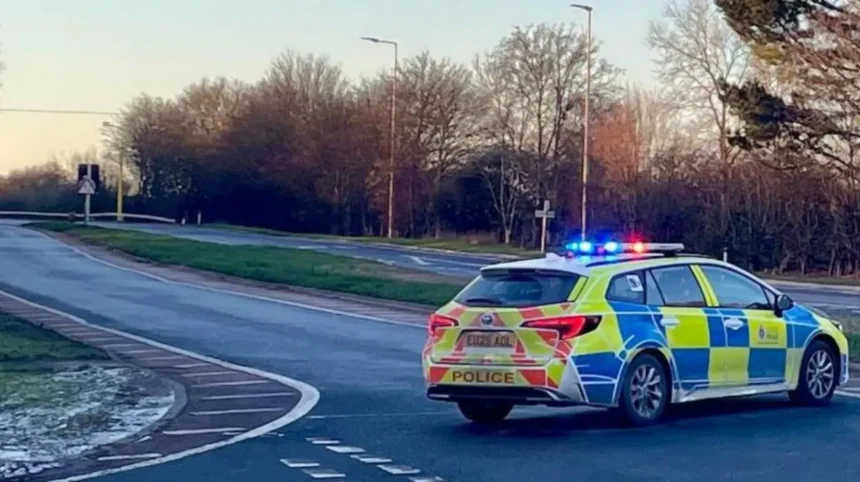
Because of that error, Metropolitan Police officers were dispatched to the Dagenham junction rather than Wennington. Officers searched the area and checked one further junction in each direction, finding no trace of the damaged van. While officers were searching the wrong section of the dual carriageway, a BMW 4 Series carrying Mr Kalia, a bartender and student from Barking, Ms Ruprah, a paralegal from Dagenham, and Mr Sagoo, a customer service adviser from Ilford, travelled westbound in wet conditions. The vehicle aquaplaned at high speed and collided with the stationary Ford Transit van, killing all three occupants.
Why did the coroner warn that future deaths could occur?
At the conclusion of the joint inquest hearing on 16 March 2026, the jury returned a narrative conclusion stating that the cause of death was a road traffic collision caused by the driver losing control whilst driving at high speed in adverse weather conditions. Crucially, the jury determined that the fatal crash could have been avoided if the Ford Transit van had not been parked within the central reservation after the 9.12pm incident, and if attending Metropolitan Police officers had been supplied with the correct location and arrived in sufficient time to clear the carriageway.
In her official Prevention of Future Deaths reports dated 26 March 2026 and sent to both the Metropolitan Police Service and Essex Police, Coroner Nadia Persaud wrote:
“Had the officers been provided with the correct location, they would likely have arrived before the time of the second collision.”
As reported by ITV News London, Coroner Persaud also expressed serious concern over systemic confusion surrounding location technology, stating there was “a great deal of confusion” about the precise site and an over-reliance on mobile phone location systems, which cover wide mast areas and “raise the risk of call handlers not giving full attention to the information provided by the caller”. She noted that the exact location of the emergency was only definitively established once the What3Words mapping application was used.
Additionally, the coroner’s investigation revealed a breakdown in cross-border communication between neighbouring forces. A separate 999 call regarding the incident was placed to Essex Police, whose operator incorrectly determined that the stretch of the A13 fell within Essex Police jurisdiction rather than Metropolitan Police ground. Consequently, Essex Police staff did not contact or alert the Metropolitan Police Service to the hazard.
What changes have the Metropolitan Police and Essex Police made?
In its formal response to Coroner Persaud, the Metropolitan Police Service accepted the findings and acknowledged shortcomings in both initial call recording and subsequent supervisory oversight. As reported by ITV News London, the Metropolitan Police stated that it “acknowledges the seriousness of the recording error and the absence of immediate supervisory intervention”, adding:
“The initial location provided by the caller was incorrectly entered and the opportunity to identify this at the earliest stage was missed.”
Although the Metropolitan Police identified the location mistake on the evening of the crash, supervisors did not raise the error with the operator at the time; the call handler first learned of the mistake during a meeting with the Met Command and Control (MetCC) inquest team on 24 July 2025. In its letter to the coroner signed by a Deputy Assistant Commissioner, the force confirmed that the operator would undergo a structured programme of “learning through reflection” to reinforce operational expectations and support their wellbeing. The call handler has also voluntarily contributed to training materials for fellow operators highlighting the severe consequences of failing to record caller details accurately, alongside updates to the force’s Advance Despatch Exercise training.
What steps has Essex Police taken to improve cross-border 999 calls?
Essex Police also submitted a formal response from its Chief Constable detailing operational reforms across its Contact Management command. As reported by Matthew Benton-Smith of the Echo, Essex Police has strengthened the way its 999 call handlers establish emergency locations and introduced mandatory refresher training on location searching and digital mapping, scheduled across July and August for all Contact Management staff.
According to the force’s submission and reporting by the Echo, the updated training instructs operators on structured caller questioning, utilising mapping systems alongside What3Words, recognising the limitations of single-source mobile phone mast data, and escalating calls when a location remains uncertain. Call handlers have also been explicitly instructed to ask telecommunications operators to remain on the line whenever an incident occurs near a police force boundary so that an immediate onward transfer can take place. Essex Police stated that it will keep “emergency call handling, location accuracy and cross border response under active review” and share lessons nationally via the National Police Chiefs’ Council.
Background: Cross-Border Emergency Jurisdiction on the A13
The A13 serves as a major arterial dual carriageway linking central and east London with Thurrock and south Essex, carrying heavy commuter and commercial traffic day and night. Near Rainham and Wennington Marshes, the highway runs directly along the administrative boundary separating the London Borough of Havering—policed by the Metropolitan Police Service—from the unitary authority of Thurrock, which falls under the jurisdiction of Essex Police. Because mobile phone signals along flat, open marshland and river corridors frequently connect to masts across county lines, 999 calls placed by motorists on boundary roads are regularly routed to the neighbouring force’s control room, requiring strict adherence to national call-transfer protocols and precise geographic verification.
Prediction: How These Reforms Will Affect Emergency Call Handlers and Motorists
For 999 call handlers and dispatch supervisors across London, Essex, and wider UK police forces, these procedural changes signal heightened scrutiny over manual data verification and supervisory auditing. Operators will face stricter expectations to cross-check verbal landmarks provided by callers against digital mapping tools and What3Words rather than relying solely on automated mobile network coordinates, particularly when incidents occur near force boundaries. For motorists and daily commuters travelling along major border routes such as the A13, improved cross-border call retention and faster location pinpointing are expected to reduce dispatch delays when stationary vehicles or debris obstruct high-speed carriageways, lowering the risk of secondary collisions during adverse weather.