Key Points
- Community Advocacy Mobilisation: Ruth Kettle-Frisby, representing the local campaign group Clear the Air in Havering, has partnered with research organisation Centric Lab to provide health monitoring resources for Rainham residents and the London Fire Brigade.
- Environmental Disaster Designation: Campaigners and local actors have characterised the continuous toxic smoke emanating from the illegal landfill site on Arnold’s Field as an environmental disaster.
- Vulnerable Populations Targeted: Local data highlights that the ongoing toxic air emissions disproportionately impact the health of children, elderly residents, and individuals with pre-existing medical conditions.
- Public Empowerment Strategy: The newly distributed resources aim to provide practical tools for community members to independently track long-term respiratory and physiological health indicators.
- Institutional Strain: Local emergency response services, specifically the London Fire Brigade, continue to face prolonged operational exposure while managing the subterranean fire at the Arnold’s Field site.
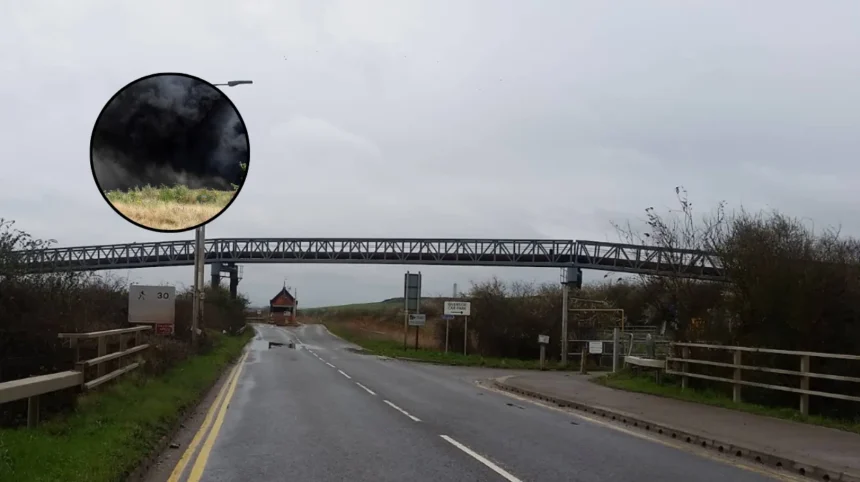
Havering (East London Times) June 23, 2026 — A coordinated community-led public health initiative has been launched in the London Borough of Havering to mitigate the long-term biological impacts of ongoing toxic smoke emissions from the illegal landfill site located at Arnold’s Field in Rainham. As reported by local environmental correspondents, Ruth Kettle-Frisby of the advocacy group Clear the Air in Havering has established a formal partnership with Centric Lab, an independent scientific research institution specializing in environmental health.
- Key Points
- Why Are Local Campaigners Partnering With Centric Lab?
- Who Is Most At Risk From the Toxic Air Emissions?
- How Are Emergency Services and Personnel Being Supported?
- Background of the Arnold’s Field Illegal Landfill Development
- Predictions: How This Development Will Affect Rainham Residents and Local Policy
The collaboration aims to supply affected Rainham residents and active personnel within the London Fire Brigade with dedicated analytical tools and educational information to systematically track their own and their children’s long-term health metrics.
The operational focus of this initiative follows months of persistent subterranean smouldering at the unauthorized dump site, which has frequently blanketed nearby residential zones in thick, acrid smoke. Public health analysts have repeatedly warned that the particulate matter and gaseous compounds released by such fires present an immediate and protracted danger to public physiology.
By distributing these specialized monitoring resources, the campaign seeks to establish an empirical data framework managed directly by the community, bypassing traditional bureaucratic delays in localized environmental reporting.
Why Are Local Campaigners Partnering With Centric Lab?
The partnership between Clear the Air in Havering and Centric Lab was initiated in direct response to a perceived deficit in hyper-local biometric data.
According to statements compiled by regional journalists covering the Havering borough, the shared resource packages are designed to give residents practical agency over their environmental circumstances.
The tools focus heavily on documenting symptom patterns, respiratory performance, and secondary systemic reactions over extended timelines.
In an analysis of the distribution strategy, media reports indicate that the deployment of these resources aims to address specific community vulnerabilities in three distinct ways:
- Symptom Logging: Enabling parents to document daily variations in children’s respiratory health, including coughing frequency, wheezing, and sleep disruptions.
- Environmental Mapping: Correlating observed physical symptoms with shifting wind directions and smoke density levels recorded around Arnold’s Field.
- Clinical Preparedness: Equipping residents with organized, longitudinal health diaries that can be presented directly to National Health Service (NHS) general practitioners during medical consultations.
Who Is Most At Risk From the Toxic Air Emissions?
Public health documentation accompanying the campaign underscores that toxic air impacts children, people with existing health conditions, and the elderly the hardest.
Medical consensus indicates that developing pulmonary systems in children absorb pollutants at a higher relative rate than adult lungs, running the risk of permanent structural deficits.
Furthermore, residents diagnosed with chronic obstructive pulmonary disease (COPD), asthma, or cardiovascular vulnerabilities experience acute exacerbations when exposed to high concentrations of fine particulate matter (PM2.5).
The elderly population in Rainham, facing natural age-related declines in immune resilience, represents another critical risk tier currently exposed to the persistent atmospheric fallout.
How Are Emergency Services and Personnel Being Supported?
The London Fire Brigade (LFB) has maintained an ongoing relationship with the Arnold’s Field site due to the volatile nature of buried commercial and industrial waste.
Subterranean landfill fires are notoriously difficult to extinguish, often requiring continuous dampening operations that expose frontline firefighters to prolonged periods of ambient toxicity.
Through the initiative led by Kettle-Frisby, the health monitoring infrastructure is also being extended to support these emergency service workers.
The collection of long-term health data for exposed firefighters is seen as a necessary measure to track occupational hazards distinct from standard urban firefighting environments.
Background of the Arnold’s Field Illegal Landfill Development
The environmental crisis at Arnold’s Field in Rainham is the culmination of long-standing regulatory, legal, and environmental compliance failures.
The site, situated within the Green Belt portion of the Havering borough, transitioned from historic mineral extraction voids into an unauthorized repository for commercial, industrial, and demolition waste over several years.
Despite initial zoning restrictions, enforcement notices issued by local government authorities and the Environment Agency were routinely ignored or legally contested by site operators, allowing thousands of tonnes of unregulated materials to accumulate illegally.
The composition of the buried waste remains largely unmapped, complicating both firefighting strategies and environmental toxicology assessments. In late 2022 and throughout 2023, deep-seated fires ignited within the decomposed mass, fueled by pockets of methane gas and compressed combustible materials.
Because the site lacked standard landfill engineering controls—such as synthetic liners, gas extraction wells, or clay capping—the fire began venting toxic chemical compounds directly into the lower atmosphere. Local air quality monitoring stations have intermittently flagged elevated readings of hazardous substances, prompting repeated warnings from political representatives and grassroots organizations, which ultimately led to the current structured intervention by Clear the Air in Havering.
Predictions: How This Development Will Affect Rainham Residents and Local Policy
The deployment of localized health monitoring tools by Centric Lab and Clear the Air in Havering is anticipated to alter the socio-political dynamic between the local population, municipal authorities, and regulatory bodies significantly.
For the primary audience—the residents of Rainham—the collection of systematic, user-generated health logs will likely transition vague community anxieties into verifiable empirical evidence.
This data compilation is expected to lead to a measurable increase in localized clinical presentations within the local NHS trust, as residents seek formal diagnoses backed by their recorded symptom timelines.
From a regulatory standpoint, the accumulation of community-led epidemiological data will place unprecedented pressure on the Environment Agency and Havering Borough Council to expedite remediation strategies for Arnold’s Field. Should the collected metrics demonstrate a clear correlation between landfill smoke vectors and pediatric respiratory decline, the data will likely serve as foundational evidence for future class-action legal proceedings or formal human rights appeals regarding environmental negligence. Additionally, the inclusion of the London Fire Brigade in the monitoring program could prompt emergency service unions to demand stricter operational limits and enhanced protective apparatus for prolonged deployments to unregulated environmental dump sites across Greater London.