Key Points
- Havering’s political balance has shifted after the local elections, with the long-standing order inside the Town Hall changed by major losses for the Havering Residents Association and Conservatives.
- Reform UK made significant gains in areas including Hornchurch, South Hornchurch and parts of Rainham.
- The Conservatives were wiped out completely, leaving no Conservative councillors in the chamber.
- The Havering Aligned Residents Associations, made up of the Havering Residents Association, Hornchurch Residents Association and Upminster and Cranham Residents Association, retained 14 councillors.
- That group will now formally become the opposition in the Town Hall.
- Councillor Gillian Ford has been named Leader of the Opposition and said residents had used the elections to express a desire for national change.
- She said the Residents Associations would focus on scrutiny, challenge and accountability over the new administration’s decisions and service delivery.
- The new political arrangement sets up a period of close attention on how the incoming administration performs against its election promises.
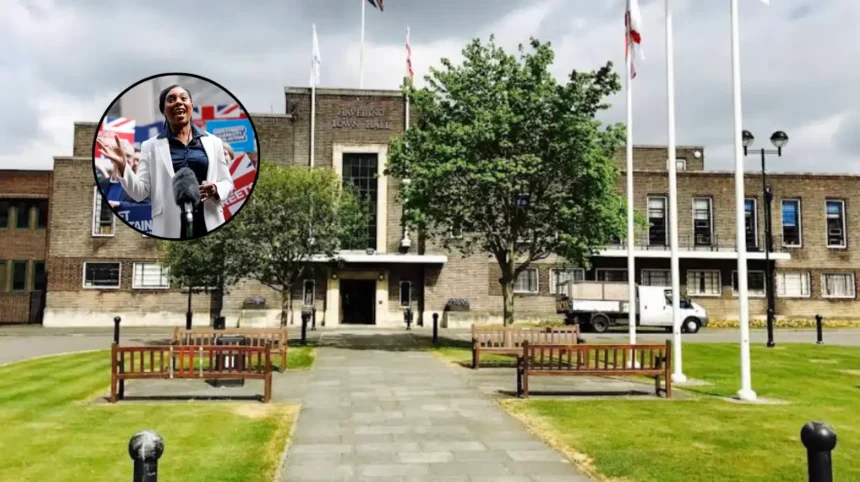
Havering (East London Times) May 19, 2026 – Havering’s political landscape has been reshaped after the local elections, with the Havering Aligned Residents Associations now set to become the official opposition in the Town Hall after a series of election losses for both the Residents Associations and the Conservatives. The developments mark a major shift in the borough’s political make-up as councillors prepare for the first Full Council meeting of the new four-year term.
- Key Points
- Why are the Residents Associations now the opposition?
- What did Gillian Ford say about scrutiny?
- How significant is Reform UK’s gain?
- What does the Conservatives’ wipeout mean?
- What happens at the first Full Council meeting?
- Why did voters back change?
- Background on the development
- What could this mean for residents?
The election results have ended the borough’s previous balance of power and left the chamber in a very different state. Reform UK recorded major gains in wards including Hornchurch, South Hornchurch and parts of Rainham, while the Conservatives were removed from the council entirely. The Residents Associations, despite losing ground, still returned 14 councillors and remain the largest organised opposition group.
Why are the Residents Associations now the opposition?
The Havering Aligned Residents Associations are made up of the Havering Residents Association, Hornchurch Residents Association and Upminster and Cranham Residents Association. Together, they won 14 seats, which is enough to give them the formal opposition role inside the council chamber.
Councillor Gillian Ford, formerly Deputy Leader and now Leader of the Opposition, said the election results reflected a broader public mood. As reported by the original source, Ford said:
“Residents wanted national change and used the local elections to get their voices heard, we get that.”
She added that residents recognised the Residents Associations as
“local people that focus on the local issues” and described them as
“the one constant that sticks around helping and supporting our communities.”
Her comments suggest the group intends to present itself as the borough’s steady local voice at a time of significant political change. That position becomes more important now that the Conservatives have no councillors left in the chamber.
What did Gillian Ford say about scrutiny?
Ford said the role of the Residents Associations will now be to question the new administration’s decisions and performance. As reported by the source, she said:
“Our role is to challenge, question and scrutinise the new administration’s policy decisions and service delivery.”
She also warned that the incoming leadership has made promises that, in her view, cannot be delivered. According to the report, Ford said the opposition would hold the administration to account
“on behalf of Havering residents and businesses.”
She added that the new administration must remain “inclusive and representative of all residents” and avoid policies that could have a negative impact.
Those remarks place scrutiny at the centre of the Residents Associations’ approach in the new council term. The group is now expected to use its position to monitor decisions closely, especially on policy delivery and public services.
How significant is Reform UK’s gain?
Reform UK’s gains were one of the most notable features of the election result, particularly because the party made advances in places traditionally seen as Residents Association strongholds.
The report says those victories came in areas such as Hornchurch, South Hornchurch and parts of Rainham.
The scale of the shift indicates a clear change in voter behaviour across the borough. The losses for both the Residents Associations and Conservatives suggest that many voters were willing to move away from the established political pattern in Havering and back a different option.
That change has not only affected seat numbers. It has also altered the tone of the local political debate, with the new administration now under pressure to show it can translate campaign promises into practical delivery.
What does the Conservatives’ wipeout mean?
The Conservatives no longer have any representation in Havering’s council chamber after being wiped out in the elections. That is a significant change for a party that had previously formed part of the borough’s political landscape.
Their absence means the chamber now has a different structure, with the Residents Associations taking on the opposition role by default as the largest organised group outside the governing side.
It also means one of the traditional voices in Havering politics has been removed entirely from the council table.
For residents, the immediate effect will be a different style of debate at Full Council meetings and within committees. For the opposition, it leaves the Residents Associations as the main group carrying the burden of challenge and oversight.
What happens at the first Full Council meeting?
Attention is now turning to the first Full Council meeting of the new four-year term, which is expected to show how the new political era in Havering will begin. The meeting will be the first clear test of how councillors interact after the election shock.
It is likely to be closely watched because it will offer early signs of how the new administration intends to govern and how the opposition plans to respond.
The Residents Associations, led by Gillian Ford, are expected to use the meeting to begin their scrutiny role in earnest.
The meeting will also help reveal whether the recent election campaign messages now turn into policy detail. That will matter to residents and businesses alike, particularly where public services and council decisions are concerned.
Why did voters back change?
The report suggests that many voters used the local elections to express frustration and a desire for national change. Ford said residents wanted that change and used the ballot box to send a message.
At the same time, the Residents Associations held on to 14 councillors, which indicates that local voters still see value in their borough-focused approach.
That split result suggests that some residents were motivated by wider political sentiment, while others preferred to keep a local independent voice in the chamber.
This mixed result helps explain why the political picture in Havering changed so sharply without completely removing the Residents Associations from the map.
The borough now has a new governing dynamic, but also an opposition group with significant local experience.
Background on the development
Havering has long been known for the strength of its Residents Associations, which have historically played a major role in borough politics. Their local identity and focus on community issues have often distinguished them from the national parties.
The latest election, however, has disrupted that pattern. Reform UK’s gains, alongside the Conservatives’ collapse, have created one of the biggest political changes the borough has seen in years.
That leaves the Residents Associations in a position where they are still influential, but no longer dominant in the way they once were.
This development is important because it may alter how the council debates policy, handles public services and responds to local pressure. It also marks the start of a new term in which political alliances, scrutiny and delivery will be under closer than usual attention.
What could this mean for residents?
For residents, the main effect will be a more contested council chamber and possibly a sharper style of political scrutiny.
The Residents Associations are likely to question decisions more aggressively, particularly where they believe promises are not being kept.
The new administration will also face immediate pressure to prove it can govern effectively after winning significant support. That means residents may see early focus on delivery, accountability and the handling of local services.
Over time, this could produce either stronger confidence in the council or deeper political tension if expectations are not met. The direction will depend on how well the new administration performs and how effectively the opposition holds it to account.