Key Points
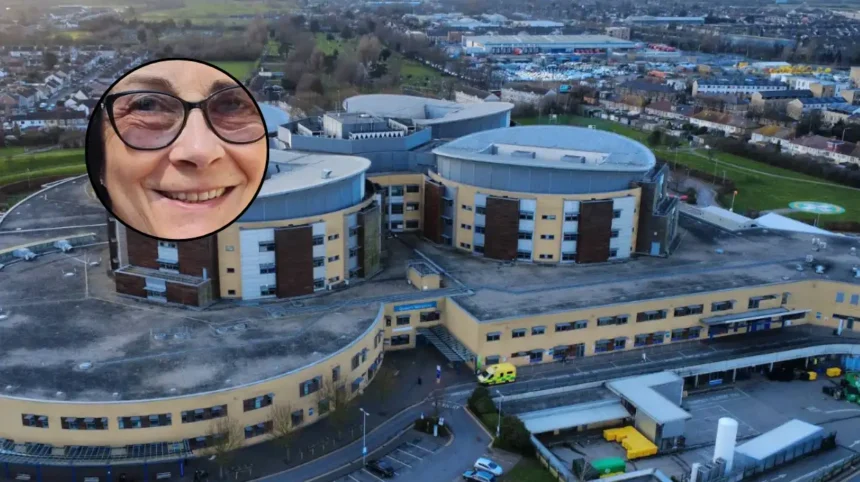
- Suzanne Maylen, a 60-year-old resident from Rainham, has become the first patient at Queen’s Hospital to receive a new brain stimulation device for epilepsy.
- The device, known as the EASEE system, was fitted during surgical intervention at the Romford hospital in April.
- The system is specifically engineered to treat patients diagnosed with drug-resistant focal epilepsy.
- Placed directly under the scalp, the device sends targeted electrical impulses to the brain to disrupt abnormal electrical activity that causes seizures.
- Unlike traditional neurostimulation devices, the EASEE system does not require invasive brain tissue penetration or cranial bone removal.
Romford (East London Times) August 18, 2026 – Suzanne Maylen, a 60-year-old patient from Rainham, has become the first person at Queen’s Hospital in Romford to be fitted with a pioneering bioelectric brain device aimed at treating drug-resistant focal epilepsy. The surgical procedure, which took place in April, involved placing the specialized Epicranial Application of Stimulation in Epilepsy (EASEE) system directly under Maylen’s scalp to manage debilitating neurological seizures.
- Key Points
- What Is the EASEE Epilepsy Device and How Does It Function?
- Who Is Suzanne Maylen and How Has Focal Epilepsy Affected Her Life?
- What Do Medical Experts and Surgeons Say About the Procedure?
- Background of the Particular Development
- Prediction: How Will This Development Affect Epilepsy Patients and Healthcare Providers?
What Is the EASEE Epilepsy Device and How Does It Function?
The EASEE device, developed by medical technology firm Precise Effects in Epilepsy (Precisis), is a thin, flexible electrode structure implanted epicranially—directly over the skull area corresponding to the epileptogenic zone, but beneath the scalp.
Unlike conventional deep brain stimulation (DBS) or vagus nerve stimulation (VNS) hardware, the EASEE system does not penetrate brain tissue, nor does it require a craniotomy to open the skull bone. It functions by delivering continuous, high-frequency electrical pulses and bio-synchronous stimulation to stabilize hyper-excitable cortical neurons, effectively preventing seizure impulses from spreading across neurological pathways.
Who Is Suzanne Maylen and How Has Focal Epilepsy Affected Her Life?
Suzanne Maylen, 60, has lived with drug-resistant focal epilepsy for a significant period. Focal epilepsy involves abnormal electrical discharges originating in a localized section of the brain. In drug-resistant cases, standard anti-seizure medication fails to provide adequate control, leaving patients exposed to unpredictable seizure episodes, risk of injury, and restricted independence.
Following her surgical procedure in April at Queen’s Hospital—run by Barking, Havering and Redbridge University Hospitals NHS Trust—Maylen entered a monitoring phase to assess the long-term efficacy of the device in lowering seizure frequency and severity.
What Do Medical Experts and Surgeons Say About the Procedure?
Neurosurgeons and clinical specialists involved in the procedure at Queen’s Hospital emphasize that the minimally invasive nature of the implantation reduces surgical risk factors, recovery durations, and potential neurological complications compared to traditional brain surgeries.
Clinicians note that the epicranial approach allows the device to sit imperceptibly under the skin, controlled wirelessly to adjust stimulation settings based on individual patient requirements and seizure mapping.
Background of the Particular Development
Focal epilepsy accounts for a major proportion of adult epilepsy cases globally. Approximately one-third of individuals with focal epilepsy develop refractoriness, meaning their conditions cannot be managed effectively using anti-epileptic drug therapies alone.
Historically, patients with drug-resistant focal epilepsy had limited options, often relying on major resective brain surgery—where the seizure-originating tissue is surgically removed—or intracranial stimulation systems that carry risks associated with invasive brain manipulation. The emergence of epicranial stimulation technologies like EASEE represents a technological evolution, offering a middle ground between non-invasive therapies and invasive brain surgery. Clinical trials across Europe have evaluated the technology’s ability to deliver long-term neuromodulation with low surgical morbidity rates.
Prediction: How Will This Development Affect Epilepsy Patients and Healthcare Providers?
This development is anticipated to offer significant clinical and operational impacts for both patients suffering from refractory epilepsy and the broader healthcare system.
- For Drug-Resistant Epilepsy Patients: The success of minimally invasive devices like EASEE offers an alternative intervention pathway for individuals who are either ineligible for resective neurosurgery or hesitant to undergo procedures involving brain tissue penetration. Lowering seizure frequency can directly enhance patient autonomy, reduce injury risks, and improve overall quality of life.
- For Neurologists and Healthcare Trusts: Broader adoption of epicranial stimulation systems within NHS trusts could reduce long-term hospital admissions associated with uncontrolled seizure emergencies. Because the implant procedure carries lower surgical complexity, it may allow hospitals to optimize neurosurgical resources, reduce operating theatre durations, and lessen post-operative recovery timelines compared to traditional neurostimulator implants.