Key Points
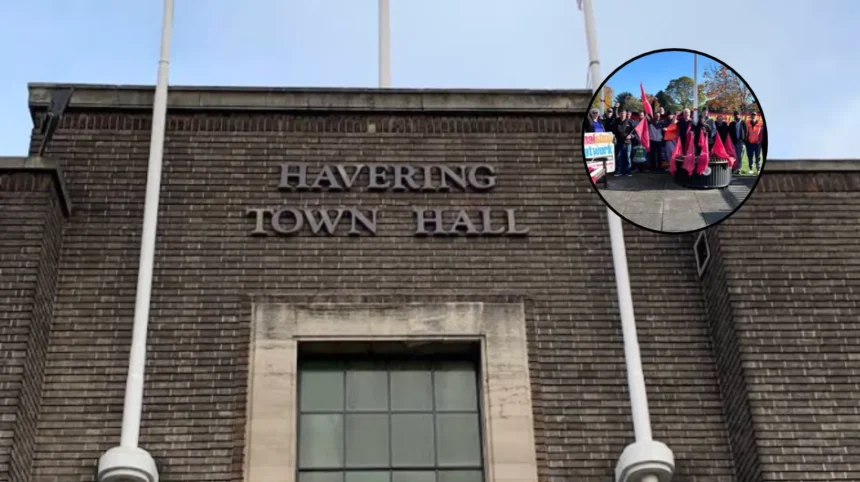
- Parliamentary Support: Dagenham and Rainham MP Margaret Mullane joined striking FCC Waste Management employees and Unite trade union representatives outside Romford Town Hall during a week-long strike over pay and working conditions.
- Pay Disparity: Unite reports that newly appointed bin loaders in Havering earn £12.88 an hour compared to £15.72 in neighbouring Redbridge, while Havering drivers receive £17.24 an hour compared to £19.89 in Redbridge. Havering loader rates fall below the London Living Wage rate of £15.45 an hour cited by the union.
- Operational and Safety Concerns: Members have raised grievances regarding heavy workloads, fatigue, extreme heat conditions, vehicle safety standards, and inadequate welfare facilities.
- Strike Timeline: The industrial action commenced on Monday 26 October and is scheduled to run through Friday 30 October.
- Agency and Strike-Breaking Allegations: Unite claims FCC Waste Management imported agency staff from regions including East Lothian, Scotland, covering travel and lodging expenses rather than settling the wage dispute locally.
Romford (East London Times) October 31, 2026 – Havering’s striking waste management personnel were joined outside Romford Town Hall by Dagenham and Rainham Member of Parliament Margaret Mullane alongside trade union delegates as a week-long strike over remuneration and workplace standards neared its conclusion. The industrial action, coordinated by the trade union Unite, involves workers employed by private contractor FCC Waste Management, which delivers outsourced refuse collection services under a commercial contract with Havering London Borough Council. The work stoppage began on Monday 26 October and is slated to conclude on Friday 30 October, causing noticeable disruption to municipal waste collection schedules throughout the borough.
The underlying conflict revolves around significant wage differentials between adjacent local authorities, excessive physical workloads, and broader working conditions that representatives assert have persisted since FCC Waste Management assumed operational responsibility for the municipal contract in 2023.
How Does Havering Bin Workers’ Pay Compare to Neighbouring Redbridge?
Comparative financial data released by the trade union highlights a substantial hourly wage gap between municipal waste staff operating in Havering and those performing identical duties in the adjoining London Borough of Redbridge. According to figures provided by representatives, a newly appointed refuse loader in Havering receives £12.88 per hour, whereas an equivalent worker in Redbridge receives £15.72 per hour.
The pay differential extends to heavy goods vehicle drivers within the service. Newly hired drivers in Havering earn £17.24 per hour, compared to £19.89 per hour awarded to drivers operating across the borough boundary in Redbridge. Unite noted that the starting rate for Havering loaders sits markedly below the recognised London Living Wage threshold of £15.45 per hour quoted by the organisation. Union officials contend that this variance creates severe personal hardship for operational staff attempting to absorb the higher cost of living across Greater London.
Beyond base hourly rates, union members have formally registered operational complaints with local management concerning escalating daily workloads, physical exhaustion, working during periods of intense summer heat, vehicle maintenance standards, and access to basic hygiene and welfare amenities during shifts.
What Are Trade Union Leaders and Public Representatives Demanding?
Unite General Secretary Sharon Graham expressed strong criticism regarding the current pay structures and management policies, stating:
“These are key workers who deserve to be paid fairly. It is nonsensical that they earn so little in comparison to their counterparts in the next borough and FCC and Havering Council have serious questions to answer over this. FCC must also listen to its workers’ concerns over conditions. Unite will not allow our members to be left struggling to afford essentials and working under poor conditions and will continue to back these workers every step of the way.”
Unite Regional Officer Danny Hoggan also raised concerns regarding the employer’s response to the strike action, stating:
“It is unacceptable that our members at FCC have been left struggling to make ends meet. Meanwhile instead of paying them fairly and coming to the table to resolve issues FCC would rather pay money to strike break than treat Havering workers with dignity and respect. Unite are more than willing to meet with FCC to negotiate an end to this dispute, but that relies on FCC changing tack and committing to immediate meaningful changes to these workers’ pay and conditions.”
Unite asserted that rather than allocating resources to resolve the underlying wage dispute through collective bargaining, the contractor brought in replacement workers from distant regional operations, including East Lothian in Scotland, with the company financing travel, hotel accommodation, and per diem allowances to maintain minimum service baselines.
The direct attendance of Member of Parliament Margaret Mullane alongside union members outside the municipal headquarters in Romford brought intensified parliamentary visibility to the demonstration as the initial week-long mandate approached its final scheduled day.
Background of the Havering Refuse Dispute
Outsourced refuse collection within the London Borough of Havering has undergone multiple contractual transitions over recent years as local authorities seek to maintain essential public services within constrained municipal budgets. FCC Waste Management secured the multi-year environmental services contract from Havering Council in 2023, taking over operational responsibility for kerbside refuse, recycling collections, and street cleansing across the borough.
Since the transfer of services, employee representatives have continually flagged structural discrepancies regarding TUPE transfers, varying pay tiers for newly recruited staff versus legacy personnel, and differing equipment standards compared to surrounding East London and Essex authorities. The current industrial action represents the first major organized stoppage under the present contract, reflecting broader national trends where contracted-out municipal infrastructure staff seek parity with direct-hire council employees amid inflationary pressures.
Prediction: How Will This Development Affect Havering Residents and Refuse Workers?
The outcome of the current standoff and potential follow-up industrial action carries distinct operational implications for several key stakeholder groups across the borough:
- Havering Residents and Households: Should negotiations remain stalled following the conclusion of the initial five-day strike, residents face ongoing delays to weekly refuse and recycling collections, potential accumulation of kerbside waste, and reduced street cleansing capabilities. Continued reliance on external temporary cover may lead to localized collection missed-turns as temporary crews adapt to unfamiliar collection routes.
- Frontline Refuse Staff and Union Membership: A successful resolution resulting in upward pay adjustments toward the London Living Wage or regional parity would alleviate acute cost-of-living pressures for frontline crews. Conversely, prolonged industrial action without an agreement risks wage loss during strike days and heightened workplace friction.
- Havering Borough Council and Taxpayers: Persistent labor unrest under an outsourced supplier exposes the local authority to public dissatisfaction and potential contractual review procedures. If contract terms are renegotiated to accommodate higher baseline wages, long-term financial commitments for municipal waste management may increase, directly affecting local budgetary allocations for public services.