Key Points
- Tower Hamlets Council faces criticism for below-average A-level results compared to the England average, despite stronger performance in younger cohorts.
- Aspire Party Mayor Lutfur Rahman accused the council of “failing our kids” and “failing our parents” due to inadequate local institutions.
- Figures were presented to council leaders last week, highlighting the disparity in A-level outcomes.
- Rahman noted that A-level students from Tower Hamlets are travelling to other boroughs to access better education options.
- The story originates from a MyLondon report, with no additional coverage identified from other media outlets at this time.
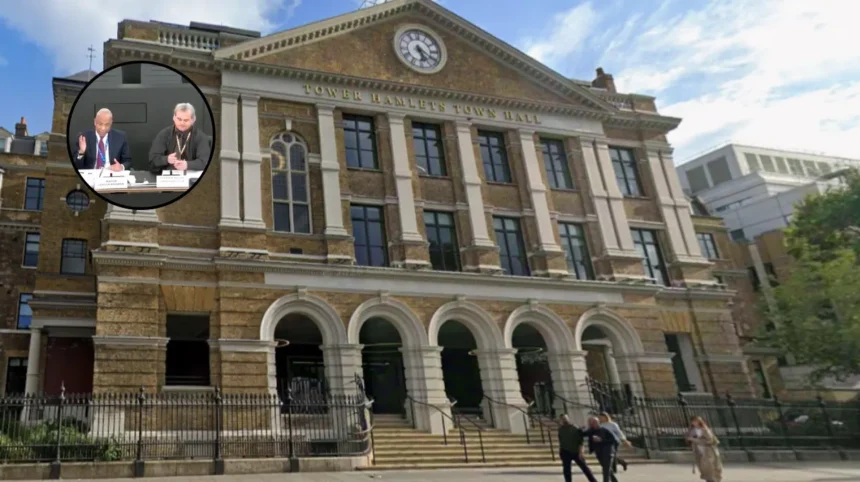
Tower Hamlets (East London Times) February 26, 2026 – Tower Hamlets Council has been sharply criticised for below-average A-level results that lag behind the England average, prompting the borough’s mayor to declare the authority is “failing our kids”. Figures presented to council leaders last week revealed this underperformance, even as the borough achieves above-average results among younger pupils. Aspire Party Mayor Lutfur Rahman highlighted students’ need to seek education outside the borough, calling the situation “terrible”.
- Key Points
- What Sparked the Council’s Criticism?
- Why Are A-Level Results Below the England Average?
- Who Is Lutfur Rahman and What Is His Role?
- How Do Tower Hamlets’ Younger Cohorts Perform?
- What Are Students Doing to Access Better Education?
- What Has Been the Council’s Response So Far?
- Why Does This Matter for Tower Hamlets Families?
- What Steps Could Improve A-Level Outcomes?
- How Does Tower Hamlets Compare to Neighbouring Boroughs?
- What Lies Ahead for Tower Hamlets Education?
What Sparked the Council’s Criticism?
As reported in MyLondon by an unnamed staff writer, the controversy erupted following the presentation of educational performance data to Tower Hamlets Council leaders last week.
The figures starkly showed A-level results in the borough scoring lower than the national England average. This shortfall persists despite the council’s success in delivering above-average outcomes for younger cohorts, such as GCSE-level pupils.
Mayor Lutfur Rahman, leader of the Aspire Party, did not mince words in his assessment. He stated that A-level students from Tower Hamlets are compelled to go to other boroughs “to get the best education”. According to the MyLondon article, Rahman remarked:
“We are failing to provide them with the best institutions in Tower Hamlets. They’re going elsewhere to get the best education. I think it’s terrible now, terrible. We’re failing our parents. Failing our kids.”
This direct attribution underscores Rahman’s frustration with local provision, positioning the council as falling short on post-16 education despite earlier successes.
Why Are A-Level Results Below the England Average?
The data prompting this outcry indicates a specific weakness at the A-level stage, where Tower Hamlets underperforms relative to national benchmarks.
While younger cohorts exceed averages, the transition to sixth-form or college-level study appears to falter. No precise percentages or grade distributions were detailed in the available reporting, but the comparison to England’s overall figures paints a concerning picture for aspiring university entrants and career starters in the borough.
Rahman’s comments, as captured by MyLondon, point to a lack of high-quality institutions within Tower Hamlets as a core issue. Students’ exodus to neighbouring areas suggests capacity problems, insufficient specialist teaching, or less competitive programmes locally.
This mobility drains resources and opportunities from the borough, exacerbating inequalities for families unable to afford travel or relocation.
Such disparities are not uncommon in urban areas with diverse populations like Tower Hamlets, where socioeconomic factors, English language support needs, and funding pressures can impact outcomes. However, the mayor’s stark language elevates the debate, framing it as a systemic failure rather than isolated challenges.
Who Is Lutfur Rahman and What Is His Role?
Lutfur Rahman serves as the mayor of Tower Hamlets under the Aspire Party banner, a position he has held amid contentious local politics.
Known for his vocal advocacy on community issues, Rahman has previously clashed with authorities over governance and representation. In this instance, his criticism is directed inwardly at the council he leads, highlighting internal accountability.
As per the MyLondon coverage, Rahman’s statement came during discussions of the recent figures. He emphasised the human cost:
“We’re failing our parents. Failing our kids.”
This phrasing resonates with parental concerns in a borough where education is a pathway out of deprivation for many. Rahman’s Aspire Party, focused on local empowerment, positions this as a priority lapse that demands urgent reform.
His remarks also reflect broader tensions in East London, where high-stakes exams like A-levels determine futures amid rising living costs and competition for places.
How Do Tower Hamlets’ Younger Cohorts Perform?
A notable contrast lies in the borough’s stronger results for younger pupils, surpassing England averages at earlier stages.
This success story, referenced in the MyLondon report, suggests effective primary and secondary interventions that lose momentum post-GCSE. Factors might include robust early-years funding, targeted interventions for disadvantaged pupils, or high-performing state schools in the area.
Yet, the drop-off at A-level raises questions about sixth-form provision.
Tower Hamlets lacks a density of elite colleges or specialist academies compared to neighbouring boroughs like Newham or Hackney, potentially forcing top performers outward. Rahman’s observation that students “are going elsewhere” aligns with data on cross-borough applications, where ambitious pupils seek better-resourced environments.
This pattern mirrors national trends, where urban deprivation correlates with post-16 dips, but Tower Hamlets’ mayor demands local accountability over excuses.
What Are Students Doing to Access Better Education?
Mayor Rahman explicitly noted that A-level students from Tower Hamlets travel to other boroughs for superior options. As quoted in MyLondon:
“They’re going elsewhere to get the best education.”
This commuting burden falls heaviest on lower-income families, who face transport costs, time losses, and disrupted routines.
Popular destinations likely include top-performing colleges in Redbridge, Waltham Forest, or central London, known for strong A-level pass rates and progression to Russell Group universities. Such migration underscores a market-driven education system where parental choice amplifies disparities.
Rahman decried this as evidence of local shortcomings:
“We are failing to provide them with the best institutions in Tower Hamlets.”
His words imply a need for capital investment, partnerships with outstanding providers, or policy shifts to retain talent.
What Has Been the Council’s Response So Far?
At the time of reporting, no formal council rebuttal appears in the MyLondon piece, with focus remaining on Rahman’s critique during the data presentation.
As mayor, Rahman’s position places pressure on cabinet members overseeing education, potentially spurring reviews or budget reallocations.
Tower Hamlets Council has historically invested in education via pupil premium and free school meals expansions, contributing to younger cohort gains. Extending such models to A-levels could involve new sixth-form centres, teacher recruitment drives, or alliances with further education colleges.
The absence of counter-statements leaves Rahman’s narrative dominant, but expect scrutiny meetings or opposition queries in coming weeks.
Why Does This Matter for Tower Hamlets Families?
For residents in this densely populated East London borough, A-level underperformance threatens social mobility. Tower Hamlets grapples with high child poverty rates, making strong exam results vital for university access and skilled employment. Rahman’s accusation of “failing our kids” taps into parental anxieties, especially among aspirational communities.
Broader implications include economic stagnation if talent outflows persist, straining local services while enriching rivals. Politically, this bolsters Aspire’s grassroots appeal, contrasting with national parties on delivery.
What Steps Could Improve A-Level Outcomes?
Potential remedies draw from successful boroughs: enhanced careers guidance, STEM specialisms, or wraparound support like mental health services. Rahman’s urgency—”I think it’s terrible now, terrible”—signals intent for action, perhaps via emergency funding bids.
Collaboration with multi-academy trusts or Transport for London subsidies for commuters could bridge gaps. Long-term, building flagship post-16 hubs would anchor ambition locally.
How Does Tower Hamlets Compare to Neighbouring Boroughs?
While specifics are limited, England’s average provides a baseline Tower Hamlets falls beneath. Neighbours like Newham often excel due to selective schools and diversity-driven programmes. Rahman’s student flight narrative confirms this competitive landscape.
National data from the Department for Education typically shows London boroughs outperforming elsewhere, amplifying local shortfalls.
What Lies Ahead for Tower Hamlets Education?
Rahman’s forthright stance sets the agenda for council scrutiny. With figures fresh, expect public consultations, performance audits, and potential leadership reshuffles. For pupils, the stakes remain high as 2026 results loom.
This episode highlights urban education’s fragility, where early wins demand sustained investment. Tower Hamlets’ trajectory hinges on translating critique into concrete uplift.