


Key Points
- A UK Trade and Business Commission consultation received nearly 145 responses from businesses of different sizes.
- Three-quarters of respondents reportedly said rejoining the European Union would have the most positive effect on their businesses.
- Companies identified Brexit-related costs, border paperwork and delays as their main concerns.
- Prime Minister Andy Burnham is due to attend a United Kingdom–European Union summit in Brussels on November 20, 2026.
- Expected agreements cover food and farming, emissions trading and youth mobility.
- The government says closer European ties should support growth while maintaining existing red lines on the single market, customs union and free movement.
Businesses overwhelmingly back Britain to rejoin EU as Andy Burnham prepares for Brexit talks in Brussels
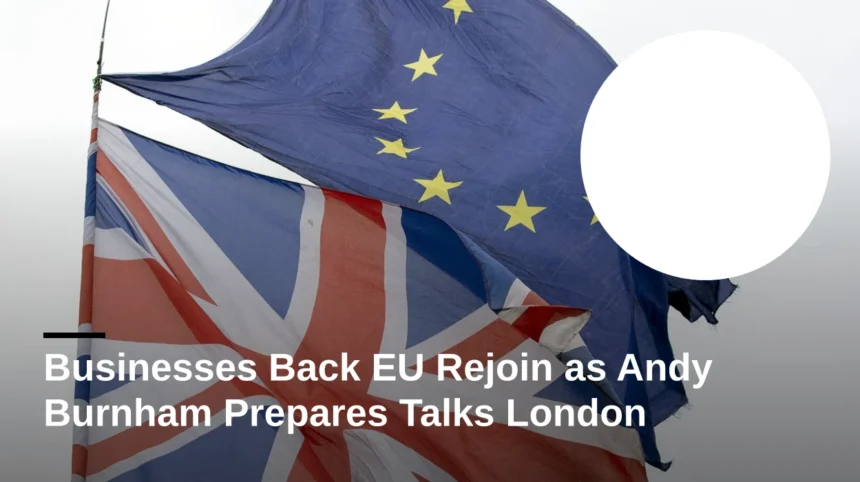
London (East London Times) November 18, 2026 – British businesses have expressed strong support for closer ties with the European Union, with a new consultation reporting that three-quarters of respondents viewed eventual membership as the most positive outcome for their companies. The findings were released as Prime Minister Andy Burnham prepares for a United Kingdom–European Union summit in Brussels on November 20, where officials are expected to discuss agreements on food, emissions trading and youth mobility.
As reported by The Independent, the UK Trade and Business Commission received nearly 145 responses from small and medium-sized businesses, sole traders and large companies across the United Kingdom. The consultation examined the current trading relationship and possible future arrangements, including their benefits, risks and trade-offs.
What did businesses identify as their main concerns?
The consultation reported that companies prioritised reducing Brexit-related costs and removing border paperwork. About one-third of respondents ranked those issues as their leading concern. By contrast, only 4 per cent selected freedom for the United Kingdom to set its own trade policy as their top priority, while 1 per cent selected regulatory independence.
Steve Taylor, owner of Winterwood Farms Limited in south-east England, said delays and administrative costs had ended the company’s exports of short-shelf-life soft fruit. He said paperwork that could take a week had replaced same-day sales and overnight delivery arrangements.
Peter Norris, chair of Virgin Group and a UK Trade and Business Commission member, said closer European ties, including discussion of membership, had become important to business success. Lillian Jones, Labour Member of Parliament and commission chair, said businesses wanted future arrangements to address the barriers they had identified and support growth across the country.
What agreements are expected at the Brussels summit?
Andy Burnham is expected to seek agreements on food and farming, emissions trading and a reciprocal youth mobility or youth experience scheme. The Independent reported that the package could increase United Kingdom gross domestic product by 0.4 per cent, while City A.M. reported a government claim that linking emissions trading systems could save British exporters £800 million.
According to ITV News, the proposed youth scheme would make it easier for eligible young people from the United Kingdom and European Union to live and work in one another’s territories. Andy Burnham said British young people would be prioritised for jobs at home and argued that closer European ties could create additional opportunities.
The government has said the arrangements would not amount to rejoining the single market or customs union and would not restore unrestricted freedom of movement. Andy Burnham has said the British public would ultimately decide the country’s longer-term relationship with the European Union.
What evidence has been cited about Brexit’s economic impact?
The supplied report cited Centre for European Reform analysis indicating that chemicals and pharmaceutical exports had fallen by 21 per cent since the United Kingdom left the European Union, while agrifood exports had fallen by 29 per cent. It also cited Stanford University economist Nick Bloom’s estimate that lost trade, additional red tape and delays had reduced the economy by as much as 8 per cent of gross domestic product, compared with the 4 per cent estimate previously associated with the Office for Budget Responsibility.
Neil Kinnock described the business findings as rational and patriotic, arguing that stronger links with the United Kingdom’s largest nearby market were necessary for growth and stability. Critics of closer ties, including Oliver Lewis, former deputy chief Brexit negotiator under Boris Johnson and chair of the Stay Out campaign, have opposed any move towards rejoining the European Union.
What could the development mean for businesses?
If the summit produces agreements on food, emissions trading and youth mobility, exporters could face fewer administrative barriers and gain improved access to European markets. The effect would depend on the final terms, implementation and whether the agreements reduce costs without creating additional obligations for companies.
A wider discussion about the United Kingdom’s long-term relationship with the European Union could give businesses a clearer route to seek regulatory alignment, funding access and simpler supply chains. However, the government’s stated position remains that any immediate reset will stop short of rejoining the single market, customs union or European Union itself.

