BBC News is one of the United Kingdom’s best-known news organisations, providing television, radio and digital journalism to audiences across Britain and internationally. For visitors exploring North London, understanding BBC News also provides useful context about London’s role as a major global media centre.
- What is BBC News and why is it important in London?
- Where is BBC News based in London?
- How did BBC News develop into a major British media institution?
- What does BBC News actually cover?
- How does BBC News maintain editorial standards and impartiality?
- Why is Broadcasting House relevant to visitors exploring North London?
- What can tourists learn about London from BBC News?
- How does BBC News fit into London’s modern creative economy?
- How is BBC News changing in the digital age?
- What should visitors know before visiting the BBC area?
- What is the future significance of BBC News for London?
- Why should BBC News be included in a modern London media guide?
The British Broadcasting Corporation, commonly known as the BBC, operates as a public service broadcaster under a Royal Charter. Its mission is to serve audiences through impartial, high-quality and distinctive content that informs, educates and entertains. The current Charter identifies impartial news and information as one of the BBC’s core public purposes.
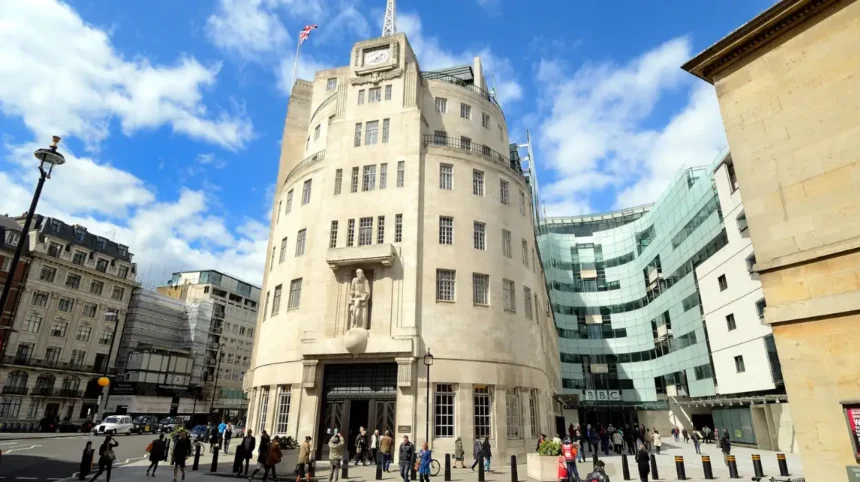
Although BBC News is not based in North London itself, its London operations form part of the capital’s wider media landscape. The BBC’s main London headquarters, Broadcasting House, is on Portland Place in the West End. Government documentation identifies Broadcasting House as the BBC’s chief office.
For tourists, the BBC connection adds another layer to understanding London. The capital is not simply a centre for historic attractions, museums and theatres. It is also a major centre for journalism, broadcasting, publishing and creative industries.
What is BBC News and why is it important in London?
BBC News is the BBC’s journalism operation, delivering news and current affairs through television, radio and digital services. Its London presence connects national journalism with the capital’s political, cultural, economic and international significance.
BBC News covers events at local, regional, national and international levels. Its output includes breaking news, politics, business, science, technology, health, culture, sport and international affairs. The BBC’s Royal Charter specifically requires the organisation to provide impartial news and information that helps audiences understand and engage with the world.
London is particularly important to BBC News because the city contains the United Kingdom’s national political institutions, major businesses, diplomatic organisations, courts, cultural institutions and transport networks. These institutions generate a large proportion of the stories followed by national and international audiences.
The BBC’s London headquarters is Broadcasting House on Portland Place. The location is associated with BBC radio and television operations and forms part of the wider central London media environment. Government records also identify Broadcasting House as the BBC’s chief office.
For visitors travelling from North London, the BBC therefore represents more than a news website or television channel. It is part of the physical geography of London’s media sector.
The organisation’s public-service role also distinguishes BBC News from many commercial news providers. Its constitutional framework establishes public purposes covering news, learning, creative output, representation of UK communities and international representation of British culture and values.
This structure explains why BBC News remains relevant when studying London’s modern identity.
Where is BBC News based in London?
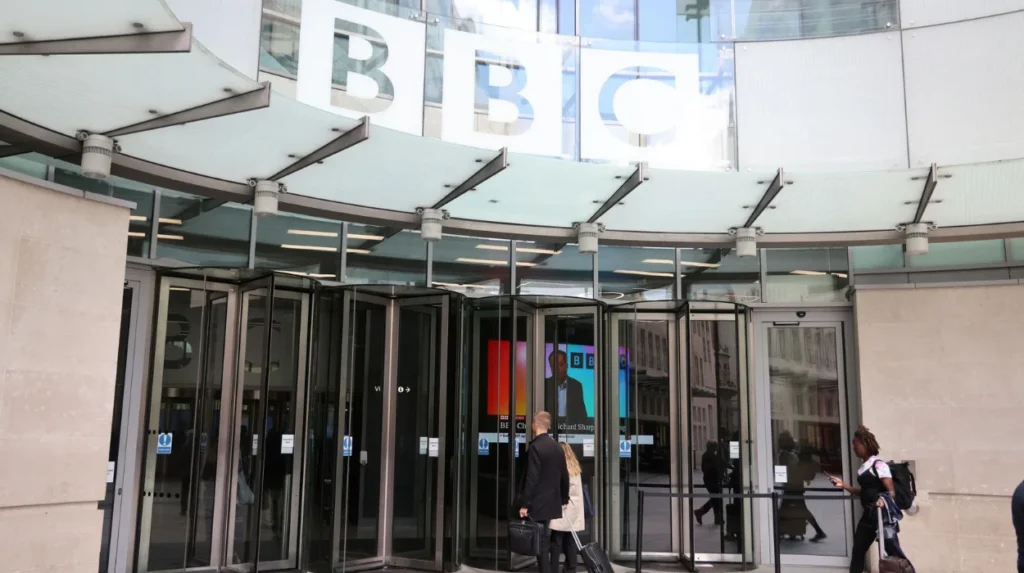
BBC News has a major London base at Broadcasting House on Portland Place in central London. The building sits near Oxford Circus and Regent’s Park, placing the BBC within a major cultural, commercial and transport area.
Broadcasting House stands on Portland Place in the City of Westminster. The building is close to Oxford Circus, Regent’s Park, Fitzrovia and Marylebone, making it accessible from many parts of London.
The location is significant because central London has long concentrated national media organisations alongside government, business and cultural institutions.
For visitors staying in North London, reaching the BBC’s central London area is straightforward using the Underground, buses, cycling routes and walking connections. North London neighbourhoods such as Camden, Kentish Town, Hampstead, Highgate and Islington have direct or relatively simple connections towards the West End.
Broadcasting House itself is primarily a working media facility rather than a conventional tourist attraction. Visitors should therefore distinguish between seeing the building externally and accessing BBC workplaces or studios.
The building’s location also makes it useful as part of a broader London itinerary. A visitor can combine the area with Regent’s Park, Marylebone, Oxford Street, Fitzrovia and nearby cultural destinations.
This creates a practical connection between media tourism and neighbourhood exploration. The BBC building provides the institutional context, while surrounding districts provide the cafés, streets, architecture, shops and public spaces that define everyday central London.
For anyone interested in journalism, broadcasting or modern British culture, the location provides a useful geographical reference point.
How did BBC News develop into a major British media institution?
BBC News developed from the wider British Broadcasting Corporation, established in 1922, into a national and international public-service news organisation spanning radio, television and digital platforms. Its development reflects major changes in British media and technology.
The BBC began broadcasting in the early twentieth century and became an important national institution during the development of radio. Television later expanded its reach, while digital technology transformed how audiences access news.
The organisation’s history is closely linked with London because the capital became an important centre for broadcasting production, journalism and administration.
The BBC’s modern constitutional structure is defined by its Royal Charter and Framework Agreement. The Royal Charter provides the constitutional basis for the organisation and sets out its mission, public purposes, governance and independence.
The current framework states that the BBC must be independent in matters concerning its mission and public purposes, particularly editorial and creative decisions.
BBC News therefore operates within a formal public-service structure rather than simply functioning as a conventional commercial news publisher.
Technological change has repeatedly altered BBC News. Radio created mass real-time broadcasting. Television introduced visual news reporting to large audiences. The internet introduced continuous digital publishing. Mobile devices then changed how audiences consume breaking news.
The BBC’s contemporary news operation therefore exists across several formats rather than one traditional broadcast channel.
Its long development also explains why BBC News is recognised internationally. The BBC’s public purposes specifically include reflecting the United Kingdom, its culture and values to audiences around the world.
For visitors interested in London’s cultural identity, this history demonstrates how broadcasting became an important part of British public life.
As you explore the modern media landscape, you are also encountering a city shaped by decades of broadcasting history. Read about the full to understand the historical foundations behind London’s modern media environment.
What does BBC News actually cover?
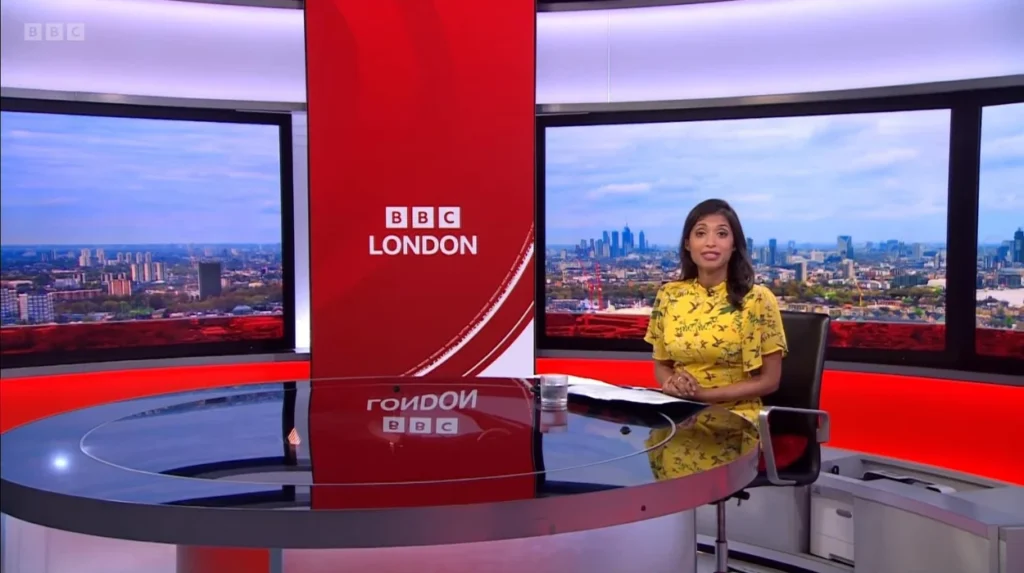
BBC News covers local, regional, national and international subjects, including politics, business, science, technology, culture, sport and major public events. Its remit requires broad coverage designed to help audiences understand significant issues.
BBC News has a broad editorial scope because the BBC serves audiences throughout the United Kingdom and internationally.
Politics is a major part of the organisation’s coverage because London is the location of the UK Parliament, central government departments, political parties and many national institutions.
Business reporting also has a strong London connection. The capital is one of the United Kingdom’s principal financial and commercial centres. Stories concerning financial markets, companies, employment, investment and economic policy frequently have direct relevance to London residents and businesses.
Science and technology reporting connects London with universities, research institutions, technology companies and public organisations.
Culture provides another major area of coverage. London contains theatres, galleries, museums, music venues, publishing companies and creative organisations that contribute substantially to the UK’s cultural economy.
BBC News also reports on sport, weather, transport, education and public services. These topics have direct practical relevance for residents and travellers.
For visitors, local reporting can provide useful background when planning time in London. Transport disruption, major public events, demonstrations, severe weather and significant civic developments frequently affect travel patterns.
The BBC’s public purpose also requires coverage that reflects different parts of the United Kingdom rather than focusing exclusively on London. The Charter specifically requires the BBC to serve the nations, regions and communities of the UK.
That requirement creates an important distinction between BBC News as a London-based operation and BBC News as a UK-wide public service.
How does BBC News maintain editorial standards and impartiality?
BBC News operates under formal editorial and regulatory requirements covering accuracy, impartiality, fairness and editorial integrity. The BBC Board has responsibilities for standards, while Ofcom regulates the BBC’s UK public services.
Editorial standards are central to the BBC’s public-service role. The Royal Charter states that the BBC must provide impartial, high-quality and distinctive output. Its first public purpose specifically concerns impartial news and information.
The BBC Framework Agreement also contains requirements relating to fairness, due impartiality, due accuracy and editorial integrity. Government amendments in 2022 strengthened the BBC Board’s responsibilities in these areas.
Ofcom, the UK communications regulator, has an additional regulatory role. Under the BBC Charter, Ofcom sets an operating framework and operating licence for the BBC’s UK public services.
This regulatory structure matters because BBC News operates in an environment where public confidence in journalism is important.
Impartiality does not mean that every news report contains equal amounts of material from every possible viewpoint. It refers to the BBC’s obligation to apply its editorial standards fairly and appropriately.
Accuracy is also a central principle. The UK Government’s 2024 BBC Mid-Term Review identified impartiality as a core part of the BBC’s role and examined the organisation’s editorial standards and governance arrangements.
For readers and travellers, understanding this framework helps explain why BBC News stories frequently distinguish between verified facts, statements from sources, analysis and developing information.
The BBC’s editorial system is therefore part of its institutional identity. Its journalism operates within rules established through the organisation’s constitutional and regulatory framework.
Why is Broadcasting House relevant to visitors exploring North London?
Broadcasting House provides a useful central London reference point for visitors interested in journalism, broadcasting and British culture. North London travellers can combine the area with Regent’s Park, Marylebone, Fitzrovia and other nearby destinations.
North London has strong connections with London’s creative and cultural economy. Neighbourhoods such as Camden, Kentish Town, Islington and Hampstead have long attracted writers, musicians, artists, media professionals and other creative workers.
Broadcasting House sits further south, but it remains accessible from these neighbourhoods.
A visitor staying around Camden can travel towards the West End and continue to Portland Place. Visitors staying around Islington can use Underground, bus or walking routes towards central London. Hampstead and Highgate provide access through transport connections towards the West End and surrounding central districts.
The attraction of the BBC location is primarily institutional rather than recreational. Visitors should not treat Broadcasting House as equivalent to a museum with unrestricted public access.
Instead, it works best as part of an itinerary focused on modern London.
A media-themed day can include Broadcasting House alongside nearby streets, independent cafés, public squares, parks, bookshops and cultural venues. Regent’s Park is particularly relevant because it provides a large green space within walking distance of the BBC’s Portland Place headquarters.
Oxford Circus is another useful transport and shopping reference point. From there, visitors can reach Oxford Street and several surrounding districts.
This combination gives tourists a way to experience London beyond the conventional concentration of major historic landmarks.
Digital nomads and business travellers also benefit from understanding the area. Central London has extensive cafés, hotels, transport connections and commercial facilities. The BBC’s presence contributes to the district’s wider identity as a professional and creative centre.
What can tourists learn about London from BBC News?
BBC News helps visitors understand London as a national and international centre for politics, business, culture, media and public life. Its coverage provides context for events and institutions encountered throughout the capital.
A visit to London often involves seeing institutions without understanding their wider significance. BBC News helps connect those institutions through journalism.
For example, Parliament appears regularly in political reporting. Government departments feature in policy coverage. Financial institutions appear in economic reporting. Museums, theatres and galleries appear in cultural reporting. Transport authorities feature in travel and infrastructure stories.
This creates a broad picture of London as an interconnected city.
BBC News also demonstrates the importance of geography in journalism. A story about national politics can originate in Westminster. A financial report can relate to the City of London. A cultural story can come from the West End. A community report can originate in a London borough.
North London forms part of this larger metropolitan system.
Visitors exploring Camden, Islington, Barnet or other North London areas can therefore use BBC reporting as a way to understand local developments within a wider London context.
The BBC’s public purpose also requires it to represent communities across the United Kingdom. Its Framework Agreement includes an objective to distribute creative focus and decision-making more widely across the country and to represent under-represented perspectives.
This is important because modern London should not be understood in isolation from other UK regions.
BBC News connects local stories with national developments and international events. That broad perspective makes it relevant to travellers seeking a deeper understanding of Britain.
How does BBC News fit into London’s modern creative economy?
BBC News forms part of London’s wider creative and media economy, alongside broadcasters, publishers, production companies, advertising businesses, cultural organisations and technology firms operating across the capital.
London has a large concentration of media and creative organisations. Broadcasting is one component of a broader ecosystem that includes journalism, television production, film, radio, publishing, advertising, design and digital media.
The BBC contributes to this ecosystem through its public-service operations and investment in creative production.
The BBC’s public purposes explicitly include supporting the creative economy across the UK. The Charter requires the BBC to reflect and serve the diverse communities of England, Scotland, Wales and Northern Ireland while supporting creative activity.
Government documents have also emphasised the BBC’s responsibility to increase the geographic distribution of creative decision-making and investment. The 2022 Framework Agreement amendments established an “Across the UK” objective covering representation and creative-industry development.
For North London, this wider creative economy has practical relevance. The area contains established cultural districts, creative businesses, independent venues and professional communities.
The BBC is one part of a much larger media network.
For tourists, this explains why London remains prominent in international journalism and cultural production. For business travellers, it explains the concentration of professional services and creative organisations.
For digital nomads, the media economy provides context for the many coworking spaces, cafés and flexible work environments found across central and North London.
The BBC’s role therefore extends beyond the individual news bulletin. It is part of the institutional infrastructure supporting Britain’s media and cultural life.
How is BBC News changing in the digital age?
BBC News has expanded beyond traditional television and radio into digital publishing, mobile consumption and online services. The organisation’s future increasingly depends on maintaining trusted journalism across rapidly changing technologies and audience habits.
Digital technology has fundamentally changed news consumption.
Audiences no longer depend on scheduled television bulletins or fixed radio programmes to receive information. Online publishing allows news organisations to update stories continuously.
Mobile phones have further changed consumption patterns. News can reach audiences through websites, applications, notifications, social platforms and video services.
This environment creates opportunities and challenges for public-service journalism.
The BBC’s Royal Charter permits UK public services to use television, radio, online services and similar technologies. This provides a broad technological framework rather than limiting the BBC to traditional broadcasting.
The current BBC Charter review also highlights technology, misinformation, media literacy and artificial intelligence as important issues for the future of public-service broadcasting. The government’s 2025 review consultation discusses potential responsibilities concerning misinformation and digital skills.
Artificial intelligence is particularly important because automated systems increasingly influence how audiences discover, summarise and interpret news.
BBC News therefore operates in a media environment where publication is only one part of the information process. Distribution, verification, search visibility, recommendation systems and audience trust all influence how journalism reaches readers.
The BBC’s future relevance depends on maintaining its public-service purpose while adapting to these changes.
For visitors, this digital transformation also changes how London can be explored. A traveller can use digital news services before leaving accommodation, during transport journeys and while visiting attractions.
News has therefore become part of the practical infrastructure of modern travel.
What should visitors know before visiting the BBC area?
Visitors should treat Broadcasting House as a working BBC facility rather than assume unrestricted public access. The surrounding Portland Place and West End area is easier to explore as part of a wider central London itinerary.
Broadcasting House is an operational media headquarters. Visitors should respect access restrictions and avoid treating staff entrances, security areas or working spaces as tourist facilities.
The most practical approach is to view the building and its surroundings as part of a walking itinerary.
Portland Place connects the BBC headquarters with several central London neighbourhoods. Regent’s Park provides a nearby green-space destination. Marylebone offers residential streets, independent businesses and architectural interest. Fitzrovia provides another strong connection to London’s creative and commercial character.
Oxford Circus connects the area to major shopping streets and Underground services.
A visitor starting in North London can therefore build a route that combines the BBC area with several distinct neighbourhood experiences.
The itinerary can focus on modern London rather than only historic landmarks. It can include media architecture, public spaces, cafés, independent shops and cultural venues.
The BBC itself remains most relevant as a symbol and institution within that landscape.
Visitors interested in journalism should also understand that a news organisation is not the same as a conventional attraction. The value comes from understanding its role in British public life and seeing where that work is produced.
This distinction creates a more accurate expectation and makes the visit easier to plan.
What is the future significance of BBC News for London?
BBC News remains significant to London because the capital is a major centre for government, media, business and culture. Its future role will depend on trusted journalism, digital innovation, public-service obligations and continued audience engagement.
The BBC’s future is being considered through the renewal and review of its Royal Charter arrangements. The government’s current review process examines the organisation’s mission, public purposes, funding, technology, trust and role in British society.
The existing Charter continues until the end of 2027.
That timetable makes the future structure of public-service broadcasting an important subject for the UK media sector.
BBC News will continue operating within a changing information environment. Audiences consume journalism through multiple platforms. Artificial intelligence is changing search and content discovery. Social media affects how stories spread. Misinformation creates additional pressure for reliable verification.
London remains central to these developments because the city contains many of the institutions that generate nationally significant news.
For North London residents and visitors, the BBC therefore provides a useful connection between neighbourhood life and national public affairs.
Understanding BBC News also helps explain why London has such a strong media identity. The city combines political institutions, cultural organisations, creative industries, technology companies and major broadcasters within a relatively compact metropolitan area.
For travellers, this offers a different way to experience London.
Instead of viewing the city only through famous landmarks, visitors can examine the institutions that shape contemporary British life. BBC News is one of those institutions.
Its headquarters, journalism, public-service obligations and technological development all demonstrate the continuing importance of London as a centre of communication.
Why should BBC News be included in a modern London media guide?
BBC News belongs in a modern London media guide because it connects broadcasting, journalism, politics, culture and technology. Broadcasting House also provides a useful starting point for exploring central London from a North London perspective.
BBC News represents more than a familiar news brand. It is part of a public institution with defined constitutional responsibilities, a major London headquarters and a long history of adapting to new communication technologies.
The organisation’s Royal Charter establishes a mission based on serving audiences through impartial, high-quality and distinctive content. Its public purposes cover news, learning, creative output, representation of UK communities and international cultural representation.
Its London headquarters at Broadcasting House places it within a neighbourhood rich in cultural, commercial and transport connections.
For North London visitors, the location is accessible and easy to combine with nearby destinations.
The wider significance is even more important. BBC News provides a window into how London functions as a centre of national journalism and international communication.
Tourists can use the surrounding area to explore modern London. Residents can understand the connection between local communities and national media. Business travellers can identify the relationship between broadcasting and London’s wider professional economy. Digital nomads can see how creative industries contribute to the character of central and North London.
BBC News therefore fits naturally into an exploration of London beyond conventional tourist attractions.
The strongest way to experience its significance is not simply to identify the BBC building. It is to understand the institution, its public-service role, its history, its editorial framework and its place within London’s modern creative economy.
That context turns a recognisable media organisation into a useful lens for understanding the capital itself.
What is BBC News?
BBC News is the news and current affairs operation of the British Broadcasting Corporation. It provides journalism covering UK and international politics, business, science, technology, culture, sport, weather and major public events through television, radio and digital platforms.