Key Points
- Northern Ireland Secretary of State Chris Bryant has officially prohibited a contentious Orange Order march along Garvaghy Road in Portadown.
- The ministerial intervention overrode a previous Parades Commission determination following a 13-day standoff between pro-union groups and nationalist residents.
- Secretary of State Chris Bryant cited changing public safety circumstances, calling for all ongoing demonstrations, rallies, and protests to be stood down immediately.
- Political reactions remain starkly divided: nationalist leaders praised the decision for preventing intimidation, while unionist figures claimed it fatalized the rule of law and rewarded threat of force.
- The Police Service of Northern Ireland (PSNI) confirmed that investigations into alleged criminal conduct and unlawful assembly during the multi-week impasse remain active.
London, UK (East London Times) October 10, 2026 — The British government has blocked a contentious march from taking place in Northern Ireland after a two-week standoff between groups that support the region’s continued union with the United Kingdom and those who favor reunification with the Republic of Ireland. Northern Ireland Secretary of State Chris Bryant intervened Friday night to ban the procession along Garvaghy Road in Portadown, saying it was not possible to find a compromise between the union-supporting Orange Order and residents of the traditionally republican area through which it wanted to march.
As reported by Shawn Pogatchnik of the Associated Press, Chris Bryant stated that
“I’ve looked at the changing situation in Portadown, the fact that it’s very difficult for that procession to proceed, and I’ve decided that it’s not in the public interest for it to proceed, and I’ve therefore banned the procession.”
Chris Bryant further noted that the conditions under which the independent Parades Commission had originally approved the event had shifted drastically, rendering the planned parade unsafe. In an official communication released by the Northern Ireland Office, Chris Bryant stated,
“With this in mind, I call for all protests, rallies and demonstrations to be stood down. There is no excuse for a continued ratcheting up of tensions. The community in Portadown has been on the sharp end of intense attention for a number of weeks. It will take time to rebuild relations. The least we can all do now is give them breathing space.”
How Have Political Leaders and Community Groups Reacted to the Ministerial Ban?
As reported by Rory Carroll of The Guardian, Northern Ireland First Minister Michelle O’Neill welcomed the decision, stating on social media that “we have just received confirmation that there will be no unwanted Orange march down the Garvaghy Road.” Furthermore, as reported by Shawn Pogatchnik of the Associated Press, in a joint statement issued alongside Sinn Féin President Mary Lou McDonald, Michelle O’Neill stated that “today belongs to the residents of the Garvaghy Road, who have shown remarkable strength and dignity in the face of provocation and intimidation. There will be an enormous sense of relief within the community this evening.” The joint statement added that
“for two weeks, local residents have endured fear and anxiety through no fault of their own. They never asked for this wound to be reopened, yet they faced these challenges with courage, determination and enormous resilience.”
Conversely, as reported by David Young and Jonathan McCambridge of the Press Association, Democratic Unionist Party (DUP) leader Gavin Robinson condemned the government’s intervention, stating that the rule of law in Northern Ireland had been “fatally undermined.” Gavin Robinson stated that
“the decision of the Chief Constable to refer the matter to the Secretary of State and his conclusion that the parade cannot proceed is a direct result of republican agitation, mobilisation and the looming threats of potential violence. These decisions are a mistake, and send profound signals that the country should be run on force of numbers and who shouts the loudest.”
As reported by Cillian Sherlock of TheJournal.ie, Garvaghy Road Residents Coalition spokesman Breandán Mac Cionnaith stated that the announcement was not a moment for celebration, noting that “while this is a win for us tonight, it is one that is tinged with sadness and with loss.” Breandán Mac Cionnaith added that the decision should serve as a “starting point to rebuilding strained community relations in Portadown,” emphasizing that “there are relationships here in Portadown that need to be built and rebuilt and certainly our community here in Portadown is prepared to undertake that journey.”
As reported by Shawn Pogatchnik of the Associated Press, Police Service of Northern Ireland (PSNI) Chief Constable Jon Boutcher stated that the weeks of standoff had severely strained public relations, noting that
“it is in everyone’s interest that time and space is now created for conversations about finding long-term solutions to this complex and sensitive issue.”
Background of the Garvaghy Road Parading Dispute
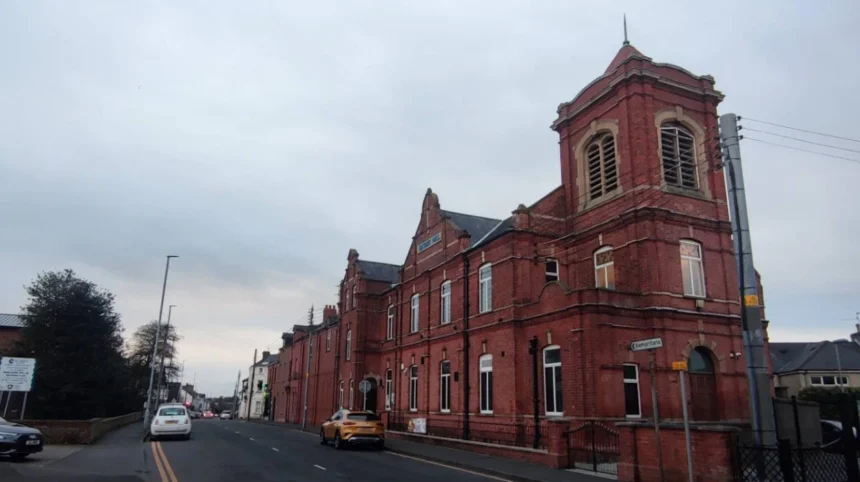
The dispute surrounding the Drumcree parish church and Garvaghy Road in Portadown, County Armagh, forms one of the most prominent historic flashpoints of Northern Ireland’s civil conflict. During the 1990s, annual attempts by Portadown Orange Lodge No. 1 to march back from Drumcree Church along the predominantly nationalist Garvaghy Road provoked intense multi-day standoffs, widespread rioting, and fatal sectarian violence.
The impasses of 1995 through 1998 resulted in severe civil unrest across the region, necessitating major military and police deployments. To manage such disputes, the UK Parliament established the independent Parades Commission in 1998 to assess parade routes, community impact, and public order risks. Since the late 1990s, the Commission had consistently restricted the Orange Order from completing its return route through Garvaghy Road without local residential consent.
The recent 2026 standoff emerged after a determination permitted a restricted procession along the route, re-igniting long-standing historical grievances. Nationalist residents organized sit-ins and counter-protests, while unionist groups assembled in support of traditional marching rights. The subsequent 13-day impasse led to political deadlocks at Stormont, active police investigations into protest conduct, legal challenges in the High Court, and ultimately the direct executive intervention by the Secretary of State to prohibit the gathering on public safety grounds.
Prediction: How This Development May Affect the Local Community and Wider Political Landscape
The executive prohibition of the Garvaghy Road march is expected to have immediate and long-term ramifications for both the residents of Portadown and the broader governance structure of Northern Ireland.
For the local residents of Garvaghy Road, the ruling provides an immediate de-escalation of public order tensions, removing the threat of impending physical confrontations in their neighborhood. However, community cohesion within Portadown remains fragile. The multi-week standoff has deepened cross-community division, meaning local reconciliation initiatives will require substantial time and resources before normal relations can resume.
For the political establishment at Stormont, the decision presents heightened operational friction within the power-sharing executive. Unionist political parties view the prohibition as a capitulation to protest pressure, which may fuel political friction and undermine consensus-building between the DUP and Sinn Féin. The public disagreement surrounding law enforcement actions and executive authority is likely to result in sustained parliamentary debates over the powers of the Parades Commission, the role of direct ministerial interventions, and the future framework for managing contentious public assemblies across Northern Ireland.