
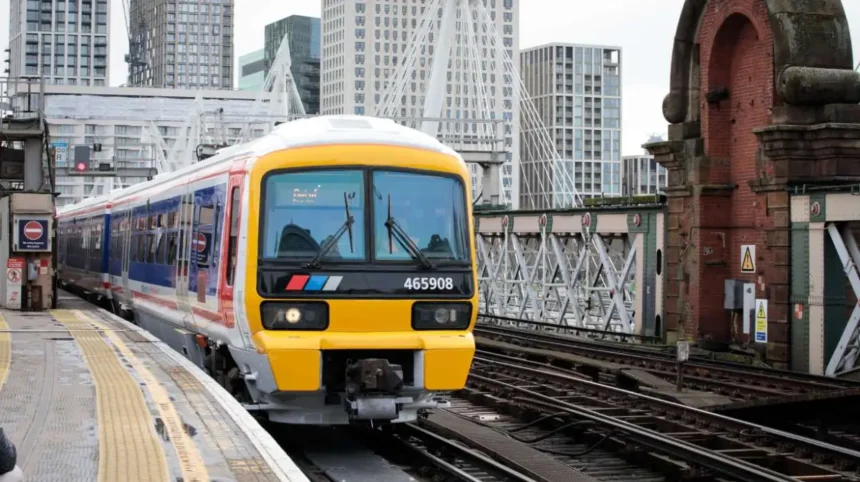
Major disruption is expected across parts of London’s rail network this summer as two busy stations are set to close for extensive upgrade works worth £20 million, affecting thousands of daily commuters and holiday travellers.
The planned engineering project will see both stations shut for a total of 22 days between 26 July and 16 August, alongside several additional weekend closures before and after this main period. During this time, no trains will operate to or from the affected stations, and services will be diverted across alternative routes in the capital.
Rail passengers using services operated by Southeastern Railway will be among the most affected, as key routes will be redirected to other central London terminals including London Victoria, Cannon Street, Blackfriars, and London Bridge. Travellers are being advised to plan ahead, allow extra journey time, and expect changes to timetables, possible cancellations, and platform alterations throughout the works.
The main closure has been scheduled during the summer holiday period in an effort to reduce commuter disruption. However, additional weekend shutdowns will take place around the main works window, including closures on 7 June, 18–19 July, and 22–23 August, as well as a further planned closure over the weekend of 10–11 October.
The upgrade project is being delivered by Southeastern Railway as part of a major infrastructure investment aimed at improving safety, reliability, and long-term performance across the network. Engineers will replace approximately 1.2 miles of ageing track along a heavily used section of the line, which has been in service for decades.
In addition to track replacement, the works will include significant upgrades to station platforms and structural maintenance across key railway infrastructure. This includes improvements to sections of platforms at London Charing Cross, as well as repairs to pedestrian and bridge structures connecting Waterloo East and Waterloo stations. Maintenance will also be carried out on the Hungerford Bridge, which carries rail traffic across the River Thames into central London.
Transport officials have stated that the scale of the project requires full closures because the work cannot be safely completed while trains are operating. Night-time or partial closures were ruled out due to the complexity and volume of engineering required.
Passengers affected by the disruption will be able to use their tickets on alternative transport options at no additional cost. This includes London Underground services and local bus routes, which are expected to absorb some of the displaced passenger demand during the closure period.
According to Southeastern Railway’s train services director Scott Brightwell, the investment will modernise outdated infrastructure, replacing track and platform components originally installed in the 1990s while also reinforcing older Victorian-era structures that remain critical to the network.
He explained that consolidating the work into a single extended closure, supported by additional weekend shutdowns, is intended to minimise long-term disruption. Alternatives such as repeated weekend closures or multiple shorter shutdown periods were considered but ultimately rejected in favour of a more concentrated approach.
Brightwell also noted that the timing of the works was intentionally chosen for the summer period, when passenger numbers are typically lower and schools are on holiday, reducing the overall impact on commuters.
While the closure will cause short-term inconvenience, transport authorities argue that the longterm benefits will include safer journeys, improved reliability, and fewer unexpected delays across one of London’s key rail corridors.