
A few years ago, even the possibility of military escalation in the Gulf was enough to shake global markets and push oil prices sharply higher. Today, reactions appear calmer, almost as if the global economy has become used to recurring instability in the Middle East.
But that calm may be misleading.
Markets are not ignoring the risks. Instead, they are beginning to treat them as part of a long-term reality. Investors, shipping companies, banks, and even governments are increasingly making decisions based on the assumption that tensions in the region are unlikely to disappear anytime soon.
That shift in thinking matters more than it seems.
The global economy depends on confidence as much as it depends on numbers. Once instability becomes normalised, investment behaviour gradually changes. Companies become more cautious about expansion, long-term planning weakens, and the cost of risk quietly rises beneath the surface.
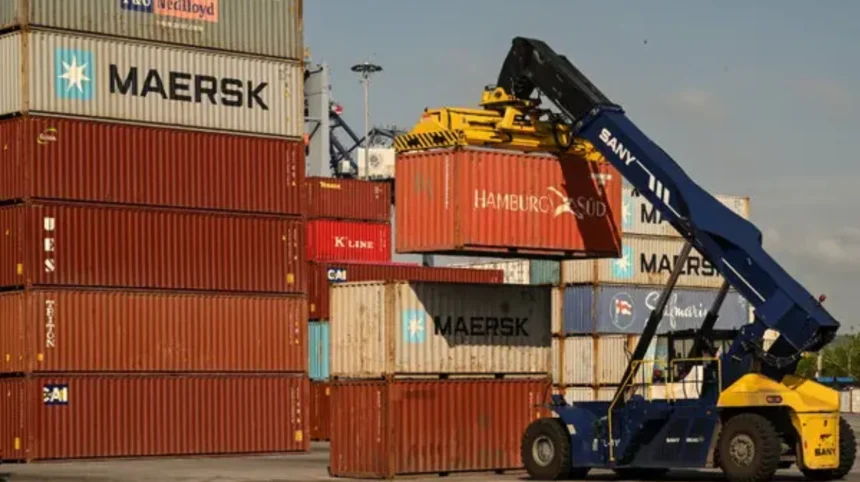
In recent months, concerns have extended far beyond oil prices alone. Attention has increasingly focused on shipping routes, supply chains, and the security of strategic maritime corridors. Some shipping firms have already adjusted routes and risk calculations, while insurance costs linked to regional tensions continue to rise.
The problem is that the world entered this period of geopolitical uncertainty while the global economy was already under pressure. Inflation remains persistent in many countries, interest rates are still elevated, and growth across major economies has slowed. That means any new disruption in the Middle East would hit an international economy that is already showing signs of fatigue.
Despite all the talk about artificial intelligence, digital transformation, and the transition to clean energy, geography still matters. Trade continues to depend on vulnerable maritime routes, and energy markets remain deeply connected to politically sensitive regions.
What is also striking is the increasingly cautious approach adopted by major powers. The United States is trying to preserve its strategic influence without becoming trapped in prolonged regional confrontations. China, meanwhile, watches developments carefully because of its heavy dependence on Gulf energy supplies. Europe, for its part, understands that another major external shock could place additional pressure on economies that have not fully recovered from previous crises.
At the same time, the region itself is changing.
Several Middle Eastern economies are accelerating efforts to diversify beyond oil, investing heavily in technology, tourism, logistics, and new industries. These changes do not necessarily mean the region is becoming more stable, but they do suggest that governments are preparing for a future in which economic resilience matters as much as political influence.
Still, one difficult question remains: can the global economy continue adapting to a Middle East shaped by recurring instability?
So far, the answer appears to be yes — but only to a certain extent.
Markets have become faster at absorbing shocks, and multinational companies have improved their ability to manage disruptions. Yet adaptation does not mean the costs have disappeared. Prolonged instability creates slower, less visible consequences: delayed investment decisions, rising transport costs, weaker confidence, and a more cautious global business environment.
The real danger may not lie in one dramatic crisis, but in the gradual normalisation of instability itself. Once uncertainty becomes permanent, economies begin losing the ability to plan long term, and strategic decisions become driven more by short-term reactions than by future vision.
For that reason, the key question today may no longer be whether the Middle East will face another crisis, but whether the global economy can continue absorbing the cost of constant tension without eventually paying a much higher price.