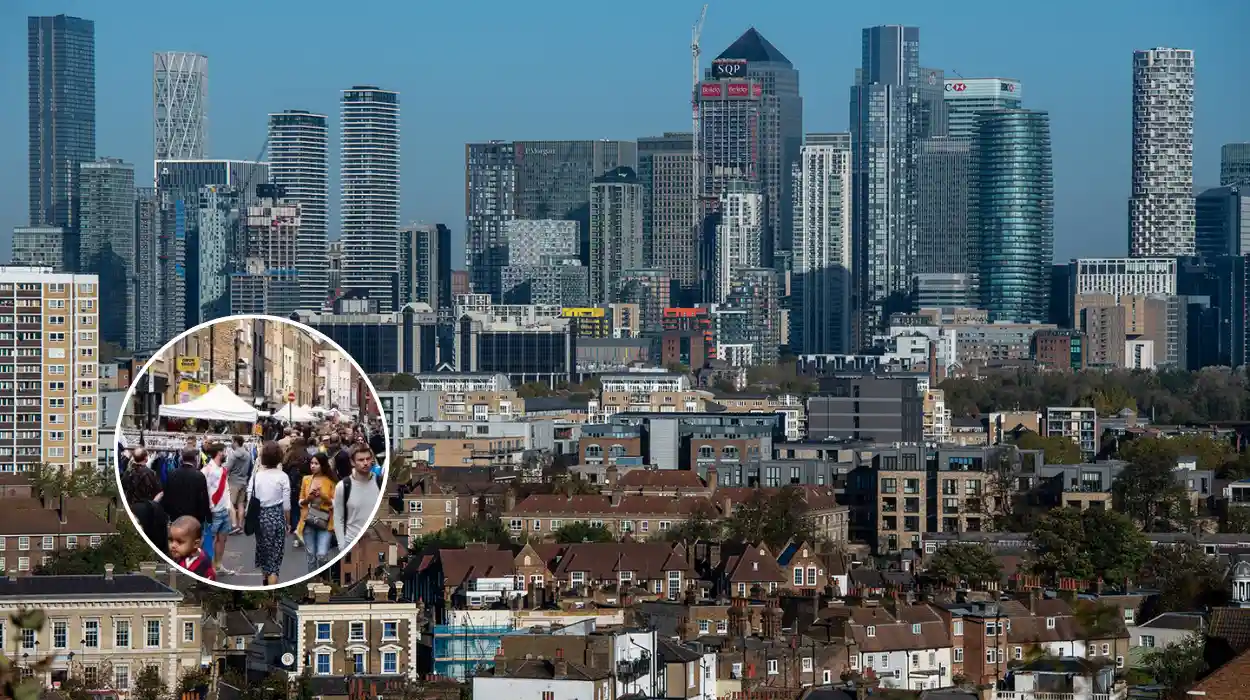
Key Points
- Nine in ten Tower Hamlets residents say people from different backgrounds get on well together, according to the 2024 Annual Residents Survey.
- Satisfaction with the borough as a place to live has risen to 83%, above the national local government average of 74%.
- The results mark a positive shift from 2023, when 87% of residents said the community got on well.
- Mayor Lutfur Rahman applauded the findings but acknowledged “more work to do” in some service areas.
- Cohesion and inclusion remain key themes amid debates around flags, demonstrations, and national identity in Tower Hamlets.
- The survey is independently conducted, representing a wide cross-section of residents from across the borough.
- Trust and satisfaction with the local council remain higher than the national average, reinforcing a sense of local pride.
How have residents’ perceptions of Tower Hamlets changed?
The findings from this year’s survey suggest that views of Tower Hamlets as a welcoming and inclusive place have strengthened following a period of national debate over community cohesion and identity politics.
- Key Points
- How have residents’ perceptions of Tower Hamlets changed?
- What did the Mayor of Tower Hamlets say about the survey results?
- Why is this survey significant for Tower Hamlets?
- What factors contribute to residents’ satisfaction?
- How does Tower Hamlets compare to other London boroughs?
- What is the wider context behind these findings?
- What are the next steps for the council?
- How do experts interpret Tower Hamlets’ survey results?
- What does this tell us about life in Tower Hamlets today?
As reported by the Local Democracy Reporting Service (LDRS) via East London Advertiser, the borough — known for its rich mix of cultures — has maintained “strong cohesion and mutual respect” despite local and national controversies, including disagreements about flag displays and demonstrations in public spaces.
Independent analysts commissioned by Tower Hamlets Council highlighted a notable statistical increase in residents’ confidence in community harmony and cross-cultural understanding.
What did the Mayor of Tower Hamlets say about the survey results?
Speaking after the release of the survey, Executive Mayor Lutfur Rahman praised the findings while recognising areas for improvement.
As reported by BBC London News, Mayor Rahman stated:
“We believe our residents are the best judge of how we are doing. I love that our residents are happy living here, and like living alongside each other, in one of the most diverse boroughs in the country, which is also one of the most cohesive.”
Rahman added, as quoted by the East London Advertiser, that he was “incredibly proud to see that rates of satisfaction and trust in our council are much higher than the average for local government,” while acknowledging that the council “has more work to do in some areas.”
He confirmed that Tower Hamlets Council is “working with its services to drive forward further improvements,” particularly in local engagement, housing, and access to amenities.
Why is this survey significant for Tower Hamlets?
According to The Guardian’s coverage of local government performance surveys, community satisfaction levels are often viewed as a key metric for measuring civic trust and social cohesion.
Tower Hamlets’ steady rise in positivity — from 87% in 2023 to 91% in 2024 regarding community relations — suggests a notable recovery in public confidence following years of national scrutiny.
The borough, one of the most diverse in Britain, has frequently been spotlighted in national headlines for its complex social mix, housing pressures, and local governance challenges. Analysts suggest that such a high rate of satisfaction is a positive indicator of recovery and resilience.
As reported by The Evening Standard, council officials believe these results demonstrate a broader pattern of improved service delivery, neighbourhood safety, and an inclusive local culture where residents “feel they belong.”
What factors contribute to residents’ satisfaction?
The independent research team commissioned by Tower Hamlets Council conducted the survey using a sample representative of the borough’s population by age, ethnicity, and social background.
Respondents cited several key reasons for their satisfaction:
- Cultural vibrancy and diversity.
- Access to parks, community facilities, and cultural venues.
- Improvements in local safety and policing visibility.
- Better communication between residents and the council.
As reported by LocalGov.co.uk, respondents expressed appreciation for local initiatives such as the Tower Hamlets Community Cohesion Fund and new youth engagement programmes, which many said “help build respect and unity between backgrounds.”
How does Tower Hamlets compare to other London boroughs?
Data from the London Councils Benchmarking Programme, published this month and cited by BBC London, reveal that Tower Hamlets ranks among the top five boroughs in London for community satisfaction.
Compared to boroughs facing similar demographic complexity — such as Hackney, Newham, and Southwark — Tower Hamlets scores above average in perceived inclusivity and trust in local government.
However, the survey also highlighted a few persistent concerns:
- Housing affordability and availability remain major issues.
- Some residents expressed frustration about street cleanliness and waste services.
- Transport congestion was mentioned as an ongoing challenge.
What is the wider context behind these findings?
The borough’s community cohesion figures come amid increased political attention on local governance and identity issues.
In 2023 and early 2024, Tower Hamlets featured in national debates over flag displays at council buildings and public demonstrations, as reported by The Independent’s Tara Cobham. Despite polarised discussions in national media, local data shows improving perceptions of unity — suggesting that residents’ lived experiences differ from outside assumptions.
Sociologists at Queen Mary University of London, quoted in East End Review, describe this as an example of “community resilience” — where lived neighbourhood experiences can “outperform political narratives.”
What are the next steps for the council?
Tower Hamlets Council has committed to building on positive momentum across its priority areas. According to a council spokesperson cited by East London Lines, initiatives planned for 2025 include:
- Expanding affordable housing projects.
- Strengthening youth programmes in partnership with local charities.
- Enhancing public realm cleanliness through new street management systems.
- Establishing new forums for civic dialogue between residents and council officials.
Mayor Rahman, as quoted by the Tower Hamlets Council press office, emphasised that “active listening” will remain central to the borough’s approach:
“This survey tells us there is more work to do in some areas, and we will continue involving residents in shaping those improvements.”
How do experts interpret Tower Hamlets’ survey results?
Urban affairs commentator Dave Hill, writing for OnLondon.co.uk, analysed the survey results as evidence that Tower Hamlets is “turning a corner” in public confidence despite political controversies.
Hill noted that the findings “show a consistent pattern of upward satisfaction” and reflect the borough’s progress in restoring trust after years of scrutiny over governance and transparency.
Likewise, the Institute for Community Studies (ICS) said the results could “serve as a model for other urban authorities navigating complex multi-ethnic dynamics.”
What does this tell us about life in Tower Hamlets today?
The 2024 Annual Residents Survey paints a picture of a borough that remains vibrant, cohesive, and outward-looking, even while tackling the urban pressures faced by all major London districts.
Residents’ message appears clear: diversity is not merely a demographic fact — it is a defining strength of Tower Hamlets.
As summarised by East London Advertiser journalist Joe Coughlan,
“Tower Hamlets continues to evolve, balancing its historic roots with a modern identity shaped by inclusion, resilience, and civic pride.”