Key Points:
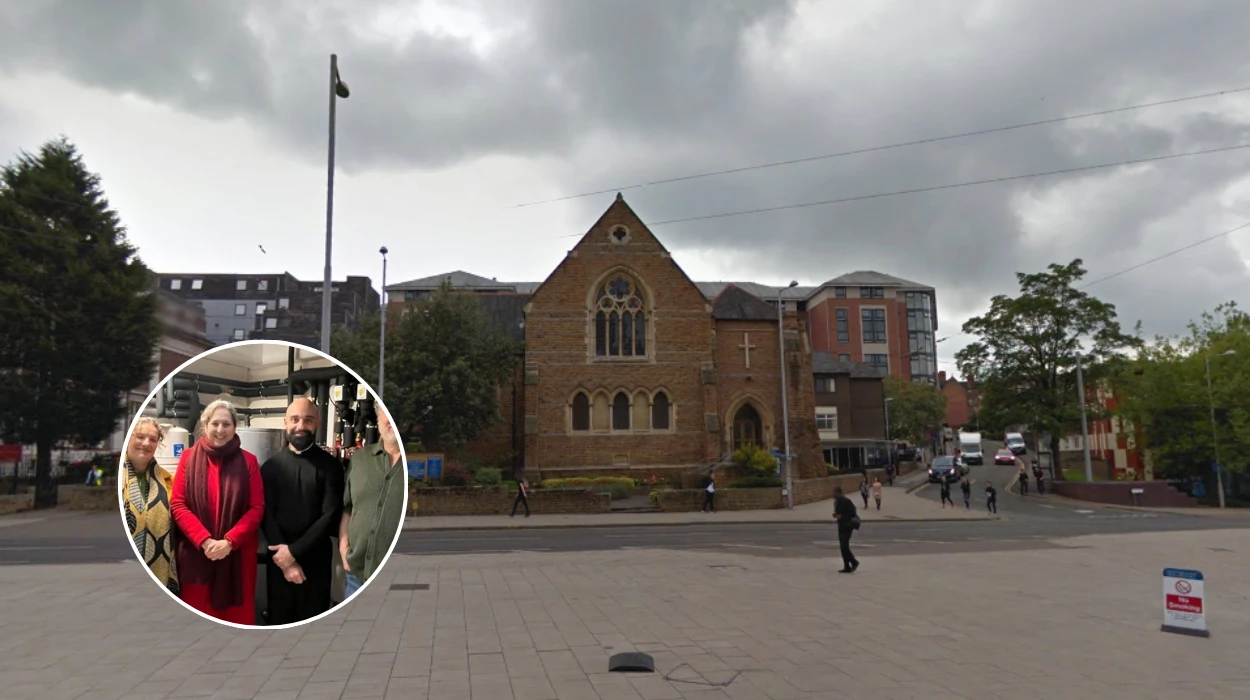
- St Paul’s Church, West Hackney, has undergone a £170,000 green energy transformation.
- Installation includes 104 solar panels and four air-source heat pumps, producing around 70% of the church’s total energy.
- The project was funded by Stokey Energy, Hackney Council’s Community Energy Fund, and the London Olympics Legacy Fund.
- The parish contributed £40,000, expected to be recouped within four years.
- Father Brandon Fletcher-James, the church’s vicar since summer 2025, said the upgrade aims to make environmental sustainability practical for faith communities.
- Tom Campbell, co-founder of Stokey Energy, described the church as a “solar powerhouse”.
- The project generates about 46 megawatt hours (MWh) of electricity per year, cutting energy costs significantly.
- Hackney Council plans to expand similar sustainability initiatives to other religious buildings and housing stock.
How has St Paul’s Church transformed its energy use?
According to the BBC Local Democracy Reporting Service, the 19th-century Anglican church now generates about 70% of its total energy requirements from renewable sources. The installation of solar panels and heat pumps has markedly reduced reliance on traditional gas and electricity sources.
- Key Points:
- How has St Paul’s Church transformed its energy use?
- Who funded and managed the £170k renewable energy project?
- What was the church’s role in driving the upgrade?
- Why is this project significant for Hackney’s wider climate goals?
- How will the project benefit the local community?
- What are the future plans for replication across London?
- Is this part of a growing national trend towards greener churches?
- What challenges remain for faith buildings going green?
The initiative aligns with Hackney Council’s broader climate strategy, which seeks to decarbonise local infrastructure and reduce emissions from public buildings by 2030.
As reported by BBC journalist Joe Talora, the church’s contribution to the overall cost – around £40,000 – could be recovered within four years, depending on energy market fluctuations.
Who funded and managed the £170k renewable energy project?
The project was financed through a partnership model involving community, council, and legacy funding. The principal backers include Stokey Energy, Hackney Council’s Community Energy Fund, and the London Olympics Legacy Fund.
Stokey Energy, a local non-profit cooperative co-founded by Tom Campbell, spearheaded both the technical design and the installation work. Campbell explained that the group’s mission was to help community buildings transition to low-carbon systems.
As quoted by Campbell in the BBC report:
“Most churches have phenomenal thermal leaking, which is why they have so many problems with congregations really suffering from the cold, and enormous heating bills because the buildings are so poorly insulated.”
He further added that the new solar system now produces approximately 46 MWh of electricity annually, equivalent to powering more than a dozen average UK homes each year.
What was the church’s role in driving the upgrade?
Reverend Brandon Fletcher-James, who took over as priest in summer 2025, told the Local Democracy Reporting Service (LDRS) that the project exemplifies how churches can embrace sustainability in a pragmatic way.
As quoted by Father Fletcher-James:
“All churches aspire to be environmentally friendly, but we try to do it in a way that actually is practical. Even in the last five months of being here, I’ve been approached by various churches asking how it even came about in terms of solar panels, but also what that means for our environmental status.”
The priest highlighted that faith institutions are increasingly realising their potential role in tackling climate change, particularly as large, historic buildings tend to be high energy consumers.
He also noted that the transition has sparked interest among neighbouring congregations, both Anglican and interfaith, who see St Paul’s as a pilot model for sustainable worship spaces.
Why is this project significant for Hackney’s wider climate goals?
Hackney Council has identified places of worship as a key part of its sustainability push, given their community reach and large carbon footprints.
A spokesperson for Hackney Council, cited by BBC News, said the success of St Paul’s retrofit underscores how local partnerships can support ambitious environmental targets.
The council hopes to implement similar renewable energy schemes across churches, mosques, temples, and community centres in the borough.
This forms part of the council’s ongoing commitment to reduce emissions across both public buildings and residential housing estates, especially older structures prone to heat inefficiency.
How will the project benefit the local community?
The St Paul’s initiative provides direct and indirect benefits beyond just reduced energy costs.
For congregants, improved thermal comfort means fewer issues with extreme cold during services—a persistent challenge in many historic churches.
For the wider community, the church’s energy surplus, when applicable, can flow back to the grid through local energy sharing arrangements facilitated by Stokey Energy.
As reported by The Hackney Citizen, community members have praised the church’s leadership in blending faith and environmental responsibility.
The retrofitting also serves as an educational tool for local schools and residents interested in renewable technology, with Stokey Energy offering guided demonstrations.
What are the future plans for replication across London?
Both Stokey Energy and Hackney Council have confirmed intentions to explore replication of the St Paul’s model elsewhere.
Tom Campbell noted in comments to the Evening Standard that the project demonstrates the feasibility of applying small-scale solar and heat systems to heritage buildings without compromising their architectural integrity.
“This model can easily be adapted for other historic or community properties. The challenge is ensuring upfront capital is available, and councils play a key role there,” he said.
Meanwhile, Hackney Council’s deputy mayor for environment and transport, Cllr Mete Coban, told Hackney Gazette that the local authority is prioritising emissions reduction across all sectors.
“Faith buildings are at the heart of our community and can lead by example in the transition to cleaner, greener energy,” Coban said.
Is this part of a growing national trend towards greener churches?
Yes. Across the UK, there has been a noticeable rise in faith-led sustainability initiatives.
According to The Church of England’s Environment Programme, more than 6,000 parishes nationwide have begun adopting measures such as solar panels, LED lighting, and heat pump systems to achieve net zero carbon emissions by 2030.
St Paul’s West Hackney joins several other pioneering churches—including St Michael’s in Stoke Gifford and St James’s Piccadilly—that have integrated renewable energy sources with the support of local councils and environmental charities.
The Energy Saving Trust has also highlighted such faith-based projects as powerful community case studies for climate adaptation.
What challenges remain for faith buildings going green?
Despite growing momentum, installing renewable systems in historic church buildings presents unique difficulties.
Architectural constraints, planning permissions, and heritage conservation regulations often limit the scale or visibility of solar arrays. Maintenance funding is also a hurdle—many churches rely on donations and must balance sustainability ambitions with financial realities.
However, the success of St Paul’s demonstrates that community collaboration and cross-sector funding can overcome these barriers. As sustainability becomes a moral and practical concern for religious institutions, more collaborative models like Hackney’s may emerge nationwide.
St Paul’s West Hackney’s £170,000 transformation stands as a symbol of how faith, community, and sustainability can merge to create lasting positive impact.
Backed by innovative partnerships and forward-thinking leadership, the church is not only reducing carbon emissions but also inspiring others to follow. From congregation comfort to borough-wide climate goals, the project underscores the powerful potential of local initiatives to drive national environmental change.