



East London Times (ELT)East London Times (ELT)East London Times (ELT)
  • Local News
    • Redbridge News
    • Hackney News
    • Newham News
    • Havering News
    • Tower Hamlets News
    • Waltham Forest News
    • Barking and Dagenham News
  • Crime News​
    • Havering Crime News
    • Barking and Dagenham Crime News
    • Tower Hamlets Crime News
    • Newham Crime News
    • Redbridge Crime News
    • Hackney Crime News
    • Waltham Forest Crime News
  • Police News
    • Barking and Dagenham Police News
    • Havering Police News
    • Hackney Police News​
    • Newham Police News
    • Redbridge Police News
    • Tower Hamlets Police News
    • Waltham Forest Police News
  • Fire News
    • Barking and Dagenham Fire News
    • Havering Fire News
    • Hackney Fire News​
    • Newham Fire News
    • Redbridge Fire News
    • Tower Hamlets Fire News
    • Waltham Forest Fire News
  • Sports News
    • West Ham United News
    • Tower Hamlets FC News
    • Newham FC News
    • Sporting Bengal United News
    • Barking FC News
    • Hackney Wick FC News
    • Dagenham & Redbridge News
    • Leyton Orient News
    • Clapton FC News
    • Havering Hockey Club News
East London Times (ELT)East London Times (ELT)
  • Local News
  • Crime News​
  • Police News
  • Fire News
  • Sports News
  • Local News
    • Redbridge News
    • Hackney News
    • Newham News
    • Havering News
    • Tower Hamlets News
    • Waltham Forest News
    • Barking and Dagenham News
  • Crime News​
    • Havering Crime News
    • Barking and Dagenham Crime News
    • Tower Hamlets Crime News
    • Newham Crime News
    • Redbridge Crime News
    • Hackney Crime News
    • Waltham Forest Crime News
  • Police News
    • Barking and Dagenham Police News
    • Havering Police News
    • Hackney Police News​
    • Newham Police News
    • Redbridge Police News
    • Tower Hamlets Police News
    • Waltham Forest Police News
  • Fire News
    • Barking and Dagenham Fire News
    • Havering Fire News
    • Hackney Fire News​
    • Newham Fire News
    • Redbridge Fire News
    • Tower Hamlets Fire News
    • Waltham Forest Fire News
  • Sports News
    • West Ham United News
    • Tower Hamlets FC News
    • Newham FC News
    • Sporting Bengal United News
    • Barking FC News
    • Hackney Wick FC News
    • Dagenham & Redbridge News
    • Leyton Orient News
    • Clapton FC News
    • Havering Hockey Club News
  • Privacy Policy
  • Cookies Policy
  • Report an Error
  • Sitemap
  • Code of Ethics
  • Help & Resources
East London Times (ELT) © 2026 - All Rights Reserved
East London Times (ELT) > World News > Rethinking Economic Stability in an Age of Continuous Disruption
World News

Rethinking Economic Stability in an Age of Continuous Disruption

Amal Ibrahim
Last updated: June 2, 2026 10:02 am
Amal Ibrahim
1 hour ago
Local News Journalist -
Share
Economic Stability in an Age of Continuous Global Disruption

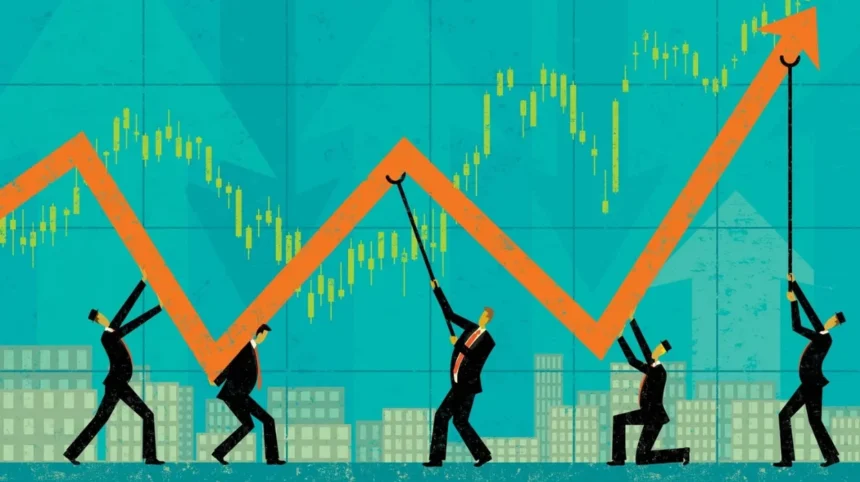
The global economy is entering a period in which instability is no longer an occasional shock but an embedded feature of the system itself. The traditional understanding of economic cycles—clear phases of expansion followed by predictable corrections—is becoming increasingly difficult to apply in a world shaped by overlapping structural forces.

In earlier decades, economic disruptions were often triggered by identifiable events such as financial crises, oil shocks, or regional geopolitical tensions. These events, while significant, tended to be contained within specific timeframes or geographical boundaries. Today, however, the nature of disruption has changed. Economic pressures are now transmitted rapidly across borders, creating a system in which local shocks can quickly become global challenges.

One of the most visible examples of this shift is the behaviour of inflation. In some major economies, inflation has fluctuated between 5% and 8% during recent peaks, reflecting a complex combination of structural and cyclical pressures. Rather than being driven solely by demand fluctuations, inflation today is influenced by supply chain vulnerabilities, energy market volatility, labour shortages in critical industries, and logistical inefficiencies. As a result, inflation has become less responsive to conventional policy tools, complicating the task of central banks.

Monetary authorities now operate in an environment defined by uncertainty. Interest rate adjustments, once considered a reliable mechanism for controlling inflation and stimulating growth, are producing less predictable outcomes. In some cases, tighter policy has slowed inflation without significantly cooling economic activity, while in others it has constrained growth more than anticipated. This uneven transmission reflects the deeper structural changes within the global economy.

At the same time, fiscal policy is facing growing constraints. In several advanced economies, public debt has now exceeded 100% of gross domestic product, limiting long-term fiscal flexibility. Rising debt levels, combined with demographic pressures and increasing expenditure demands, are placing governments under sustained financial strain. Ageing populations in many regions are also increasing pressure on healthcare and pension systems, further narrowing policy space.

Another major factor reshaping the global economic landscape is technological transformation. Estimates suggest that between 20% and 30% of existing jobs could be affected by automation and artificial intelligence over the coming decades. The rapid advancement of these technologies is redefining productivity and altering the composition of labour markets. While these developments offer long-term efficiency gains, they also introduce short-term disruption as certain roles are restructured or displaced. The challenge lies in managing this transition in a way that allows economies to benefit from innovation without exacerbating inequality or labour market instability.

In parallel, global trade patterns are undergoing significant reconfiguration. The highly integrated supply chains that characterised previous decades are being reassessed in favour of more diversified and regionally resilient structures. This does not represent a reversal of globalisation, but rather its reconfiguration. Efficiency is no longer the sole priority; resilience, security, and strategic independence are becoming increasingly important considerations in trade and production decisions.

These changes are contributing to a global economic environment that is more fragmented, but not necessarily weaker. Instead, it is becoming more adaptive, with countries and institutions seeking to balance interdependence with risk management. However, this transition also introduces inefficiencies, as duplication of supply chains and regionalisation can increase costs and reduce economies of scale.

Despite the scale of these challenges, the global economy is not moving towards decline. Rather, it is undergoing a structural transformation that is redefining the conditions under which growth occurs. Economic expansion is likely to remain possible, but it will be more uneven across regions and sectors, and more dependent on the ability of institutions to adapt to rapidly changing conditions.

In this context, the role of policymakers is evolving. The primary objective is no longer simply to stabilise short-term fluctuations, but to design frameworks capable of operating effectively in an environment of continuous disruption. This requires a shift in thinking—from managing cycles to managing complexity.

Ultimately, the defining characteristic of the current economic era is not a single dominant trend, but the interaction of multiple forces that reinforce and amplify one another. Inflation dynamics, fiscal constraints, technological change, and shifting trade structures are all interconnected components of a broader transformation. Understanding this complexity will be essential for navigating the uncertainties of the coming years.


WHO Warns Conflict in DR Congo Is Fueling Dangerous Ebola Crisis
Can International Economic Cooperation Stabilise a Fragmenting Global Economy?
Far From Home: The Quiet Cost of a Life Lived in Service
Iran War Triggers Global Inflation Fears as Energy and Food Prices Surge
Strait of Hormuz Impact on Global Energy Markets and Economic Stability
Amal Ibrahim
ByAmal Ibrahim
Follow:
Amal Ibrahim is Local News Journalist at East London Times (ELT). Amal Ibrahim is a Senior Journalist specializing in economic, political, and social reporting, with a focus on analyzing local and global developments. Her work includes published articles on economic trends, energy markets, and social issues, with contributions to East London Times. She covers East London and surrounding areas, including Newham, Hackney, Tower Hamlets, and South London, focusing on politics, community affairs, and socio-economic developments.
Previous Article West Ham Hand Nuno Power To Appoint Director Of Football: Stratford 2026 West Ham Hand Nuno Power To Appoint Director Of Football: Stratford 2026
Next Article Reform UK Cancels Havering Pride Flag-Raising 2026; Romford, 2026 Reform UK Cancels Havering Pride Flag-Raising 2026; Romford, 2026
East London Times footer logo

All the day’s headlines and highlights from East London Times, direct to you every morning.

Area We Cover

  • Hackney News
  • Havering News
  • Newham News
  • South East London News
  • Redbridge News
  • Tower Hamlets News
  • Waltham Forest News

Explore News

  • Crime News​
  • Fire News
  • Police News
  • Live Traffic & Travel News
  • Sports News

Discover ELT

  • About East London Times (ELT)
  • Become ELT Reporter
  • Contact East London Times (ELT)
  • Street Journalism Training Programme (Online Course)
  • Politicians
  • Journalists
  • Contributors

Useful Links

  • Privacy Policy
  • Cookies Policy
  • Report an Error
  • Sitemap
  • Code of Ethics
  • Help & Resources

East London Times (ELT) is the part of Times Intelligence Media Group. Visit timesintelligence.com website to get to know the full list of our news publications

East London Times (ELT) © 2026 - All Rights Reserved
Welcome Back!

Sign in to your account

Username or Email Address
Password

Lost your password?