Key Points
- New Nursery Provision: Plans have been finalized to establish a new 18-place nursery at the RJ Mitchell Primary School campus in Hornchurch.
- Target Demographics: The facility will provide 13 dedicated places for children aged three and four, alongside five allocated spaces for two-year-olds.
- Priority Enrolment: Havering Council has confirmed that admissions will prioritize working families requiring extended hours and households currently receiving additional local authority support.
- Infrastructure Transformation: The nursery will be housed in the school’s existing caretaker’s house, which is scheduled for comprehensive refurbishment and structural extension.
- Funding Origin: The development is financed via the Department for Education (DfE) nursery provision grant, following a London-wide allocation targeting 34 educational institutions earlier this year.
- Target Launch Date: The newly developed early years facility is projected to officially open its doors to the public in January 2027.
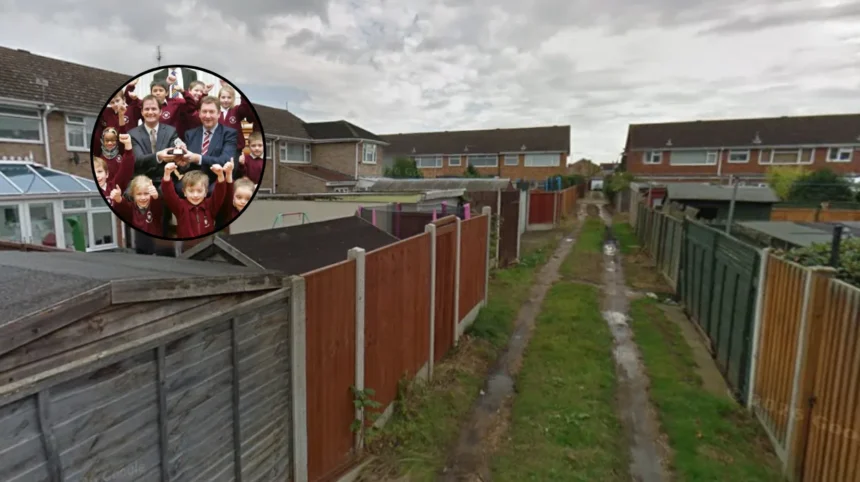
Hornchurch (East London Times) June 4, 2026 — Local authorities have released the formal operational specifications and structural blueprints for a new early years nursery infrastructure at RJ Mitchell Primary School, situated on Tangmere Crescent in Hornchurch. The forthcoming facility, which has been designed to accommodate 18 young children, represents a localized expansion of early years childcare within the London Borough of Havering. Funded through a central government framework, the project is scheduled to complete its construction and refurbishment phases in time for a formal operational launch in January 2027.
- Key Points
- How Will the DfE Funding Allocation Be Administered by Havering Council?
- What Construction and Refurbishment Works Are Planned for the Caretaker’s House?
- Who Will Be Prioritised for the 18 New Nursery Places in Hornchurch?
- Background of the Particular Development
- Predictions and Implications for Local Audiences
According to the official project specifications published by Havering Council, the local authority has structured the delivery of the 18 new places to meet specific age-group demands within the immediate Hornchurch catchment area.
The internal distribution of childcare capacity allocates 13 positions for children aged three and four, whilst the remaining five positions are explicitly reserved for two-year-old toddlers. This targeted division aligns local implementation with broader national statutory requirements regarding early years childcare expansions.
The physical footprint of the nursery will occupy a space previously utilized for non-educational purposes on the school grounds. Havering Council confirmed that the development strategy relies on the repurposing of the existing caretaker’s residence located within the school boundary lines.
The delivery plan requires an extensive capital works program, involving both the internal modernization of the current domestic architecture and the construction of an external structural extension to meet modern educational standards.
How Will the DfE Funding Allocation Be Administered by Havering Council?
The financial framework underpinning the Hornchurch development stems directly from a broader regional investment strategy coordinated by the Department for Education (DfE).
Earlier this year, central government administrators announced a capital injection intended to bolster nursery provisions across the capital, identifying 34 specific school sites throughout Greater London as beneficiaries of the dedicated funding stream. RJ Mitchell Primary School was selected as a key delivery partner within Havering to absorb a portion of this macroscopic educational grant.
In the published administrative briefs, Havering Council detailed the exact mechanism through which the capital grant will be deployed. Rather than constructing an entirely separate, freestanding facility from the ground up—which would incur significantly higher expenditures and require prolonged planning permissions—the council’s asset management team opted for an adaptive reuse strategy.
The funds are earmarked for structural modifications, safety upgrades, and specialized environmental design required to convert the historical caretaker’s house into a compliant, secure early years learning center.
The financial oversight of the refurbishment will be managed by Havering Council’s education capital projects division.
The scope of work dictated by the grant allocation stipulates that the funding must cover the comprehensive overhaul of the building’s utility infrastructure, the installation of child-accessible sanitary facilities, the creation of a commercial-grade preparatory kitchen, and the securing of surrounding outdoor areas to form integrated play zones.
What Construction and Refurbishment Works Are Planned for the Caretaker’s House?
The transformation of the Tangmere Crescent site requires shifting the property from a standard residential designation to an D1 non-residential institutional educational classification. Architectural layouts submitted to the local authority demonstrate that the internal floor plan of the former caretaker’s house will undergo complete spatial reconfiguration.
The primary objective is the elimination of traditional domestic partitions to maximize open-plan visibility and facilitate regulatory line-of-sight supervision for early years staff.
The planned structural extension will project outwards from the existing core of the house, expanding the overall square footage to accommodate the high spatial demands of mixed-age nursery cohorts.
The extension is specifically designed to house the main playrooms, which require substantial natural light and direct, unobstructed access to outdoor areas. Contractors will be required to install specialist safety glass, anti-finger-trap hinges on all internal doors, and acoustic dampening materials within the walls to optimize the learning environment.
Beyond the internal structural alterations, a significant portion of the refurbishment budget will focus on the external perimeter. The council’s planning documentation outlines the creation of dedicated outdoor play areas that are physically segregated from the primary school’s older student population.
These outdoor zones will feature all-weather safety surfacing, regulatory perimeter fencing, and integrated outdoor learning equipment designed to support the physical development metrics mandated by the Early Years Foundation Stage (EYFS) statutory framework.
Explore More Hornchurch News
New McDonald’s Planned at Former Poundland Site in Hornchurch 2026
Five-Year-Old Janae Raises £520 for Hospital Library Books Hornchurch 2026
Who Will Be Prioritised for the 18 New Nursery Places in Hornchurch?
Given the strictly capped capacity of 18 places at the RJ Mitchell Primary School site, Havering Council has established a rigid admissions hierarchy to govern the allocation of slots ahead of the January 2027 opening. The local authority has explicitly stated that admission will not operate on a purely first-come, first-served basis. Instead, the framework prioritizes families exhibiting the highest socio-economic or logistical need within the Hornchurch locality.
The first priority tier comprises families who are currently under the care of, or receiving additional support from, local authority social services and community welfare programs.
This includes households qualifying for complex early intervention funding, low-income provisions, or specialized family support mechanisms. By prioritizing these allocations, the council aims to utilize the school-based nursery as an intervention tool to narrow the early development gap frequently observed in disadvantaged student cohorts prior to entering full-time primary education.
The secondary priority tier targets working families who require extended childcare hours to maintain employment. This criteria addresses a known logistical bottleneck in the region, where a shortage of wraparound and extended-day early years provision frequently restricts parental workforce participation.
The nursery’s operational model will aim to offer hours that accommodate standard commuting schedules, bridging the gap between typical school timetables and professional working hours for residents in the surrounding residential estates.
Background of the Particular Development
The expansion of early years provision at RJ Mitchell Primary School does not occur in isolation, but rather serves as a direct local response to systemic shifts in United Kingdom educational policy and regional demographic pressures. Over the past several years, successive central government directives have progressively expanded the statutory entitlement to free childcare for working parents.
The rollout of these initiatives has exponentially increased demand for places across London boroughs, exposing significant deficits in the existing physical infrastructure of many early years providers.
The London Borough of Havering has faced specific challenges regarding childcare place sustainability. Historical data indicates that the borough has historically operated with a lean margin of surplus nursery places, particularly within residential pockets like Hornchurch that have seen steady inflows of young families seeking suburban housing linked to transport corridors into central London.
When the Department for Education announced its capital funding package for 34 London schools earlier this year, it explicitly targeted areas where local data projected an imminent shortfall of physical spaces relative to the expanding statutory entitlements.
Furthermore, the choice of RJ Mitchell Primary School as a site for expansion carries historical and institutional relevance. Named after the designer of the Supermarine Spitfire—reflecting Hornchurch’s heritage as a vital Royal Air Force base during the Second World War—the school serves a dense residential community.
The decision to repurpose the caretaker’s house reflects a broader asset-management trend across UK local authorities. As direct funding for entirely new school builds has become more constrained, councils have increasingly relied on optimizing existing, underutilized assets within established school perimeters to deliver statutory expansions rapidly and cost-effectively.
Predictions and Implications for Local Audiences
The introduction of the 18-place nursery at RJ Mitchell Primary School is projected to introduce distinct, localized socio-economic shifts that will directly impact families, early years educators, and the primary school infrastructure within Hornchurch.
For the primary audience—local parents and guardians residing within the Tangmere Crescent catchment—the establishment of this facility will directly alleviate localized childcare deficits.
The inclusion of five places specifically for two-year-olds addresses an acute shortage in toddler-specific care, which is traditionally more expensive and harder to secure due to stricter staff-to-child ratio requirements (1:3 for two-year-olds versus 1:4 or 1:8 for older brackets under UK regulations). Working parents who secure these placements can expect a stabilization of household childcare costs and a reduction in daily commuting frictions, as they will be able to drop off children of varying age groups at a single, centralized educational site.
For the broader Hornchurch educational ecosystem, this development will alter local enrollment dynamics. By bringing three- and four-year-olds onto the RJ Mitchell Primary School campus early, the school establishes an immediate pipeline for its Reception intake. Children who spend their formative nursery years within the repurposed caretaker’s house will become habituated to the school’s geography, staff, and peer groups.
Data from similar school-based nursery expansions suggests this will lead to significantly smoother transitions into formal primary education, reducing the administrative and emotional strain on families and teaching staff alike when the nursery cohorts officially transition into the primary school system in subsequent academic years.