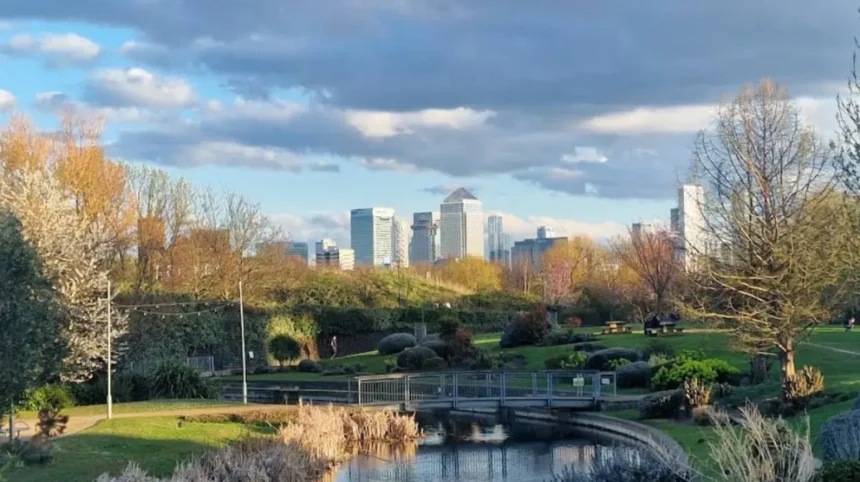
Tower Hamlets offers some of London’s most useful outdoor spaces for visitors and residents throughout the year. Its strongest options are Victoria Park, Mile End Park, Limehouse Basin, and the borough’s canal and riverside walks.
- What makes Tower Hamlets strong for outdoor leisure?
- Which park is best for a full-day visit?
- Where should you go for active outdoor time?
- What is best for waterside walks?
- Which places work best in spring?
- Why do these places work in summer?
- Where should you go in autumn and winter?
- How can travellers use Tower Hamlets outdoors well?
- Which outdoor places deserve priority?
What makes Tower Hamlets strong for outdoor leisure?
Tower Hamlets combines large parks, canal corridors, riverside access, and smaller neighbourhood gardens in one compact borough. That mix supports walking, running, family outings, photography, and quiet breaks across all seasons, with public spaces spread from Mile End to Victoria Park and the Thames edge.
The borough works well for outdoor leisure because its green and blue spaces sit close together. A traveller can move from a major park to a canal route or riverside path without crossing a wide city gap. That density matters for tourists, business travellers, and remote workers who want a short outdoor reset between indoor plans.
Victoria Park is the borough’s oldest and largest park, and it is one of its most important public open spaces. Mile End Park gives the borough a modern, activity-focused green corridor with play areas, outdoor exercise space, and walking routes. Together, these sites give Tower Hamlets year-round appeal for different types of outdoor use.
Which park is best for a full-day visit?
Victoria Park is the best all-round outdoor destination in Tower Hamlets for a full-day visit. It combines historic landscape design, open lawns, lakes, formal gardens, and long walking routes, making it suitable for families, couples, solo visitors, and anyone spending several hours outdoors.
Victoria Park has strong heritage value as well as leisure value. It was created in response to the overcrowded and unhealthy conditions of East End London, and it became one of the capital’s most significant public parks. That background gives the park more than recreation value. It also makes it a landmark in London’s social history.
For visitors, the practical appeal is simple. The park provides large open areas for walking, relaxing, picnicking, and low-cost leisure. Its formal gardens add seasonal interest, so repeat visits feel different in spring, summer, autumn, and winter. The park’s scale also helps with crowd distribution, which makes it calmer than many smaller central London green spaces.
As you explore the modern site, you are crossing land with a deep heritage. Read about the full history of Victoria Park to understand its origins.
Where should you go for active outdoor time?
Mile End Park is the strongest choice for active outdoor time in Tower Hamlets. It has play areas, an outdoor gym, multi-use games areas, and leisure links such as the climbing wall, so it suits exercise, family activity, and short refresh breaks between work or travel commitments.
Mile End Park is a modern linear park that threads through East London. That structure makes it especially useful for everyday use. It is not only a place for sitting and relaxing. It also supports movement, sport, and informal exercise.
The park works well for travellers who want activity without complex planning. You can walk through it, sit in it, or use its sports facilities without needing a full day’s itinerary. For digital nomads, it gives a useful break from screen time. For business travellers, it provides a practical reset before evening plans.
What is best for waterside walks?
Limehouse Basin and the nearby canal routes are the best waterside walks in Tower Hamlets. They connect the River Thames to the Regent’s Canal network, creating a route that combines boats, locks, bridges, and urban views in a compact and walkable setting.
The key feature of Limehouse Basin is its role as a link between water systems. The basin opened in the early 19th century as an interchange between the Thames and the canal network, allowing cargo to move between sea-faring ships and narrowboats. That industrial past still shapes the area’s character, even though the present-day use is leisure-based.
For visitors, the waterside route is useful because it is scenic without being remote. You get the visual rhythm of boats, bridges, and marinas, plus easy access to Limehouse Station and adjoining streets. That makes the area practical for a short morning walk, an afternoon stroll, or a low-effort detour during a day in East London.
Which places work best in spring?
Spring is the best time for Victoria Park’s planting, Mile End Park’s walking routes, and the borough’s canal edges. New growth, longer daylight, and milder temperatures improve comfort, visibility, and photo quality across Tower Hamlets’ main outdoor spaces.
Spring suits Tower Hamlets because the borough’s major sites respond well to changing light and fresh planting. Victoria Park’s formal gardens show seasonal bedding displays that create clear colour and texture changes through the year. That gives spring visitors a visible reason to return.
This is also the most balanced season for walking. Temperatures are comfortable, paths are generally dry enough for longer routes, and the parks are not yet at peak summer crowd levels. For tourists, that means easier movement and better sightlines. For residents, it means repeat visits feel fresher because the planting and tree cover have entered active growth.
Spring is also a strong season for mixed itineraries. A visitor can combine a park walk, a canal stop, and a café break in one outing. That is useful for short-stay travellers who want to maximise one half-day outdoors.
Why do these places work in summer?
Summer gives Tower Hamlets its widest outdoor range. Victoria Park offers large lawns and shade, Mile End Park supports exercise and longer walks, and the canal and riverside routes work well for early mornings and late evenings when daylight lasts longer.
Summer is the easiest season for longer outdoor stays. Victoria Park’s scale matters here because its open lawns, lake surroundings, and historic features create multiple ways to use the same visit. Visitors can stay active, rest, or explore horticultural features without leaving the park.
Mile End Park becomes especially useful in summer for active users. Exercise zones, play areas, and open paths allow movement without the need for paid entry or fixed booking. That makes it efficient for residents, travellers with children, and anyone seeking a practical outdoor stop between other plans.
The canal corridor also works well in summer because of its structure. Water edges and footpaths encourage steady walking rather than intense physical effort. In hot weather, that matters. People usually want shade, flow, and short pauses rather than demanding routes.
Explore More Area Guide
Hidden Gems in Tower Hamlets Every Visitor Should Experience at Least Once
Where to Explore in Tower Hamlets: History, Food & Views
Where should you go in autumn and winter?
Autumn and winter favour the borough’s tree-lined parks, waterside routes, and shorter neighbourhood green spaces. Victoria Park, Mile End Park, and Limehouse Basin all remain useful because they offer walking, open space, and visual interest even when temperatures fall.
Autumn works well because the borough’s parks and canal edges show strong seasonal contrast. Tree cover changes colour, paths become quieter, and the parks become more suitable for reflection, walking, and photography. Victoria Park remains the most substantial option because it offers enough size to support a longer visit even in colder weather.
Winter requires more efficient planning. The best outdoor places are those with clear access, short loops, and nearby transport. Mile End Park fits that pattern because it is linear and easy to enter in sections. Limehouse Basin also fits because its compact waterside paths can be completed quickly without losing the outdoor experience.
These seasons reward visitors who want calm rather than activity volume. Fewer crowds make it easier to appreciate the layout, heritage, and atmosphere of each site. That is important for travellers who use outdoor time to decompress between business meetings, hotel work, or city sightseeing.
How can travellers use Tower Hamlets outdoors well?
Travellers use Tower Hamlets best by matching each outdoor space to a specific need: Victoria Park for long visits, Mile End Park for activity, and Limehouse Basin for short scenic walks. This makes the borough efficient for leisure, work breaks, and flexible city exploration.
The borough’s outdoor appeal is strongest when visitors choose by purpose. A full-day tourist visit belongs in Victoria Park because the site combines history, planting, lawns, and space. A traveller who wants movement should choose Mile End Park because it has active facilities and a modern layout. A person who wants a short scenic walk should head to Limehouse Basin because the waterside route is compact and distinctive.
This approach also suits business travellers and digital nomads. Short outdoor sessions work better when the location matches the time available. Twenty minutes in a canal corridor can be enough to reset between tasks. An hour in Victoria Park can turn a free afternoon into a proper leisure break. That flexibility is a major reason Tower Hamlets stands out in East London.

Which outdoor places deserve priority?
The priority list is Victoria Park first, Mile End Park second, and Limehouse Basin third. These places cover the main visitor needs in Tower Hamlets: history, relaxation, activity, and waterside walking, with each site backed by official borough information.
Victoria Park deserves first place because it combines scale, heritage, and seasonal planting in one destination. Mile End Park comes next because it serves active leisure, family use, and short daily visits with practical facilities. Limehouse Basin follows because it provides a different kind of outdoor experience: compact, historic, and strongly linked to the Thames and canal system.
Together, these places define Tower Hamlets as more than a transport district or business area. They show that the borough supports outdoor leisure across all seasons, not only in summer. That makes it one of East London’s most useful boroughs for travellers who want space, movement, and accessible outdoor time without leaving the city core.