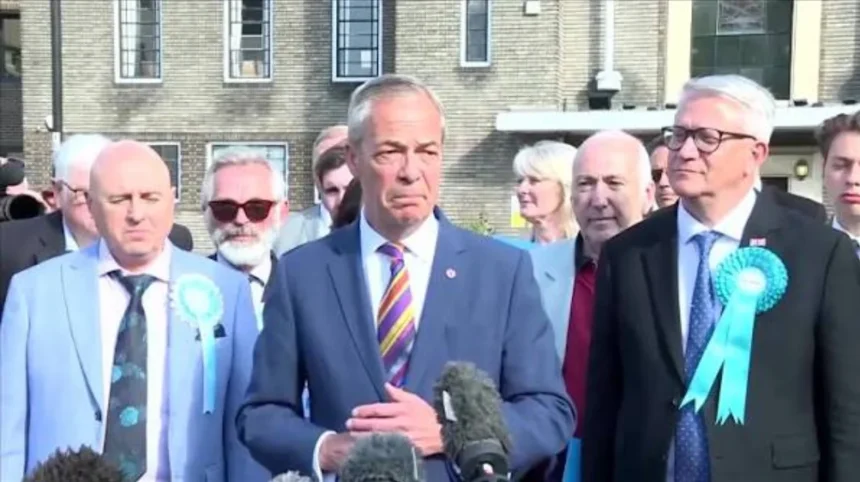
In May’s local elections, Havering became the first, and currently only, London borough led by Reform UK, who gained a majority in winning 39 of the available 55 council seats. Perhaps reflecting the emerging patterns of right-wing voting intentions and Reform’s substitutional dominance over the Conservatives, the Tories secured 0 council seats, losing all their previous 23. Since May, the council have proposed myriad plans which depart from the ideologies of the former administration, with July’s First 100 Day plan establishing their reenvisioned local intentions. The principal question remains: will the fresh eyes of a new leading party revitalise Havering, or will the council move into the realm of instability and futility characteristic of Reform’s other local authorities?
The council’s first landmark, and perhaps most polarising, decision came as members voted to rescind the Climate Emergency status, a declaration made by the previous coalition council. The declaration adopted a primarily symbolic function, being used by the council as a device to amplify and accelerate the policies set out in their Climate Change Action Plan.
Yet upon coming into power, the Reform led administration withdrew from this emergency status, with Council Leader Keith Prince AM stating, “we don’t want to pursue net zero-related policies when they place unnecessary cost or restriction on residents.” The irony of Prince’s statement is palpable, as, in July, Havering has seen the highest total of grass fires among London’s boroughs and witnessed 47 incidents in just one week. It is undoubtable that the damages, demand on public services, pollution and reparations caused by the fervent will of the climate will amount to a far higher bill for Havering’s residents than a portion of their council tax. Indeed, this net zero scepticism and short-sighted outlook on urgent environmental action is representative of Reform’s ingrained climate negligence and lack of long-term strategic vision. Is the cost of green policies as “unnecessary” as the council suggests, or do the administration favour cutting public spending no matter how dire the situation may be?
The council’s first 100 Day Plan is another recent strategy which the newly elected administration will work to carry out. The plan repeatedly asserts the promise of “stabilising the Council” and “building a bedrock for the future.” While much of this rhetoric is likely born out of the disorder of multiple other Reform councils, such as Kent County and West Northamptonshire, it remains true that Havering’s finances are in a state of almost untenable disrepair. Specifically, the council was on the brink of bankruptcy in late 2025 and resorted to an £88 million bail-out from the government to remain in operation. It is thus unquestionable that Havering’s council, no matter who it is led by, must focus on strengthening its economic condition.
However, the way in which the current administration has sought to save and cut costs leaves much to be desired. Despite promising to “begin delivering visible improvements,” the council has no plans for three Havering libraries which were closed in 2025 and denied the idea of dedicating any funding toward their reopening. Maybe if they focused less on “restoring civic pride” by flying the Union and English flags over the town hall, the administration would be able to more efficiently provide for communities and their crucial public spaces. As Councillor Gillian Ford rightly identifies, “A flag does not in itself bring civic pride, it is an inert object. It is the actions that take place in a given area that do that.” One can only hope that the administration detaches from Reform’s incessant jargon and shallowness in favour of serving the borough’s real needs.
Havering Council is clearly now in another precarious position. Whilst not as financially destitute as the previous administration, the current Reform led council appears to be home to a different form of insecurity. The council’s environmental views seem not only to misalign with the realities of climate change and net zero, but also do not make long-term economic sense. Other areas of life in Havering continue to be ignored in favour of desperate financial scavengery, which works often against the ideas woven into the fabric of their early plans.
The views expressed in this article are the author’s own and do not necessarily reflect (East London Times) editorial policy.