Tower Hamlets covers 7.7 square miles of East London, stretching from the edge of the City of London to the River Lea and Isle of Dogs. The London borough attracts over 12 million visitors annually and contains 12 accredited museums and galleries, 30 public parks, and dozens of historic street markets. Historically established as the industrial engine and primary maritime gateway of the British capital, Tower Hamlets features a dense concentration of UNESCO World Heritage infrastructure, contemporary visual arts institutions, performance venues, and multicultural commercial districts. This article provides a comprehensive guide to the cultural, historical, and artistic experiences available to international leisure travellers, UK domestic visitors, remote digital workers, and business executives exploring East London.
- What Are the Top Historical Landmarks to Visit in Tower Hamlets?
- The Tower of London and Fortress Precinct
- Tower Bridge and River Thames Maritime Heritage
- Historic Places of Worship and Community Heritage
- Which Museums and Contemporary Art Galleries Define Tower Hamlets?
- Whitechapel Gallery and Modern Visual Arts
- London Museum Docklands at West India Quay
- Young V&A and Educational Heritage in Bethnal Green
- The Ragged School Museum and Victorian Educational History
- How Can Visitors Experience the Multicultural Neighbourhoods and Markets of Tower Hamlets?
- Brick Lane and Banglatown Street Culture
- Old Spitalfields Market and Artisanal Trading
- Columbia Road Flower Market and Sunday Trading Heritage
- Roman Road Market and Traditional East End Life
- What Performance Arts and Live Theatre Venues Operate in Tower Hamlets?
- Wilton’s Music Hall and Historic Variety Theatre
- Rich Mix Cultural Foundation in Shoreditch
- Troxy Venue and Art Deco Entertainment
- What Annual Festivals and Public Green Space Events Take Place in Tower Hamlets?
- Victoria Park and All Points East Festival
- Trinity Buoy Wharf and Industrial Arts Heritage
- Mudchute Park and Urban Farm Cultural Programming
- How Should Travellers Plan a Cultural Itinerary in Tower Hamlets?
What Are the Top Historical Landmarks to Visit in Tower Hamlets?
Tower Hamlets contains iconic national landmarks that document nearly a thousand years of British military, royal, and architectural history. Visitors explore medieval fortresses, Victorian engineering structures, and historic places of worship that define the nation’s political and maritime evolution.
The Tower of London and Fortress Precinct
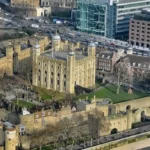
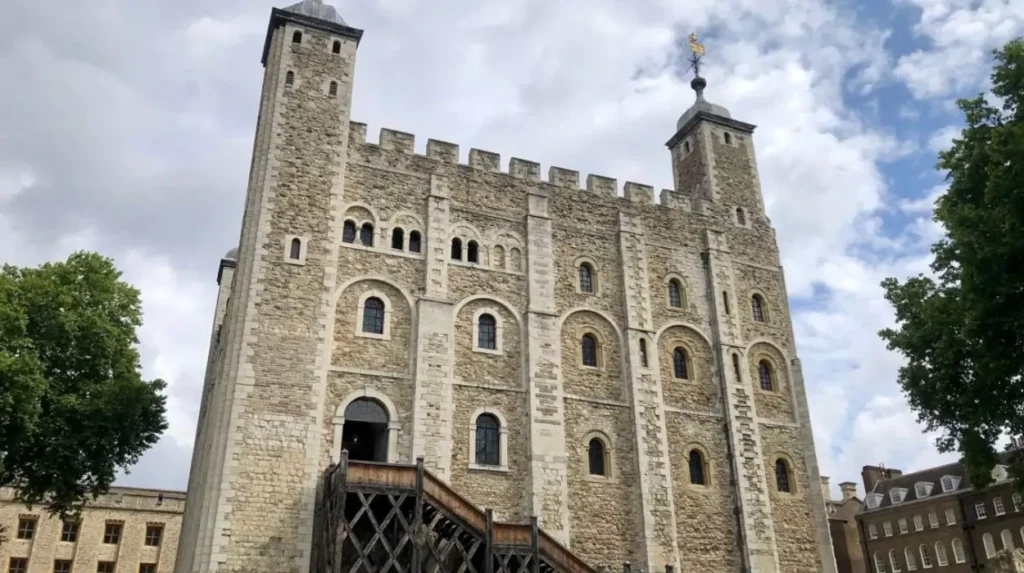
The Tower of London is a UNESCO World Heritage Site founded in 1078 by William the Conqueror. The central White Tower remains an intact example of 11th-century Norman military architecture. The fortress covers 12 acres along the northern bank of the River Thames and receives more than 2.8 million visitors each year.
Inside the precinct, visitors view three major historical displays:
- The Crown Jewels, housed in the Jewel House, which feature the 530.2-carat Cullinan I diamond and the Imperial State Crown.
- The Royal Armouries collection inside the White Tower, displaying 16th-century tournament armour made for King Henry VIII.
- The Chapel Royal of St Peter ad Vincula, built in 1520, which contains the burial sites of executed historical figures, including Queen Anne Boleyn and Queen Catherine Howard.
The Yeoman Warders, established under King Henry VII in 1485, conduct hourly historical guided tours across the precinct. Entry tickets cost £34.80 for adults, with operating hours from 09:00 to 17:30 Tuesday through Saturday, and 10:00 to 17:30 Sunday and Monday.
Tower Bridge and River Thames Maritime Heritage
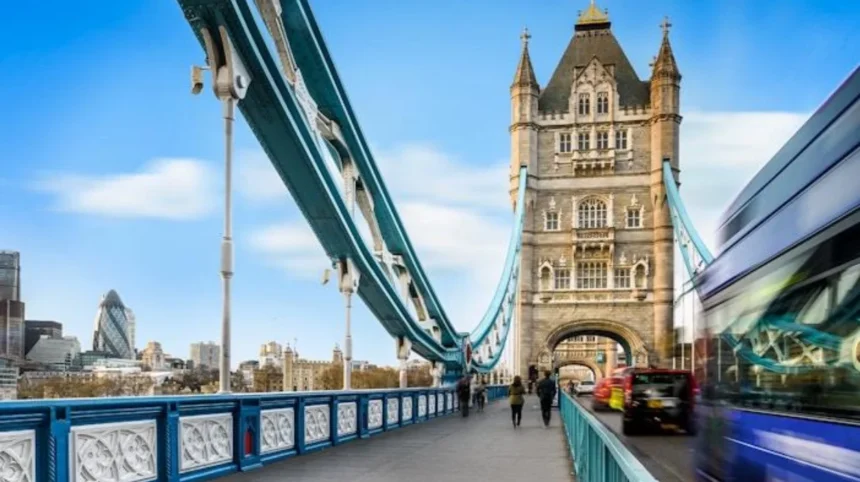
Tower Bridge opened in 1894 as a combined bascule and suspension bridge designed by Sir John Wolfe Barry and Horace Jones. The structure spans 244 metres across the River Thames, linking Tower Hamlets directly to the London Borough of Southwark.
Visitors access two distinct structural experiences:
- The High-Level Glass Floor Walkways, located 42 metres above the river surface, offering panoramic views of the East London skyline and western financial districts.
- The Victorian Engine Rooms, located at the southern and northern abutments, preserving the original coal-fired steam engines and hydraulic accumulators that powered the bridge bascules until 1976.
The bridge raises its bascules approximately 800 times per year to permit commercial and recreational shipping passage. Public access to the interior exhibition operates daily from 09:30 to 18:00.
Historic Places of Worship and Community Heritage
The architectural fabric of Tower Hamlets contains religious and civic structures representing consecutive waves of international migration. Three notable religious landmarks illustrate this historical succession:
- St Anne’s Church, Limehouse: Designed by Nicholas Hawksmoor and constructed between 1714 and 1730 under the Fifty New Churches Act of 1711. The church features the highest church clock tower in London and served historic merchant sailors navigating the Thames docks.
- The East London Mosque and London Muslim Centre: Situated on Whitechapel Road, this complex forms one of the largest Islamic religious centres in Europe. Established in its current location in 1982, it accommodates 7,000 worshippers and offers educational heritage tours detailing Muslim history in Britain.
- Sandys Row Synagogue: Located in Spitalfields, this site opened in 1763 as a French Huguenot chapel before converting in 1867 into an Ashkenazi Jewish synagogue, preserving 19th-century timber interior fittings.
Which Museums and Contemporary Art Galleries Define Tower Hamlets?
Tower Hamlets features world-renowned visual arts institutions and specialist social history museums. The borough offers free public access to contemporary art collections, maritime commercial archives, Victorian social exhibits, and interactive design spaces across former industrial sites.
Whitechapel Gallery and Modern Visual Arts
Whitechapel Gallery opened in 1901 to bring modern visual art to the population of the East End of London. Located on Whitechapel High Street in a Grade II* listed Arts and Crafts building designed by Charles Harrison Townsend, the gallery hosted historical exhibitions including Pablo Picasso’s Guernica during its UK tour in 1939.
The institution spans nine exhibition galleries, a public archive library, an auditorium, and an independent art bookstore. The gallery exhibits zero permanent displays; instead, it presents a rotating annual programme of six major temporary exhibitions showcasing contemporary international artists and thematic retrospective collections. Admission to the core ground-floor galleries is free, with entry operating Tuesday through Sunday from 11:00 to 18:00, with extended hours until 21:00 on Thursdays.
As you explore the modern site, you are crossing land with a deep heritage. Read about the full [Insert Anchor Text for History Article Here] to understand its origins.
London Museum Docklands at West India Quay
London Museum Docklands occupies No. 1 Warehouse at West India Quay, a Grade I listed Georgian sugar warehouse built in 1802 during the expansion of the West India Docks. Opened as a regional museum in 2003, the institution welcomes over 500,000 visitors annually.
The museum organises its permanent collections across 12 gallery spaces detailing four centuries of Thames river trade, dock construction, and port migration. Key permanent installations include:
- London, Sugar & Slavery: A gallery documenting London’s involvement in the transatlantic slave trade, legal commerce, and the abolitionist movement.
- Sailortown: A full-scale reconstruction of 19th-century atmospheric winding alleys, taverns, and lodging houses surrounding Wapping and Limehouse.
- Docklands at War: An exhibition detailing the Luftwaffe air bombing campaigns during the 1940 Blitz and the subsequent post-war decline of the commercial docks.
The museum provides free entry daily from 10:00 to 17:00.
Young V&A and Educational Heritage in Bethnal Green
Young V&A, situated on Cambridge Heath Road in Bethnal Green, reopened in July 2023 following a £13 million architectural transformation. The museum occupies a Victorian iron-framed structure originally built in 1872 as the Bethnal Green Museum.
The venue houses three permanent galleries designed for interactive engagement:
- Imagine: Dedicated to performance, storytelling, and stage design sets.
- Play: Focused on early childhood sensory development, games, and physical activities.
- Design: Showcasing engineering prototypes, modern product design, and sustainable technologies.
The museum hosts over 2,000 objects from the Victoria and Albert Museum collection, including historic toys, clothing, and digital design media. Entry is free, with opening hours set from 10:00 to 17:45 seven days a week.
The Ragged School Museum and Victorian Educational History
Located on Copperfield Road alongside the Regent’s Canal, the Ragged School Museum occupies three converted Victorian canal warehouses. Dr Thomas Barnardo founded the venue in 1877 as the largest free ragged school in London, providing free elementary education, meals, and clothing to destitute East End children until its closure in 1908.
The museum preserves authentic Victorian environments:
- A restored 1890s schoolroom featuring original wooden desks, slate writing tablets, and educational maps.
- A Victorian domestic kitchen exhibition depicting working-class domestic life in Bow and Mile End.
- An archive collection of photographs and oral histories detailing 19th-century social reform movements.
The museum opens to the public on designated open weekends and offers specialized historical lectures and school reenactment sessions.
How Can Visitors Experience the Multicultural Neighbourhoods and Markets of Tower Hamlets?
Tower Hamlets features world-famous street markets and distinct ethnic quarters. Visitors experience centuries of international commercial traditions, immigrant culinary hubs, vintage fashion trade, and public street art installations within walkable urban neighbourhoods.
Brick Lane and Banglatown Street Culture
Brick Lane stretches from Whitechapel High Street north to Swanfield Street, serving as the commercial and cultural heart of London’s British-Bangladeshi community. The southern section of the street is designated as Banglatown, featuring authentic South Asian dining establishments, sweet shops, and fabric stores.
Brick Lane is equally famous for three cultural features:
- Street Art Installations: The street walls showcase international murals by street artists including Banksy, Stik, ROA, and D*Face.
- The Truman Brewery Complex: A former 11-hectare industrial brewery converted into an arts venue housing independent clothing boutiques, record shops, and street food markets.
- Brick Lane Beigel Bake: Operating at 159 Brick Lane since 1974, this 24-hour traditional Jewish bakery produces handmade hot salt beef beigels, selling thousands daily.
Old Spitalfields Market and Artisanal Trading
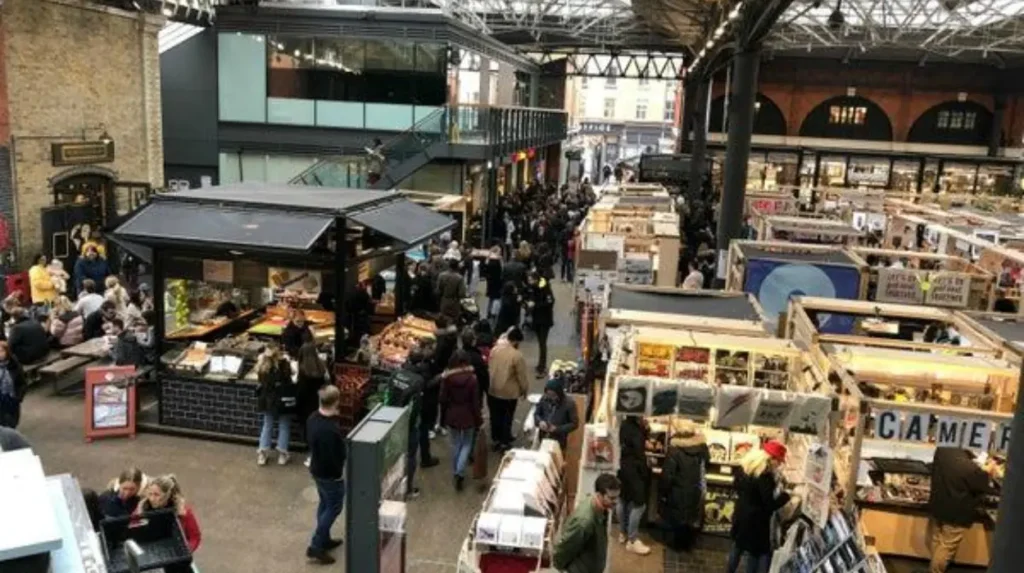
Spitalfields Market traces its commercial charter to King Charles I in 1638. The current covered market structure, built in 1887 under the direction of the City of London Corporation, stands between Commercial Street and Lamb Street.
The market operates seven days a week, featuring 90 permanent traders and independent street food vendors:
- Thursdays: Dedicated to vintage clothing, antique jewellery, and historical collectibles.
- Fridays: Focused on independent vinyl record labels, art prints, and fashion designers.
- Saturdays and Sundays: General trade incorporating global street food stalls selling East Asian, Latin American, and Middle Eastern dishes.
The market adjoins the Bishops Square development, providing outdoor seating areas, public sculptures, and work-friendly cafes for digital nomads.
Columbia Road Flower Market and Sunday Trading Heritage
Columbia Road Flower Market is an open-air retail market operating every Sunday from 08:00 to 15:00 in Bethnal Green. The market consists of 60 street stalls lining a narrow Victorian terrace street.
Traders sell bedding plants, cut flowers, shrubs, and gardening supplies sourced directly from British and Dutch nurseries. Behind the market stalls, Columbia Road contains 60 independent shops, art galleries, vintage clothing boutiques, and artisan bakeries operating inside restored 19th-century shopfronts.
Roman Road Market and Traditional East End Life
Roman Road Market occupies a historic Roman paved route running through the heart of Bow. Operating on Tuesdays, Thursdays, and Saturdays, the market has served East London residents since the mid-19th century.
The market features 80 traditional stalls selling three categories of consumer goods:
- Affordable fashion, footwear, and textile products.
- Fresh fruit, vegetables, fish, and regional bakery items.
- Household items, traditional haberdashery, and affordable street food.
Roman Road preserves an authentic East End dialect, traditional pie-and-mash shops (such as G. Kelly, operating since 1939), and local community culture separate from central tourist zones.
What Performance Arts and Live Theatre Venues Operate in Tower Hamlets?
Tower Hamlets hosts historic variety halls, independent cinema complexes, and multi-disciplinary performance venues. Visitors access live theatrical plays, indie film screenings, musical concerts, and community performances across architecturally significant cultural spaces.
Wilton’s Music Hall and Historic Variety Theatre
Wilton’s Music Hall, located on Grace’s Alley in High Street Wapping, is the oldest surviving grand music hall in the world. Built by John Wilton in 1859 by combining five 18th-century terraced houses with a grand hall interior, the building retains its original cast-iron columns, timber stage, and distressed plaster auditorium.
The venue hosts a full calendar of contemporary performances:
- Classic theatrical plays and modern adaptations.
- Opera, cabaret, and choral concerts.
- Literary readings and acoustic music sessions.
Wilton’s operates two public bars—The Mahogany Bar and the Cocktail Bar—serving craft beers and cocktails inside original Victorian rooms. Guided historic architecture tours run weekly, detailing the hall’s rescue from demolition by heritage campaigners in the 1960s.
Rich Mix Cultural Foundation in Shoreditch
Rich Mix is a non-profit independent arts centre located on Bethnal Green Road near Shoreditch High Street station. Housed in a converted five-storey former leather factory, the venue promotes diverse cultural arts and community media.
The facilities include:
- Three Cinema Screens: Screening independent British films, foreign language cinema, and Hollywood releases.
- Two Performance Stages: Hosting live music gigs, world music festivals, stand-up comedy, and spoken-word poetry.
- Exhibition Spaces: Presenting contemporary photography, digital media installations, and community art projects.
Rich Mix provides accessible desk spaces, free public Wi-Fi, and a ground-floor cafe, serving as a primary workspace hub for remote workers and creative professionals in East London.
Troxy Venue and Art Deco Entertainment
Troxy is a Grade II listed Art Deco venue located on Commercial Road in Stepney. Designed by George Coles and opened in 1933 as a luxury 2,600-seat cinema, the building features an intact Art Deco interior, grand foyer lighting, and a restored Wurlitzer theatre pipe organ.
Today, Troxy operates as an independent live performance space accommodating up to 3,100 guests. The venue hosts three primary types of public events:
- International live music concerts spanning rock, indie, electronic, and global pop.
- Professional combat sports events, including boxing and martial arts championships.
- Immersive film screenings, corporate galas, and cultural award ceremonies.
Explore More Area Guide
Best Things to See and Do Around Tower Hamlets During Your London Trip
What Is Tower Hamlets Famous For? History, Culture & Modern Attractions Guide
What Annual Festivals and Public Green Space Events Take Place in Tower Hamlets?
Tower Hamlets provides major green space festivals, heritage maritime displays, and urban ecological farms. Visitors explore public parks, canal heritage sites, and community events that combine outdoor recreation with live cultural programming.
Victoria Park and All Points East Festival
Victoria Park opened in 1845 as London’s first planned public park, covering 86 hectares in the northern section of Tower Hamlets. Known locally as “The People’s Park,” the space features two boating lakes, a 1912 Chinese Pagoda, a Victorian drinking fountain, and wide tree-lined avenues.
The park serves as East London’s premier outdoor event venue, hosting two major annual events:
- All Points East: A ten-day outdoor music festival held every August, featuring headlining international rock, indie, and electronic artists across multiple stages, alongside mid-week free community outdoor cinema and food markets.
- Victoria Park Market: A weekly Sunday food market running along the Nightwalk path, featuring 50 traders selling organic produce, sourdough bread, cold-pressed juices, and international street food.
Trinity Buoy Wharf and Industrial Arts Heritage
Trinity Buoy Wharf sits at the confluence of the River Thames and the River Lea, facing North Greenwich. Established in 1803 as a maintenance depot for river buoys and lightships, the site preserves London’s only surviving lighthouse, constructed in 1864 by James Douglass for testing lighting equipment and training lighthouse keepers.
The wharf operates as a thriving creative hub housing distinct cultural installations:
- Longplayer: A 1,000-year-long musical composition composed by Jem Finer, playing continuously inside the lighthouse lantern room using Tibetan singing bowls since 1 January 2000.
- Container City: An architectural complex built from recycled steel shipping containers, providing studio spaces for fine artists, sculptors, and digital designers.
- The Faraday Effect: A small public museum installation dedicated to scientist Michael Faraday, who conducted electrical research inside the wharf laboratory.
Visitors reach Trinity Buoy Wharf via the East London Transit route or by walking along the Lea River path. The site includes a riverside diner operating inside a 1950s American vehicle.
Mudchute Park and Urban Farm Cultural Programming
Mudchute Park and Farm covers 32 acres of open countryside on the Isle of Dogs, forming one of the largest urban farms in Europe. Established in 1977 on land previously used as spoil dumping grounds during the construction of the Millwall Docks, the park is managed as a registered educational charity.
The site offers three distinct visitor activities:
- Livestock and Agriculture: Home to over 100 farm animals, including rare British breeds of sheep, cattle, pigs, goats, and poultry.
- Equestrian Centre: Providing riding lessons, dressage arenas, and countryside bridle paths for adult riders and youth groups.
- World War II Heritage: Preserving an intact anti-aircraft gun site built during the Blitz to defend the London Docks against aerial attacks.
Mudchute Farm offers free entry daily from 09:00 to 17:00, with an on-site cafe serving cooked meals sourced from local producers.
How Should Travellers Plan a Cultural Itinerary in Tower Hamlets?
Planning a trip to Tower Hamlets requires strategic selection of transport routes, workspace venues, and budget options. Efficient itineraries group attractions by neighbourhood nodes to minimize transit time while maximizing cultural exposure.
Transport Connections and Accessibility Options
Tower Hamlets contains an extensive public transportation infrastructure linking East London directly to Central London and London City Airport.
Four major transport modes serve the borough:
- Docklands Light Railway (DLR): Automated light rail system providing connections between Bank, Tower Gateway, Canary Wharf, Greenwich, and Stratford. Key stations for cultural attractions include West India Quay (London Museum Docklands), Island Gardens (Mudchute), and Cutty Sark.
- London Underground: The District Line, Hammersmith & City Line, and Central Line serve key cultural stations, including Whitechapel, Bethnal Green, Mile End, and Bow Road.
- Elizabeth Line: High-speed rail connections stopping at Whitechapel and Canary Wharf, linking Tower Hamlets directly to London Heathrow Airport in under 45 minutes.
- Uber Boat by Thames Clippers: Commuter river bus services calling at Tower Pier, Bankside, Canary Wharf Pier, and Masthouse Terrace Pier, offering scenic river travel along the Thames.
Visitors pay for all transport using contactless bank cards or Oyster cards under Transport for London’s unified pricing system.
Work-Friendly Venues for Digital Nomads and Business Travellers
Digital nomads and corporate travellers seeking remote working facilities while exploring Tower Hamlets find designated public spaces across the borough:
- Canary Wharf Public Idea Store: Located on Churchill Place, offering free high-speed Wi-Fi, quiet study desks, computer terminals, and printing services.
- Idea Store Whitechapel: A flagship community learning facility designed by David Adjaye, situated on Whitechapel Road. It features five floors of workspace, library archives, and an upper café.
- The Workspace at Rich Mix: Provides spacious seating, electric power outlets, high-speed Wi-Fi, and coffee facilities near Shoreditch High Street station.
These venues allow business travellers to maintain productivity while accessing cultural sites during lunch breaks and evenings.
Budgeting and Free Admission Opportunities
Tower Hamlets provides affordable options for budget-conscious travellers. Major public institutions offer high factual value without admission fees.
The following venues provide 100% free permanent entry:
- London Museum Docklands
- Whitechapel Gallery (ground floor exhibitions)
- Young V&A
- Mudchute Park and Farm
- Trinity Buoy Wharf public art installations
- Victoria Park and public green spaces
By combining free national museums with low-cost street market dining in Brick Lane or Roman Road, travellers maintain daily cultural expenses under £20 per person while experiencing the authentic heritage and modern identity of Tower Hamlets.
Is Tower Hamlets worth visiting?
Yes. Tower Hamlets is one of East London’s most diverse destinations, combining world-famous landmarks, historic markets, museums, riverside walks, contemporary art galleries, and green spaces. Visitors can experience medieval history, multicultural neighbourhoods, and modern Canary Wharf within a single borough.