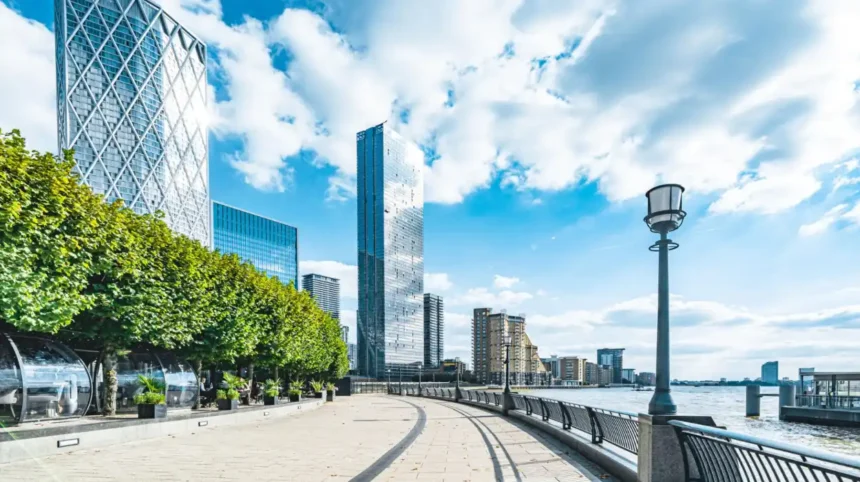
Tower Hamlets contains one of London’s most diverse waterfront landscapes, combining the River Thames, historic docks, regenerated marinas, and more than 13 kilometres of interconnected canals and riverside paths. The borough offers scenic walking routes, maritime heritage, wildlife habitats, modern architecture, cultural landmarks, and public open spaces that appeal to tourists, residents, remote workers, and business travellers alike. From the Thames Path National Trail to the Limehouse Cut and Regent’s Canal, Tower Hamlets provides accessible riverside experiences that showcase both London’s industrial past and its contemporary waterfront regeneration.
- Why is Tower Hamlets one of East London’s best destinations for riverside walking?
- What makes the Thames Path through Tower Hamlets special?
- Which walking routes offer the best riverside scenery in Tower Hamlets?
- How do Tower Hamlets’ historic docks enhance the riverside experience?
- What wildlife and natural habitats can visitors discover along the waterfront?
- Which riverside attractions should visitors include during their walk?
- Where can digital nomads and business travellers relax beside the water?
- How accessible are Tower Hamlets’ riverside walking routes?
- What is the best time of year to enjoy Tower Hamlets’ waterfront?
- How has riverside regeneration transformed Tower Hamlets?
- Why should visitors include Tower Hamlets’ riverside walks in an East London itinerary?
Why is Tower Hamlets one of East London’s best destinations for riverside walking?
Tower Hamlets offers one of London’s richest waterfront environments, combining the River Thames, historic docks, navigable canals, regenerated marinas, wildlife reserves, cultural attractions, and continuous walking routes that connect centuries of maritime history with modern urban landscapes across East London.
Situated immediately east of the City of London, the London Borough of Tower Hamlets stretches along approximately 8 kilometres of the north bank of the River Thames. This strategic riverside position has shaped London’s commercial, maritime, and industrial development for more than 1,000 years.
Today, the borough combines internationally recognised financial districts with peaceful canal towpaths, historic dock basins, riverside parks, and conservation areas. Visitors can experience multiple types of waterfront environments within a relatively compact geographical area.
The area’s riverside network includes:
- The Thames Path National Trail
- Regent’s Canal
- Limehouse Cut
- Millwall Dock
- West India Docks
- Blackwall Basin
- Limehouse Basin
- Poplar Dock Marina
These waterways support leisure boating, cycling, walking, wildlife conservation, and heritage tourism while connecting numerous neighbourhoods throughout East London.
As you explore the modern riverside, you are walking through areas that shaped Britain’s maritime economy for centuries. Read about the full to understand its origins.
What makes the Thames Path through Tower Hamlets special?
The Thames Path through Tower Hamlets combines uninterrupted river views, historic docks, maritime landmarks, contemporary architecture, public art, riverside parks, and panoramic viewpoints, creating one of London’s most varied and accessible sections of the National Trail.
The Thames Path National Trail extends for approximately 296 kilometres from its source in Gloucestershire to the Thames Barrier. The Tower Hamlets section represents one of its most visually diverse urban stretches.
Walkers encounter changing landscapes that include:
Limehouse Riverside
Limehouse retains strong maritime character through historic warehouses, narrow streets, converted dock buildings, and riverside pubs dating back centuries. The riverside path offers extensive views towards Wapping, Rotherhithe, and central London.
Canary Wharf Waterfront
Modern skyscrapers contrast with preserved dock basins. Glass office towers stand beside restored dock walls, demonstrating London’s transformation from one of the world’s busiest ports into a global financial centre.
Blackwall Riverside
Blackwall provides quieter stretches where visitors can observe passing river traffic, including commuter ferries, cargo vessels, tugboats, and cruise ships navigating one of Europe’s busiest tidal rivers.
The route remains largely level, making it suitable for families, casual walkers, runners, and cyclists.
Which walking routes offer the best riverside scenery in Tower Hamlets?
Several interconnected walking routes showcase Tower Hamlets’ waterfront landscapes, including the Thames Path, Regent’s Canal Towpath, Limehouse Cut Walk, Canary Wharf circuit, and Isle of Dogs riverside loop, each providing distinctive scenery and historical significance.
Tower Hamlets benefits from an integrated network of pedestrian routes linking waterways, parks, and neighbourhoods.
Thames Path to Canary Wharf
Distance: Approximately 6 kilometres
Highlights include:
- Limehouse Basin
- Historic dock architecture
- Riverside gardens
- Canary Wharf skyline
- Public art installations
- River viewpoints
This route combines maritime heritage with modern cityscapes.
Limehouse Cut Walk
Distance: Approximately 4 kilometres
Completed in 1770, Limehouse Cut is Britain’s oldest canal built specifically to bypass a river meander. The towpath provides peaceful waterside walking away from busy roads.
Visitors encounter:
- Canal boats
- Industrial heritage
- Waterside wildlife
- Historic bridges
- Quiet green corridors
Regent’s Canal Route
Distance within Tower Hamlets: Approximately 5 kilometres
The Regent’s Canal connects Limehouse Basin with North London. Towpaths feature lock gates, colourful narrowboats, waterside cafés, and residential developments.
Isle of Dogs Riverside Circuit
Distance: Approximately 8 kilometres
This circular route surrounds much of the Isle of Dogs, providing continuous Thames views alongside modern residential developments, restored docks, and riverside parks.
How do Tower Hamlets’ historic docks enhance the riverside experience?
Tower Hamlets’ historic docks preserve Britain’s maritime heritage through restored dock basins, warehouses, canals, quays, and shipping infrastructure that now support recreation, tourism, business, and cultural activities along regenerated waterfront districts.
The borough once formed the heart of the Port of London, which became the world’s largest port during the nineteenth century.
Several major dock systems remain visible today.
West India Docks
Opened in 1802, the West India Docks dramatically reduced cargo theft while increasing shipping efficiency.
Today, visitors find:
- Original dock basins
- Historic dock walls
- Floating pontoons
- Marina facilities
- Waterside cafés
- Modern office buildings
Millwall Dock
Millwall Dock retains much of its original water basin while supporting leisure boating and residential developments.
The calm water reflects surrounding architecture, making it popular for photography.
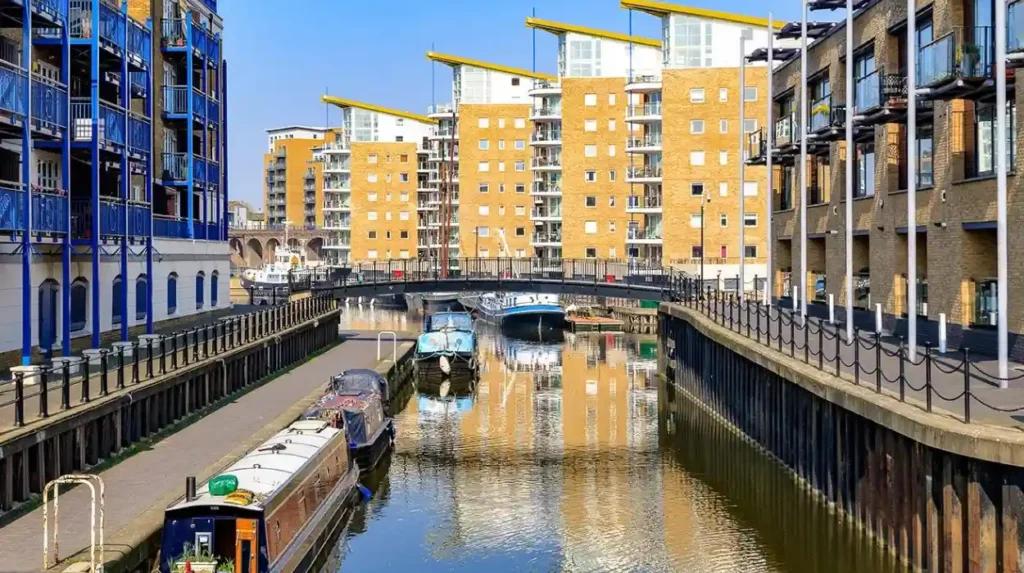
Limehouse Basin
Originally called Regent’s Canal Dock, Limehouse Basin links Regent’s Canal with the River Thames.
The marina accommodates leisure vessels while preserving its role as an important navigation junction.
Blackwall Basin
Blackwall Basin demonstrates successful dock regeneration, combining residential developments with preserved waterfront infrastructure.
What wildlife and natural habitats can visitors discover along the waterfront?
Tower Hamlets’ riverside environments support diverse urban biodiversity, including migratory birds, waterfowl, fish, tidal ecosystems, wetlands, and landscaped parks that demonstrate successful ecological restoration within a densely populated metropolitan borough.
Although highly urbanised, Tower Hamlets contains important habitats along its waterways.
Common bird species include:
- Grey herons
- Cormorants
- Mute swans
- Canada geese
- Mallards
- Moorhens
Examples include herons around Limehouse Basin, cormorants near the Thames, and swans along Regent’s Canal.
The tidal River Thames supports over 125 fish species according to environmental monitoring by the Environment Agency and the Zoological Society of London.
Native fish include:
- European eel
- European seabass
- Flounder
Vegetation along canal corridors improves biodiversity by supporting insects, pollinators, and nesting birds.
Landscaped riverside parks also contribute to ecological connectivity throughout East London.
Which riverside attractions should visitors include during their walk?
Tower Hamlets’ waterfront attractions combine historic landmarks, museums, public art, viewing platforms, cultural venues, modern architecture, parks, and marinas that enrich riverside walks with educational, recreational, and photographic opportunities throughout the borough.
Walking routes connect numerous visitor attractions.
Canary Wharf
Canary Wharf combines international business headquarters with landscaped public spaces, waterside promenades, shopping centres, restaurants, and year-round public art.
Its extensive dockside seating makes it attractive for leisure visitors and remote workers.
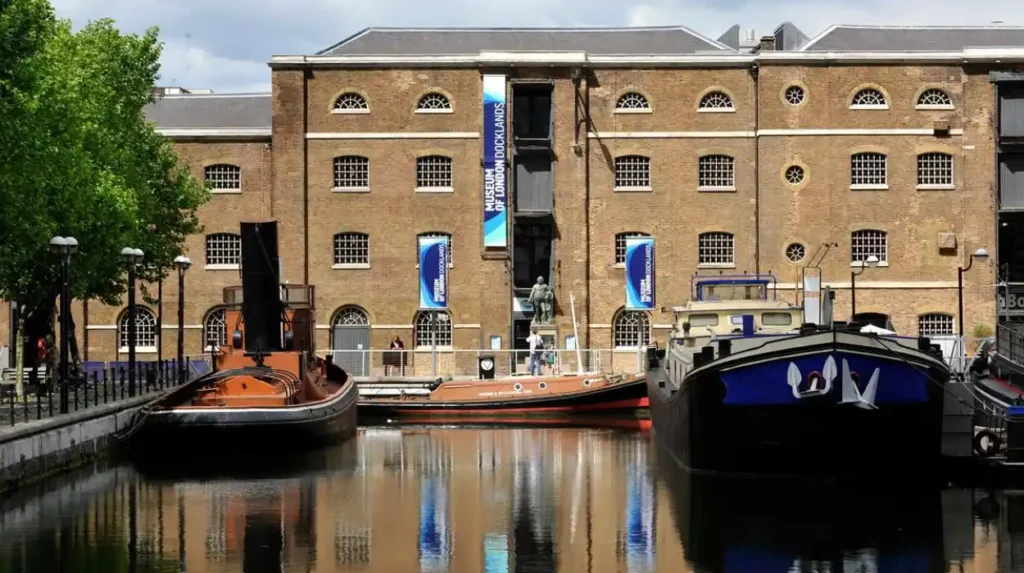
Museum of London Docklands
Located inside a restored nineteenth-century sugar warehouse, the museum explains London’s commercial shipping, slavery, trade, immigration, and dockland redevelopment.
Admission remains free.
Trinity Buoy Wharf
Although located adjacent to Tower Hamlets across the River Lea, Trinity Buoy Wharf complements riverside exploration through its creative studios, historic lighthouse, and arts installations.
Riverside Public Art
Numerous sculptures and temporary exhibitions appear throughout Canary Wharf and surrounding docklands, creating outdoor cultural experiences integrated into pedestrian routes.
Where can digital nomads and business travellers relax beside the water?
Tower Hamlets provides numerous work-friendly waterfront environments featuring cafés, public seating, reliable transport, free public spaces, and peaceful dockside settings that combine productivity with attractive riverside surroundings for visitors and professionals.
The borough’s regenerated docklands support modern lifestyles alongside recreational spaces.
Canary Wharf offers extensive outdoor seating overlooking dock basins, with cafés providing Wi-Fi, refreshments, and comfortable working environments.
Dockside plazas remain relatively quiet outside commuter peak periods.
Limehouse Basin provides a more relaxed atmosphere where visitors can enjoy waterside cafés overlooking leisure boats.
Several riverside parks include benches suitable for reading, informal meetings, or remote working during favourable weather.
The area’s excellent transport connections—including the Elizabeth line, Docklands Light Railway, London Underground, Thames Clippers, and local buses—allow visitors to combine sightseeing with flexible working schedules.
How accessible are Tower Hamlets’ riverside walking routes?
Most riverside walking routes in Tower Hamlets provide step-free sections, surfaced pathways, public transport access, frequent seating, clear wayfinding, and multiple entry points, making the waterfront accessible to a broad range of visitors throughout the year.
Accessibility has improved significantly through docklands regeneration.
Many riverside sections feature:
- Wide paved walkways
- Step-free access
- Directional signage
- Rest areas
- Public toilets nearby
- Lighting for evening use
Canary Wharf represents one of London’s most accessible urban environments, with lifts, ramps, and step-free public spaces connecting stations and waterfront promenades.
Limehouse Basin also offers relatively accessible walking conditions, although some historic canal paths remain narrower.
Visitors can easily join riverside routes from stations including:
- Tower Hill
- Limehouse
- Westferry
- Canary Wharf
- Poplar
- Blackwall
- Island Gardens
What is the best time of year to enjoy Tower Hamlets’ waterfront?
Tower Hamlets’ riverside walks remain enjoyable throughout the year, with spring providing flowering landscapes, summer offering long daylight hours, autumn delivering colourful scenery, and winter presenting dramatic river views alongside quieter walking conditions.
Each season offers different experiences.
Spring brings fresh vegetation, nesting birds, and comfortable walking temperatures.
Summer provides extended daylight, outdoor dining, and busy waterfront activity, particularly around Canary Wharf and Limehouse Basin.
Autumn creates colourful reflections across dock basins while generally offering comfortable walking conditions.
Winter produces striking skyline photography, especially during clear afternoons when low sunlight illuminates riverside architecture.
Early mornings often provide the quietest experience, while evenings showcase illuminated skyscrapers reflected across historic dock waters.
Explore More Area Guide
Discover Tower Hamlets: Markets, Museums & Historic Neighbourhoods in East London
Best Things to See and Do Around Tower Hamlets During Your London Trip
How has riverside regeneration transformed Tower Hamlets?
Tower Hamlets has transformed former industrial docklands into internationally recognised mixed-use waterfront districts through regeneration that preserves maritime heritage while creating homes, employment, public spaces, transport infrastructure, and recreational environments.
Following the decline of London’s docks during the 1960s and 1970s, extensive regeneration reshaped much of the borough.
The establishment of the London Docklands Development Corporation in 1981 accelerated investment across former docklands.
Major achievements include:
Economic Development
Canary Wharf has grown into one of Europe’s largest financial centres, supporting hundreds of thousands of jobs.
Public Access
Previously restricted dock infrastructure now provides extensive public waterfront access.
Heritage Conservation
Historic dock walls, warehouses, cranes, and navigation features have been incorporated into modern developments rather than removed.
Environmental Improvements
Water quality within former docks has improved substantially, supporting aquatic life and recreational boating.
The regeneration model demonstrates how industrial waterfronts can successfully balance economic growth, heritage conservation, public recreation, and environmental enhancement.
Why should visitors include Tower Hamlets’ riverside walks in an East London itinerary?
Tower Hamlets offers an exceptional combination of scenic walking, maritime heritage, historic canals, regenerated docks, wildlife, architecture, cultural attractions, and excellent transport links, making its riverside network one of East London’s most rewarding visitor experiences.
Few London boroughs provide such variety within a single interconnected walking network. Visitors can explore centuries of maritime history, observe contemporary urban development, enjoy peaceful canal corridors, discover biodiversity, visit internationally significant cultural attractions, and experience panoramic Thames views during a single day.
The borough’s waterfront reflects London’s evolution from medieval trading settlement to imperial port, industrial powerhouse, and modern global city. Historic dock basins now coexist with world-class business districts, while former industrial canals have become attractive recreational routes supporting walking, cycling, and leisure boating.
Excellent public transport enables flexible itineraries, allowing visitors to begin or end walks at multiple stations across the borough. The continuous network of riverside paths also connects naturally with neighbouring areas including the City of London, Greenwich, Newham, and Southwark.
For tourists seeking iconic views, residents exploring local heritage, digital nomads looking for inspiring work-friendly locations, or business travellers making the most of free time, Tower Hamlets’ riverside experiences represent one of East London’s most complete and accessible outdoor attractions. The combination of natural waterways, preserved maritime infrastructure, regenerated public spaces, and cultural landmarks ensures these walking routes remain relevant, educational, and enjoyable throughout every season.
What are the best riverside walks in Tower Hamlets?
The best riverside walks include the Thames Path, Limehouse Basin to Canary Wharf, Regent’s Canal Towpath, Limehouse Cut Walk, and the Isle of Dogs Riverside Circuit. These routes combine waterfront scenery, historic docks, parks, and modern architecture.