Tower Hamlets is one of the most historically significant and culturally diverse boroughs in East London. It stretches from the River Thames and Tower Hill through Wapping, Whitechapel, Stepney, Bethnal Green, Mile End, Bow, Poplar and the Isle of Dogs. Its landscape combines medieval heritage, Victorian markets, historic docks, major museums, public parks, contemporary architecture and internationally recognised landmarks.
- What makes Tower Hamlets a distinctive place to visit in East London?
- Why should visitors explore the Tower of London and Tower Bridge?
- What can visitors discover at the Museum of London Docklands?
- Which historic neighbourhoods should visitors explore around Spitalfields and Brick Lane?
- Where can visitors experience Tower Hamlets’ market culture?
- Which parks and green spaces are worth visiting in Tower Hamlets?
- What can visitors see around Wapping and St Katharine Docks?
- Why is Canary Wharf important for modern Tower Hamlets sightseeing?
- How can visitors build a complete Tower Hamlets sightseeing experience?
- What makes Tower Hamlets relevant for future visitors?
The borough takes its name from the Tower of London and the hamlets historically associated with it. Its southern boundary follows the distinctive bend of the River Thames. Tower Hamlets Council describes the area as the heart of London’s East End, with evidence of human activity dating back thousands of years.
For visitors, this geography creates a compact destination with several distinct experiences. A single visit can include royal history at the Tower of London, engineering at Tower Bridge, dockland heritage at the Museum of London Docklands, market culture around Spitalfields and Brick Lane, and open space at Victoria Park.
The borough also represents the transformation of London’s eastern waterfront. Former docks have become commercial and leisure districts, while historic streets retain evidence of migration, manufacturing, trade and religious communities. This combination makes Tower Hamlets particularly valuable for travellers seeking more than conventional central-London sightseeing.
What makes Tower Hamlets a distinctive place to visit in East London?
Tower Hamlets combines royal heritage, riverfront landmarks, historic markets, museums, multicultural neighbourhoods, modern business districts and major parks within one London borough, creating a varied sightseeing destination with strong historical and cultural depth.
The borough occupies a strategically important part of London. Its position beside the Thames connected it to maritime trade, while roads and waterways linked East London with the wider capital.
The modern visitor experience reflects that history. Tower Hill contains some of London’s most recognisable heritage attractions. Wapping retains elements of the former dock system. Whitechapel and Spitalfields contain layers of religious, commercial and migrant history. Canary Wharf represents the redevelopment of former docklands into a major financial district.
Historic England identifies a large collection of listed buildings and historic places across Tower Hamlets. These include the Tower of London, Spitalfields Market, Brick Lane Jamme Masjid, churches, dock structures and industrial buildings.
This concentration of heritage gives visitors several ways to explore the borough. Travellers interested in architecture can focus on listed buildings. Museum visitors can examine London’s maritime economy. Food and shopping visitors can explore markets and independent businesses. Walkers can follow the Thames, canals and green spaces.
Tower Hamlets therefore works particularly well as a destination for visitors who want to connect individual attractions with the wider development of London.
Why should visitors explore the Tower of London and Tower Bridge?
The Tower of London and Tower Bridge provide two defining Tower Hamlets experiences: one represents centuries of royal, military and political history, while the other demonstrates Victorian engineering and London’s historic dependence on river transport.
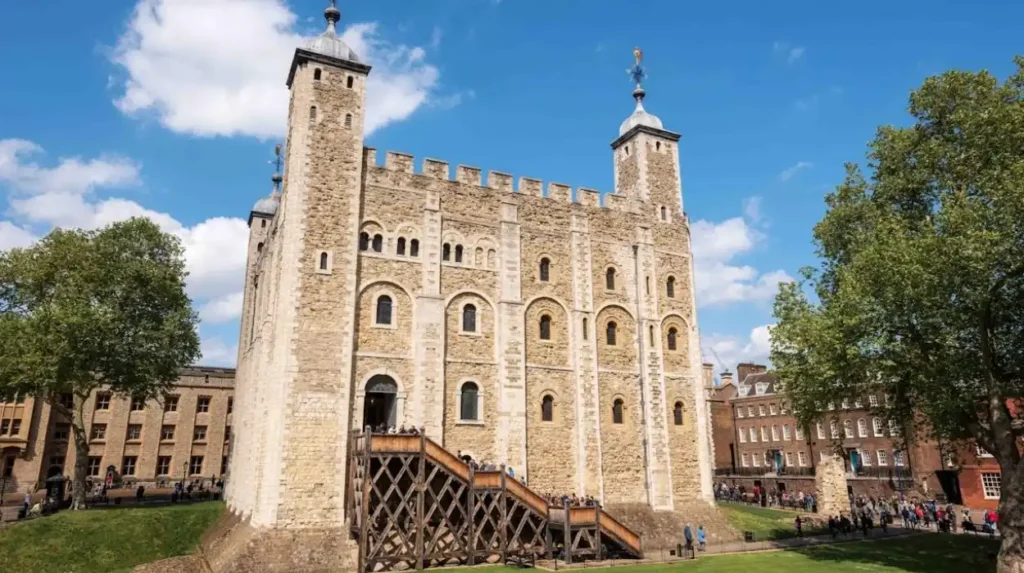
The Tower of London is one of the borough’s most important historic sites. Its development began after the Norman Conquest, and the complex evolved from a fortified royal stronghold into a major historic landmark. Historic England identifies the Tower as a nationally significant listed site and notes its development as a medieval fortress and royal centre.
The site connects visitors with medieval government, royal authority, imprisonment and military architecture. Its location beside the Thames also explains the strategic importance of this part of London.
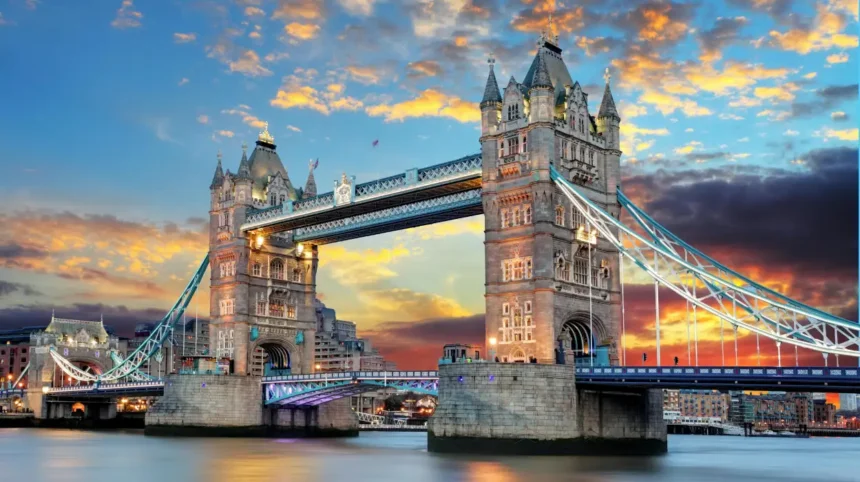
Tower Bridge stands immediately east of the Tower of London and provides a different historical experience. The bridge opened on 30 June 1894 after eight years of construction. It was designed by architect Sir Horace Jones and engineer Sir John Wolfe Barry.
Its movable bascules allowed road traffic to cross the Thames while maintaining access for vessels travelling through the Pool of London. More than 50 designs were submitted during the competition for a new crossing before the selected design was approved.
The bridge’s visitor experience includes the high-level walkways, views across the Thames, the glass-floor sections and the Victorian Engine Rooms. The walkways stand approximately 43.5 metres above the river at high tide and extend about 70 metres between the towers.
Together, the Tower of London and Tower Bridge establish a useful historical sequence. The Tower represents medieval London and royal power. Tower Bridge represents industrial-era London, engineering and expanding urban transport.
As you explore these modern visitor sites, you are crossing land with a deep heritage. Read about the full [Insert Anchor Text for History Article Here] to understand its origins.
What can visitors discover at the Museum of London Docklands?
The Museum of London Docklands explains how the River Thames, port activity, international trade and dock construction shaped London’s economy, communities and physical landscape, making it one of the borough’s most useful places for understanding East London’s maritime past.
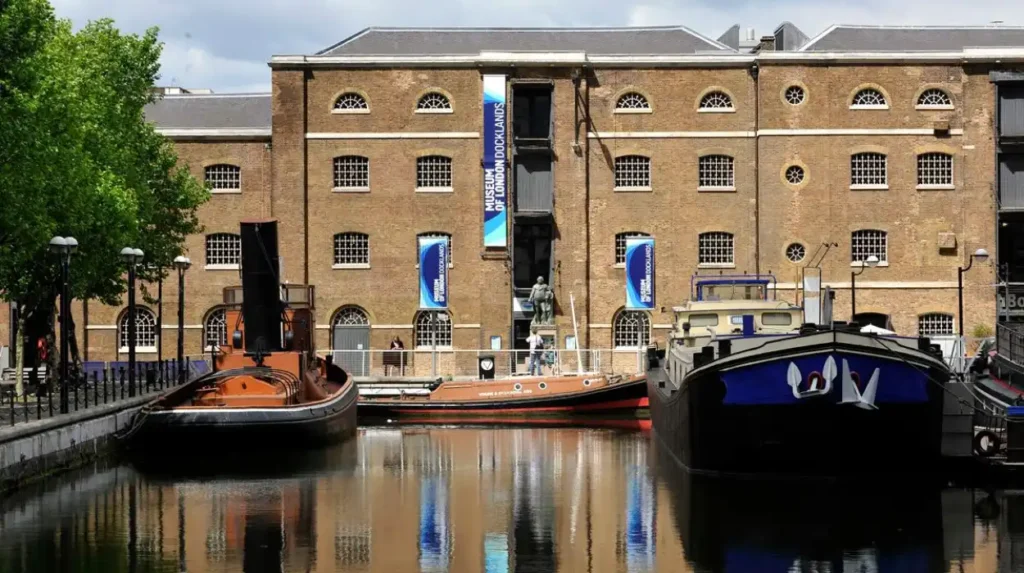
The Museum of London Docklands is located in a historic warehouse at West India Quay. Its setting is important because the surrounding docklands were once central to London’s international trading economy.
The museum documents the history of London’s river, port and docklands. Exhibitions connect commercial trade with the development of the city and the communities that lived and worked around the docks.
Visitors can use the museum to understand why Tower Hamlets developed a dense network of wharves, warehouses, canals and dock basins. Goods arriving through the Thames influenced employment, housing, transport and local commerce.
The West India Docks opened in the early nineteenth century and became an important part of London’s port infrastructure. Their warehouses stored imported commodities before distribution across Britain and beyond.
The museum also provides context for the dramatic changes that affected the docklands during the twentieth century. Containerisation changed port operations, while larger vessels required different infrastructure. Many traditional London docks subsequently closed, creating large areas of underused waterfront land.
The later redevelopment of Docklands created a new urban landscape. Canary Wharf, situated nearby on the Isle of Dogs, became a major financial and commercial centre.
This transition gives visitors an opportunity to see how economic systems alter the physical structure of cities. The museum therefore works particularly well for visitors interested in history, architecture, economics, urban planning and London’s global trading connections.
Which historic neighbourhoods should visitors explore around Spitalfields and Brick Lane?
Spitalfields, Brick Lane and neighbouring streets offer concentrated evidence of East London’s commercial and social history, combining historic market buildings, religious architecture, independent businesses, street art, food culture and communities shaped by successive waves of migration.
Spitalfields is one of Tower Hamlets’ strongest areas for historic urban exploration. Its streets contain buildings associated with markets, textile production, religious communities and nineteenth-century commerce.
Spitalfields Market is particularly significant. Historic England records that the present market buildings were designed by George Sherrin and constructed between 1885 and 1893. The listed complex includes red-brick structures, stuccoed gables and original architectural details.
The market remains an important visitor destination because it connects historic architecture with contemporary retail and food businesses.
Brick Lane extends north from the Spitalfields area and has become one of East London’s best-known streets for food, shopping, markets and street art. Its cultural identity reflects successive communities that established businesses and places of worship in the neighbourhood.
Brick Lane Jamme Masjid provides a particularly clear example of this layered history. Historic England records that the building began as a French Protestant chapel in 1743–44, later became a synagogue in 1897 and was converted into a mosque in 1976.
This sequence illustrates the changing demographic and religious character of East London.
Visitors can continue towards the Old Truman Brewery, independent shops, vintage businesses, cafés and food venues. The area also connects naturally with nearby Spitalfields Market and Commercial Street.
For photographers, the neighbourhood provides varied architectural subjects. For food-focused travellers, it offers established culinary traditions alongside contemporary businesses. For history visitors, the streets reveal changes that are not always visible through a single museum exhibition.
Where can visitors experience Tower Hamlets’ market culture?
Tower Hamlets has a strong market tradition, with places such as Spitalfields, Petticoat Lane and Columbia Road providing different forms of shopping, food, produce and street activity rooted in the commercial history of East London.
Markets are central to the identity of Tower Hamlets. They reflect the borough’s historic role as a commercial district between the City of London, the Thames and the expanding East End.
Petticoat Lane Market is associated with clothing, textiles, fashion and bargain shopping. The market developed within the wider commercial culture of the East End and remains a recognisable visitor destination.
Spitalfields Market provides a more architectural and covered-market experience. Its nineteenth-century buildings are protected as listed heritage structures, creating a direct connection between present-day retail and Victorian commercial development.
Columbia Road Flower Market provides a different experience. The market is particularly associated with flowers and plants and is one of the borough’s most recognisable weekend destinations.
The variety of markets makes Tower Hamlets useful for visitors with different interests. Shoppers can focus on clothing and independent goods. Food visitors can combine market exploration with nearby restaurants and cafés. Photographers can document architecture, displays and street scenes.
Markets also provide an accessible way to understand the borough’s commercial history. They show how streets function as public trading spaces rather than simply transport routes.
Visitors should check individual market opening schedules before travelling because market operations differ by day and season.
Which parks and green spaces are worth visiting in Tower Hamlets?
Victoria Park is the borough’s largest public park, while Mile End Park provides another major green corridor with sports, recreation and ecological facilities, giving visitors accessible outdoor spaces alongside Tower Hamlets’ dense historic and urban attractions.
Victoria Park is one of the most important green spaces in East London. Tower Hamlets Council describes it as London’s oldest public park, opened in 1845 for the benefit of the East End working class. The park covers approximately 86 hectares and receives more than nine million visits each year.
Its original purpose was strongly connected with public health, recreation and access to open space.
Today, Victoria Park contains sports facilities, play areas, gardens, a bandstand, picnic areas, refreshments, toilets and other visitor facilities. The council states that the park holds a Green Flag Award.
The park also forms part of a wider green corridor linking areas around the Regent’s Canal, Mile End Park and Queen Elizabeth Olympic Park.
Mile End Park provides another important outdoor destination. It includes Mile End Stadium, an Ecology Park and the Arts Pavilion.
These parks provide a useful contrast to the built-up streets of Whitechapel, Spitalfields and Canary Wharf. Visitors can use them for walking, recreation, photography, picnics and outdoor breaks.
Victoria Park is also significant for its historical landscape. Its creation reflects nineteenth-century investment in public parks at a time when industrial East London experienced rapid population growth.
For digital nomads and business travellers, these green spaces also provide practical downtime between meetings or sightseeing sessions. Their scale makes them useful for longer walks rather than brief visits.
What can visitors see around Wapping and St Katharine Docks?
Wapping and St Katharine Docks preserve important evidence of London’s historic waterfront, with surviving dock structures, warehouses, riverside paths and maritime architecture providing visitors with a direct connection to the commercial history of the Thames.
Wapping sits beside the Thames east of Tower Hill and has a strong connection with London’s historic dock system. Its riverside streets contain surviving buildings and structures associated with maritime trade.
St Katharine Docks provides one of the clearest examples of dockland redevelopment. The docks opened in 1828 and were engineered by Thomas Telford with architectural work by Philip Hardwick. Historic England records that they replaced the medieval St Katharine’s Hospital site.
The docks were designed to handle valuable cargoes close to central London. Their location allowed goods to move between ships, warehouses and the wider city.
St Katharine Docks suffered substantial damage during the Second World War. The docks closed in 1968 and later became a marina as part of redevelopment.
Historic fabric survives in the area. Historic England lists the quay walls and basin of St Katharine’s Dock as Grade II structures.
The Dockmaster’s Office is another listed building. It dates from 1828 and was associated with the management of vessels, cargo, workers and dock safety.
Today, the area combines historic dock architecture with restaurants, cafés, offices, boats and pedestrian routes.
Wapping and St Katharine Docks therefore demonstrate how industrial infrastructure can acquire a new leisure function while retaining elements of its original physical character.
Why is Canary Wharf important for modern Tower Hamlets sightseeing?
Canary Wharf demonstrates the transformation of former dockland into a major international financial district, combining high-rise architecture, public spaces, retail, transport infrastructure, restaurants and waterfront areas within one of London’s most recognisable modern urban environments.
Canary Wharf occupies the Isle of Dogs, an area historically shaped by docks and maritime trade. The district changed dramatically during late twentieth-century regeneration.
The modern skyline contrasts sharply with the low-rise streets of Wapping, Stepney and Spitalfields. High-rise commercial buildings dominate the area, while former dock basins remain important elements of the urban design.
Tower Hamlets Council identifies Canary Wharf as an internationally recognised Docklands financial centre and highlights the area’s transformation from former dockland into a major European financial district.
Visitors can explore the relationship between architecture and the waterfront. The district contains large commercial towers, landscaped public spaces, shopping areas, restaurants and pedestrian routes around dock basins.
Canary Wharf is also important for transport. The Jubilee line, Docklands Light Railway and Elizabeth line provide connections with central London and other parts of the capital.
For domestic business travellers, the district provides a concentrated combination of offices, restaurants, shopping and leisure facilities. Digital nomads also find cafés, public areas and commercial amenities throughout the wider district.
The contrast with historic Tower Hamlets is one of its defining visitor characteristics. A traveller can move from medieval and Victorian heritage around Tower Hill to contemporary skyscrapers around Canary Wharf within the same borough.
Explore More Area Guide
Best Visitor Experiences in Tower Hamlets 2026
A Tourist’s Guide to Exploring Tower Hamlets and East London | History, Markets & Attractions
How can visitors build a complete Tower Hamlets sightseeing experience?
A complete Tower Hamlets visit works best when visitors combine one major historic landmark, one museum or cultural area, one market or neighbourhood, and one green or riverside space rather than concentrating entirely on a single attraction.
A balanced itinerary begins around Tower Hill. The Tower of London establishes the medieval and royal history of the area, while Tower Bridge introduces Victorian engineering and the continuing importance of the Thames.
The route can then continue towards St Katharine Docks and Wapping. These areas provide a stronger understanding of London’s former dock system and waterfront economy.
Spitalfields and Brick Lane provide a different cultural dimension. Historic market buildings, religious architecture, independent businesses and food venues demonstrate the social development of the East End.
A museum visit at the Museum of London Docklands adds structured historical context. It explains the commercial systems behind the docks and the later transformation of Docklands.
Canary Wharf then provides a modern counterpart. Its high-rise skyline demonstrates the economic redevelopment of former dockland.
Victoria Park provides an appropriate final outdoor destination. Its 86-hectare landscape offers space for walking, recreation and relaxation after exploring dense urban districts.
Visitors with limited time can concentrate on Tower Hill, St Katharine Docks, Spitalfields and Brick Lane. Travellers with a full day can add the Museum of London Docklands and Canary Wharf. Visitors staying longer can explore Victoria Park, Mile End, Bow and the wider riverside.
Transport planning is important because Tower Hamlets contains several distinct visitor districts. The Tube, Docklands Light Railway, Elizabeth line, buses and walking routes connect the principal areas.
The best itinerary therefore depends on the visitor’s interests. History-focused travellers can prioritise the Tower of London, Tower Bridge and dock heritage. Culture-focused visitors can prioritise Spitalfields, Brick Lane and markets. Outdoor visitors can prioritise Victoria Park, Mile End Park and riverside routes.
What makes Tower Hamlets relevant for future visitors?
Tower Hamlets remains relevant because its attractions represent several stages of London’s development, from medieval royal power and maritime trade to Victorian infrastructure, twentieth-century regeneration and the modern global economy.
The borough provides an unusually concentrated record of urban change.
Its heritage is not limited to isolated monuments. Historic streets, markets, religious buildings, docks and industrial structures form connected evidence of how East London developed.
Historic England’s Tower Hamlets heritage material identifies hundreds of listed places and highlights buildings spanning medieval, post-medieval and twentieth-century periods.
The borough also demonstrates the importance of adaptive reuse. Former dock areas now support offices, restaurants, leisure facilities and public spaces. Historic market buildings continue to accommodate contemporary businesses.
This combination creates strong long-term relevance for tourism. Visitors can experience heritage architecture while also seeing how London continues to change.
Tower Hamlets also provides an important cultural perspective on London. Its neighbourhoods reflect migration, international trade, religious diversity, industrial employment and changing patterns of urban development.
For leisure travellers, this means the borough offers more than a collection of famous landmarks. It provides a geographical explanation of how East London developed and why the Thames remains central to the capital’s identity.
For residents, the same landscape supports parks, markets, museums, cultural venues and leisure spaces. For business travellers, Canary Wharf and the surrounding Docklands provide modern commercial infrastructure close to historic visitor attractions.
The result is a destination with strong historical depth and contemporary relevance. Tower Hamlets connects London’s past, present and continuing urban transformation within a relatively compact area.
What are the best places to visit in Tower Hamlets?
The best places to visit in Tower Hamlets include the Tower of London, Tower Bridge, Brick Lane, Spitalfields Market, Museum of London Docklands, Victoria Park, St Katharine Docks, Wapping and Canary Wharf. These attractions cover history, culture, shopping, architecture, riverside scenery and leisure.