Canary Wharf is one of London’s most recognisable destinations for contemporary architecture, outdoor sculpture and carefully designed public spaces. Located on the Isle of Dogs in East London, the district combines major commercial buildings with landscaped squares, waterfront promenades, pedestrian routes and a growing collection of permanent artworks.
- What Makes Canary Wharf an Important Destination for Public Art and Architecture?
- Where Can Visitors Find the Best Public Art in Canary Wharf?
- Which Canary Wharf Squares Are Best for Discovering Outdoor Sculptures?
- Where Can Visitors Explore Interesting Modern Architecture in Canary Wharf?
- Why Is Crossrail Place Roof Garden Worth Visiting?
- How Does the Garden Reflect Global Geography?
- What Architectural Features Should Visitors Photograph?
- Where Can Visitors Find Interesting Waterfront Architecture and Public Art?
- Which Locations Offer the Best Photography Opportunities in Canary Wharf?
- Where Can Visitors Photograph the Canary Wharf Skyline?
- Where Are the Best Locations for Architectural Details?
- Where Can Visitors Photograph Public Sculptures?
- When Is the Best Time to Photograph Canary Wharf?
- How Can Visitors Explore the Canary Wharf Art Trail on Foot?
- How Does Canary Wharf’s Architecture Reflect Its Docklands History?
- What Public Spaces and Green Features Complement Canary Wharf’s Architecture?
- How Does Jubilee Park Improve the Public Environment?
- How Does Wood Wharf Integrate Landscape Design?
- Why Are Green Spaces Important in Commercial Districts?
- What Seasonal Public Art Events Can Visitors Experience in Canary Wharf?
- How Accessible Are Canary Wharf’s Public Art and Architectural Attractions?
- Can Visitors Explore the Area Without Buying Tickets?
- Is Canary Wharf Suitable for Visitors with Reduced Mobility?
- Are There Facilities for Visitors?
- How Can Visitors Reach Canary Wharf’s Public Art and Architecture Attractions?
- Which Underground Stations Serve Canary Wharf?
- Can Visitors Use the Docklands Light Railway?
- Can Visitors Arrive by River?
- How Is Canary Wharf’s Architecture Changing in the Future?
- What Is Happening at 8 Canada Square?
- How Is Wood Wharf Changing the District?
- Why Does Mixed-Use Development Matter?
- What Should Visitors Know Before Exploring Canary Wharf?
The area offers visitors an opportunity to explore modern urban design without purchasing attraction tickets. Its public spaces contain sculptures by internationally recognised artists, colourful installations, architectural features and landscaped environments positioned between office towers and historic docks.
Canary Wharf Group’s public art collection contains more than 100 works, making the district an important destination for free outdoor art in London. The collection includes standalone sculptures, integrated architectural artworks, murals and light installations. Visitors can explore these works while walking between Canada Square, Jubilee Park, Cabot Square, Crossrail Place and Wood Wharf. canarywharf.com+1
The combination of art, architecture and waterways makes Canary Wharf particularly suitable for sightseeing, photography, short walking routes and cultural exploration.
What Makes Canary Wharf an Important Destination for Public Art and Architecture?
Canary Wharf combines contemporary skyscrapers, landscaped public spaces and more than 100 artworks across its estate. Its outdoor collection includes permanent sculptures, architectural installations and murals, creating an accessible cultural destination for visitors exploring modern East London.
Canary Wharf developed from London’s historic West India Docks into a major financial and commercial district. Its modern identity is closely connected with large-scale redevelopment, high-rise construction and the introduction of public spaces within a dense business environment.
The district’s architecture reflects different periods of contemporary design. Glass office towers stand alongside residential buildings, transport infrastructure, landscaped gardens and retail developments. This variety gives visitors opportunities to examine architectural materials, building proportions, engineering techniques and relationships between buildings and public spaces.
Public art forms another important part of this environment. Canary Wharf Group began developing its permanent collection after hosting The Shape of the Century: 100 Years of Sculpture in Britain exhibition in 1999. Following the exhibition, selected sculptures were acquired for permanent display.
The collection subsequently expanded through commissioned works, acquisitions and loans. Its artworks appear throughout the estate rather than being restricted to one gallery or exhibition building.
Visitors therefore experience art as part of the everyday urban environment. Sculptures appear in squares, beside waterways, within pedestrian areas and near major buildings.
Where Can Visitors Find the Best Public Art in Canary Wharf?
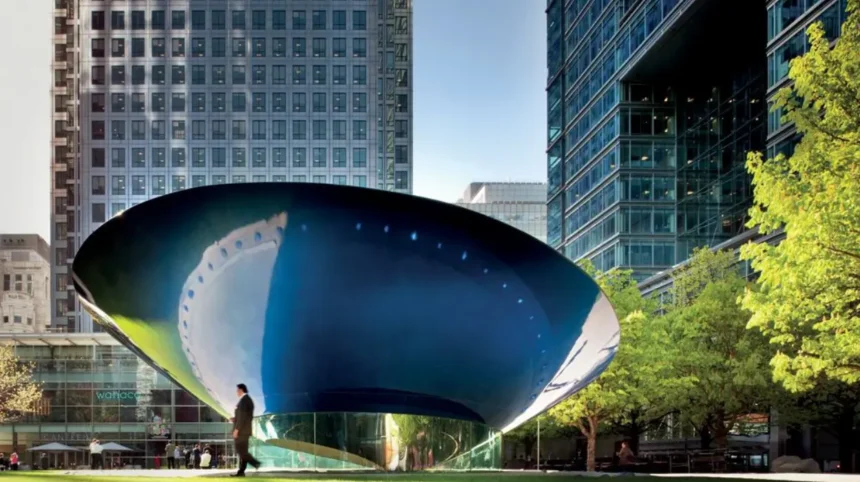
Visitors can discover Canary Wharf’s public art throughout Canada Square, Cabot Square, Jubilee Park, Westferry Circus and Wood Wharf. These locations feature permanent sculptures, colourful installations and artistic features within accessible outdoor spaces.
The best starting point is the central Canary Wharf estate, where many artworks are positioned near major pedestrian routes and landscaped squares.
The official Canary Wharf art brochure organises the collection into geographical zones. This makes it easier to explore individual artworks without following a fixed museum-style route. The free collection includes pieces purchased, commissioned or loaned to Canary Wharf Group. canarywharf.com+1
Which Sculptures Should Visitors Look For?
Several works provide useful starting points for exploring the collection.
Tear by Richard Hudson
Tear is a large sculptural work associated with the estate’s contemporary outdoor art collection. Its distinctive organic form provides an interesting contrast with Canary Wharf’s angular glass buildings.
Draped Seated Woman by Henry Moore
Henry Moore was a major British sculptor known for figurative sculptures and organic forms. His work is an important reference point for understanding modern British sculpture and its influence on public spaces.
Minotaur and Hare on Bench by Sophie Ryder
Sophie Ryder is known for sculptures featuring human and animal forms. Her work introduces figurative subjects into Canary Wharf’s contemporary architectural environment.
Whale on the Wharf by Jason Klimoski and Lesley Chang
This artwork is a notable feature of the Wood Wharf area. Its subject and large-scale presentation make it a distinctive stop for visitors exploring the newer waterfront neighbourhood.
Chimney by Andrew Burton
Chimney is a colourful sculptural structure inspired by the Qutub Minar in Delhi. It uses different patterns and colours to create a mosaic-like appearance. The artwork also references the international trading connections associated with the area’s dockland history.
Visitors should use the current official art guide to confirm individual artwork positions, as installations and loans can change.
Which Canary Wharf Squares Are Best for Discovering Outdoor Sculptures?
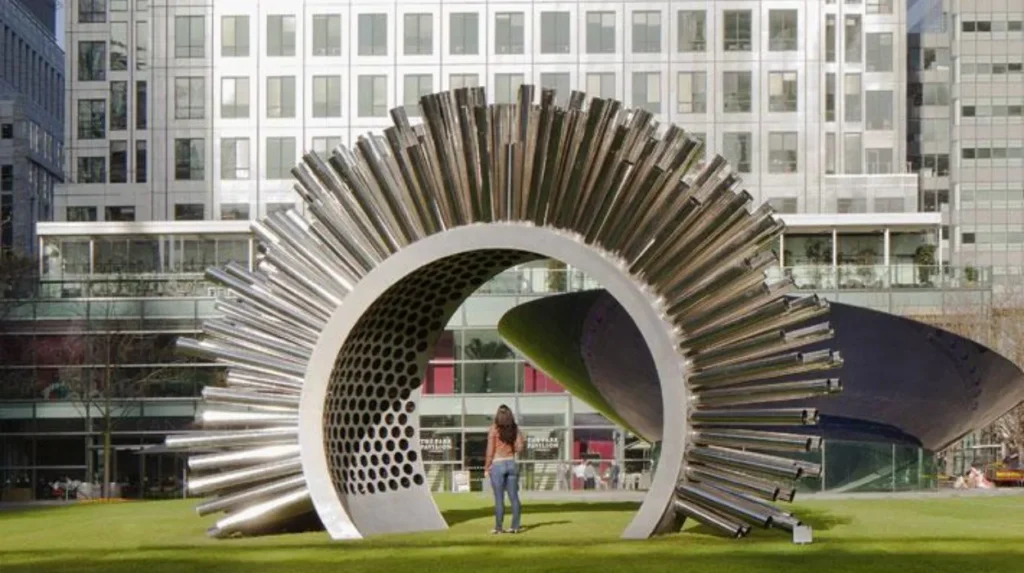
Canada Square, Cabot Square, Montgomery Square and Jubilee Park provide some of the most accessible settings for outdoor sculptures. Their landscaped surroundings combine contemporary artworks, seating areas, water features and views of Canary Wharf’s office towers.
The district’s public squares are important parts of its urban design. They provide open spaces between commercial buildings and create accessible locations for cultural installations.
Canada Square
Canada Square is one of the central public spaces in Canary Wharf. It sits beside One Canada Square and is surrounded by prominent commercial buildings.
The square provides a useful location for examining the scale of the district’s architecture. Visitors can observe how tall buildings define the surrounding public realm while landscaped areas and pedestrian routes create spaces for movement and relaxation.
Cabot Square
Cabot Square provides a landscaped setting within the main business district. Its planting, seating and surrounding architecture create a different atmosphere from the larger commercial plazas.
The square is also associated with Canary Wharf’s wider art programme, including artworks positioned around nearby pedestrian spaces.
Jubilee Park
Jubilee Park is an important green space within the Canary Wharf estate. It sits above Jubilee Place and the Jubilee line station.
Its water features, planted areas and surrounding office towers make it a useful location for combining landscape photography with architectural observation.
Montgomery Square
Montgomery Square is another useful stop when exploring Canary Wharf’s public spaces. Its open layout connects with surrounding pedestrian routes and the district’s wider programme of public installations.
Visitors should also look for temporary displays and seasonal activities when exploring the square.
These locations demonstrate how public art and landscape design contribute to the character of Canary Wharf beyond its commercial buildings.
Where Can Visitors Explore Interesting Modern Architecture in Canary Wharf?
Canary Wharf’s most recognisable architectural landmarks include One Canada Square, 8 Canada Square, Crossrail Place, One Park Drive and Newfoundland. These buildings demonstrate different approaches to skyscraper design, mixed-use development and contemporary urban infrastructure.
Canary Wharf is particularly important for visitors interested in modern commercial architecture. Its buildings represent several decades of high-rise development and include work by internationally recognised architectural practices.
One Canada Square
One Canada Square is the district’s best-known skyscraper. Designed by Argentine-American architect César Pelli, the building became a defining feature of the Canary Wharf skyline.
Completed in the early 1990s, the tower has a distinctive pyramidal roof and a reflective exterior. Its vertical proportions make it a prominent landmark from surrounding streets, squares and waterways.
The building is especially interesting for visitors studying the development of London’s commercial skyscrapers. Its design helped establish Canary Wharf as a major business district.
8 Canada Square
8 Canada Square is another major tower within the district. It was designed by Kohn Pedersen Fox and became widely associated with HSBC’s London headquarters.
The building represents the scale of international financial development in Canary Wharf. Its large floor area and prominent position contribute to the area’s dense commercial skyline.
In July 2024, plans were announced to redevelop the building into a mixed-use destination following the expiry of the existing HSBC lease. The proposed transformation includes workspace, leisure, entertainment, education and cultural facilities, with construction planned to begin in 2027.
Crossrail Place
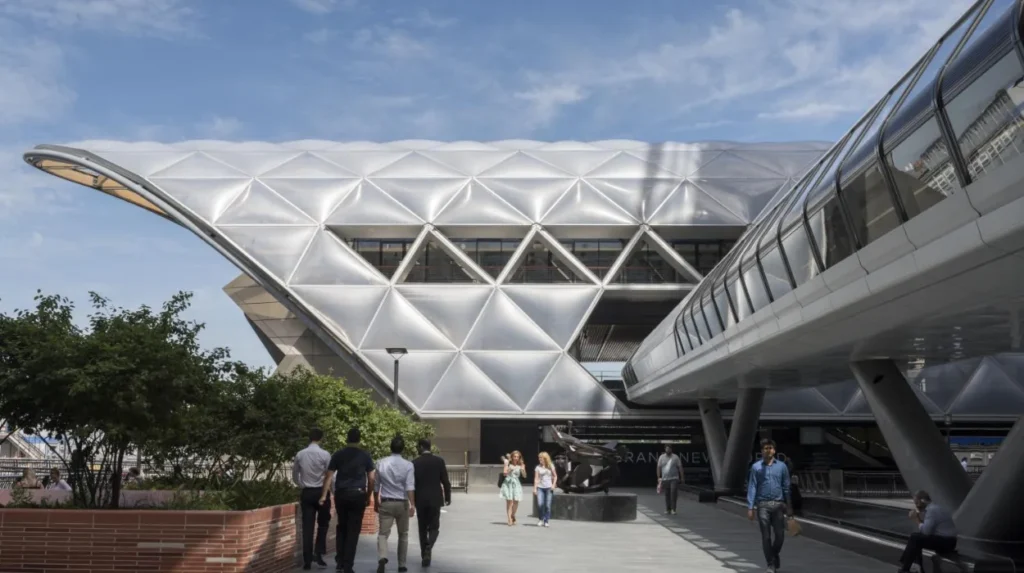
Crossrail Place is one of the district’s most interesting examples of transport-led architecture. Designed by Foster + Partners, the development combines transport infrastructure, retail facilities and a public rooftop garden.
Its curved roof structure creates a distinctive silhouette within the Canary Wharf skyline. The building also demonstrates how major transport developments can incorporate public spaces and environmental design.
One Park Drive
One Park Drive is a residential skyscraper in Wood Wharf designed by Herzog & de Meuron.
Its cylindrical form distinguishes it from the rectangular office towers around Canada Square. The building demonstrates how contemporary residential architecture introduces different shapes and building uses into the wider district.
Newfoundland
Newfoundland is another prominent residential tower in Canary Wharf. Its distinctive structural design and elevated position contribute to the changing character of the Isle of Dogs skyline.
Together, these buildings provide a broad introduction to contemporary architectural design in East London.
Why Is Crossrail Place Roof Garden Worth Visiting?
Crossrail Place Roof Garden is a free public garden above the Crossrail Place development. It combines contemporary architecture, botanical planting, sheltered walking paths and seating, offering visitors a distinctive combination of landscape design and urban infrastructure.
Crossrail Place Roof Garden is one of the most distinctive public spaces in Canary Wharf. It sits above the Crossrail Place development and provides an elevated garden environment surrounded by commercial buildings.
The garden was designed by landscape architecture practice Gillespies as part of the wider development by Foster + Partners. Its roof structure takes inspiration from the form of a ship’s hull, connecting the architecture with the maritime history of the former docks.
How Does the Garden Reflect Global Geography?
The garden’s planting arrangement references the Prime Meridian, the geographical line at zero degrees longitude.
Plants from the Eastern and Western hemispheres appear in different sections. Visitors can identify ferns, bamboo, Japanese magnolia and acer trees as they explore the landscaped pathways.
This geographical concept gives the garden an educational dimension. Its planting also introduces biodiversity into a highly developed commercial environment.
What Architectural Features Should Visitors Photograph?
The roof structure is one of the garden’s most recognisable features. Its timber and glass elements create an overhead framework that filters natural light into the garden.
The curved roof provides interesting photographic compositions, particularly when visitors photograph the contrast between the planted areas and the surrounding buildings.
The garden also contains seating areas and winding paths. These features make it suitable for visitors seeking a quieter break during an architectural walking tour.
According to Visit London, the garden is free to enter, with published visitor information listing daily opening hours of 9am to 9pm. Visitors should check current access arrangements before travelling. visitlondon.com+1
Where Can Visitors Find Interesting Waterfront Architecture and Public Art?
The waterfront around Westferry Circus, Eden Dock, Wood Wharf and Harbour Quay combines contemporary buildings, public sculptures and landscaped pedestrian spaces. These locations provide opportunities to photograph reflections, dockside structures and Canary Wharf’s changing skyline.
Canary Wharf’s waterfront is an important part of its architectural identity. The district developed around former commercial docks, and its contemporary public realm continues to incorporate water into the urban environment.
Westferry Circus
Westferry Circus is a distinctive public space at the western edge of Canary Wharf. Its landscaped upper level and surrounding road infrastructure create an unusual relationship between transport engineering and public landscaping.
The nearby riverside promenade provides views towards the River Thames. Visitors can photograph the contrast between the water, landscaped areas and modern office towers.
This location is particularly useful for wide-angle photography because it provides different perspectives of the district’s built environment.
Eden Dock
Eden Dock is a landscaped waterfront destination within the Canary Wharf estate. Its design introduces planting and public seating alongside the dock water.
The area also features contemporary public art, including installations that respond to the waterfront environment. The setting is particularly useful for photographing the relationship between architecture, water and landscape.
Wood Wharf
Wood Wharf is a newer mixed-use neighbourhood east of the main Canary Wharf business district. Its development introduces residential buildings, public spaces, restaurants and waterfront routes.
One Park Drive is a prominent architectural landmark in this area. The surrounding pedestrian spaces provide views of contemporary residential design and the dockside environment.
The neighbourhood demonstrates how Canary Wharf is expanding beyond its original concentration of office towers.
Harbour Quay
Harbour Quay is a landscaped waterfront space within Wood Wharf. Its open setting provides views across the water towards surrounding modern buildings.
Visitors can use its pedestrian areas for waterfront photography, short walks and outdoor breaks.
These locations demonstrate how the former dockland environment remains central to Canary Wharf’s modern identity.
Which Locations Offer the Best Photography Opportunities in Canary Wharf?
The best photography locations include Canada Square, Crossrail Place Roof Garden, Westferry Circus, Jubilee Park and Wood Wharf. Each location offers different compositions, including skyscraper views, architectural details, landscaped spaces and waterfront reflections.
Canary Wharf offers several distinct photography environments within a relatively compact area. Visitors can capture large-scale architectural compositions, close-up sculptural details and landscaped urban spaces without travelling between distant London attractions.
Where Can Visitors Photograph the Canary Wharf Skyline?
Canada Square provides a direct view of One Canada Square and the surrounding commercial towers. Its open public spaces allow photographers to capture the scale of the buildings from street level.
Westferry Circus provides another useful perspective. Its position near the River Thames creates opportunities for wider skyline compositions.
Where Are the Best Locations for Architectural Details?
Crossrail Place Roof Garden is suitable for photographing structural details, particularly its curved roof and timber framework.
One Park Drive offers another architectural subject because of its cylindrical form and distinctive residential design.
The contrast between the rounded residential tower and the angular commercial buildings creates interesting compositions.
Where Can Visitors Photograph Public Sculptures?
The public squares around Canary Wharf provide accessible locations for sculpture photography.
Jubilee Park, Canada Square and the surrounding pedestrian areas contain artworks and landscape features that can be photographed alongside nearby buildings.
Visitors should photograph artworks from public pedestrian areas and avoid obstructing walkways.
When Is the Best Time to Photograph Canary Wharf?
Early morning provides softer natural light and generally quieter public spaces. It is suitable for capturing building façades, architectural details and empty pedestrian areas.
Late afternoon offers changing light across the towers and waterways. Evening photography highlights illuminated buildings and public installations.
Winter visits are particularly useful for photographing seasonal light displays. However, temporary installations are not permanent features of the public art collection.
How Can Visitors Explore the Canary Wharf Art Trail on Foot?
Visitors can explore the Canary Wharf art trail independently by following pedestrian routes between its public squares, landscaped gardens and waterfront spaces. The free outdoor collection requires no general admission ticket or scheduled gallery appointment.
The art trail is a practical way to discover the district’s cultural attractions while exploring its architecture.
Canary Wharf Group publishes an art brochure identifying artworks and their locations. The guide organises the collection into geographical zones, helping visitors plan a route through the estate.
The free Bloomberg Connects digital guide also provides information about the collection. It includes photographs and audio features that help visitors understand individual artworks and their creators.
- Westferry Circus: Start with the waterfront promenade and surrounding landscape.
- Jubilee Park: Explore the landscaped public space and nearby architecture.
- Crossrail Place Roof Garden: Examine the timber roof structure and botanical planting.
- Harbour Quay: Continue towards Wood Wharf’s waterfront environment.
- Wood Wharf: Finish by exploring contemporary residential architecture and dockside public spaces.
The route provides a combination of public art, architecture, greenery and waterfront scenery. Visitors can extend the walk by exploring Canada Square and Cabot Square.
How Long Should Visitors Allow?
A short visit focusing on the main architectural landmarks takes approximately one to two hours. A more comprehensive exploration of the public art collection, gardens and waterfront spaces requires additional time.
Visitors interested in photographing individual sculptures should allow longer at each stop.
The route is also suitable for domestic business travellers who want to explore the district during free time between meetings.
How Does Canary Wharf’s Architecture Reflect Its Docklands History?
Canary Wharf’s contemporary architecture reflects the transformation of London’s historic commercial docks into a major financial and residential district. Its modern buildings, transport infrastructure and landscaped public spaces occupy an area shaped by maritime trade and industrial redevelopment.
Understanding the history of Canary Wharf helps visitors interpret its architecture and public art.
The West India Docks opened in 1802 and became an important part of London’s international trading network. The docks handled goods arriving through maritime routes and supported commercial activity across the capital.
However, changes in shipping technology, containerisation and port operations reduced the importance of London’s traditional enclosed docks. The West India Docks eventually closed to commercial shipping in 1980.
The subsequent redevelopment transformed large areas of former dockland into offices, transport facilities, residential neighbourhoods and public spaces.
One Canada Square became a defining symbol of this transformation during the early 1990s. Later developments introduced further office towers, residential buildings and transport-led architecture.
The district’s contemporary public art also connects with its historical setting. For example, Andrew Burton’s Chimney references the trading history of the docks through decorative patterns representing historic commercial activities.
As you explore the modern site, you are crossing land with a deep heritage. Discover the full [Insert Anchor Text for Canary Wharf’s Docklands History Article Here] to understand the area’s maritime origins, industrial development and transformation into a modern financial district.
This connection between historical infrastructure and contemporary design gives Canary Wharf a distinctive architectural character.
What Public Spaces and Green Features Complement Canary Wharf’s Architecture?
Canary Wharf combines landscaped parks, rooftop gardens, waterfront promenades and pedestrian squares. Jubilee Park, Crossrail Place Roof Garden and Wood Wharf demonstrate how green infrastructure improves the appearance and usability of a densely developed commercial district.
Green infrastructure is an important component of contemporary urban planning. It incorporates vegetation, water features and accessible outdoor spaces into built-up environments.
Canary Wharf uses these elements to create a more varied public environment.
How Does Jubilee Park Improve the Public Environment?
Jubilee Park provides landscaped space between commercial buildings. Its planting and water features introduce natural elements into the surrounding architectural environment.
The park is particularly useful for visitors who want to take a break between sightseeing locations.
How Does Wood Wharf Integrate Landscape Design?
Wood Wharf incorporates landscaped pedestrian areas alongside residential developments and dockside routes.
Its public spaces provide access to waterfront views and create connections between buildings, restaurants and walking routes.
Why Are Green Spaces Important in Commercial Districts?
Green spaces provide opportunities for outdoor recreation, walking and informal social activities. They also introduce vegetation into environments dominated by hard surfaces and tall buildings.
For visitors, these areas provide alternative photographic subjects and quieter locations away from busy commercial streets.
What Seasonal Public Art Events Can Visitors Experience in Canary Wharf?
Canary Wharf regularly hosts temporary art installations, outdoor exhibitions and seasonal cultural events. Winter Lights is a notable example, transforming public spaces with illuminated artworks and interactive displays during its annual winter programme.
The permanent art collection is not the only cultural attraction in Canary Wharf. Temporary installations introduce additional artistic experiences throughout the year.
What Is Canary Wharf Winter Lights?
Winter Lights is an annual light-art festival that uses public spaces across Canary Wharf as exhibition locations.
The programme features illuminated sculptures, digital installations and interactive artworks. Different artists contribute installations that explore light, technology and contemporary visual design.
The 2026 edition marked the festival’s tenth year and featured 16 installations across the estate. Locations included Cabot Square, Crossrail Place Roof Garden, Montgomery Square and Westferry Circus.
Are Temporary Installations Part of the Permanent Collection?
Temporary installations are separate from the permanent public art collection.
Permanent artworks remain part of the estate’s longer-term cultural environment, while seasonal installations operate for specific events or exhibition periods.
Visitors should check Canary Wharf Group’s official events information before planning a visit around a particular installation.
How Accessible Are Canary Wharf’s Public Art and Architectural Attractions?
Canary Wharf’s main public spaces are connected by pedestrian routes, shopping complexes and public transport stations. Visitors can explore major architectural landmarks and outdoor artworks without requiring access to private office buildings or restricted residential facilities.
Accessibility is an important consideration when planning a visit.
Canary Wharf is designed around a network of pedestrian areas, underground shopping connections and transport facilities.
Can Visitors Explore the Area Without Buying Tickets?
Yes. The outdoor public art collection and principal public spaces are free to explore.
Crossrail Place Roof Garden also offers free public access during its published opening hours.
Some commercial buildings have restricted interiors. Visitors should distinguish between publicly accessible outdoor spaces and private office or residential facilities.
Is Canary Wharf Suitable for Visitors with Reduced Mobility?
The district’s modern infrastructure includes lifts, escalators and step-free transport connections at key locations.
Crossrail Place and the main shopping developments provide indoor pedestrian connections that are useful during poor weather.
However, visitors should check individual building and garden access arrangements. Construction activity, temporary events and maintenance work also affect pedestrian routes.
Are There Facilities for Visitors?
Canary Wharf provides public seating, toilets, shopping facilities, restaurants and transport connections.
The estate also has free Wi-Fi in its public spaces, according to its published estate information. canarywharf.com
These facilities make the district suitable for tourists, local residents and business travellers exploring East London.
How Can Visitors Reach Canary Wharf’s Public Art and Architecture Attractions?
Visitors can reach Canary Wharf using the Jubilee line, Elizabeth line and Docklands Light Railway. These transport connections provide convenient access to the main business district, Crossrail Place, waterfront promenades and Wood Wharf.
Canary Wharf is one of East London’s best-connected commercial districts.
Its transport network makes it straightforward to plan an independent walking tour.
Which Underground Stations Serve Canary Wharf?
Canary Wharf is served by the Jubilee line and Elizabeth line.
The Jubilee line station provides connections towards central London and Stratford. The Elizabeth line offers connections towards central London, Heathrow Airport and other destinations across the capital.
Can Visitors Use the Docklands Light Railway?
Yes. The Docklands Light Railway (DLR) serves Canary Wharf and nearby Docklands locations.
West India Quay and Heron Quays are useful stations for visitors exploring different parts of the wider district.
Can Visitors Arrive by River?
Canary Wharf Pier provides river transport connections along the Thames.
Arriving by river offers a different perspective of the district’s waterfront architecture and surrounding buildings.
The combination of rail, underground and river transport makes Canary Wharf accessible for visitors travelling from different parts of London.
Explore More Area Guide
Exploring Regent’s Canal: Mile End and Tower Hamlets Walking Guide
Discover Roman Road Market and East London’s Historic Streets
How Is Canary Wharf’s Architecture Changing in the Future?
Canary Wharf continues to evolve through residential development, commercial refurbishment and improvements to public spaces. Projects such as the redevelopment of 8 Canada Square demonstrate the district’s transition towards a more mixed-use urban environment.
Canary Wharf’s architectural development is no longer limited to large office buildings.
New developments increasingly combine residential accommodation, retail facilities, restaurants, leisure spaces and publicly accessible environments.
What Is Happening at 8 Canada Square?
The proposed redevelopment of 8 Canada Square represents an important change in the building’s future use.
Plans announced in July 2024 include a transformation into a mixed-use destination. The proposals include new workspace, leisure, entertainment, education and cultural facilities.
Construction is planned to begin in 2027 following the expiry of the existing HSBC lease.
How Is Wood Wharf Changing the District?
Wood Wharf introduces a larger residential and mixed-use component into Canary Wharf.
Its buildings, landscaped spaces and waterfront routes create a different urban environment from the original office-focused business district.
One Park Drive is an important example of this architectural transition.
Why Does Mixed-Use Development Matter?
Mixed-use development combines different building functions within the same neighbourhood. Examples include residential apartments, offices, shops, restaurants and cultural spaces.
This approach supports activity beyond traditional working hours and creates more opportunities for residents and visitors to use public spaces.
Canary Wharf’s future architecture will therefore remain closely connected to changes in transport, sustainability, commercial property and urban living.
What Should Visitors Know Before Exploring Canary Wharf?
Visitors should check current opening hours, temporary installation schedules and public access information before exploring Canary Wharf. Comfortable walking shoes, a planned route and the official art guide help make the experience more productive.
A little preparation makes an architectural and public art visit easier.
Visitors should consider the following practical points:
- Admission: The outdoor public art collection is free to explore.
- Garden access: Check the latest Crossrail Place Roof Garden opening hours.
- Walking: Allow sufficient time to explore the main squares and waterfront.
- Photography: Visit early or late in the day for different lighting conditions.
- Seasonal events: Check the official Canary Wharf events calendar for temporary exhibitions.
- Transport: Use the Jubilee line, Elizabeth line or DLR.
- Art information: Consult the Canary Wharf public art brochure or Bloomberg Connects digital guide.
Visitors should also remember that Canary Wharf remains an active business and residential district. Some buildings, private courtyards and indoor facilities have restricted access.
Respecting these boundaries helps maintain a positive experience for visitors, residents and people working in the area.
Canary Wharf is an important destination for discovering public art and contemporary architecture in East London. Its collection of more than 100 artworks, distinctive skyscrapers, landscaped squares and waterfront spaces creates a varied cultural experience within a modern commercial district.
Visitors can discover sculptures by recognised artists, explore the architecture of One Canada Square and Crossrail Place, photograph the waterfront around Westferry Circus and experience the botanical environment of Crossrail Place Roof Garden.
Jubilee Park, Cabot Square and Wood Wharf provide further opportunities to explore the relationship between landscape design, public art and contemporary buildings.
The district also offers a connection with London’s industrial past. Its former docks have been transformed into a modern urban environment where historic infrastructure and contemporary development exist together.
For tourists, residents, photographers and architecture enthusiasts, Canary Wharf provides an accessible way to explore modern London through public spaces, creative installations and distinctive buildings.
Where can visitors find public art in Canary Wharf?
Visitors can find public art throughout Canada Square, Cabot Square, Jubilee Park, Montgomery Square, Westferry Circus and Wood Wharf. These locations feature sculptures, installations and artistic features within accessible public spaces.