Tower Hamlets is one of London’s most culturally diverse boroughs and a major destination for visitors interested in museums, galleries, heritage buildings, markets, performing arts and migration history. It stretches from the historic Tower of London and Wapping through Whitechapel, Spitalfields, Bethnal Green, Mile End and the Isle of Dogs.
- What makes Tower Hamlets a major cultural destination in East London?
- Which historic landmark should visitors explore first in Tower Hamlets?
- Why is the Museum of London Docklands important for cultural tourism?
- What can visitors discover at Whitechapel Gallery?
- Why should visitors explore Brick Lane and Spitalfields?
- Which museum best explains Victorian East End life?
- What can families experience at Young V&A in Bethnal Green?
- Why is Wilton’s Music Hall a key heritage venue?
- Where can visitors experience contemporary arts and cinema in Tower Hamlets?
- Which cultural markets should visitors include in a Tower Hamlets itinerary?
- How can visitors explore Jewish heritage in Tower Hamlets?
- What local history resources can visitors use for deeper research?
- Which parks add cultural value to a Tower Hamlets visit?
- How should visitors plan a cultural day across Tower Hamlets?
- Why is Tower Hamlets important for understanding London’s multicultural history?
- What should visitors prioritise when they have limited time?
- What makes Tower Hamlets worth adding to a London cultural itinerary?
The borough combines medieval landmarks, Victorian institutions, docklands heritage, contemporary art, South Asian culture, Jewish East End history and creative industries. Tower Hamlets Council describes the area as the heart of London’s East End and highlights its combination of historic and modern attractions.
Its cultural importance is also reflected in its heritage protection. Tower Hamlets contains 13 Grade I listed buildings, about 40 Grade II* listed buildings and around 2,000 Grade II listed buildings. The Tower of London and Tower Bridge are among its Grade I landmarks.
For tourists, this concentration creates a practical advantage. Several major cultural destinations sit within short walking, Underground, Overground, DLR or bus journeys of one another. A visitor can combine museums, galleries, markets and historic streets within a single day.
What makes Tower Hamlets a major cultural destination in East London?
Tower Hamlets combines royal heritage, docklands history, migration stories, contemporary art, theatre, museums, markets and multicultural neighbourhoods within one London borough, giving visitors a dense cultural itinerary. Its attractions range from the Tower of London to Brick Lane, Whitechapel and Bethnal Green.
Tower Hamlets takes its name from the historical relationship between the Tower of London and the hamlets surrounding it. The borough has evidence of human activity extending back thousands of years, including archaeological finds from the Stone and Bronze Ages.
Its modern identity developed through several major historical forces. The River Thames supported maritime trade. The West India Docks transformed the Isle of Dogs into a major commercial centre. Victorian industrialisation expanded communities across the East End. Migration created distinctive cultural districts.
The result is a borough where heritage is not confined to museums. Streets, religious buildings, markets, theatres, warehouses and former industrial sites all contribute to the visitor experience.
This makes Tower Hamlets particularly suitable for travellers who want cultural attractions beyond the conventional central London circuit.
Which historic landmark should visitors explore first in Tower Hamlets?
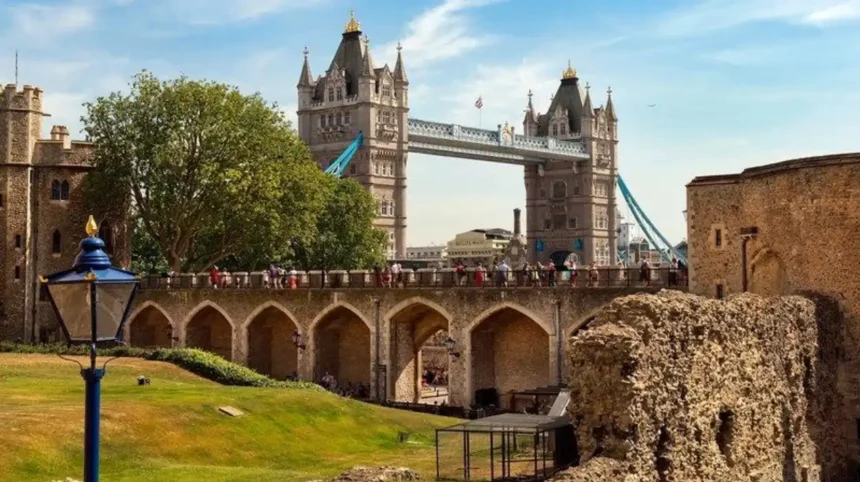
The Tower of London is the borough’s defining historic landmark and a UNESCO World Heritage Site. The medieval fortress combines royal history, military architecture, political imprisonment, ceremonial traditions and the Crown Jewels within one major riverside visitor attraction.
The Tower of London occupies a strategically important position beside the River Thames. William the Conqueror began construction of the White Tower in the 1070s, establishing the foundation of the complex that developed over subsequent centuries.
The fortress served several functions. It operated as a royal residence, defensive stronghold, prison, armoury, treasury and ceremonial site. Its buildings preserve evidence of changing royal and military priorities.
The Tower also contains the Crown Jewels, which form one of the most recognisable collections associated with the British monarchy. The White Tower contains displays connected with the Royal Armouries, including the Line of Kings and the Spanish Armoury. Tower Hamlets Council identifies the Tower as both a World Heritage Site and Grade I listed building.
For first-time visitors, the Tower provides the strongest introduction to the borough’s long relationship with national political and royal history.
As you explore this modern visitor destination, you are crossing land with a deep heritage. Read about the full to understand its origins.
Why is the Museum of London Docklands important for cultural tourism?
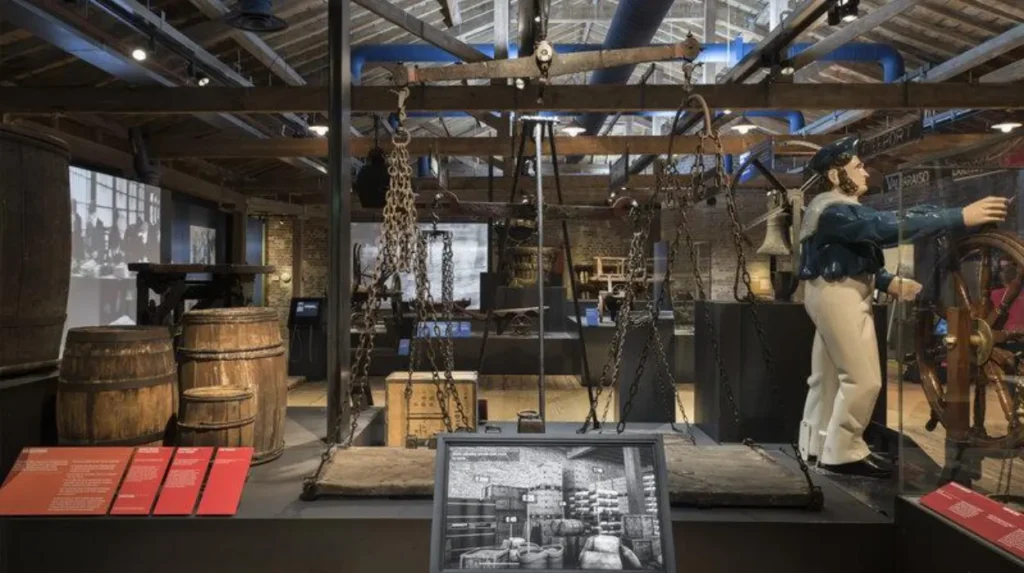
The Museum of London Docklands explains how the River Thames, international trade and the historic docks shaped London. Its galleries connect maritime commerce, migration, industry, slavery, redevelopment and modern Docklands within a preserved West India Docks warehouse.
The Museum of London Docklands is located in a historic warehouse beside the West India Docks. Its setting is important because the building itself forms part of the story presented inside the museum.
West India Docks opened in 1802 and became an important centre for the movement and storage of goods arriving from overseas. The dock system changed the physical and economic structure of the Isle of Dogs.
The museum places this history within the wider development of London as a global port. Its collections cover subjects including the River Thames, trade, migration, dock workers, social history and the transformation of Docklands.
Tower Hamlets Council identifies the museum as a key heritage collection and notes that it occupies part of a Grade I listed low warehouse at West India Docks.
The museum is particularly useful for visitors who want to understand why Canary Wharf, the Isle of Dogs and the wider Thames corridor developed into major commercial areas.
What can visitors discover at Whitechapel Gallery?
Whitechapel Gallery is one of London’s leading contemporary art institutions. Founded in 1901, it presents exhibitions, commissions, archives, education programmes and creative activity while retaining its historic role of bringing significant art to East London audiences.
Whitechapel Gallery opened in 1901 in a purpose-built Arts and Crafts building designed by Charles Harrison Townsend. Its original mission focused on providing East London residents with access to high-quality art and educational exhibitions.
The gallery has since developed an international reputation. Its historical programme included artists such as Pablo Picasso, Jackson Pollock, Mark Rothko and Frida Kahlo, alongside influential contemporary artists.
Its cultural role extends beyond temporary exhibitions. The institution maintains archives, educational resources, artist commissions, courses, a bookshop and other public facilities.
The building itself is part of the experience. Its architecture reflects the civic ambition behind the gallery’s creation at the beginning of the twentieth century.
Whitechapel Gallery is therefore a strong choice for visitors combining East End history with contemporary visual culture.
Why should visitors explore Brick Lane and Spitalfields?
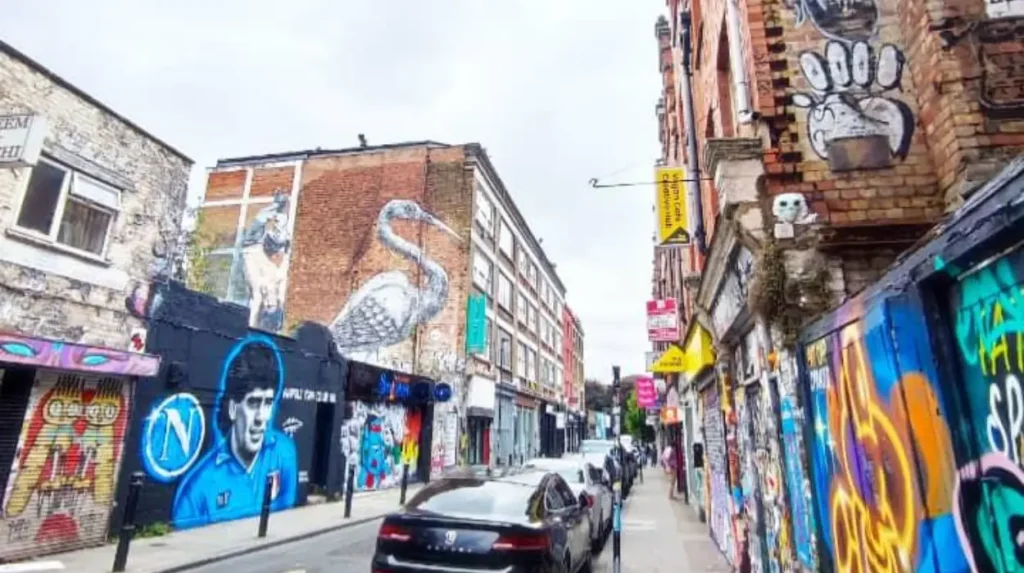
Brick Lane and Spitalfields provide one of Tower Hamlets’ clearest expressions of migration, food, fashion, markets, street art, architecture and creative culture. Historic buildings sit alongside Bangladeshi businesses, galleries, vintage shops, restaurants and busy markets.
Brick Lane has a long and complex history. The surrounding area first developed strongly through Huguenot settlement and textile production. Later communities included Jewish migrants and, from the twentieth century, a large Bangladeshi community.
The street remains closely associated with Bangladeshi cultural and economic life. Tower Hamlets records that Brick Lane became a centre for the Bangladeshi community from the 1970s, providing shops and services as the community settled and expanded.
Markets form another important component. The Sunday street market sells goods including clothing, jewellery, antiques, bicycles and vintage items. The Truman Brewery complex contains additional market and food spaces.
Street art also contributes substantially to the area’s contemporary cultural identity. Murals and changing artworks appear throughout Brick Lane and adjoining streets.
The architecture provides another layer. Tower Hamlets identifies Brick Lane as a medieval-origin street containing buildings redeveloped mainly during the eighteenth and nineteenth centuries. The surrounding conservation area retains historic terraces, shopfronts and religious buildings.
Visitors should therefore treat Brick Lane as a cultural district rather than simply a food destination.
Which museum best explains Victorian East End life?
The Ragged School Museum presents Victorian East End social history through the surviving buildings of a school opened by Dr Thomas Barnardo in 1877. Its classrooms, canal setting and collections explain education, poverty and childhood in nineteenth-century London.
The Ragged School Museum stands beside the Regent’s Canal near Mile End Park. The institution occupies former warehouses converted into one of the largest ragged schools in Victorian England.
The school opened in 1877 and served some of the poorest children in the Victorian East End. Its educational programme forms the basis of the museum’s interpretation today.
One of its most significant features is the reconstructed Victorian classroom. The museum states that approximately 16,000 children each year experience this classroom through its educational programme.
The museum underwent major refurbishment supported by £4.8 million from the National Lottery Heritage Fund. The restoration preserved the historic building while improving visitor access.
For visitors interested in social history, the museum provides a direct connection between the physical environment and everyday Victorian experiences.
The current visitor information lists step-free access throughout the building, with Mile End as the nearest Underground station.
What can families experience at Young V&A in Bethnal Green?
Young V&A in Bethnal Green is a free museum focused on children, young people, creativity, design and play. Its three principal galleries, Imagine, Play and Design, provide an accessible cultural experience for families exploring creative collections.
Young V&A occupies the historic Bethnal Green building formerly known as the V&A Museum of Childhood. The museum first opened in 1872, giving the building more than 150 years of institutional history.
Its current identity focuses on creativity and design. The three principal galleries are Imagine, Play and Design. The museum presents collections and activities designed around creative exploration.
General admission is free. The museum currently operates daily from 10.00 to 17.45, with galleries closing from 17.00.
The building also benefits from strong public transport connections. Bethnal Green Underground station is approximately a two-minute walk away, while Cambridge Heath Overground station is approximately five minutes away.
Young V&A works particularly well for family itineraries because its cultural offer combines museum collections with interactive experiences.
Why is Wilton’s Music Hall a key heritage venue?
Wilton’s Music Hall is a Grade II* listed performing arts and heritage venue in Tower Hamlets. Its surviving nineteenth-century interiors, theatre history, music programme and community activities make it one of the borough’s most distinctive cultural destinations.**
Wilton’s Music Hall preserves an important chapter in the development of popular entertainment in London’s East End.
The venue developed from a sequence of buildings associated with John Wilton’s entertainment business. Its surviving hall contains characteristic Victorian architectural details, including the famous barley-twist columns and historic staircase.
The building is Grade II* listed, placing it within the higher level of statutory protection for buildings of particular national architectural or historic importance.
Today, Wilton’s operates as a public arts and heritage venue. Its programme combines performance, culture, community work and heritage activity.
Its significance extends beyond theatre. The building demonstrates how entertainment developed for working-class East London audiences and how historic performance spaces can continue functioning as cultural venues.
A visit is therefore useful for travellers interested in architecture, theatre history and live performance.
Where can visitors experience contemporary arts and cinema in Tower Hamlets?
Rich Mix on Bethnal Green Road combines arts, cinema, performance and cultural programming in one East London venue. It provides a contemporary counterpart to Tower Hamlets’ museums and historic buildings, with programming linked to diverse communities and creative practice.
Rich Mix is located at 43–47 Bethnal Green Road. Tower Hamlets Council describes it as an arts centre, cinema and theatre.
The venue contributes to the borough’s contemporary creative infrastructure. Its location is significant because Bethnal Green Road connects several culturally active areas, including Brick Lane, Shoreditch and Bethnal Green.
For tourists, Rich Mix provides a useful evening option when a cultural itinerary needs a cinema screening, performance or arts event rather than another museum.
The venue also illustrates the wider transformation of East London into a major creative district.
Its cultural value sits alongside independent galleries, studios, restaurants, markets and community organisations that operate throughout the surrounding neighbourhood.
Which cultural markets should visitors include in a Tower Hamlets itinerary?
Brick Lane Market, Petticoat Lane Market and Columbia Road Flower Market provide different forms of commercial and social culture. Together they demonstrate the borough’s trading traditions, migrant communities, independent retail, food culture, fashion, antiques and contemporary visitor economy.
Markets are central to Tower Hamlets’ cultural identity. The council specifically identifies Petticoat Lane and Columbia Road Flower Market among the borough’s vibrant markets.
Brick Lane is especially significant for visitors interested in the relationship between markets and migration. Its Sunday market has become one of London’s major visitor destinations, selling clothing, jewellery, antiques, vintage goods and other products.
Petticoat Lane has a different commercial character and is associated with the long-standing market culture of the East End.
Columbia Road Flower Market provides another distinct experience, centred on horticulture and independent trading.
These markets demonstrate that cultural tourism does not depend exclusively on formal museums. Everyday commerce, food, language, architecture and retail traditions also communicate local history.
How can visitors explore Jewish heritage in Tower Hamlets?
Tower Hamlets contains important evidence of Jewish East End history, particularly around Whitechapel, Spitalfields, Stepney and Aldgate. Historic synagogues, schools, community buildings, former Jewish institutions and Brick Lane landmarks reveal successive waves of migration and settlement.
Jewish migration transformed the East End from the late nineteenth century. Tower Hamlets records that thousands of Yiddish-speaking Russian Jews arrived from the 1880s and that the Jewish population of the East End exceeded 100,000 around the beginning of the twentieth century.
The council’s Jewish heritage walking route connects historic locations including Fieldgate Street Synagogue, the East London Synagogue, Stepney Green Jewish School, St Botolph’s, Aldgate, the former Jewish National Theatre and sites around Brick Lane.
This heritage is particularly visible through reused buildings. Brick Lane Mosque, for example, occupies a building with earlier religious associations, reflecting the changing communities that have shaped the area.
A heritage walk provides more context than visiting isolated buildings because it demonstrates how migration created interconnected residential, religious, educational and commercial networks.
What local history resources can visitors use for deeper research?
Tower Hamlets Local History Library and Archives provides access to historical documents, maps, photographs, newspapers and other records covering the borough. Its collections extend back to 1384 and support research into buildings, streets, communities and East End history.
The archive is an important resource for visitors who want to move beyond major attractions and investigate specific streets or communities.
Its collections include documents dating from 1384, maps, plans, photographs and newspaper cuttings. The service also supports family history and research into the changing communities of Tower Hamlets.
This resource is particularly relevant to repeat visitors, researchers, students, writers and digital nomads working on local history projects.
It also demonstrates the depth of the borough’s documented past. The visitor experience does not end at museums because archives preserve evidence that connects individual buildings and streets with wider historical developments.
Which parks add cultural value to a Tower Hamlets visit?
Victoria Park and Mile End Park add public art, historic features, community events and open-air cultural experiences to Tower Hamlets itineraries. Mile End Park contains the Art Pavilion, while Victoria Park preserves historic landscape features and hosts major cultural events.
Victoria Park contains historic lakes, the Burdett Coutts Memorial, a bandstand and two original London Bridge stone alcoves. The park also hosts music and cultural festivals.
Mile End Park provides a different cultural environment. Its Art Pavilion hosts free exhibitions, while the Arts Park incorporates outdoor art and links to the Ecology Park and Regent’s Canal.
These spaces are valuable for visitors who want to combine cultural sightseeing with outdoor time.
Tower Hamlets parks also host festivals, arts programmes, music, dance and community events throughout the year.
For a longer itinerary, a park visit provides a practical transition between museums and indoor venues.
How should visitors plan a cultural day across Tower Hamlets?
A well-planned cultural day can connect historic landmarks, museums, markets, galleries and performing arts without crossing large parts of London. Grouping attractions by neighbourhood reduces travel time and creates a coherent route through Tower Hamlets’ history and culture.
A western itinerary can begin around the Tower of London before continuing towards Wapping and Whitechapel. Whitechapel Gallery then provides a direct transition from historic East London to contemporary art.
A Brick Lane and Spitalfields itinerary works well for visitors interested in migration, markets, architecture, food and street art. The area contains several connected cultural themes within a compact walking environment.
Bethnal Green provides another strong cluster. Young V&A offers a family-focused museum experience, while Bethnal Green Road connects visitors with contemporary arts and cultural venues.
Mile End provides a heritage-focused route through the Ragged School Museum, Regent’s Canal and Mile End Park.
The Isle of Dogs offers a different experience centred on docklands history and modern urban development, with the Museum of London Docklands providing the historical context.
Visitors should check individual venue opening hours, exhibition schedules, admission requirements and event arrangements before travelling because programmes change.
Why is Tower Hamlets important for understanding London’s multicultural history?
Tower Hamlets demonstrates how London developed through migration, trade, industry, religion, education and cultural exchange. Its Jewish, Bangladeshi, Huguenot, dockland and wider East End histories remain visible through buildings, markets, museums, food businesses, religious sites and public spaces.
The borough’s cultural landscape is layered rather than uniform.
Huguenot refugees contributed to textile production around Spitalfields. Jewish communities established businesses, schools, religious institutions and social organisations across the East End. Bangladeshi communities later developed strong cultural and commercial networks around Brick Lane, Whitechapel and neighbouring streets.
The docklands added another international dimension. Goods, workers and commercial networks connected Tower Hamlets with destinations around the world.
Contemporary arts institutions add a further layer. Whitechapel Gallery, Rich Mix and other creative venues connect the borough with London’s international cultural sector.
This combination makes Tower Hamlets particularly valuable for cultural tourism because the visitor can examine national history and local community history within the same geographical area.
Explore More Area Guide
Tower Hamlets Highlights: Top Places to Explore East London 2026
Tower Hamlets Tourist Day Guide: Attractions, Food & Culture 2026
What should visitors prioritise when they have limited time?
Visitors with limited time should prioritise the Tower of London, Museum of London Docklands, Whitechapel Gallery and Brick Lane. Families should add Young V&A, while heritage-focused visitors should include the Ragged School Museum or Wilton’s Music Hall.
The Tower of London provides the strongest introduction to royal and medieval history.
The Museum of London Docklands explains the economic importance of the Thames and historic port.
Whitechapel Gallery covers more than a century of modern and contemporary art.
Brick Lane adds living cultural heritage through migration, markets, food, architecture and street art.
Young V&A is the strongest family-focused option among the major museums in the borough, with free general admission and dedicated Imagine, Play and Design galleries.
The Ragged School Museum provides deeper social history, while Wilton’s Music Hall adds performance and architectural heritage.
This selection covers the principal cultural themes without requiring visitors to travel repeatedly between distant parts of London.
What makes Tower Hamlets worth adding to a London cultural itinerary?
Tower Hamlets offers an unusually concentrated combination of royal heritage, maritime history, migration, contemporary art, Victorian social history, markets, architecture and live culture. Its attractions reveal both London’s national history and the everyday communities that shaped the capital.
The borough contains globally recognised landmarks and smaller institutions with highly specific local stories.
Its listed buildings provide architectural evidence. Its museums preserve material history. Its galleries document artistic development. Its markets demonstrate living commercial traditions. Its religious and community buildings reveal migration. Its theatres preserve popular entertainment traditions.
Tower Hamlets also remains an active cultural environment rather than a static heritage district. The council continues to programme cultural events, festivals, exhibitions, music, theatre, markets and community activities across the borough.
For tourists, this makes Tower Hamlets one of the most comprehensive cultural areas to explore in East London.
For residents, researchers and business travellers, its museums, archives, galleries, parks and cultural venues provide additional opportunities beyond conventional sightseeing.
A Tower Hamlets cultural itinerary therefore works best when visitors combine major landmarks with neighbourhood exploration. The result is a broader understanding of how London developed through power, trade, migration, creativity and community.
What are the best cultural places to visit in Tower Hamlets?
The best cultural places include the Tower of London, Museum of London Docklands, Whitechapel Gallery, Brick Lane, Young V&A, Ragged School Museum and Wilton’s Music Hall. Each attraction covers a different aspect of East London history, art, heritage or community culture.