Key Points
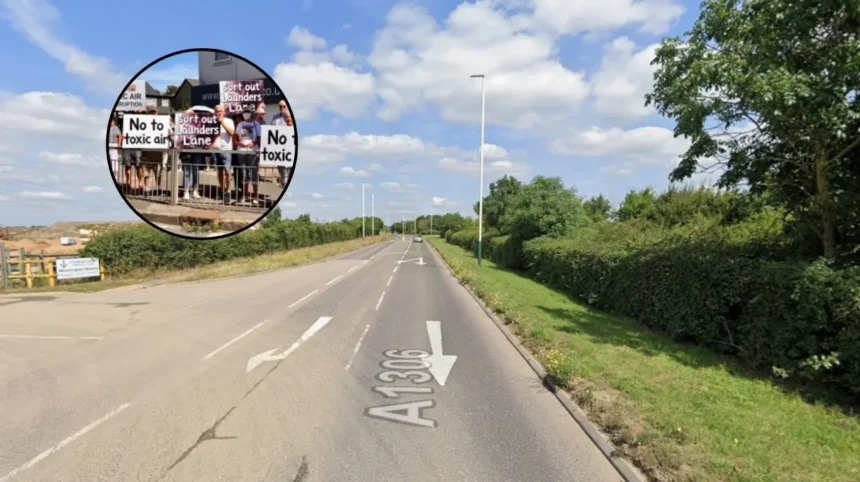
- Weekly Protest Operations: Local residents gathered near the A1306 in Rainham on Saturday, 15 August, continuing weekly demonstrations against ongoing fumes and underground smouldering at the Launders Lane site.
- Severe Personal Health Concerns: Protesters voiced deep alarm over respiratory and cardiovascular conditions, citing family illnesses including strokes, Chronic Obstructive Pulmonary Disease (COPD), emphysema, and severe asthma.
- Public Health Enquiry Demanded: Campaigners are urging authorities to establish an official public health enquiry to rigorously evaluate the local medical and environmental footprint of the site.
- Political Calls for Intervention: Local representative Councillor Luke Barry publicly criticised past council administrations for “dragging their heels” and demanded direct intervention from Central Government, the Mayor of London, and the Environment Agency.
- Distinction on Causality: Environmental and medical frameworks stress that individual medical conditions stem from multiple complex variables, requiring formal scientific investigation to establish any direct link to site emissions.
Rainham (East London Times) August 17, 2026 — Demonstrators gathered near the A1306 carrying placards to express their growing frustration over persistent, choking fumes emanating from the neighbouring Launders Lane site. The demonstration on Saturday, 15 August, represents the latest iteration of weekly public protests staged by local inhabitants who state that their daily quality of life remains severely compromised by ongoing smoke and fires.
As reported by Sandra Rowse of The Havering Daily, resident Sonia spoke openly during a live newsfeed broadcast regarding the profound physical toll she believes the site has taken on her family circle. Sonia stated:
“I have had two strokes and I’m only 42. My husband is 50 and has COPD and emphysema. Myself and my daughter have severe asthma. It is a nightmare living here.”
Describing the daily environmental conditions inside her home, Sonia further explained:
“We can’t open our windows, we wake up to fumes that are choking us. I don’t want to die, I’m too young. I have a daughter.”
Her testimony reflects the broader anxiety among households situated adjacent to the Launders Lane compound. Residents maintain that they have endured the consequences of repeated subterranean outbreaks, surface blazes, and acrid smoke plumes for an unacceptable period.
What Are The Primary Demands Of The Rainham Campaigners?
Protesters are actively calling for a comprehensive public health enquiry. Campaigners assert that formal statutory scrutiny is required to systematically evaluate potential health consequences for those living downwind of the area.
As reported by Sandra Rowse of The Havering Daily, the central message from local campaigners remains direct:
“We are not asking for much — just the right to breathe like everyone else.”
Residents express a simple objective: to be capable of opening their windows, using their residential gardens, and living without constant fear of airborne pollutants.
However, medical standards and public health guidelines require a clear distinction between resident concerns and verified clinical causality. Individual health diagnoses—including strokes, asthma, emphysema, and COPD—are multi-factorial medical conditions influenced by genetic, lifestyle, and environmental variables. Establishing whether exposure to smoke or specific ambient particulates from Launders Lane directly caused or exacerbated specific medical conditions requires independent epidemiological studies and clinical research.
How Are Local Political Figures Responding To The Crisis?
Political figures attended the weekend demonstration to align themselves with the residents’ demands. As reported by Sandra Rowse of The Havering Daily, Councillor Luke Barry declared:
“Previous administrations have dragged their heels with the Launders Lane Crisis and this has gone on for far too long. It’s about time that it gets more attention from Central Government, the Mayor of London and the Environment Agency.”
Councillor Barry added his perspective on the political direction of the local authority, stating:
“I have full confidence that the new administration will make significant progress during its tenure.”
Local representatives assert that because the issue spans local council boundaries, private land ownership barriers, and regional environmental regulation, coordinated multi-agency backing from national authorities and statutory body regulators is essential to secure a permanent solution.
Explore More Rainham News
Residents Protest Launders Lane Fires | Rainham 2026
Berwick Manor Hotel Licence Review by Havering Council in Rainham 2026
Background Of The Particular Development
The controversy surrounding Launders Lane—frequently referred to locally as Arnolds Field—stretches back several decades. Originally operated as a commercial sand and gravel extraction pit during the 1960s, the 17-hectare site subsequently experienced extensive periods of illegal and unregulated waste tipping. Tens of thousands of tonnes of commercial refuse, construction debris, and unmapped materials were dumped meters above permitted levels.
Over the last decade, the site earned the local moniker “The Rainham Volcano” due to frequent underground combustion. Decomposing organic matter buried beneath deep layers of refuse generates intense thermal heat, which spontaneously ignites surrounding materials during dry weather conditions. The London Fire Brigade has been called to the location hundreds of times over recent years to tackle surface blazes and smouldering hotspots.
Remediation has been historically hindered by complex land ownership structures. Because the land remains in private hands, public bodies faced legal limits regarding direct intervention on private property without specific statutory thresholds being met.
A major legal shift occurred following action by community campaigners under the banner Clear the Air in Havering. A High Court judicial review successfully quashed an earlier council assessment, leading Havering Council to formally designate Arnold’s Field as “contaminated land” under Part 2A of the Environmental Protection Act 1990. Environmental testing confirmed the presence of heavy metals, polycyclic aromatic hydrocarbons (PAHs), and asbestos fibers within the soil mass. Furthermore, scientific monitoring by academic institutions, including Imperial College London, identified elevated concentrations of fine particulate matter ($\text{PM}_{2.5}$) released during active fire events.
Prediction: How This Development Can Affect Rainham Residents And Stakeholders
The persistent public protests, paired with the formal classification of Launders Lane as contaminated land, are expected to trigger several short- and long-term impacts for the local community and regulatory authorities:
- Accelerated Statutory Remediation: The statutory designation of the site under Part 2A of the Environmental Protection Act gives Havering Council enhanced legal powers to issue formal remediation notices to the private landowner. If the private owner fails to execute required capping or clearance work, the council can legally step in to carry out emergency works and pursue cost recovery.
- Potential Property Market Stagnation: Ongoing high-profile media coverage and persistent health concerns surrounding air quality could temporarily impact the local housing market in immediate postcodes around the A1306, affecting home valuations and buyer confidence until physical remediation commences.
- Increased Public Health Oversight: Continued community campaigning for a public health enquiry makes it increasingly likely that regional health authorities, alongside the UK Health Security Agency (UKHSA), will carry out targeted health monitoring or localized epidemiological assessments to establish clearer data on air quality impacts.
- Long-Term Multi-Agency Investment: Pressure on Central Government, the London Fire Brigade, and the Environment Agency is likely to accelerate funding allocation for short-term suppression solutions—such as specialized polymer ground covers—while comprehensive long-term soil remediation strategies are finalized.