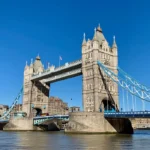
Tower Hamlets is one of the most varied leisure destinations in East London. The borough combines major historic landmarks, large public parks, riverside districts, museums, markets, sports facilities, cultural venues and modern entertainment areas. Its location beside the River Thames also places several major attractions within easy reach of central London.
- What makes Tower Hamlets a major leisure destination in East London?
- Which parks are the best leisure destinations in Tower Hamlets?
- What can visitors do at Victoria Park?
- Which museums and cultural attractions should visitors explore?
- Where can visitors experience markets and local shopping in Tower Hamlets?
- What can visitors experience around Canary Wharf?
- Where are the best riverside leisure destinations in Tower Hamlets?
- Which leisure destinations are best for families?
- Where can visitors enjoy sport and active leisure?
- What free leisure activities can visitors enjoy in Tower Hamlets?
- How can visitors combine Tower Hamlets leisure destinations into a day?
- Why should visitors include Tower Hamlets in an East London itinerary?
- What should visitors know before exploring Tower Hamlets leisure destinations?
- What is the overall visitor value of Tower Hamlets as a leisure destination?
Tower Hamlets extends from the City of London towards Stratford and the Isle of Dogs. Its southern boundary follows the River Thames, while areas including Whitechapel, Spitalfields, Bethnal Green, Bow, Poplar, Limehouse, Wapping and Canary Wharf create distinct visitor experiences. The council describes the borough as a place with a strong mixture of history, culture, markets and modern attractions.
The leisure offer is particularly strong because visitors can combine outdoor recreation with cultural tourism in a single day. Victoria Park provides extensive green space, Museum of London Docklands explains the area’s maritime history, Brick Lane delivers food and market culture, and Canary Wharf provides contemporary architecture, public spaces and dining.
The borough also has more than 120 parks and green spaces. Fourteen currently hold Green Flag Awards, demonstrating the scale and quality of its managed public open space.
What makes Tower Hamlets a major leisure destination in East London?
Tower Hamlets is a major East London leisure destination because it combines historic landmarks, parks, museums, markets, riverside spaces, sport and entertainment within one well-connected London borough. Visitors can experience traditional East End culture and modern Docklands attractions during the same trip.
Tower Hamlets has a distinctive geographical position. It sits between central London and the wider East End, with major transport connections serving Whitechapel, Bethnal Green, Mile End, Canary Wharf, Poplar, Limehouse and other districts.
Its identity comes from several layers of development. The Tower of London represents medieval and royal history. The historic docks represent London’s international trading past. Brick Lane and surrounding neighbourhoods reflect successive migrant communities. Canary Wharf represents the transformation of former docklands into a major financial and commercial district.
The River Thames remains a major geographical feature. Riverside locations around Wapping, Limehouse, Canary Wharf and the Isle of Dogs provide walking routes, waterside views and access to landmarks.
The borough’s leisure infrastructure also includes seven council-managed leisure centres. These facilities provide opportunities for swimming, exercise classes, court sports and other physical activities.
This combination gives visitors several ways to structure a day. A traveller can start with a park walk, visit a museum, explore a market and finish with dining or entertainment.
Which parks are the best leisure destinations in Tower Hamlets?
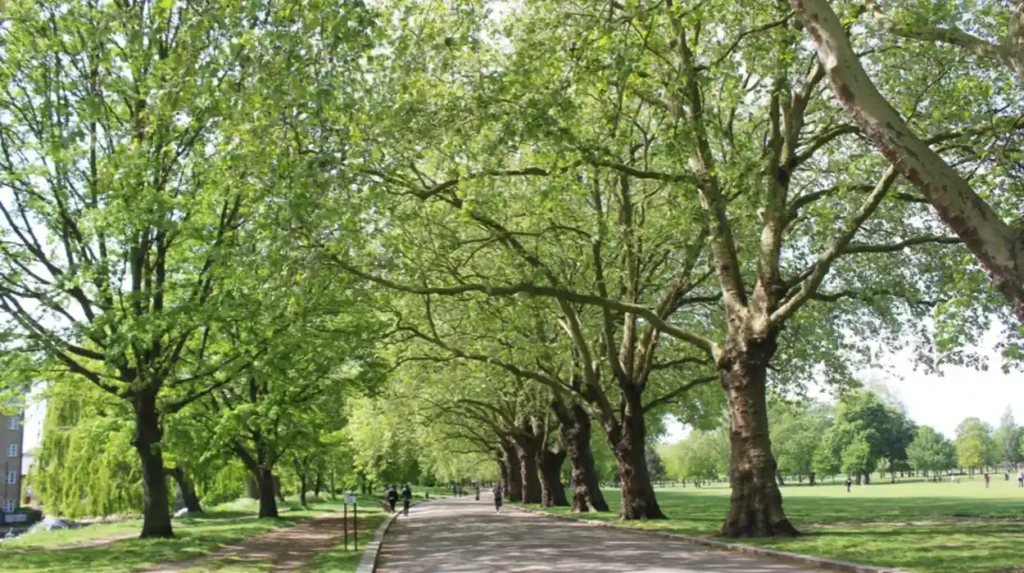
Victoria Park, Mile End Park, Mudchute Park and Farm, Tower Hamlets Cemetery Park and Island Gardens provide some of the borough’s strongest outdoor leisure experiences. They offer walking, gardens, sport, nature, recreation and riverside views for different visitor interests.
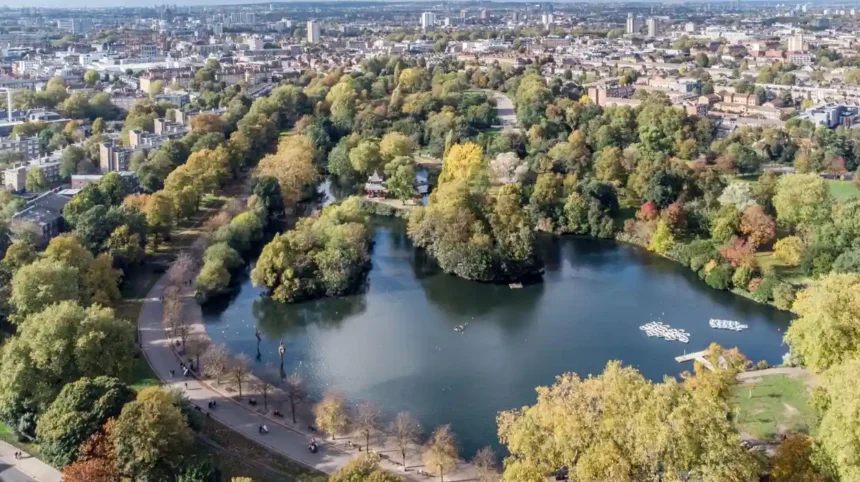
Victoria Park is the largest and one of the most important public parks in Tower Hamlets. The council identifies it as an 86-hectare park and London’s oldest public park, having opened in 1845. It was created for the working population of the East End and remains a major community and leisure space.
The park contains lakes, gardens, historic features, sports facilities, playgrounds and open lawns. Visitors can also find tennis courts, football pitches, cricket facilities, a bowling green and an outdoor gym.
Mile End Park provides a different outdoor experience. It contains sports facilities, an Ecology Park, the Arts Pavilion and areas designed for recreation. The park also includes an Active Zone at Wennington Green with outdoor gym equipment and a multi-use games area.
Mudchute Park and Farm is one of London’s notable urban countryside destinations. It occupies part of the Isle of Dogs and provides open space, farm animals and educational activities within a densely developed part of East London.
Tower Hamlets Cemetery Park provides another distinctive experience. It is both a historic cemetery and a local nature reserve, combining heritage, wildlife habitats and walking routes.
Island Gardens offers an important riverside green space on the Isle of Dogs. Its location provides views towards Greenwich and the historic Old Royal Naval College across the Thames.
The borough’s park network is extensive. The council records more than 120 parks and green spaces, while its designated registered landscapes include Victoria Park, Boundary Gardens, Island Gardens, Museum Gardens and the Novo Cemetery.
What can visitors do at Victoria Park?
Visitors can walk around historic lakes and gardens, use sports facilities, visit playgrounds, relax on open lawns, use the skate park, attend events and enjoy cafés at Victoria Park. Its 86 hectares provide substantial space for outdoor recreation in East London.
Victoria Park is particularly suitable for visitors who want an outdoor destination without leaving the urban environment.
Its historical importance strengthens the leisure experience. The park opened in 1845 and was designed as a public space for East London’s working population. It has therefore served recreational and community purposes for more than 180 years.
The park contains the Burdett-Coutts Fountain, historic lakes and two original stone alcoves from London Bridge. Its gardens include the Old English Garden, Floral Sunken Garden and other planted areas.
Active visitors have several options. The park provides football pitches, cricket facilities, tennis courts, bowling and outdoor gym equipment. A skate park is also available near The Hub café.
The park also supports large-scale cultural events. Tower Hamlets Council states that Victoria Park hosts festivals, music and cultural events during the year.
For visitors interested in the historical development of East London’s public spaces, the modern park is also a gateway into the area’s past. As you explore the modern site, you are crossing land with a deep heritage. Read about the full to understand its origins.
Which museums and cultural attractions should visitors explore?
Museum of London Docklands, the Tower of London, the Ragged School Museum and local galleries provide major cultural experiences in Tower Hamlets. They cover London’s port history, royal history, Victorian education, migration, commerce and the development of East London.
Museum of London Docklands is one of the most important cultural destinations in the borough. Located at West India Quay, the museum examines London’s relationship with the River Thames, docks, trade and global commerce.
Its permanent galleries cover the history of London’s docks and the people connected with them. The museum also presents the history of slavery and its relationship with London’s trading economy. Admission to the permanent galleries is free, according to Visit London.
The museum is also designed for families. The Mudlarks gallery provides an interactive environment for children, while the wider museum offers historical exhibitions and educational activities.
The Tower of London is another major attraction. The historic fortress sits beside the Thames and has served as a royal palace, prison, armoury and treasury. Its long history makes it one of the most significant heritage destinations accessible from Tower Hamlets.
The Ragged School Museum provides a more specialised East End experience. Located beside the Regent’s Canal, it occupies buildings connected with Victorian education and working-class communities. Tower Hamlets Council notes that the museum underwent restoration and renovation and now includes exhibition space and a café.
Visitors interested in cultural tourism can also explore local galleries and arts venues around Whitechapel, Bethnal Green, Spitalfields and Canary Wharf.
These destinations demonstrate that leisure tourism in Tower Hamlets is not limited to entertainment. The borough provides structured opportunities to understand London’s economic, social and cultural development.
Where can visitors experience markets and local shopping in Tower Hamlets?
Brick Lane, Columbia Road, Petticoat Lane, Spitalfields and other local markets provide some of East London’s strongest shopping and food experiences. Visitors can find fashion, flowers, street food, antiques, crafts, art, jewellery and specialist goods.
Markets are central to the visitor experience in Tower Hamlets. The council describes the borough as having a particularly diverse selection of street markets.
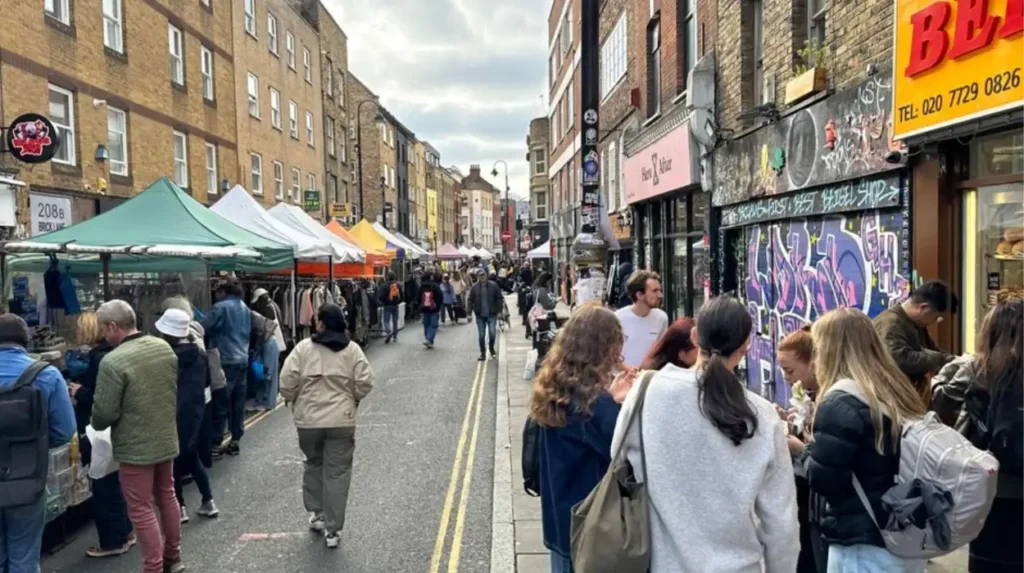
Brick Lane Market is one of the best-known examples. The market operates on Sundays and is associated with fashion, food, art, vintage goods and street culture. The council records its establishment in 1888.
The wider Brick Lane area also has a strong Bangladeshi cultural identity. Restaurants, cafés, independent shops and food businesses make the area particularly relevant for visitors interested in East London’s multicultural heritage.
Columbia Road Flower Market provides a different experience. It is strongly associated with flowers, plants and gardening products and is one of the area’s established Sunday destinations.
Petticoat Lane, associated with Middlesex Street and the surrounding streets, provides another market experience focused historically on fashion, textiles and related goods.
Old Spitalfields Market is a covered market close to the City and Brick Lane. It combines independent traders, restaurants, cafés and retail businesses.
The market network allows visitors to explore different parts of Tower Hamlets through shopping. Each location has a distinct commercial and cultural identity.
For tourists, markets also provide opportunities to combine food and leisure. A market visit can become part of a wider walking itinerary covering Brick Lane, Spitalfields, Whitechapel or Shoreditch.
What can visitors experience around Canary Wharf?
Canary Wharf provides a modern leisure environment centred on contemporary architecture, riverside public spaces, restaurants, retail, cultural programming and events. Its Docklands setting contrasts sharply with Tower Hamlets’ historic East End streets and traditional markets.
Canary Wharf occupies a former docklands area that has undergone major redevelopment. Today it is one of London’s principal business districts and an important leisure destination outside working hours.
The district contains high-rise commercial buildings, public squares, retail areas, restaurants and landscaped spaces. Its position around the docks creates a strong connection between architecture and water.
Visitors can walk through the estate, explore public art, dine at restaurants and access cultural events. The district also provides a convenient base for combining leisure with business travel because of its concentration of offices, hotels, shops and transport connections.
Canary Wharf’s identity is closely connected with the transformation of London’s Docklands. The council describes the area as an internationally recognised financial centre, with Canary Wharf Tower acting as a major landmark on the East London skyline.
The area works particularly well for visitors who prefer modern attractions. It provides a contrast with nearby historic locations such as the Tower of London, Wapping and Limehouse.
Riverside walks around the docks also provide opportunities for photography, architecture viewing and relaxed exploration.
Where are the best riverside leisure destinations in Tower Hamlets?
The Thames waterfront around Wapping, Limehouse, Canary Wharf, the Isle of Dogs and Island Gardens provides walking, architecture, historic landmarks and panoramic views. These areas connect East London’s industrial history with its modern residential and commercial landscape.
The River Thames forms the southern boundary of Tower Hamlets and has shaped the borough’s development for centuries. The docks, warehouses and wharves supported London’s trading economy and influenced the growth of surrounding neighbourhoods.
Wapping provides one of the strongest historic riverside environments. Former warehouses and wharves reflect the area’s maritime past, while riverside paths provide views across the Thames.
Limehouse offers another distinctive waterfront setting. The district combines canals, historic buildings, residential streets and access to the Thames.
Canary Wharf presents the modern Docklands landscape. Tall commercial buildings surround water-filled dock basins, creating a distinctive urban environment.
Island Gardens provides an important viewpoint across the Thames. From this area, visitors can see Greenwich and the historic buildings on the opposite bank.
The riverside also connects several attractions. Visitors can create walking routes that combine historic sites, parks, museums, restaurants and public spaces without relying entirely on private transport.
The waterfront therefore functions as both a leisure destination and a geographical framework for exploring Tower Hamlets.
Which leisure destinations are best for families?
Victoria Park, Mile End Park, Museum of London Docklands, Mudchute Park and Farm and the borough’s playgrounds provide strong family leisure options. They combine outdoor activity, educational experiences, nature, sports and child-friendly facilities across Tower Hamlets.
Victoria Park is particularly suitable for families because it contains playgrounds, open lawns, gardens, a lake and sports facilities. The park also has cafés and spaces for informal recreation.
Mile End Park provides another family-oriented destination. Its facilities include play areas, sports spaces, the Ecology Park and the Arts Pavilion. The council also supports family activities and community events within the park.
Museum of London Docklands offers an educational alternative for rainy days. Its permanent galleries explain London’s docklands history, while Mudlarks provides an interactive family gallery.
Mudchute Park and Farm introduces children to animals, farming and nature within the urban environment.
Tower Hamlets also has more than 60 playgrounds across its parks and open spaces. The council has invested in improving accessibility and inclusive play facilities.
Families therefore have access to both free outdoor destinations and structured cultural attractions.
Where can visitors enjoy sport and active leisure?
Visitors seeking active leisure can use Tower Hamlets parks, outdoor gyms, sports pitches, leisure centres, tennis courts, cycling routes and specialised activities. Victoria Park and Mile End Park provide particularly broad choices for outdoor exercise and recreation.
Tower Hamlets provides an extensive network of active leisure facilities.
Victoria Park includes football pitches, cricket wickets, tennis courts, a bowling green and outdoor gym equipment. These facilities support both organised and informal exercise.
Mile End Park also provides sports facilities and an outdoor Active Zone. Its multi-use games area supports different forms of recreational activity.
The borough has seven leisure centres managed by Be Well. Facilities include exercise classes and court hire, with availability varying between centres.
For visitors looking for a more unusual activity, Revolution Karting in the Mile End area provides an outdoor karting circuit. Tower Hamlets Council identifies it as a 650-metre track with karts capable of reaching 50 mph.
The borough also supports Mile End parkrun, a free weekly 5-kilometre community running event held on Saturdays. Advance registration is required.
These options make Tower Hamlets relevant for visitors who want to include exercise within a city break.
What free leisure activities can visitors enjoy in Tower Hamlets?
Visitors can enjoy parks, walking routes, public gardens, selected museums, markets and community spaces without paying general admission. Museum of London Docklands offers free permanent galleries, while Tower Hamlets parks provide extensive open-air recreation.
Free leisure opportunities make Tower Hamlets accessible to travellers managing a London budget.
The borough’s parks are the most extensive free resource. Visitors can walk through Victoria Park, Mile End Park, Island Gardens, Bethnal Green Gardens and other public spaces without an admission charge.
Museum of London Docklands also provides free entry to its permanent galleries. This makes it one of the strongest free cultural attractions in the borough.
Mile End parkrun provides another free activity for registered participants. It combines physical activity with a community event format.
Visitors can also explore market streets without paying admission. Brick Lane, Columbia Road and other market districts function as public urban environments where browsing, architecture viewing and street photography form part of the leisure experience.
Tower Hamlets Council also runs seasonal programmes. Its 2026 Summer of Fun programme includes free family activities, sports, workshops, gardening, reading activities and cultural events across the borough.
Free destinations therefore form an important part of the borough’s visitor economy.
How can visitors combine Tower Hamlets leisure destinations into a day?
Visitors can combine a park, museum, market, riverside walk and dining area in one itinerary because Tower Hamlets contains closely connected leisure districts. A practical route can link Victoria Park, Mile End, Brick Lane, Spitalfields, the Thames and Canary Wharf.
A visitor focusing on green space can begin at Victoria Park. The park provides enough attractions for a substantial morning visit, including gardens, lakes, sports facilities and historic features.
A cultural itinerary can then move towards Mile End and the Regent’s Canal, followed by the Ragged School Museum or Museum of London Docklands.
A food and shopping itinerary can focus on Brick Lane and Spitalfields. These areas provide markets, restaurants, cafés and independent retail.
A riverside itinerary can continue towards Wapping, Limehouse or Canary Wharf. Visitors can then finish around the docks with dining and modern architecture.
The exact sequence depends on opening times and the visitor’s interests. Markets have specific trading days, while museums and leisure facilities operate according to published schedules.
For business travellers, Canary Wharf and nearby Docklands provide a practical leisure environment after working hours. Digital nomads can combine cafés and public spaces with cultural destinations, although individual venue policies determine whether laptop working is permitted.
For families, Victoria Park, Mile End Park and Museum of London Docklands provide a strong combination of outdoor and indoor activities.
Why should visitors include Tower Hamlets in an East London itinerary?
Tower Hamlets deserves a central place in an East London itinerary because its leisure destinations represent several distinct aspects of London. Visitors can experience public parks, historic docks, museums, markets, multicultural neighbourhoods, modern architecture and riverside recreation within one borough.
The borough’s main strength is variety.
Victoria Park represents public recreation and historic landscape design. Mile End Park demonstrates how urban green infrastructure supports sport, nature and community activity. Museum of London Docklands explains the commercial history created by the River Thames.
Brick Lane and surrounding markets demonstrate the continuing importance of migration, food, independent commerce and cultural identity. Canary Wharf demonstrates the scale of modern financial and urban redevelopment.
This variety also gives Tower Hamlets strong year-round relevance. Outdoor destinations work particularly well during suitable weather, while museums and indoor cultural venues provide alternatives during colder or wetter periods.
The borough’s extensive green-space network further supports sustainable urban leisure. Tower Hamlets Council states that parks provide habitats for wildlife as well as opportunities for recreation and wellbeing.
The result is a visitor destination that works for short visits and longer East London itineraries.
Explore More Area Guide
Tower Hamlets Attractions for First-Time Visitors 2026
Best Walking Experiences in Tower Hamlets, East London 2026
What should visitors know before exploring Tower Hamlets leisure destinations?
Visitors should check individual opening hours, market days, event schedules, accessibility information and transport conditions before travelling. Markets and seasonal attractions operate on specific schedules, while parks, museums and leisure facilities have different operating arrangements.
Planning is important because Tower Hamlets’ attractions operate differently.
Brick Lane Market is associated with Sundays, while Columbia Road Flower Market is also strongly associated with Sunday trading. Museum opening hours follow published schedules, and special exhibitions or events can have separate arrangements.
Visitors should also check event information before visiting Victoria Park. Large festivals and cultural events can change the character of the park and influence local travel conditions.
Accessibility information is available for major cultural destinations. Museum of London Docklands, for example, provides accessible lifts and routes suitable for wheelchair users according to Visit London.
Park users should follow local rules. Tower Hamlets Council states that barbecues are not permitted in its parks and open spaces because of fire risk and potential damage to grass.
Checking official information before travel produces a more reliable visitor experience and prevents avoidable disruption.
What is the overall visitor value of Tower Hamlets as a leisure destination?
Tower Hamlets offers one of East London’s broadest leisure mixes, combining major heritage sites, award-winning parks, museums, markets, riverside spaces, sports facilities and modern commercial districts. Its diversity allows visitors to build cultural, outdoor, family and entertainment itineraries.
Tower Hamlets is not defined by a single attraction. Its visitor appeal comes from the relationship between different destinations.
The borough connects historic London with contemporary East London. The Tower of London and docklands heritage represent centuries of development, while Canary Wharf demonstrates the transformation of former industrial waterfronts into modern business and leisure districts.
Its parks provide another major advantage. More than 120 parks and green spaces give visitors access to outdoor recreation throughout the borough. Victoria Park alone covers 86 hectares and receives millions of visits annually.
Markets provide a different dimension. Brick Lane, Columbia Road, Petticoat Lane and other markets connect shopping with food, local culture and neighbourhood identity.
Museums add educational value, while riverside locations provide walking and architectural experiences.
For tourists visiting East London, Tower Hamlets therefore offers a complete leisure environment rather than a single-purpose attraction zone. Its combination of heritage, green space, culture, food, shopping, sport and modern development makes it a strong destination for day trips, weekend visits and longer London itineraries.
What are the best leisure destinations in Tower Hamlets?
The best leisure destinations in Tower Hamlets include Victoria Park, Mile End Park, Museum of London Docklands, Brick Lane, Canary Wharf, Mudchute Park and Farm, Island Gardens and Tower Hamlets Cemetery Park. These attractions cover parks, culture, history, markets, riverside recreation and entertainment.