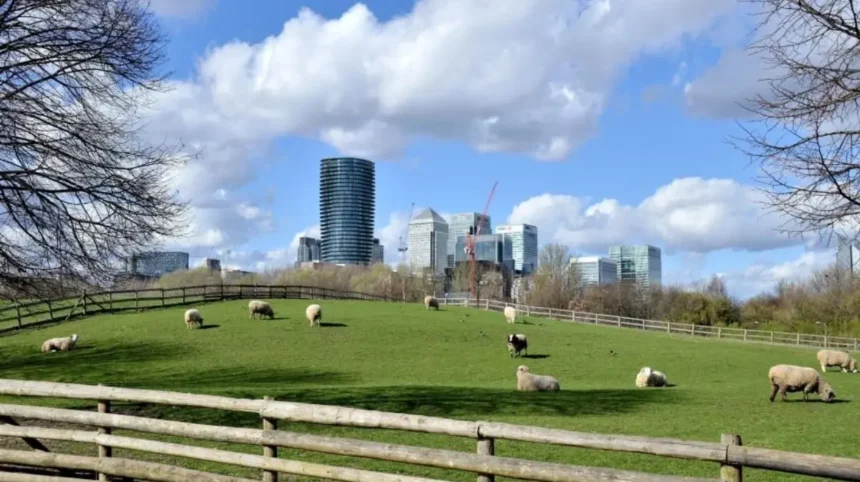
The Isle of Dogs in East London offers a diverse network of green spaces, waterfront gardens, recreational parks and landscaped public areas. Located within the London Borough of Tower Hamlets, this Thames-side peninsula combines historic dockland landscapes with modern urban development. Its outdoor spaces provide opportunities for walking, cycling, wildlife observation, family activities, photography and relaxation.
- What Makes the Isle of Dogs an Important Green Space Destination?
- How Did the Isle of Dogs Develop Its Parks and Green Spaces?
- Which Parks Should Visitors Explore on the Isle of Dogs?
- Where Can Visitors Find Gardens and Landscaped Spaces in Canary Wharf?
- What Can Visitors Discover at Crossrail Place Roof Garden?
- Where Can Visitors Enjoy Waterfront Walks Across the Isle of Dogs?
- Island Gardens waterfront
- Millwall Outer Dock surroundings
- Canary Wharf waterfront
- Thames Path connections
- Which Green Spaces Are Suitable for Families and Children?
- Where Can Visitors Experience Wildlife and Nature on the Isle of Dogs?
- Mudchute’s natural habitats
- Millwall Park’s biodiversity areas
- Island Gardens’ riverside environment
- Eden Dock and aquatic habitats
- What Outdoor Sports and Recreational Activities Are Available?
- Football and cricket at Millwall Park
- Bowls and outdoor fitness
- Tennis at St John’s Park
- Walking and jogging
- Outdoor events and community activities
- How Can Visitors Reach the Green Spaces Across the Isle of Dogs?
- Are the Isle of Dogs Green Spaces Accessible Throughout the Year?
- How Do Green Spaces Improve the Environment and Quality of Life on the Isle of Dogs?
- How Can Visitors Plan a Green Space Walking Day Across the Isle of Dogs?
- Stop 1: Start at Island Gardens
- Stop 2: Walk through Millwall Park
- Stop 3: Explore Mudchute Park and Farm
- Stop 4: Visit Canary Wharf’s landscaped spaces
- What Should Visitors Know Before Exploring the Isle of Dogs’ Green Spaces?
- Why Are the Isle of Dogs’ Green Spaces Important for Its Future?
From the open countryside atmosphere of Mudchute Park and Farm to the riverside views at Island Gardens, the area offers outdoor experiences for different ages and interests. Canary Wharf adds another dimension through landscaped squares, rooftop gardens, waterfront promenades and contemporary ecological projects.
The Isle of Dogs is particularly suitable for visitors who want outdoor recreation without travelling far from London’s financial and commercial districts. Residents, tourists, business travellers and remote workers can access several public spaces through the Docklands Light Railway (DLR), Jubilee line and Elizabeth line.
Understanding the location, facilities and character of each green space helps visitors plan a practical outdoor itinerary. Some locations provide extensive lawns and sports facilities, while others offer quiet seating, ornamental planting, river views and opportunities to experience urban nature.
What Makes the Isle of Dogs an Important Green Space Destination?
The Isle of Dogs is an important East London outdoor destination because it combines public parks, riverside gardens, urban wildlife habitats and landscaped commercial spaces. These environments provide recreation, relaxation, biodiversity and accessible outdoor experiences within a densely developed urban neighbourhood.
The Isle of Dogs is a peninsula surrounded by the River Thames on three sides. Its geography has influenced its development, particularly during the expansion of London’s historic docklands. Former industrial land, residential developments and commercial districts now sit alongside public parks and landscaped waterfront areas.
The area’s green infrastructure includes several different types of outdoor environments. Traditional public parks provide lawns, sports facilities and children’s play areas. Riverside gardens offer views across the Thames, while modern developments incorporate planted squares, rooftop gardens and waterside seating.
Tower Hamlets Council manages several important parks, including Millwall Park and Island Gardens. Mudchute Park and Farm operates as a community charity and provides a combination of agricultural, recreational and natural environments. Canary Wharf’s landscaped spaces are managed by Canary Wharf Group.
These locations serve different purposes. A family visiting with children can explore Mudchute’s farm animals, while someone seeking a peaceful lunchtime break can visit Jubilee Park. Visitors interested in photography can enjoy the historic Greenwich panorama from Island Gardens.
The availability of these spaces also contributes to urban wellbeing. Public parks provide opportunities for physical activity, social interaction and contact with nature. They create accessible outdoor environments for people living and working in areas where residential and commercial buildings occupy substantial amounts of land.
How Did the Isle of Dogs Develop Its Parks and Green Spaces?
The Isle of Dogs developed from marshland and agricultural ground into an industrial dockland peninsula during the nineteenth century. The closure of the docks, subsequent regeneration and community environmental projects helped establish its present network of parks, gardens and recreational landscapes.
The history of the Isle of Dogs is closely connected to London’s maritime economy. Before large-scale industrial development, much of the peninsula consisted of marshland and agricultural ground. The construction of the West India Docks, completed in 1802, transformed the landscape and established the area as an important centre for international trade.
Millwall Docks followed in 1868. Their development required extensive engineering work, including excavation, dredging and the movement of large quantities of soil and mud.
These industrial activities influenced the creation of several modern green spaces.
The origins of Mudchute
Mudchute developed from material removed during the construction and operation of Millwall Docks. Between 1875 and 1910, mud dredged from the docks was deposited on nearby land. This created an unusual landscape of raised ground that gradually developed natural habitats.
The site subsequently became an important community environmental resource. In 1977, Mudchute Park and City Farm was established, transforming former dockland ground into a public landscape with agricultural and recreational facilities.
The development of Millwall Park
Millwall Park also has a connection to the peninsula’s changing land use. The area remained marshland until 1919, when it became playing fields and a recreation ground.
It also has a sporting connection with the original Millwall Football Club, which used the site between 1889 and 1910.
The creation of Island Gardens
Island Gardens was established as a public park in 1895 by the London County Council. Its creation protected an important view across the Thames towards historic Greenwich during a period of rapid industrial development.
The park remains an important example of how public landscape planning preserved the visual character of the riverfront.
Visitors interested in the industrial and maritime background of these landscapes can explore the full [History of the Isle of Dogs and Its Docklands Heritage] to understand how former docks, shipbuilding areas and industrial land shaped the peninsula’s present-day environment.
Tower Hamlets Council’s historical records provide additional information about the development of local parks, including Mudchute, Millwall Park and Island Gardens. towerhamlets.gov.uk+1
Which Parks Should Visitors Explore on the Isle of Dogs?
The main parks on the Isle of Dogs include Mudchute Park and Farm, Millwall Park and Island Gardens. Each offers a different outdoor experience, from countryside-style landscapes and family recreation to sports facilities, riverside walks and historic waterfront views.
The three parks form an important part of the peninsula’s public green infrastructure. They are connected through local streets and walking routes, allowing visitors to explore more than one location during a single outing.
Mudchute Park and Farm
Mudchute Park and Farm is one of the area’s most distinctive outdoor attractions.
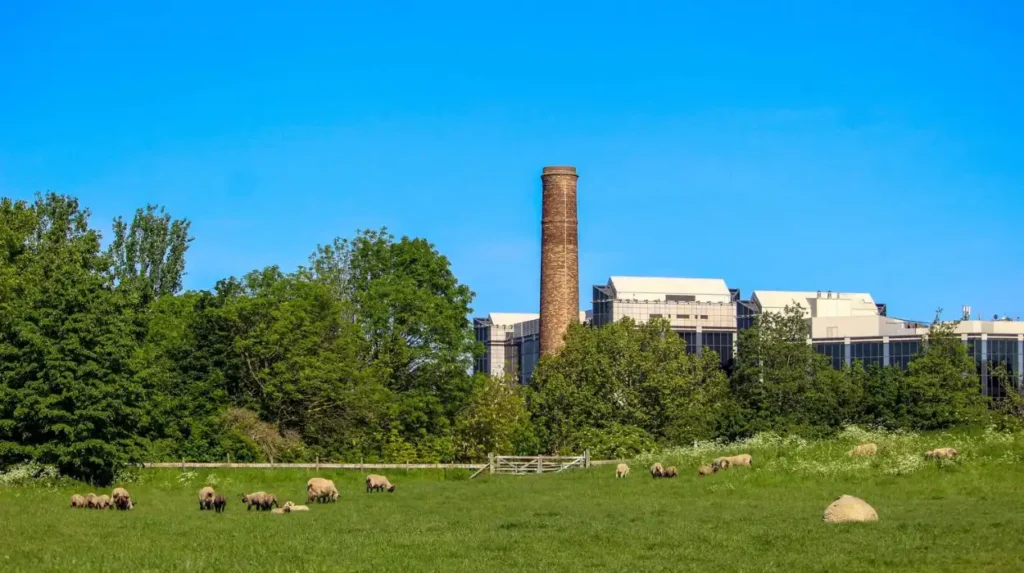
The site covers approximately 32 acres and combines open grassland, grazing areas, woodland, ponds, hedgerows and recreational facilities. It is home to more than 100 animals, providing an agricultural experience within East London.
Visitors can explore the farmyard, observe livestock and walk through the surrounding parkland. The site also provides opportunities to learn about animal care, farming and environmental education.
Its open landscape offers a noticeable contrast with the surrounding residential towers and Canary Wharf skyline.
The farm is free to visit and operates as a community charity. Its facilities include picnic areas, refreshments and educational activities.
The park and farm have different opening arrangements. The park generally opens from dawn until dusk, while the farm operates during designated daytime hours. Visitors should check the official Mudchute website before travelling.
Mudchute is particularly suitable for families, nature enthusiasts, school groups and visitors looking for an extended outdoor visit. The organisation recommends allowing at least two hours to explore the farm and courtyard.
Millwall Park
Millwall Park provides a combination of recreational facilities, landscaped greenery and open playing areas.
Located near Mudchute and Island Gardens, it offers a convenient outdoor destination for local residents and visitors. Its facilities include football pitches, cricket facilities, a bowls green, children’s play areas and an outdoor gym.
The park also has walking paths, seating, trees and meadow areas that contribute to its biodiversity value.
Its sporting facilities support organised recreation, while the open lawns provide space for informal outdoor activities.
A notable feature is its connection to the former docklands railway infrastructure. The disused railway viaduct and former ropewalk reflect the area’s industrial history.
Millwall Park received further sporting investment in March 2026, when new cricket training facilities were launched. These include a two-lane non-turf cricket practice facility and a non-turf pitch developed with support from the England and Wales Cricket Board and Tower Hamlets Council.
The park holds a Green Flag Award, recognising its management and environmental standards.
Island Gardens
Island Gardens occupies the southern end of the peninsula.
This approximately three-acre riverside park is recognised for its views across the Thames towards Greenwich. Visitors can see the Old Royal Naval College, Queen’s House and the historic Greenwich waterfront from its landscaped grounds.
The park provides lawns, mature trees, pedestrian paths, benches and picnic spaces.
One of its most significant features is its connection to the Greenwich Foot Tunnel. This pedestrian tunnel passes underneath the Thames and connects Island Gardens with Greenwich.
The location also has an important artistic connection. The view across the river resembles the historic Greenwich panorama depicted in Canaletto’s eighteenth-century painting, A View of Greenwich from the River.
Island Gardens is particularly suitable for riverside photography, quiet walks, family picnics and visits to Greenwich. It also provides an accessible connection between two historic areas on opposite sides of the Thames.
Where Can Visitors Find Gardens and Landscaped Spaces in Canary Wharf?
Canary Wharf offers several landscaped public spaces, including Jubilee Park, Westferry Circus, Harbour Quay, Cabot Square and Montgomery Square. These locations combine seasonal planting, water features, outdoor seating, recreational facilities and pedestrian routes within the modern commercial district.
Canary Wharf forms the northern part of the Isle of Dogs and contains a network of landscaped outdoor spaces. These gardens and squares provide accessible outdoor environments between office buildings, shopping centres, residential developments and waterfront promenades.
Unlike traditional municipal parks, many Canary Wharf spaces are designed as part of the commercial district’s public realm. Their landscaping includes ornamental planting, trees, water features, sculptures and open areas for community activities.
Jubilee Park
Jubilee Park provides a landscaped green retreat within the Canary Wharf business district.
The garden features mature trees, grassed areas, planted borders and cascading water features. Its design creates a quieter environment among surrounding commercial buildings.
The park is particularly useful for visitors who want a short outdoor break during a shopping trip or business visit. Benches and lawns provide places to sit, while pedestrian paths connect the garden with nearby Canary Wharf destinations.
The combination of vegetation and water features makes Jubilee Park suitable for casual photography and relaxation.
Westferry Circus
Westferry Circus is a landscaped public space featuring ornamental gardens, seasonal flowers and sculptures.
Its design incorporates planted areas and pedestrian routes around the commercial and transport infrastructure of Canary Wharf.
The gardens provide opportunities to observe seasonal planting and outdoor artwork. Their position also makes them useful for visitors exploring the northern waterfront and nearby office developments.
Westferry Circus suits people seeking a short walk rather than an extended recreational visit.
Harbour Quay
Harbour Quay combines waterfront landscaping with pedestrian access and recreational facilities.
Its waterside setting includes a boardwalk, seating areas, lawns and outdoor fitness equipment. Visitors can walk beside the water, take a break or use the available exercise facilities.
The location also provides space for informal family activities and outdoor picnics.
Harbour Quay is particularly relevant to visitors interested in waterfront recreation because it combines open water views with landscaped surroundings.
Montgomery Square
Montgomery Square provides an active public gathering space within Canary Wharf.
The square accommodates outdoor activities, sporting events and seasonal markets. Its programme includes activities such as volleyball and lawn bowls, alongside street food events.
The space demonstrates how urban public areas serve social and recreational functions beyond traditional park activities.
Visitors should check the Canary Wharf events programme because activities and temporary installations change throughout the year.
Cabot Square
Cabot Square is a central landscaped square with a prominent fountain and outdoor artwork.
Its location near Cabot Place makes it a convenient stop during a visit to Canary Wharf’s shopping and commercial facilities.
Visitors can explore the square, observe its sculptures and enjoy the planted surroundings. Its central position also makes it a useful meeting point before continuing towards other gardens and waterfront areas.
Canary Wharf Group identifies these spaces as part of a connected public realm, with planting that changes throughout the year.
What Can Visitors Discover at Crossrail Place Roof Garden?
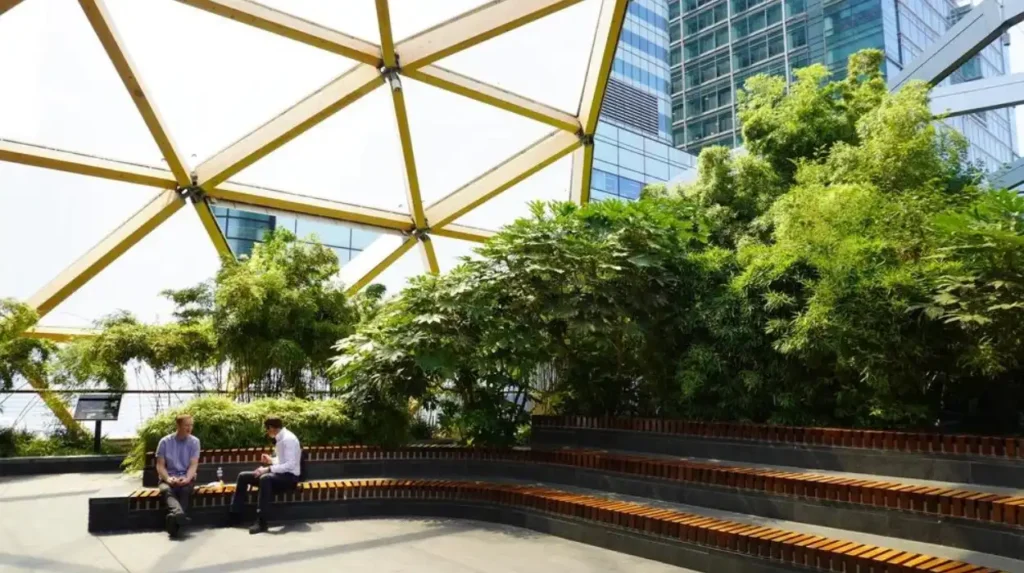
Crossrail Place Roof Garden is an elevated botanical garden in Canary Wharf, located above the Elizabeth line station. It features winding pedestrian paths, trees, exotic plants and seating beneath a distinctive roof structure inspired by maritime architecture and global botanical diversity.
Crossrail Place Roof Garden provides a different type of outdoor experience from the traditional parks on the peninsula.
The garden occupies an elevated position within the Crossrail Place development. Its timber lattice roof creates a sheltered environment for plants and visitors.
The garden’s botanical arrangement reflects the Prime Meridian, the geographical reference line at zero degrees longitude. Plant species are organised to represent different parts of the Eastern and Western Hemispheres.
Visitors can discover different botanical environments through the garden’s pathways.
What makes its planting distinctive?
The garden includes species from different geographical regions, including bamboo, ferns and Japanese magnolia. Its planting design demonstrates how urban landscaping incorporates botanical diversity into buildings and transport infrastructure.
The combination of trees, smaller plants and sheltered pathways creates an environment for walking and quiet observation.
What facilities are available?
The garden includes:
- Pedestrian pathways through planted areas.
- Benches for resting.
- Landscaped botanical sections.
- An outdoor performance environment.
- Spaces for seasonal activities and community events.
The garden is particularly suitable for visitors seeking a quiet break during a Canary Wharf visit. It also offers an interesting destination for people interested in landscape architecture, horticulture and sustainable urban design.
How can visitors reach it?
Crossrail Place Roof Garden is located close to Canary Wharf’s transport connections. Visitors can reach the area through Canary Wharf station on the Jubilee line and Elizabeth line, as well as the Canary Wharf DLR station.
Its position above the Elizabeth line station makes it convenient for people travelling from other parts of London.
The garden is free to visit. Visitors should check the latest public access arrangements and any temporary closures before travelling.
Where Can Visitors Enjoy Waterfront Walks Across the Isle of Dogs?
The Isle of Dogs provides several waterfront walking environments along the River Thames and former dock basins. Island Gardens, Harbour Quay and Canary Wharf’s pedestrian promenades offer opportunities for riverside observation, photography, casual exercise and relaxation.
The peninsula’s geographical position makes waterfront walking one of its defining outdoor activities. The Thames surrounds much of the Isle of Dogs, while former dock basins create additional waterside environments.
These routes offer different views and experiences depending on their location.
Island Gardens waterfront
The waterfront at Island Gardens provides direct views towards Greenwich.
Visitors can follow the pedestrian paths around the park and stop at seating areas overlooking the river. The historic buildings across the Thames provide a distinctive visual setting for photography.
The park also offers a convenient starting point for crossing the Greenwich Foot Tunnel.
Millwall Outer Dock surroundings
Millwall Outer Dock provides a different waterfront setting from the open River Thames.
The surrounding environment includes residential developments, pedestrian routes and waterside views. Visitors can observe the relationship between the former dock infrastructure and the modern residential landscape.
The dockside environment also reflects the peninsula’s maritime past.
Canary Wharf waterfront
Canary Wharf contains several pedestrian routes beside its docks and water basins.
These routes connect commercial buildings, landscaped squares and public spaces. Visitors can walk beside the water and observe the modern skyline from different viewpoints.
Harbour Quay provides a particularly useful destination for people interested in waterfront seating and recreation.
Thames Path connections
The Thames Path is a long-distance walking route following the River Thames through London and other parts of England.
Parts of the Isle of Dogs connect with riverside walking opportunities, although the route around the peninsula is not a single uninterrupted public riverside promenade. Buildings, dock infrastructure and private developments affect pedestrian access in certain locations.
Visitors should follow signed public paths and check their route before setting out.
For a longer outdoor outing, the riverside environment can be combined with visits to Island Gardens and Greenwich. The Greenwich Foot Tunnel provides a pedestrian connection beneath the Thames without requiring a ferry or road crossing.
Which Green Spaces Are Suitable for Families and Children?
Families visiting the Isle of Dogs can choose from Mudchute Park and Farm, Millwall Park and selected Canary Wharf gardens. These locations provide animal experiences, playgrounds, open lawns, picnic areas and opportunities for children to enjoy outdoor recreation.
Family-friendly green spaces need more than attractive landscaping. Visitors often require accessible paths, toilets, seating, refreshments and activities suitable for different ages.
The Isle of Dogs offers several environments that address these requirements.
Mudchute Park and Farm for animal experiences
Mudchute provides opportunities for children to observe farm animals and learn about agricultural activities.
The farm is home to more than 100 animals and offers educational activities connected with animal care and farming. Its open grounds also provide opportunities for family walks and outdoor exploration.
The farm’s free entry makes it an accessible destination for families planning a budget-conscious day out.
Millwall Park for playground activities
Millwall Park includes children’s play areas, sports facilities and open grassland.
The playground provision caters for different age groups, including younger children and older children. Tower Hamlets Council reports that more than 50% of the equipment in the replacement playground installed in 2021 was fully inclusive.
The park also provides space for informal games, walking and outdoor exercise.
Island Gardens for picnics
Island Gardens offers lawns, trees, seating and river views.
Families can use the picnic areas and enjoy a quieter outdoor environment. The Greenwich Foot Tunnel also provides an additional activity for older children interested in exploring the area across the river.
Canary Wharf gardens for shorter visits
Jubilee Park and Harbour Quay provide alternatives for families exploring Canary Wharf.
These locations are suitable for short outdoor breaks between shopping, dining and sightseeing activities. Harbour Quay also offers waterfront space and outdoor fitness equipment.
Families should check the facilities and opening arrangements of individual sites before travelling.
Where Can Visitors Experience Wildlife and Nature on the Isle of Dogs?
Visitors can experience urban nature at Mudchute Park and Farm, Millwall Park, Island Gardens and Canary Wharf’s landscaped waterfront environments. These locations support different habitats, including grassland, woodland, ponds, planted borders, aquatic environments and spaces for birds and other wildlife.
The Isle of Dogs demonstrates how wildlife habitats exist within a densely developed London neighbourhood.
Its green spaces include natural and managed landscapes. Some areas provide relatively extensive vegetation, while others incorporate smaller planting schemes into commercial and residential developments.
Mudchute’s natural habitats
Mudchute contains a range of habitats, including grazing pastures, woodland, hedgerows, ponds and wildflower banks.
These environments provide opportunities to observe plants, insects and birds.
The nature trail allows visitors to explore the park’s landscape while learning about its natural features.
Its combination of agricultural land and wildlife habitats makes Mudchute particularly relevant to people interested in urban biodiversity.
Millwall Park’s biodiversity areas
Millwall Park includes trees, meadow areas and planted sections designed to contribute to biodiversity.
These features provide habitat opportunities within an urban recreational environment.
Visitors can combine wildlife observation with walking, sports and family activities.
Island Gardens’ riverside environment
Island Gardens provides mature trees, grassland and riverside surroundings.
Its location beside the Thames creates opportunities to observe birds and other wildlife associated with urban waterfront environments.
Visitors interested in nature photography can explore the park’s planted areas and river-facing sections.
Eden Dock and aquatic habitats
Eden Dock is a waterfront ecological project developed in partnership with the Eden Project.
The site incorporates aquatic islands, marine habitats, art installations and water-based activities.
Its design introduces ecological features into the commercial waterfront environment. It also provides a location for visitors interested in the relationship between urban development and aquatic biodiversity.
Eden Dock is part of Canary Wharf’s wider programme of public spaces and environmental activities. Visitors should check current access and activity arrangements before planning a visit.
Tower Hamlets Council identifies Mudchute and Tower Hamlets Cemetery Park as local nature reserves within the borough. Mudchute therefore has particular importance within the area’s wider conservation network.
What Outdoor Sports and Recreational Activities Are Available?
The Isle of Dogs supports outdoor recreation through football, cricket, bowls, tennis, walking, jogging and outdoor fitness facilities. Millwall Park provides several organised sports facilities, while Canary Wharf’s public spaces accommodate recreational activities and seasonal community events.
Outdoor recreation is an important function of the peninsula’s green infrastructure. Its parks accommodate both organised sporting activities and informal exercise.
Football and cricket at Millwall Park
Millwall Park provides grass football pitches and cricket facilities. These facilities support local sports clubs, schools and community participation.
The cricket facilities received additional investment in March 2026, with a new non-turf pitch and two-lane practice nets.
Football facilities also support organised matches and recreational play. Availability depends on bookings and maintenance arrangements.
Bowls and outdoor fitness
Millwall Park includes a bowls green and an outdoor gym.
The outdoor gym provides an option for visitors who want to exercise without entering a commercial fitness centre. The bowls green offers another recreational activity, although pay-to-play arrangements apply.
Tennis at St John’s Park
St John’s Park provides outdoor tennis facilities.
The park has two floodlit hard courts, supporting tennis throughout the year. Floodlighting extends the potential playing period beyond daylight hours.
Court availability and booking arrangements should be checked through the local Courtside at Tower Hamlets service.
Walking and jogging
The parks and waterfront environments provide opportunities for informal exercise.
Visitors can walk through Island Gardens, follow paths across Millwall Park or explore Mudchute’s nature trail.
Canary Wharf’s pedestrian spaces also provide opportunities for short jogging sessions and casual exercise.
Outdoor events and community activities
Montgomery Square and Mudchute host activities that extend beyond everyday recreation.
Montgomery Square accommodates sporting activities and street food events. Mudchute provides outdoor event space for community gatherings, educational activities and organised events.
These activities demonstrate the role of green spaces as community facilities rather than simply landscaped environments.
How Can Visitors Reach the Green Spaces Across the Isle of Dogs?
Visitors can reach the Isle of Dogs’ green spaces through the Docklands Light Railway, Jubilee line, Elizabeth line, local buses, walking routes and cycling connections. Island Gardens, Mudchute and Crossharbour stations provide convenient access to major parks.
The area’s transport network makes its outdoor destinations accessible from central London and other East London neighbourhoods.
Choosing the appropriate station reduces unnecessary walking and helps visitors combine several parks within one outing.
Reaching Mudchute Park and Farm
Mudchute DLR, Crossharbour DLR and Island Gardens DLR are the closest stations.
Crossharbour offers a convenient approach through the nearby supermarket car park entrance. Visitors arriving at Mudchute station can also access the park from East Ferry Road.
The farm is accessible on foot or by bicycle from Canary Wharf and Island Gardens.
The organisation recommends walking from Island Gardens through Millwall Park to reach Mudchute. This connection also makes it possible to explore two parks during the same visit.
Reaching Island Gardens
Island Gardens DLR station is close to the park entrance.
Local bus services also serve the area, making the park accessible to visitors who prefer not to use the DLR.
Reaching Canary Wharf gardens
Canary Wharf has connections through the Jubilee line, Elizabeth line and DLR.
Crossrail Place Roof Garden is particularly convenient for passengers using Canary Wharf Elizabeth line station.
Visitors should use Transport for London’s journey planner to check current routes, service changes and accessibility information.
Mudchute Park and Farm recommends using public transport because it does not provide general visitor parking.
Are the Isle of Dogs Green Spaces Accessible Throughout the Year?
Most major green spaces on the Isle of Dogs provide outdoor access throughout the year, although individual attractions, facilities and activities follow different opening arrangements. Seasonal weather, maintenance work, daylight hours and temporary events influence the visitor experience.
Understanding opening arrangements helps visitors avoid unnecessary travel and plan activities around available facilities.
Mudchute Park and Farm
Mudchute operates throughout the year.
Its park generally opens from dawn until dusk, while the farm follows separate daytime opening hours. The organisation’s visitor information lists farm opening hours as 9am to 4pm daily, with animals returning indoors from 3pm.
Visitors should check the official website for seasonal changes and animal experiences.
Island Gardens
Island Gardens provides public access throughout the day and is generally available throughout the year.
Its riverside paths, lawns and seating make it suitable for visits during different seasons.
The café and kiosk operate separately, so their availability should be checked before visiting.
Millwall Park
Millwall Park provides outdoor access for walking, sports and recreation.
Individual sporting facilities, including bookable pitches and courts, follow their own schedules.
Maintenance work can also affect access to particular areas. Visitors should consult Tower Hamlets Council for updates.
Canary Wharf gardens
Canary Wharf’s landscaped public spaces provide opportunities for outdoor visits throughout the year.
Seasonal planting changes the appearance of the gardens. Community events, outdoor markets and sporting activities follow separate programmes.
Crossrail Place Roof Garden provides a sheltered environment, although its public access arrangements should still be checked.
Seasonal considerations
Spring offers opportunities to observe new growth and flowering plants. Summer provides longer daylight hours for walking, picnics and outdoor recreation.
Autumn brings seasonal changes to trees and planted areas, while winter visits provide quieter opportunities for riverside walks and architectural photography.
Visitors should wear appropriate footwear during wet weather, particularly when using grassland paths and woodland sections.
How Do Green Spaces Improve the Environment and Quality of Life on the Isle of Dogs?
Green spaces improve the Isle of Dogs by supporting urban biodiversity, providing recreational opportunities, managing environmental pressures and creating accessible outdoor environments. They also contribute to community wellbeing by connecting residents, workers and visitors with nature.
Green infrastructure refers to the network of natural and landscaped environments that provide environmental and social benefits within developed areas.
On the Isle of Dogs, this network includes large parks, small gardens, planted squares, waterfront environments and ecological projects.
Supporting urban biodiversity
Trees, grassland, ponds and planted areas create habitats for different forms of wildlife.
Mudchute provides particularly varied habitats through its woodland, ponds, hedgerows and grazing areas.
Eden Dock adds aquatic habitats to Canary Wharf’s commercial waterfront.
These environments help maintain ecological features within a densely developed urban district.
Improving the urban environment
Vegetation contributes to urban environmental quality through shade, rainwater absorption and the provision of permeable surfaces.
Trees provide shade during warmer weather, while planted ground helps absorb rainfall that would otherwise flow directly into drainage systems.
Waterfront planting and landscaped public spaces also improve the environmental character of commercial and residential neighbourhoods.
Supporting physical and mental wellbeing
Public parks provide accessible opportunities for walking, exercise and relaxation.
Millwall Park supports organised sport and informal physical activity. Island Gardens offers a quieter riverside environment, while Mudchute provides opportunities for nature-based recreation.
These different settings allow people to choose outdoor activities according to their interests and available time.
Strengthening community connections
Community green spaces also support social participation.
Mudchute operates educational programmes and community activities. Millwall Park supports local sporting organisations and events. Canary Wharf’s public spaces accommodate community classes, markets and seasonal activities.
These facilities create opportunities for interaction between people living, working and visiting the peninsula.
Contributing to sustainable urban development
The development of green spaces is increasingly important as residential and commercial construction changes the Isle of Dogs.
Rooftop gardens, planted squares and aquatic habitats demonstrate how environmental features can be incorporated into modern developments.
Crossrail Place Roof Garden and Eden Dock provide examples of landscape design integrated into transport and commercial infrastructure.
Tower Hamlets Council’s wider parks programme also identifies biodiversity and nature conservation as important responsibilities within the borough.
How Can Visitors Plan a Green Space Walking Day Across the Isle of Dogs?
Visitors can organise a green-space itinerary by combining Island Gardens, Millwall Park, Mudchute Park and Farm and Canary Wharf’s landscaped gardens. A practical route balances walking distances, available facilities, opening times and individual interests.
The peninsula’s parks are connected through local pedestrian routes, making a multi-stop outdoor visit practical.
The following itinerary combines historic landscapes, wildlife, recreation and contemporary urban gardens.
Stop 1: Start at Island Gardens
Walk through the landscaped grounds, enjoy views across the Thames and visit the Greenwich Foot Tunnel entrance.
Allow time for photography and a short rest beside the river.
Stop 2: Walk through Millwall Park
Explore the open lawns, trees and recreational facilities. Visitors interested in sport can look at the cricket and football facilities, while families can use the playground.
Stop 3: Explore Mudchute Park and Farm
Allow approximately two hours to explore the farmyard, observe animals and walk through the parkland.
Visitors interested in nature should explore the nature trail, woodland and wildflower areas.
Stop 4: Visit Canary Wharf’s landscaped spaces
Continue towards Canary Wharf to explore its landscaped public spaces.
Visit Jubilee Park, Harbour Quay and Montgomery Square. These destinations offer different experiences, from quiet gardens to active public squares.
The itinerary can be shortened according to available time. Visitors with only a few hours can concentrate on Island Gardens and Millwall Park or explore Jubilee Park and Crossrail Place Roof Garden.
People planning a full-day visit should allow additional time for Mudchute’s farm activities and breaks between destinations.
Explore More Area Guide
Tower Hamlets Architecture: Historic Buildings and Canary Wharf Skyscrapers
Historic Churches and Religious Buildings in Tower Hamlets, East London
What Should Visitors Know Before Exploring the Isle of Dogs’ Green Spaces?
Visitors should check individual opening times, accessibility arrangements, sporting facility bookings and event schedules before travelling. Respecting wildlife, following park regulations, using designated paths and keeping public spaces clean helps maintain these environments for everyone.
A few practical considerations make outdoor visits more convenient.
Check opening arrangements: Parks and gardens do not all follow identical schedules. Mudchute’s farm, for example, has different opening hours from its surrounding parkland.
Wear suitable footwear: Grassland paths, woodland sections and riverside routes require comfortable walking shoes, particularly after rain.
Respect wildlife: Visitors should avoid disturbing animals, birds and natural habitats. Dogs should remain under appropriate control and comply with individual park rules.
Check sports bookings: Football pitches, tennis courts, bowls greens and other facilities have separate booking arrangements.
Follow park regulations: Tower Hamlets Council does not permit barbecues in its parks and open spaces because of the risk of grass damage and fire.
Plan accessible journeys: Visitors with mobility requirements should check individual path surfaces, entrances, toilets and available facilities before travelling.
Prepare for changing weather: Outdoor areas are exposed to wind and rain, particularly along the Thames and dockside promenades.
Check transport services: The DLR, Jubilee line and Elizabeth line provide useful connections, but service changes and engineering work can affect journeys.
These considerations help visitors enjoy the peninsula’s outdoor environments while supporting their long-term maintenance and conservation.
Why Are the Isle of Dogs’ Green Spaces Important for Its Future?
The Isle of Dogs’ green spaces are important to its future because continued urban development increases the value of accessible recreation, biodiversity and environmental infrastructure. Protecting established parks while incorporating nature into new developments supports a healthier and more sustainable neighbourhood.
The Isle of Dogs continues to combine residential construction, commercial development and public infrastructure. Its green spaces provide an important environmental and recreational balance within this changing urban landscape.
Existing parks such as Mudchute, Millwall Park and Island Gardens have established community and ecological roles. Maintaining their facilities, vegetation and public accessibility remains important as the surrounding neighbourhood develops.
Modern landscaping also provides opportunities to introduce additional environmental features into commercial and residential areas.
Canary Wharf demonstrates this approach through its landscaped squares, Crossrail Place Roof Garden and Eden Dock. These projects integrate planting, public access and ecological features into an intensely developed urban setting.
Future environmental priorities include maintaining mature trees, improving habitat connectivity, protecting wildlife, increasing climate resilience and supporting sustainable drainage.
Public participation also contributes to the long-term success of these spaces. Community organisations, park users, educational groups and local authorities all have roles in maintaining and improving outdoor environments.
For visitors, the result is a varied outdoor destination that combines established public parks with contemporary landscape design.
The Isle of Dogs therefore offers more than isolated gardens. Its connected green spaces form an important part of East London’s recreational, environmental and community infrastructure.
Exploring Island Gardens, Millwall Park, Mudchute Park and Farm and Canary Wharf’s landscaped public spaces provides a clear understanding of how nature and urban development coexist across this distinctive Thames-side peninsula.
What are the best green spaces to visit on the Isle of Dogs?
The main green spaces include Mudchute Park and Farm, Millwall Park and Island Gardens. Visitors can also explore Jubilee Park, Crossrail Place Roof Garden and Harbour Quay in Canary Wharf.