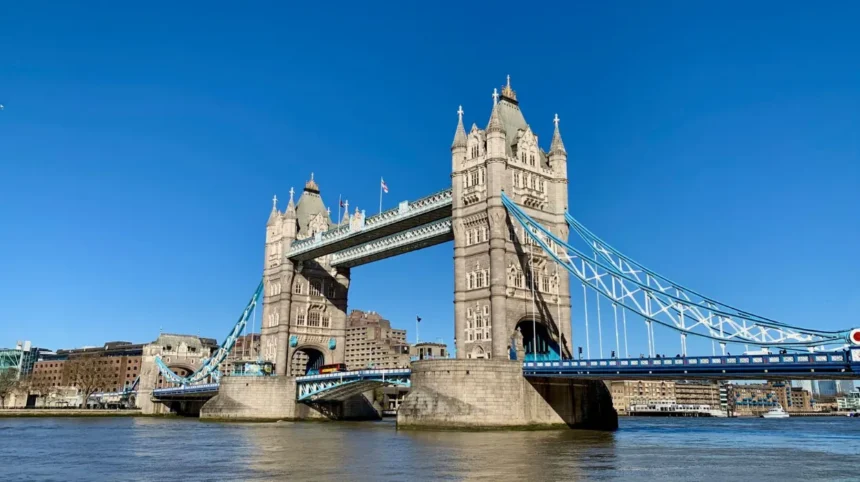
Tower Hamlets is one of the most geographically varied boroughs in East London. It stretches from the historic Tower of London and Tower Bridge through Wapping, Whitechapel, Spitalfields, Bethnal Green, Mile End and Bow to the modern business district of Canary Wharf and the Isle of Dogs.
- What makes Tower Hamlets a good destination for a one-day London itinerary?
- Which Tower Hamlets attractions should you visit first in the morning?
- How can you explore London’s historic docklands in Tower Hamlets?
- Where should you go for lunch, markets and East London culture?
- What cultural and shopping experiences should you add around Brick Lane and Spitalfields?
- Which parks are worth visiting during a Tower Hamlets day trip?
- Is Canary Wharf worth visiting on a Tower Hamlets tourist itinerary?
- How should you organise a complete one-day Tower Hamlets itinerary?
- What should tourists know before spending a day in Tower Hamlets?
- Why is Tower Hamlets important to London’s wider tourism landscape?
The borough combines medieval royal history, Victorian docklands, migrant heritage, street markets, contemporary architecture, public art, parks and riverside walking routes. This makes Tower Hamlets particularly suitable for tourists who want to experience several different sides of London within one day.
Tower Hamlets had a population of 310,300 at the 2021 Census, an increase of 22.1% from 2011. The Office for National Statistics recorded this as the largest percentage population increase of any local authority area in England between the two censuses.
The borough also has an unusually concentrated collection of major attractions. The Tower of London and Tower Bridge sit beside the River Thames, while the Museum of London Docklands explains the area’s maritime history. Further north, Brick Lane, Spitalfields and Columbia Road provide markets, independent businesses and food. Victoria Park provides a substantial green-space option, while Canary Wharf delivers a contrasting modern skyline.
For a first visit, the most efficient approach is to divide the day geographically. Start around the Tower of London, walk towards Wapping and the historic docks, continue north towards Spitalfields and Brick Lane for lunch, then finish with either Victoria Park or Canary Wharf. This route gives visitors historical landmarks, food, shopping, culture and outdoor space without attempting to cover the entire borough on foot.
What makes Tower Hamlets a good destination for a one-day London itinerary?
Tower Hamlets works well for a one-day itinerary because it combines major landmarks, historic districts, markets, museums, riverside walks, parks and modern architecture within a compact East London area. Visitors can move between very different experiences using walking routes and London’s public transport network.
Tower Hamlets is different from many London destinations because its identity is not based on one attraction. The borough contains several distinct environments that developed during different periods of London’s history.
The western section centres on the Tower of London, Tower Bridge and St Katharine Docks. These locations connect the modern visitor experience with London’s medieval and maritime past. The Tower of London dates from the Norman period and developed into a fortress, royal palace and prison. The borough’s conservation documentation identifies the Tower as one of its defining historic structures.
Further east, the character changes. Wapping and the former docklands reflect London’s development as an international port. The West India Docks and St Katharine Docks were created to improve the movement and security of cargo. The construction of enclosed docks transformed the riverside economy during the nineteenth century.
Spitalfields and Brick Lane represent another layer of East London’s development. Their markets, restaurants, independent shops and cultural venues reflect generations of migration and commercial activity.
Canary Wharf provides the strongest contrast. Former dockland infrastructure now sits beside high-rise offices, landscaped public spaces, restaurants, shopping areas and public art.
This variety means a visitor can build a Tower Hamlets itinerary around several interests without leaving the borough.
Which Tower Hamlets attractions should you visit first in the morning?
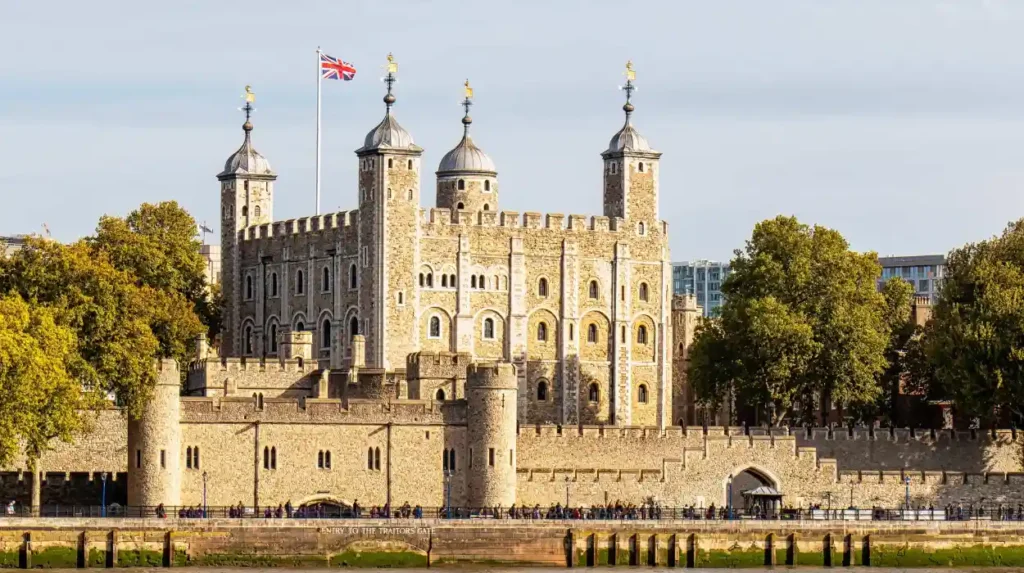
Begin at the Tower of London and Tower Bridge, where centuries of royal, military and transport history meet the River Thames. These landmarks provide the strongest starting point because they are close together and connect directly with Wapping and St Katharine Docks.
The Tower of London is the most historically significant starting point. William the Conqueror established the White Tower in the 1070s as part of a major Norman fortress. The complex later served as a royal residence, fortress, prison and repository for royal valuables. It remains home to the Crown Jewels and Yeoman Warders. The UK National Commission for UNESCO describes it as an exceptional surviving example of an eleventh-century fortress palace.
Allow several hours if entering the Tower of London. A shorter itinerary can instead explore the exterior, Tower Hill, the riverside and the surrounding historic streets before continuing towards Tower Bridge.
Tower Bridge is another essential stop. The bridge opened in 1894 after eight years of construction. It was designed by architect Horace Jones and engineered by John Wolfe Barry. Its bascule mechanism allows the roadway to lift for river traffic. Approximately 800 people were involved in its construction.
The bridge is also an efficient photography and orientation point. From its approaches, visitors can see the Thames, the Tower of London and the wider riverside landscape.
St Katharine Docks is a short walk north of Tower Bridge. The enclosed docks opened on 25 October 1828 and were designed by engineer Thomas Telford. The site developed from the former Hospital of St Katharine by the Tower and became an important commercial dock.
Today, the historic dock basin contains restaurants, cafés, boats and waterside public space. It provides a quieter transition between the major landmark area and Wapping.
As you explore the modern site, you are crossing land with a deep heritage. Read about the full [Insert Anchor Text for History Article Here] to understand its origins.
How can you explore London’s historic docklands in Tower Hamlets?
Explore the docklands by following the Thames and former dock routes through Wapping, Limehouse and the Isle of Dogs. The route reveals warehouses, canals, basins, converted industrial buildings and waterfront spaces that explain Tower Hamlets’ importance to London’s historic port economy.
Tower Hamlets developed a strong connection with London’s maritime economy because of its position along the Thames. During the nineteenth century, enclosed docks allowed cargo to be loaded and unloaded more securely than on open river wharves.
The West India Docks were particularly important. They became a major commercial centre for imported goods and helped establish the wider Docklands as an international trading district.
The Museum of London Docklands is one of the best places to understand this transformation. The museum occupies a historic Grade I listed warehouse and presents around 400 years of Docklands history, including the development of London’s river, port and communities. Its permanent galleries are free to visit.
The museum is especially useful when visitors want historical context without spending the entire day inside a major attraction. It connects the physical dock landscape outside with archival and museum material inside.
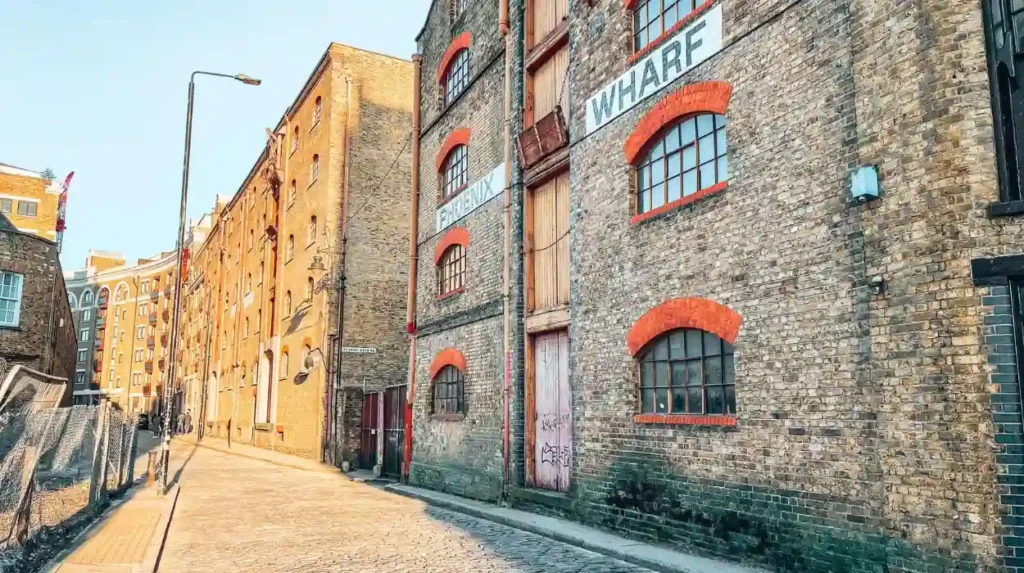
Wapping provides another useful walking area. Its riverside streets retain connections with warehouses, wharves and former industrial uses. The route can then continue east towards Limehouse.
Limehouse has an additional canal connection. The Regent’s Canal was constructed in 1812 and connected the area with London’s wider canal network. Tower Hamlets Council identifies the canal and Limehouse Basin as important components of the borough’s historic transport infrastructure.
Visitors interested in longer walks can follow the borough’s official Isle of Dogs routes. One published route connects Limekiln Dock, Canary Riverside, Westferry Circus, West India Quay, the Museum of London Docklands, Cabot Square, Canada Square and the Greenwich Foot Tunnel.
This makes the docklands particularly useful for tourists who prefer sightseeing on foot rather than moving between isolated attractions.
Where should you go for lunch, markets and East London culture?
Head towards Spitalfields and Brick Lane around midday for food, markets, independent shops and East London’s multicultural commercial culture. The area provides a practical lunch stop while keeping visitors close to galleries, historic buildings, street art and further walking routes.
Spitalfields is one of the most efficient areas for combining food and shopping during a Tower Hamlets day trip. Old Spitalfields Market, Brick Lane Market and Petticoat Lane Market are all established destinations within the wider area. Visit London lists them among the area’s principal shopping attractions.
Brick Lane is particularly associated with markets, independent businesses and food. The Old Truman Brewery occupies a former brewing complex and now contains markets, restaurants, shops, galleries and street-food venues.
The food offer reflects the area’s international character. Visitors can find cuisines from different parts of the world around Brick Lane and the surrounding streets. Visit London’s current market guide highlights food stalls and traders serving international dishes, including Ethiopian and Korean food.
Brick Lane also works for visitors interested in shopping. Markets contain vintage clothing, antiques, second-hand goods, fabrics, collectables and independent products. Sunday is particularly active, with a large concentration of market traders.
Old Spitalfields Market provides a more structured indoor market environment. It is useful when weather conditions are poor because much of the shopping and food activity is concentrated inside the market complex.
Petticoat Lane adds another historic market destination. Its location between Spitalfields and the City makes it convenient for visitors continuing towards central London.
For a tourist itinerary, lunch in this district saves travel time because food, shopping and cultural sightseeing are concentrated within walking distance.
What cultural and shopping experiences should you add around Brick Lane and Spitalfields?
Use the afternoon around Brick Lane and Spitalfields for independent shopping, historic architecture, galleries, street art and cultural venues. The district contains enough attractions to support several hours of exploration without requiring a fixed museum timetable or long cross-borough journey.
The streets around Spitalfields contain a mixture of historic buildings and contemporary businesses. This architectural contrast is part of the area’s character.
Christ Church Spitalfields is an important eighteenth-century landmark near the market district. The church was designed by Nicholas Hawksmoor and forms part of the historic architectural landscape around Spitalfields.
Independent cultural venues add another layer. Visit London’s current Spitalfields guide identifies the Whitechapel Gallery, Rich Mix, Dennis Severs’ House, galleries, music venues and other cultural destinations within the wider area.
The Whitechapel Gallery is particularly relevant for visitors interested in modern and contemporary art. Rich Mix provides another cultural option with a programme spanning film, arts and community activity.
Street art is also strongly associated with Brick Lane and neighbouring Shoreditch. Visitors can explore the streets independently or join a specialist walking tour focused on murals and public art.
The area also provides practical shopping opportunities. Old Spitalfields Market focuses on independent traders, while Brick Lane contains vintage clothing, records, food businesses, cafés and specialist shops.
The best itinerary depends on the day of the week. Sunday is particularly strong for markets, while weekdays provide a more relaxed environment for museums, galleries and independent shops.
Visitors should check individual attraction opening arrangements before travelling because market and cultural venue schedules vary.
Which parks are worth visiting during a Tower Hamlets day trip?
Victoria Park is the strongest choice for a major green-space stop, while Mile End Park provides a convenient alternative closer to central Tower Hamlets. Both offer walking space, landscaped areas and facilities that create a clear break from the borough’s dense urban districts.
Victoria Park opened in 1845 and is recognised by Tower Hamlets Council as London’s oldest public park. At 86 hectares, it is also the largest park in Tower Hamlets. The council reports more than nine million visits each year.
The park contains historic lakes, monuments, a bandstand and two original stone alcoves from London Bridge. It also forms part of a wider green corridor connecting the River Thames, Regent’s Canal, Mile End Park and the Queen Elizabeth Olympic Park.
Victoria Park works best when visitors want a substantial outdoor section in their itinerary. It is large enough for walking, resting and sightseeing without requiring an attraction ticket.
Mile End Park is more centrally positioned within the borough. The park covers more than 10 hectares and includes the Art Pavilion, Ecology Pavilion, outdoor gym, play areas, sports facilities and landscaped areas. It currently holds a Green Flag Award.
Tower Hamlets has more than 120 parks and green spaces. The council identifies Tower Hamlets Cemetery Park and Mudchute Park and Farm as local nature reserves, providing additional options for visitors interested in wildlife and quieter outdoor environments.
The choice between the parks depends on the itinerary. Victoria Park suits visitors travelling towards Bow or Bethnal Green. Mile End Park works better when travelling between central East London and Canary Wharf.
Is Canary Wharf worth visiting on a Tower Hamlets tourist itinerary?
Canary Wharf is worth adding when you want modern architecture, riverside scenery, public art, restaurants and landscaped spaces. It provides a strong contrast with the medieval Tower, Victorian docks and historic markets visited earlier in the day.
Canary Wharf represents the modern transformation of London’s former docklands. The district contains high-rise commercial buildings, public squares, waterfront routes, restaurants, shops and extensive public art.
Crossrail Place Roof Garden provides one of the area’s most distinctive public spaces. Its covered garden contains plants from different parts of the world within a large lattice structure. Canary Wharf’s published information describes the garden as one of London’s major roof gardens.
Jubilee Park sits close to Canary Wharf Underground station and contains landscaped areas, water features and public artworks. Canada Square Park provides another open space in the commercial centre.
Public art is a major part of Canary Wharf’s identity. The district contains sculptures and installations distributed across squares, walkways and waterfront spaces. Its published art guide includes works by artists such as Lynn Chadwick, Bob Allen, Jon Buck, Nigel Hall and Sophie Ryder.
The district is also useful for visitors seeking food after a full day of sightseeing. Restaurants and cafés are distributed around the estate and waterfront.
For digital nomads and business travellers, Canary Wharf provides a different experience from the historic core of Tower Hamlets. Cafés, restaurants, transport connections, public spaces and commercial infrastructure make it suitable for combining sightseeing with a short period of remote work.
The contrast between Canary Wharf’s vertical skyline and the low-rise historic streets around Wapping and Spitalfields also makes it an effective final stop.
How should you organise a complete one-day Tower Hamlets itinerary?
A practical full-day itinerary starts at the Tower of London, continues through Tower Bridge and St Katharine Docks, moves to Spitalfields and Brick Lane for lunch, then finishes at Victoria Park or Canary Wharf depending on your interests and available time.
A strong morning begins around the Tower of London. Allow time for the exterior and surrounding streets, or dedicate several hours to the full attraction.
Continue to Tower Bridge. The bridge opened in 1894 and remains one of London’s defining Thames landmarks. Visitors entering the exhibition can explore its towers, walkways and engineering history.
Walk north-east towards St Katharine Docks. The historic basin provides a useful pause before continuing through Wapping.
If maritime history is the priority, travel towards the Museum of London Docklands around lunchtime. Its permanent galleries are free, making it an efficient addition for visitors managing a fixed budget.
After the museum, continue towards Spitalfields and Brick Lane. This section works well for lunch because the district has extensive food choices and market activity.
Spend the early afternoon exploring Brick Lane, Old Spitalfields Market and nearby cultural venues. Visitors interested in contemporary art can include the Whitechapel Gallery or Rich Mix, while shoppers can focus on vintage, independent and market businesses.
For a green-space finish, travel towards Victoria Park. The park’s 86 hectares provide substantially more space than the small urban gardens around the central districts.
For a modern London finish, travel south towards Canary Wharf. Crossrail Place Roof Garden, Jubilee Park, waterfront areas and public art provide a concentrated final sightseeing section.
Sunday requires a different approach. Columbia Road Flower Market operates approximately from 8am to 3pm on Sundays, with around 60 independent shops along the surrounding street. It is close to Brick Lane and Spitalfields.
A Sunday itinerary can therefore start at Columbia Road, continue through Brick Lane and Spitalfields, then move south towards the Tower and Thames.
Visitors should use Transport for London journey planning before travelling because service patterns, engineering works and station access change over time.
Explore More Area Guide
Tower Hamlets Attractions for East End Tourists 2026
Top Leisure Destinations in Tower Hamlets, East London 2026
What should tourists know before spending a day in Tower Hamlets?
Tourists should plan around opening times, walking distances, market days and attraction entry requirements. Tower Hamlets is well suited to walking, but its geography is extensive, so combining nearby destinations and using public transport between distant districts makes the day more efficient.
The first planning decision is whether to enter paid attractions. The Tower of London requires substantially more time than viewing its exterior. Visitors who want a shorter itinerary should prioritise Tower Bridge, St Katharine Docks and the surrounding riverside.
The second decision concerns markets. Brick Lane and Columbia Road are particularly dependent on the day of the week. Columbia Road Flower Market operates on Sundays, while Brick Lane has its strongest market atmosphere at weekends.
Weather also affects the ideal route. Museum visits and covered markets provide useful alternatives during wet conditions. Parks and riverside walks work better during dry weather.
Walking shoes are important because several of the best experiences are pedestrian-based. The Tower Bridge–St Katharine Docks–Wapping section works naturally as a walking route, while the Spitalfields and Brick Lane area is also compact enough to explore on foot.
Visitors should also distinguish between the historic and modern parts of the borough. Tower Hamlets is not a single architectural environment. It includes Norman royal buildings, Georgian and Victorian structures, dock warehouses, nineteenth-century residential streets, post-war developments and contemporary skyscrapers.
The borough’s scale also means visitors should avoid trying to see every attraction. A focused itinerary provides a better use of time than travelling repeatedly from one end of Tower Hamlets to another.
For accessibility, visitors should check individual attraction information before travelling. Historic buildings have different physical layouts, while newer public spaces generally offer more straightforward step-free routes.
Why is Tower Hamlets important to London’s wider tourism landscape?
Tower Hamlets is important to London’s tourism landscape because it connects royal history, maritime commerce, migration, markets, green space and modern finance within one borough. Its layered geography gives visitors a concentrated view of how London’s eastern districts have changed over centuries.
The borough’s importance begins with its position beside the Thames and the City of London. The Tower of London established a powerful royal and military presence, while the river supported commercial activity.
The docklands then reshaped the economy. West India Docks, St Katharine Docks and other facilities connected London with international trade. Warehouses, canals and wharves became defining features of East London’s riverside landscape.
The decline of traditional docks produced another transformation. Former industrial areas became sites for housing, culture, business and public spaces. Canary Wharf represents the most visible example of this redevelopment.
At the same time, neighbourhoods such as Spitalfields, Whitechapel and Brick Lane developed strong cultural identities connected to migration, enterprise, food and independent commerce.
The population figures demonstrate the scale of more recent change. Tower Hamlets grew from approximately 254,100 residents in 2011 to 310,300 in 2021, representing 22.1% growth. The borough was the most densely populated local authority area in England in 2021 according to the Office for National Statistics’ comparison.
Green infrastructure is another important part of the borough’s future. Tower Hamlets contains more than 120 parks and green spaces, while Victoria Park alone attracts more than nine million visits annually.
This combination of heritage, economic redevelopment, cultural diversity and green infrastructure gives Tower Hamlets strong relevance for both traditional sightseeing and repeat London visitors.
For tourists planning a single day, the central lesson is straightforward: focus on connected districts rather than isolated attractions. The Tower and Thames provide the historic foundation, Spitalfields and Brick Lane provide food and culture, and Victoria Park or Canary Wharf provide the final change of scenery.
That structure creates an efficient Tower Hamlets itinerary while preserving the borough’s defining characteristic: the coexistence of historic East London and modern London within the same geographic area.
What are the best places to visit in Tower Hamlets in one day?
The best places include the Tower of London, Tower Bridge, St Katharine Docks, Brick Lane, Spitalfields, the Museum of London Docklands, Victoria Park and Canary Wharf. These attractions provide a mix of history, culture, food, shopping, green space and modern architecture.