Tower Hamlets is one of East London’s most varied destinations, combining medieval royal history, Victorian heritage, former docklands, contemporary art, multicultural food, waterways, markets, parks and major cultural institutions. The London borough stretches from the River Thames around Wapping and the Isle of Dogs towards Bethnal Green, Bow and Victoria Park.
- What makes Tower Hamlets one of the best places to explore in East London?
- Why should visitors explore the Tower of London?
- What can visitors discover at the Museum of London Docklands?
- How can visitors experience Canary Wharf and the modern Docklands?
- What makes Brick Lane and Spitalfields distinctive tourist experiences?
- Why is Whitechapel important for culture and contemporary art?
- What can visitors do around Victoria Park?
- How can visitors explore Tower Hamlets by canal and waterfront?
- Which lesser-known green spaces are worth visiting in Tower Hamlets?
- What cultural experiences can digital nomads and business travellers find in Tower Hamlets?
- How should visitors plan a one-day Tower Hamlets adventure?
- When is the best time to explore Tower Hamlets?
- How does Tower Hamlets connect its history with modern East London?
- Why should Tower Hamlets be included in an East London travel itinerary?
For visitors, Tower Hamlets offers experiences that connect several layers of London’s development. The Tower of London represents Norman royal power. Whitechapel reflects centuries of migration, commerce and social change. Canary Wharf demonstrates the transformation of former docks into a major financial district. Victoria Park provides one of London’s most important historic public landscapes.
The borough also provides accessible experiences for different travel styles. Tourists can combine museums with walking routes. Residents can explore lesser-known green spaces. Digital nomads can use cafés, libraries and cultural venues around Whitechapel and Bethnal Green. Business travellers can use the borough’s transport connections to fit cultural experiences into short periods of free time.
The strongest Tower Hamlets itinerary therefore combines landmark attractions with neighbourhood exploration rather than concentrating on a single destination.
What makes Tower Hamlets one of the best places to explore in East London?
Tower Hamlets combines royal heritage, docklands history, contemporary culture, markets, parks and waterways within a compact East London area. Visitors can experience medieval landmarks, museums, galleries, food districts and green spaces during the same trip.
Tower Hamlets occupies a strategically important part of London between the City of London and the eastern reaches of the capital. Its geography explains much of its historical importance.
The River Thames forms a southern boundary and supported maritime trade for centuries. The former docks created employment and international commercial connections. Areas such as Wapping, Limehouse, Poplar and the Isle of Dogs developed around these waterways.
Further north, Whitechapel, Spitalfields, Bethnal Green and Stepney developed as dense urban communities. These neighbourhoods became associated with manufacturing, retail, migration, religious communities and political movements.
Today, the borough contains major visitor destinations alongside residential streets and community spaces. This combination gives travellers a broad range of experiences without requiring long journeys between attractions.
The borough’s cultural identity also reflects successive migration. Jewish, Bengali, Caribbean and other communities have shaped local food, language, businesses, religious buildings and cultural institutions.
For visitors interested in London beyond central Westminster and the West End, Tower Hamlets provides a direct way to understand East London’s social, economic and architectural development.
Why should visitors explore the Tower of London?
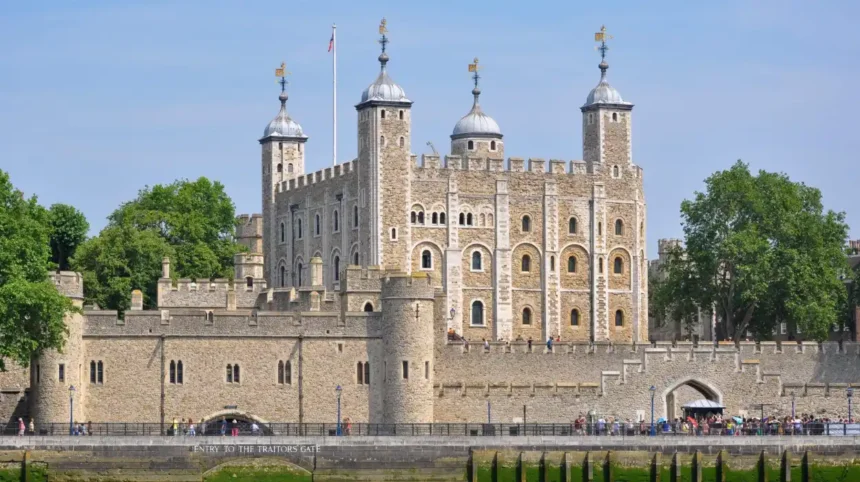
The Tower of London provides one of England’s strongest historic experiences, combining an 11th-century fortress, royal history, medieval architecture, imprisonment stories and the Crown Jewels within a UNESCO World Heritage Site beside the River Thames.
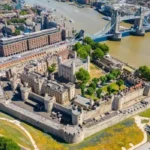
The Tower of London is one of the defining landmarks of Tower Hamlets. The White Tower was established by William the Conqueror after the Norman Conquest, beginning in 1066. UNESCO identifies it as an outstanding example of Norman military architecture and one of Europe’s most complete surviving 11th-century fortress palaces.
The complex developed over several centuries. Defensive walls, towers, royal buildings and other structures were added as the Tower changed function.
Its history includes royal residence, military defence, state administration, imprisonment and execution. The Tower also held important national records and valuables.
The Crown Jewels form one of its major visitor attractions. They represent centuries of British monarchy and remain closely associated with the Tower’s continuing royal significance.
Visitors should allow substantial time for the complex because its significance extends beyond the White Tower itself. The surrounding walls, towers and historical spaces provide evidence of how London was defended and governed.
The location beside the Thames also makes the Tower an effective starting point for a wider riverside itinerary.
As you explore this modern visitor destination, you are crossing land with a deep heritage. Read about the full to understand its origins.
What can visitors discover at the Museum of London Docklands?
The Museum of London Docklands explains how London’s river, docks, trade and communities developed. Its collections provide historical context for Canary Wharf, Limehouse, Poplar and the wider Docklands transformation that reshaped East London.
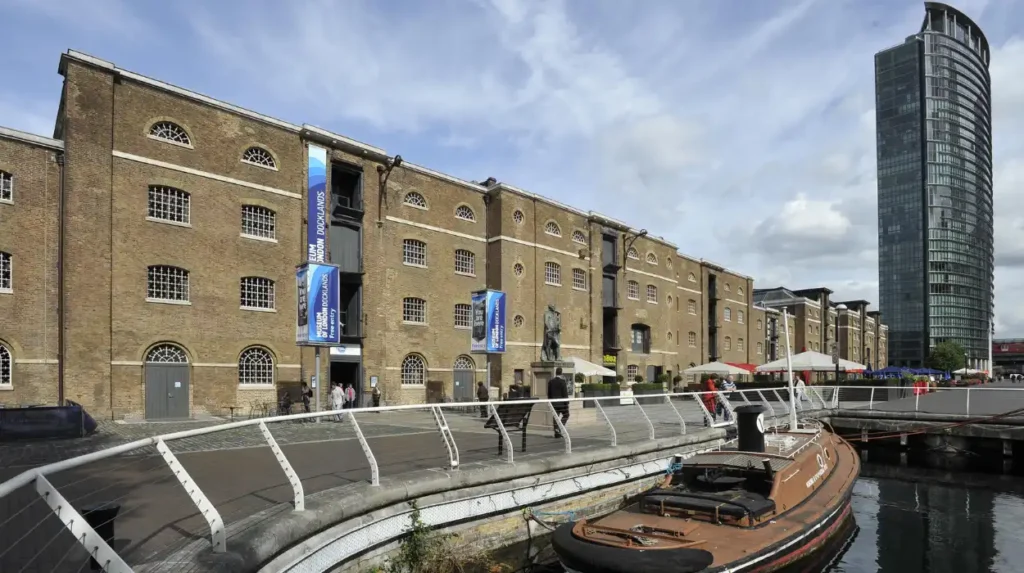
The Museum of London Docklands is located in a historic warehouse at West India Quay. It focuses on London’s relationship with the River Thames and the development of the docks.
Its subject is particularly relevant to understanding Tower Hamlets because the borough contained major commercial docklands. Goods entering London through the river influenced employment, housing, transport and neighbourhood development.
The museum presents the story of trade and migration alongside the physical development of the docks. Visitors can therefore connect historical exhibits with the surrounding Canary Wharf skyline.
West India Docks were an important part of London’s commercial infrastructure. Their warehouses and waterways supported international trade before containerisation and changing shipping patterns transformed the Docklands.
The museum experience works especially well for visitors who want historical context before exploring Canary Wharf, Limehouse or the Thames.
How can visitors experience Canary Wharf and the modern Docklands?
Canary Wharf offers a contrasting Tower Hamlets experience built around modern architecture, public art, waterside spaces, restaurants and former dock infrastructure. It demonstrates how industrial docklands became one of London’s major commercial districts.
Canary Wharf occupies the Isle of Dogs and developed from the former West India Docks. The area now contains major commercial buildings, public spaces, retail facilities, restaurants and transport connections.
The district is particularly useful for understanding urban regeneration. Historic dock structures remain alongside contemporary skyscrapers, creating a visible contrast between industrial London and the modern financial centre.
Visitors can walk around the dock basins, explore public spaces and view the architecture from different waterfront positions.
The area also connects efficiently with other Tower Hamlets destinations. The Jubilee line, Elizabeth line and Docklands Light Railway provide access to different parts of the borough and wider London.
For photography, Canary Wharf offers reflections across the water, large-scale architecture and changing views between historic warehouses and modern towers.
The experience is strongest when combined with the Museum of London Docklands, because the museum explains the industrial history that shaped the landscape visitors see today.
What makes Brick Lane and Spitalfields distinctive tourist experiences?
Brick Lane and Spitalfields provide a concentrated East London experience through food, markets, independent businesses, street art, historic buildings and multicultural heritage. They connect the area’s commercial past with its contemporary creative culture.
Brick Lane runs through the historic East End and is closely associated with changing migrant communities. Its food culture is particularly connected with the Bengali community, while its surrounding streets contain independent shops, cafés, galleries and creative businesses.
Spitalfields provides another important layer of the same urban landscape. Old market buildings, commercial streets and historic architecture sit alongside contemporary retail and hospitality businesses.
The area is especially suitable for visitors who prefer walking-based exploration. The distance between many attractions is manageable, allowing travellers to observe changes in architecture and business activity from street to street.
Food is an important component of the experience. Visitors encounter Bengali restaurants, bakeries, cafés, international cuisines and specialist food businesses.
Street art also forms part of the visual identity. Murals and changing artworks appear across walls, shutters and commercial buildings.
Because businesses and market activities change over time, visitors should check current opening arrangements before travelling.

Why is Whitechapel important for culture and contemporary art?
Whitechapel is a major cultural district in Tower Hamlets, combining contemporary art, local history, multicultural communities, markets and public institutions. Its cultural identity is strongly connected with migration, education and the East End’s long artistic tradition.
The Whitechapel Gallery was founded in 1901 by Samuel and Henrietta Barnett to bring major art to East London. The institution remains based in Tower Hamlets and operates nine exhibition spaces alongside an auditorium, study areas, bookshop and café.
Its exhibition history includes major artists such as Pablo Picasso, Jackson Pollock, Mark Rothko, Frida Kahlo and Lucian Freud. The gallery’s archive records significant exhibitions extending across more than a century.
This makes Whitechapel particularly valuable for cultural tourism. Visitors can encounter international contemporary art while remaining within one of London’s historically diverse neighbourhoods.
Whitechapel also provides access to markets, restaurants, cafés and historic streets. A visit to the gallery therefore fits naturally into a wider walking itinerary.
The district is particularly relevant to travellers interested in the relationship between art and urban communities.
What can visitors do around Victoria Park?
Victoria Park provides a major green-space experience in Tower Hamlets, combining landscaped gardens, historic features, sports facilities, open lawns, water and event spaces. Its 86 hectares make it the borough’s largest park.
Victoria Park opened in 1845 and was created specifically to provide public open space for East London communities. Tower Hamlets Council describes it as London’s oldest public park and records more than nine million annual visitors.
The park developed in response to severe overcrowding, poor sanitation and limited public open space in the nineteenth-century East End. A petition signed by 30,000 local residents was presented to Queen Victoria in 1840 requesting a public park.
The landscape includes a lake, gardens, mature trees, sports areas, cafés, playground facilities and walking routes.
Victoria Park also has heritage significance. It is listed at Grade II* on the national Register of Parks and Gardens of Special Historic Interest.
The park connects with wider green and water corridors. Visitors can continue towards Mile End, the Regent’s Canal and nearby Olympic Park areas.
Its large scale makes it suitable for walking, running, cycling, photography and relaxed outdoor visits.
How can visitors explore Tower Hamlets by canal and waterfront?
Tower Hamlets offers several water-based walking experiences around Limehouse Basin, the Regent’s Canal, Limehouse Cut and the River Thames. These routes reveal historic transport infrastructure alongside modern housing, marinas and regenerated waterfront districts.
Waterways are fundamental to Tower Hamlets’ history. The Regent’s Canal was completed in 1820 and connected the Paddington Arm with Limehouse, where it met the Thames. It carried commodities such as timber, coal, building materials and food.
Limehouse Basin is particularly useful for visitors. Formerly known as Regent’s Canal Dock, it connected inland waterways with the Thames and handled commercial traffic until the Docklands decline.
The Canal & River Trust records 1,500 ships and 15,336 barges entering Limehouse Basin in 1865, demonstrating the scale of historic activity.
Today, the basin contains a marina, walkways and waterside development. Visitors can follow the towpath, observe boats and continue towards the Thames.
Limehouse Cut provides another route between the River Lea and Thames. It was authorised in 1766 and created a shorter route for vessels travelling from the Lea towards the Thames.
These waterways provide some of the best opportunities to experience Tower Hamlets without entering a major attraction.
Which lesser-known green spaces are worth visiting in Tower Hamlets?
Tower Hamlets contains important green spaces beyond Victoria Park, including Tower Hamlets Cemetery Park, Mudchute Park and Farm, Mile End Park and smaller historic gardens. These areas combine recreation, biodiversity, heritage and community use.
Tower Hamlets Cemetery Park is one of the borough’s most distinctive outdoor destinations. It opened for burials in 1841 and became a public park after burials ceased in 1966. It is now recognised as a Local Nature Reserve.
The site covers 12.55 hectares and contains woodland, grassland, ponds, historic monuments and wildlife habitats. The Friends of Tower Hamlets Cemetery Park organise conservation activities, heritage work and guided events.
The park is also one of London’s “Magnificent Seven” Victorian cemeteries.
Mudchute Park and Farm provides another distinctive experience on the Isle of Dogs. Tower Hamlets identifies both Mudchute Park and Farm and Tower Hamlets Cemetery Park as local nature reserves.
These destinations are valuable for visitors who want an outdoor experience that differs from conventional central London parks.
What cultural experiences can digital nomads and business travellers find in Tower Hamlets?
Tower Hamlets supports short cultural breaks through libraries, cafés, galleries, markets, public spaces and excellent transport connections. Whitechapel, Spitalfields, Canary Wharf and Bethnal Green provide practical locations for combining work commitments with cultural exploration.
Digital nomads benefit from the concentration of services around Whitechapel and surrounding neighbourhoods. Idea Store Whitechapel is located at 321 Whitechapel Road and provides library, learning and community facilities.
Tower Hamlets’ Idea Store network combines library services with learning opportunities, activities, events and digital resources.
The Whitechapel branch is particularly relevant because it sits close to the market and transport network. Its facilities also support meetings, seminars, training and other activities.
Canary Wharf provides a different working environment with offices, restaurants, retail and extensive transport links.
Business travellers staying in or near the City can therefore use Tower Hamlets for short cultural excursions without committing to a full-day journey.
How should visitors plan a one-day Tower Hamlets adventure?
A one-day Tower Hamlets itinerary works best when attractions are grouped geographically. Start with the Tower or riverside, continue through Wapping and Whitechapel, explore Brick Lane and Spitalfields, then finish around Canary Wharf or Victoria Park.
A history-focused itinerary can begin at the Tower of London. The visit establishes the borough’s connection with Norman England, monarchy and the River Thames.
From the Tower, travellers can walk towards Wapping and continue towards Limehouse. Limehouse Basin then provides access to historic waterways and waterside walking routes.
A culture-focused itinerary can begin at Whitechapel Gallery. From there, visitors can explore Whitechapel Road, local food businesses and Brick Lane before continuing into Spitalfields.
A modern East London itinerary can centre on Canary Wharf. The Museum of London Docklands provides historical context, while the surrounding docks demonstrate the transformation of the area.
An outdoor itinerary can focus on Victoria Park, Mile End and nearby waterways. Tower Hamlets Cemetery Park provides another option for visitors interested in nature and heritage.
The key planning principle is geographical grouping. Tower Hamlets contains many attractions, but visitors gain more from linking nearby experiences than from crossing the entire borough repeatedly.
When is the best time to explore Tower Hamlets?
Tower Hamlets works throughout the year because its attractions include indoor museums and galleries, outdoor parks, markets, historic buildings and waterfront routes. Seasonal planning should match the experience, opening arrangements and daylight available.
Spring and summer provide longer daylight for parks, walking routes and waterfront exploration. Victoria Park and the canal towpaths are particularly useful during longer daylight hours.
Autumn provides strong conditions for heritage walks and cultural visits. Visitors can combine museums and galleries with shorter outdoor routes.
Winter places greater emphasis on indoor attractions such as the Tower of London, Museum of London Docklands and Whitechapel Gallery. Markets, restaurants and cafés also provide indoor stops during neighbourhood exploration.
Opening hours differ between attractions and change for special events or holidays. Visitors should check official attraction websites before travelling.
Public parks also operate under local rules. Tower Hamlets Council lists dawn-to-dusk opening arrangements for designated parks and open spaces.
Explore More Area Guide
Tower Hamlets Holiday Guide: Best Places to Explore
Exploring Tower Hamlets: East London Attractions 2026
How does Tower Hamlets connect its history with modern East London?
Tower Hamlets demonstrates London’s urban transformation through visible layers of medieval monarchy, maritime trade, industrial development, migration, public health reform, cultural change and financial regeneration. These layers remain visible across streets, buildings, waterways and public spaces.
The Tower of London represents medieval royal and military authority. The docks represent international commerce and industrial employment. Whitechapel represents migration, community development and cultural production.
Victoria Park represents nineteenth-century public health reform and the creation of accessible green space. Its creation followed concerns about overcrowding, pollution and poor living conditions in the East End.
The Docklands regeneration represents a later transformation. Former industrial areas became commercial, residential and cultural districts.
The borough’s waterways remain particularly important because they connect these periods physically. Limehouse Basin links historic inland transport with contemporary waterfront development. The Regent’s Canal continues to provide walking and cycling routes through East London.
This continuity makes Tower Hamlets valuable for visitors seeking more than isolated attractions. The borough functions as a living record of London’s economic, cultural and architectural development.
Why should Tower Hamlets be included in an East London travel itinerary?
Tower Hamlets deserves a central place in an East London itinerary because it combines globally recognised landmarks with neighbourhood culture, historic waterways, green spaces, museums, galleries and food districts within one highly connected London borough.
The borough provides unusually strong thematic variety.
History travellers can visit the Tower of London and explore the former docks. Art enthusiasts can visit Whitechapel Gallery. Food-focused visitors can explore Brick Lane and surrounding markets. Outdoor travellers can walk Victoria Park, Limehouse Basin and Tower Hamlets Cemetery Park.
The borough also supports flexible itineraries. A visitor with only a few hours can concentrate on Whitechapel or Canary Wharf. Travellers with a full day can combine the Tower, riverside, markets and Docklands.
Its transport network strengthens this flexibility. Underground, Elizabeth line, DLR, Overground, buses and walking routes connect major parts of Tower Hamlets with central London and other East London destinations.
The result is a destination that works for first-time visitors and repeat London travellers. Its best experiences are not limited to one landmark. They emerge from understanding how the borough’s historic neighbourhoods, waterways, institutions and public spaces fit together.
What are the best tourist attractions in Tower Hamlets?
The Tower of London, Museum of London Docklands, Whitechapel Gallery, Brick Lane, Spitalfields, Canary Wharf and Victoria Park are among the leading tourist attractions in Tower Hamlets.