Tower Hamlets is one of East London’s most varied visitor destinations, combining royal history, working docks, contemporary culture, street markets, green spaces, food districts and modern business architecture. The borough stretches from the historic Tower of London and Tower Bridge area through Whitechapel, Spitalfields, Bethnal Green, Bow, Mile End, Limehouse, Wapping and the Isle of Dogs.
- What makes Tower Hamlets one of the best places to visit in East London?
- Which historic attractions should visitors explore in Tower Hamlets?
- Where can visitors experience Tower Hamlets’ markets and local shopping culture?
- Which museums and cultural venues offer the best visitor experiences?
- Where can visitors find the best parks and outdoor experiences?
- What can visitors experience around Canary Wharf and the Docklands?
- Which riverside experiences are best for visitors?
- Where can visitors find the best food and dining experiences?
- Which Tower Hamlets areas are best for culture, shopping and entertainment?
- How should visitors plan a one-day Tower Hamlets itinerary?
- What is the best way to combine Tower Hamlets attractions?
- Why does Tower Hamlets remain relevant for future London visitors?
Its appeal comes from the concentration of different experiences within a relatively compact part of London. Visitors can explore a medieval fortress, browse an established street market, visit a major contemporary art gallery, walk through one of London’s largest parks and finish the day around Canary Wharf.
Tower Hamlets Council describes the borough as the heart of London’s East End and highlights its combination of ancient and modern places, museums, galleries, markets and historic landmarks.
The best experiences therefore depend on the type of visit. History-focused travellers have the Tower of London and Museum of London Docklands. Culture-focused visitors have Whitechapel Gallery and the East End’s creative districts. Food and shopping visitors have Brick Lane, Columbia Road and other markets. Outdoor visitors have Victoria Park, Mile End Park, Mudchute Park and Farm and the Thames riverside.
What makes Tower Hamlets one of the best places to visit in East London?
Tower Hamlets combines major historical landmarks, diverse markets, contemporary art, large parks, riverside districts and modern architecture within one London borough, giving visitors access to several distinct experiences without travelling far between them.
Tower Hamlets occupies a strategically important section of East London. The River Thames forms its southern boundary, while the borough connects central London with the wider East End and Docklands.
The borough’s geography explains much of its visitor appeal. The western section around Tower Hill contains the Tower of London. Whitechapel and Spitalfields provide historic streets, markets and cultural institutions. Bethnal Green and Bow contain established neighbourhoods and green spaces. The southern area includes Wapping, Limehouse and the Isle of Dogs, where former docks sit alongside modern financial architecture.
The contrast between historic and modern environments is particularly significant. Canary Wharf represents the regenerated Docklands economy, while nearby areas retain buildings and landscapes connected with maritime trade and industrial London.
Tower Hamlets Council identifies the borough’s history as extending back thousands of years, with archaeological evidence including Stone Age and Bronze Age implements. Roman activity also forms part of the area’s long development.
For visitors, this creates a destination where sightseeing does not depend on one attraction. A day can combine heritage, food, art, shopping and outdoor recreation.
Which historic attractions should visitors explore in Tower Hamlets?
The Tower of London is the borough’s defining historic attraction, while nearby historic streets, churches, docklands buildings and heritage sites reveal how royal power, migration, trade, industry and maritime activity shaped East London.
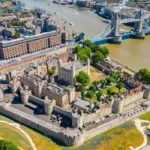
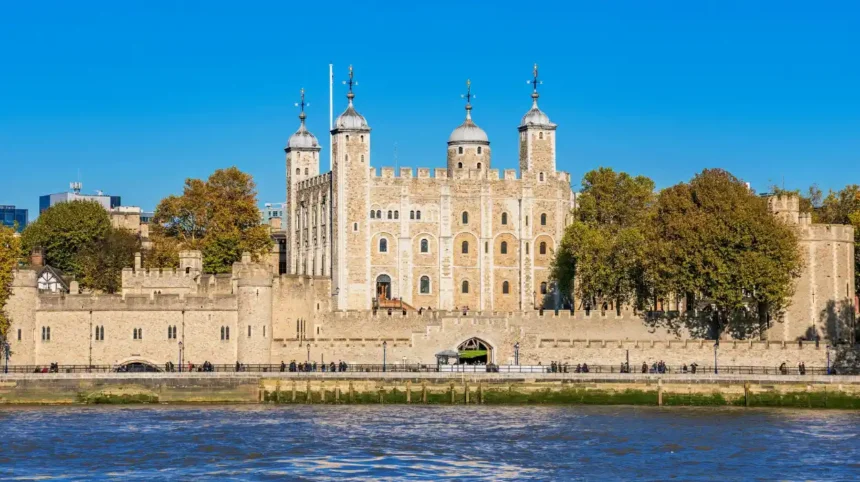
The Tower of London is the most prominent historic attraction in Tower Hamlets. Historic England identifies it as a scheduled monument and World Heritage Site with archaeological evidence covering more than 2,000 years of human activity.
The White Tower forms the architectural core of the complex. William the Conqueror began the fortress after the Norman Conquest, with construction of the White Tower taking place from the late 11th century. Later monarchs expanded the site with curtain walls, towers, a moat and royal buildings.
The Tower also operated as a royal palace, fortress, prison, arsenal and Royal Mint. Its changing functions explain why the site provides such a broad historical experience rather than representing one period alone.
Historic streets provide a different form of heritage. Brick Lane reflects successive communities that settled in the East End. Historic England records the building now known as Brick Lane Jamme Masjid as a former French Protestant chapel dating from 1743–44, later converted into a synagogue in 1897 and a mosque in 1976.
This layered religious history demonstrates the wider transformation of the East End through migration and changing communities.
As you explore these modern visitor destinations, you are crossing land with a deep heritage. Read about the full to understand its origins.
Tobacco Dock provides another major heritage experience. The Grade I listed building was constructed in 1812 as a storage and trading centre for imported goods, including tobacco. Its surviving timber structures and brick vaults now accommodate exhibitions, events, conferences and other visitor activities.
Where can visitors experience Tower Hamlets’ markets and local shopping culture?
Visitors can experience Tower Hamlets’ market culture through Brick Lane, Columbia Road, Petticoat Lane, Whitechapel Market, Roman Road Market, Bethnal Green Road and other established trading areas serving food, fashion, flowers, crafts and everyday goods.
Markets are one of the strongest reasons to explore Tower Hamlets beyond its major monuments. Tower Hamlets Council states that the borough has ten street markets, including Brick Lane, Bethnal Green Road, Chrisp Street, Columbia Road, Petticoat Lane, Roman Road, Sclater Street, Watney Market and Whitechapel Market.
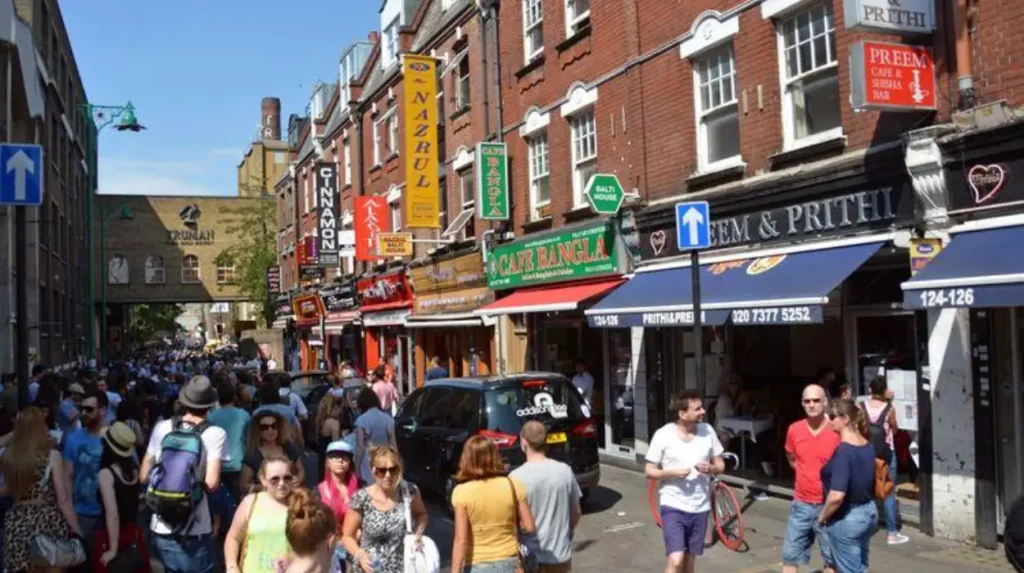
Brick Lane is particularly important for visitors. The council records its market history from 1888 and identifies fashion, food, art, jewellery, retro clothing and household goods among the market offer. The street also reflects the area’s French Huguenot, Jewish and Bangladeshi heritage.
Columbia Road provides a different market experience. Its principal identity is flowers and plants, creating a strong contrast with Brick Lane’s broader mix of food, fashion and independent retail.
Petticoat Lane is another established market district associated with East London shopping. Whitechapel Market provides a further example of the borough’s everyday trading culture.
For visitors interested in local food, markets also provide opportunities to experience cuisines associated with the borough’s diverse communities. Brick Lane is particularly associated with Bangladeshi food and the wider South Asian culture of the East End.
Market visits work particularly well as part of a walking itinerary because several neighbourhood attractions sit within relatively short distances.
Which museums and cultural venues offer the best visitor experiences?
Museum of London Docklands explains the history of London’s port and Docklands, while Whitechapel Gallery provides internationally recognised contemporary art; together they demonstrate Tower Hamlets’ transition from maritime commerce to global cultural and financial activity.
The Museum of London Docklands is one of the most useful destinations for understanding the borough’s relationship with the River Thames. The museum examines London’s port, trade and Docklands history and provides historical context for the waterfront districts visitors see today. Tower Hamlets Council specifically identifies it as a key institution charting the borough’s development as London’s port.
The Whitechapel Gallery provides a different cultural experience. Founded in 1901 by Samuel and Henrietta Barnett, the gallery was created to bring major art to East London audiences. It has since presented internationally important artists and developed a strong programme of exhibitions, education and community activity.
Its historical importance is substantial. Whitechapel Gallery hosted Picasso’s Guernica in 1939 during its only visit to Britain and later presented major exhibitions involving artists including Jackson Pollock, Mark Rothko, David Hockney and Frida Kahlo.
The gallery marked its 125th anniversary in 2026, reinforcing its continuing role within East London’s cultural landscape.
These institutions complement each other. The Museum of London Docklands explains economic and social history, while Whitechapel Gallery represents contemporary cultural production.
Where can visitors find the best parks and outdoor experiences?
Victoria Park, Mile End Park, Mudchute Park and Farm and Tower Hamlets Cemetery Park provide the borough’s strongest outdoor experiences, offering landscaped gardens, sports facilities, wildlife habitats, walking routes, recreation areas and quieter spaces.
Tower Hamlets contains more than 120 parks and green spaces, according to the council. Fourteen hold Green Flag Awards, while nine have received London in Bloom gold awards.
Victoria Park is the largest and oldest park in the borough. It covers more than 80 hectares and receives more than nine million visits each year. Facilities include sports pitches, tennis, cricket, playgrounds, picnic areas, a bandstand, refreshments and a skate space.
The park opened in 1845 and was designed as a major public green space for East London’s working population. Its landscape includes historic features such as the Burdett-Coutts Fountain, lakes and gardens.
Mile End Park provides a different experience. It includes sports facilities, the Ecology Park and arts facilities. Its position between central East London neighbourhoods makes it useful for visitors who want to combine urban sightseeing with outdoor recreation.
Mudchute Park and Farm is one of the borough’s distinctive nature destinations. It occupies part of the Isle of Dogs and provides open space and a working farm environment within a densely developed urban area.
Tower Hamlets Cemetery Park offers another ecological and historical experience. The council identifies both Mudchute Park and Farm and Tower Hamlets Cemetery Park as local nature reserves.
These parks are particularly useful for families, walkers, photographers and visitors requiring a break from busy streets.

What can visitors experience around Canary Wharf and the Docklands?
Canary Wharf provides Tower Hamlets’ most prominent modern urban experience, combining high-rise architecture, waterside public spaces, retail, dining, transport connections, cultural programming and public art within the regenerated Docklands district.
Canary Wharf represents the modern economic identity of Tower Hamlets. The district developed from former docklands into one of London’s major financial centres, creating a skyline dominated by high-rise commercial buildings.
The transformation is important because the Docklands were historically associated with shipping, warehousing and international trade. Regeneration changed the land use from industrial port activity to offices, housing, retail, hospitality and public spaces.
Visitors can experience this transformation through waterfront walks and the architectural contrast between historic dock buildings and contemporary towers.
Canary Wharf also provides a practical visitor environment. Its transport network connects the district with other parts of London through the Jubilee line, Elizabeth line, Docklands Light Railway and London Underground connections nearby.
Public art adds another layer. The wider Canary Wharf estate contains a substantial programme of permanent and temporary artworks, creating an open-air cultural component alongside galleries and events.
The district is particularly suitable for visitors who want architecture, photography, food, shopping and evening entertainment in the same area.
Its position beside former docks also connects directly with Tower Hamlets’ maritime history. The experience therefore works best when visitors recognise both sides of the district: the historic port landscape and the modern financial centre.
Which riverside experiences are best for visitors?
The Thames riverside offers visitors a continuous combination of heritage, architecture and urban scenery, with strong viewpoints around the Tower of London, Wapping, Limehouse, the Isle of Dogs and Canary Wharf forming the main waterfront experiences.
The River Thames is fundamental to Tower Hamlets’ identity. It shaped the borough’s historic trade, docks, warehouses, industrial activity and later regeneration.
The Tower of London provides the strongest historic riverside landmark. Its location beside the Thames was central to its military and political importance. Historic England records the site as a major fortress with archaeological evidence connected to Roman and medieval London.
Wapping provides a different waterfront environment. Historic dock structures and converted warehouses reflect the area’s former maritime role.
Limehouse also connects residential neighbourhoods with the historic canal and dock network. Walking routes around Limehouse Basin provide views across waterways and modern developments.
The Isle of Dogs presents perhaps the clearest visual contrast between industrial heritage and contemporary London. Former docks surround the high-rise Canary Wharf district, allowing visitors to understand the physical scale of Docklands regeneration.
Riverside walking also provides a useful way to connect attractions without relying entirely on public transport. Visitors can combine sections of the waterfront with museums, restaurants, parks and transport hubs.
Where can visitors find the best food and dining experiences?
The strongest food experiences in Tower Hamlets are concentrated around Brick Lane, Whitechapel, Spitalfields, Canary Wharf and the borough’s markets, where visitors find South Asian cuisine, international street food, independent cafés, restaurants and modern dining venues.
Tower Hamlets has one of London’s most diverse food landscapes. Its restaurants and food markets reflect the migration history of the East End and the economic transformation of the Docklands.
Brick Lane is the most recognisable food destination. Its association with Bangladeshi communities has created a strong concentration of South Asian restaurants and food businesses. The wider street also contains cafés, bakeries, street-food traders and international dining options.
Whitechapel provides another major food district. Its location between the City of London, Brick Lane and Spitalfields makes it a natural stopping point during a central East London itinerary.
Spitalfields adds restaurants, cafés and food-focused retail around the historic market district.
Canary Wharf provides a contrasting dining environment. Its restaurants serve office workers, residents, visitors and event audiences, with options ranging from quick meals to formal dining.
Market food is especially useful for visitors who want variety without committing to a single restaurant. Brick Lane’s market environment provides a broad selection of street food and international flavours.
For a full-day itinerary, visitors can use food stops strategically. Breakfast can begin around Whitechapel or Spitalfields, lunch can take place around Brick Lane, and evening dining can finish in Canary Wharf or the Docklands.
Which Tower Hamlets areas are best for culture, shopping and entertainment?
Whitechapel and Spitalfields suit culture and heritage, Brick Lane suits markets and food, Bethnal Green suits neighbourhood exploration, Victoria Park suits outdoor recreation, and Canary Wharf suits modern architecture, dining and evening entertainment.
Different parts of Tower Hamlets have distinct visitor identities. Choosing an area according to the purpose of the visit makes an itinerary more efficient.
Whitechapel is strongest for contemporary art, religious heritage, markets and East End history. Whitechapel Gallery provides the major cultural anchor, while nearby streets contain independent businesses and historic buildings.
Spitalfields combines historic architecture with shopping, food and creative businesses. Its proximity to Brick Lane allows visitors to combine several experiences in one walking itinerary.
Brick Lane is particularly suitable for visitors interested in street culture, food, fashion, markets and migration history. Tower Hamlets Council identifies it as a historic focal point for the Bangladeshi community and records its market history from 1888.
Bethnal Green provides access to neighbourhood parks, cultural venues and local shopping streets. It also connects conveniently with Victoria Park.
Bow and Mile End are useful for visitors seeking more open space. Mile End Park provides recreation and ecological attractions, while Victoria Park provides a much larger landscape.
Canary Wharf is the strongest choice for modern architecture, business tourism, waterside dining and contemporary urban photography.
How should visitors plan a one-day Tower Hamlets itinerary?
A practical one-day itinerary starts around the Tower of London, continues through Whitechapel and Brick Lane, reaches Spitalfields or Bethnal Green, and finishes around Victoria Park, the Thames or Canary Wharf according to visitor interests.
A history-led day should begin at the Tower of London. Allow substantial time because the complex contains multiple historic structures and collections. The Tower’s extensive history covers Norman construction, medieval expansion, royal occupation, imprisonment and state functions.
The next section can move towards Whitechapel. Whitechapel Gallery provides a strong cultural stop, particularly for visitors interested in modern and contemporary art.
Brick Lane then provides a natural transition from cultural sightseeing to food and markets. Its proximity to Spitalfields makes it possible to explore both districts during the same walking section.
An afternoon at Victoria Park works well for visitors prioritising green space. The park contains gardens, sports facilities, lakes and historic features.
A modern alternative is Canary Wharf. Visitors can travel south towards the Docklands and explore the financial district, waterfront and public spaces.
A heritage-focused alternative is Tobacco Dock and Wapping. Tobacco Dock’s 1812 building provides a direct connection with London’s former import trade and the physical infrastructure of the historic port.
The best itinerary therefore depends on priorities rather than attempting to visit every attraction.
Explore More Area Guide
Tower Hamlets Travel Inspiration: London Itinerary 2026
East London Explorer: Top Tower Hamlets Attractions 2026
What is the best way to combine Tower Hamlets attractions?
The most efficient approach is to group attractions geographically, combining nearby heritage sites, markets, cultural venues and parks instead of crossing the borough repeatedly, with walking and public transport connecting the main visitor districts.
Tower Hamlets is large enough to require planning but compact enough for several attractions to be combined.
The Tower of London, Tower Bridge area and riverside can form one heritage cluster. Whitechapel, Brick Lane and Spitalfields form a second cultural and food cluster. Bethnal Green and Victoria Park form a green-space cluster. Wapping, Tobacco Dock, Limehouse and Canary Wharf form the principal Docklands cluster.
This approach reduces unnecessary travel and creates stronger thematic connections.
Public transport is particularly important because the borough is served by several London transport modes. Visitors can use London Underground, Docklands Light Railway, Elizabeth line, London Overground and buses depending on the route.
Walking remains valuable within individual districts. Brick Lane, Spitalfields and Whitechapel are especially suitable for walking because attractions and food businesses sit close together.
Visitors should also check attraction opening times and event schedules before travelling. Markets operate on specific days and cultural programmes change throughout the year.
Why does Tower Hamlets remain relevant for future London visitors?
Tower Hamlets remains important because its visitor economy combines protected heritage, cultural institutions, regenerated Docklands, major green spaces, established markets and new urban development, creating a destination that continues to evolve without losing its historic identity.
Tower Hamlets demonstrates several major stages of London’s development within one borough.
The Tower of London represents medieval royal power and state authority. Docklands represents centuries of maritime trade and international commerce. Whitechapel reflects migration, social change and cultural production. Brick Lane demonstrates the continuing influence of successive communities. Canary Wharf represents London’s modern financial economy.
The borough’s parks provide another essential component. More than 120 parks and green spaces support recreation, biodiversity and community activity.
Cultural institutions also continue to evolve. Whitechapel Gallery’s 125th anniversary in 2026 illustrates the long-term role of cultural organisations in East London.
Heritage protection ensures that significant historic structures remain part of the visitor landscape. Historic England’s records cover major sites including the Tower of London, historic religious buildings and former industrial structures across Tower Hamlets.
For future visitors, this combination provides a reliable reason to return. The fundamental attractions remain rooted in the borough’s geography and history, while exhibitions, markets, cultural programmes, restaurants and events continue to develop.
Tower Hamlets is therefore best understood as a complete East London destination rather than a collection of isolated attractions. Its strongest visitor experiences come from combining history, culture, food, markets, green space and modern architecture within a single itinerary.
What are the best experiences in Tower Hamlets?
The best experiences in Tower Hamlets include visiting the Tower of London, exploring Brick Lane, viewing contemporary art at Whitechapel Gallery, walking through Victoria Park, visiting the Museum of London Docklands and exploring Canary Wharf.