Tower Hamlets is one of the most diverse and historically significant visitor destinations in East London. The London Borough of Tower Hamlets combines medieval heritage, Victorian engineering, former docks, major museums, contemporary architecture, markets, food streets, parks and riverside spaces.
- Why is Tower Hamlets a good destination for a London city break?
- Which Tower Hamlets landmark should visitors see first?
- What can visitors experience at Tower Bridge?
- Why should visitors explore St Katharine Docks?
- What makes Whitechapel and Brick Lane important visitor destinations?
- What can visitors discover at Spitalfields?
- Where can visitors experience London’s docklands history?
- Which parks and outdoor destinations are best for visitors?
- How can visitors plan a one-day Tower Hamlets itinerary?
- Which Tower Hamlets destinations are best for food and evening entertainment?
- What historical context should visitors understand before exploring Tower Hamlets?
- How should visitors combine Tower Hamlets with the wider London city centre?
- What makes Tower Hamlets relevant for future London visitors?
For a London city break, the borough offers attractions within a compact area. Visitors can connect the Tower of London and Tower Bridge with St Katharine Docks, Whitechapel, Brick Lane, Spitalfields, the City Fringe, Canary Wharf, the Isle of Dogs and Victoria Park.
The borough also has an unusually deep historical record. Historic England identifies Roman, medieval, post-medieval and 20th-century heritage sites across Tower Hamlets. Its National Heritage List includes landmarks such as the Tower of London, Victoria Park, Spitalfields Market, Brick Lane Jamme Masjid and numerous historic buildings.
This combination makes Tower Hamlets suitable for short city breaks, longer London holidays and visitors who want to combine major landmarks with neighbourhood exploration.
Why is Tower Hamlets a good destination for a London city break?
Tower Hamlets is a strong London city-break destination because it combines major landmarks, museums, markets, historic streets, riverside walks, parks, restaurants and modern business districts within a highly connected East London area.
Tower Hamlets sits immediately east of the City of London. Its western edge contains some of London’s most recognisable historic attractions, while its eastern and southern areas contain major regeneration districts and former docklands.
The borough’s visitor offer is geographically varied. Tower Hill and Tower Bridge provide major heritage attractions. Whitechapel and Brick Lane provide cultural and food experiences. Spitalfields combines historic architecture with shopping and dining. Canary Wharf provides contemporary architecture, public spaces and riverside views.
The Thames is another defining feature. The river shaped the development of the Pool of London, the docks and the commercial economy of East London.
For visitors, this creates several distinct experiences without requiring long journeys between every destination. A single day can combine historic sightseeing in the morning, market exploration around lunchtime and riverside or cultural activities in the afternoon.
Tower Hamlets also connects directly with wider central London attractions. The borough therefore works both as a destination in its own right and as a base for exploring neighbouring areas.
Which Tower Hamlets landmark should visitors see first?
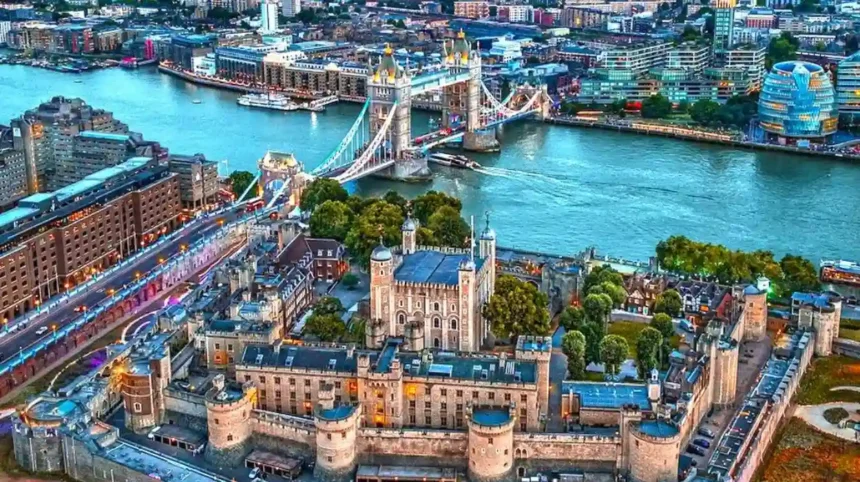
The Tower of London is the strongest starting point for first-time visitors because this historic fortress contains royal, military and political heritage spanning centuries and stands beside Tower Bridge and the River Thames in western Tower Hamlets.
The Tower of London is a scheduled monument and one of England’s most important historic sites. Historic England records its development from a tower keep castle into a larger enclosure castle from approximately the 13th century.
The White Tower forms the core of the complex. William the Conqueror began its construction after the Norman Conquest, and successive monarchs expanded the surrounding fortress.
The site has served different functions during its long history. It has operated as a royal residence, fortress, prison, armoury and treasury. Its association with the Crown remains central to its visitor identity.
The Tower also provides access to centuries of London history. Visitors encounter defensive architecture, medieval structures, royal stories and the wider history of the capital.
Its location makes it particularly useful for a city-break itinerary. Tower Bridge is close by, while St Katharine Docks and the Thames form a natural continuation of the walking route.
The Tower of London also establishes the historical context for the rest of the borough. Tower Hamlets developed around London’s eastern edge, the river and expanding commercial activity. The surviving buildings and streets demonstrate how the area changed from medieval settlement to industrial and modern London.
Visitors interested in heritage should therefore place the Tower of London near the beginning of their itinerary.
What can visitors experience at Tower Bridge?
Tower Bridge combines Victorian engineering, river views and London history through its high-level walkways, glass floors, towers and historic engine rooms, making it one of Tower Hamlets’ most recognisable visitor attractions and an essential Thames-side stop.
Tower Bridge opened in 1894 and remains a working bridge across the River Thames. Its visitor attraction provides access to the North Tower, South Tower, high-level walkways and Victorian Engine Rooms.
The high-level walkways are approximately 42 metres above the River Thames. They provide views across central and eastern London. The walkways also contain glass-floor sections that allow visitors to look towards the road and river below.
The Victorian Engine Rooms explain how the bridge’s lifting mechanism operated. Historic steam engines powered the bridge lifts for more than 80 years.
Tower Bridge also has a strong connection with the history of London’s river traffic. The bridge was designed to provide a new crossing while allowing ships to continue using the busy waterway.
Construction began in 1886. The bridge opened to the public in 1894. During its opening period, an estimated 8,000 horse-drawn vehicles and 60,000 pedestrians crossed the bridge each day.
The walkways originally operated as pedestrian routes during bridge lifts. They closed to the public in 1910 and reopened as part of the visitor attraction in 1982.
For a city break, Tower Bridge works particularly well alongside the Tower of London. The two landmarks create a concentrated heritage zone where visitors can experience medieval history, Victorian engineering and modern London river traffic within one walking itinerary.
Why should visitors explore St Katharine Docks?
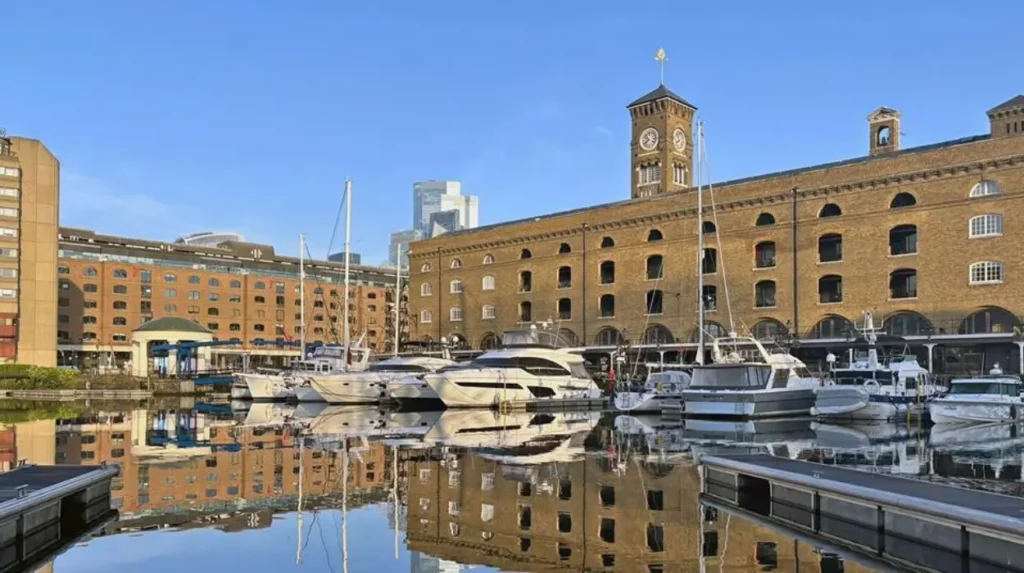
St Katharine Docks provides a quieter riverside experience beside the Tower of London, combining historic dock architecture, water, restaurants, boats and pedestrian routes in a compact setting that contrasts with the larger landmarks surrounding Tower Hill and Tower Bridge.
St Katharine Docks developed as part of London’s historic dock system. Its location close to the Tower of London reflects the importance of the Thames to London’s commercial and maritime economy.
The area now functions as a mixed-use waterfront district. Historic dock buildings sit alongside restaurants, offices, residential buildings and public spaces.
For visitors, St Katharine Docks provides a useful transition between major attractions. It offers an opportunity to leave the busiest streets around Tower Bridge and explore a more contained waterfront environment.
The docks also illustrate how former industrial infrastructure has been incorporated into contemporary London. The relationship between water, warehouses and modern businesses demonstrates the transformation of London’s eastern riverfront.
This makes St Katharine Docks particularly useful for visitors who want a slower section in their itinerary. It works for photography, waterfront walking, dining and short breaks between larger attractions.
The nearby Dockmaster’s Office is among the heritage features recorded by Historic England. The organisation also identifies surviving historic structures and dock-related buildings throughout Tower Hamlets.
Visitors interested in the development of London’s docks can continue east towards Whitechapel and the former docklands, creating a broader historical route across the borough.
What makes Whitechapel and Brick Lane important visitor destinations?
Whitechapel and Brick Lane provide one of Tower Hamlets’ strongest combinations of food, street culture, religious heritage, independent businesses, markets and historic architecture, giving city-break visitors direct access to the cultural diversity that defines modern East London.
Whitechapel sits between the historic City of London and the residential and commercial neighbourhoods of East London. Its streets contain buildings and institutions connected with immigration, medicine, religion, trade and community life.
Brick Lane provides a particularly distinctive visitor experience. The street is associated with markets, food businesses, independent shops, street art and changing cultural communities.
Its religious heritage is especially significant. Historic England records Brick Lane Jamme Masjid as a building that has served different communities. The structure began as a French Protestant chapel in 1743–44, became a synagogue in 1897 and was converted into a mosque in 1976.
This history demonstrates how buildings in Tower Hamlets have changed function as the area’s population and cultural landscape developed.
Brick Lane is also closely connected with London’s food culture. Visitors encounter South Asian restaurants, cafés, bakeries and street-food businesses alongside newer international influences.
The surrounding streets provide further opportunities for exploration. Visitors can walk between Brick Lane, Spitalfields and Shoreditch, crossing several distinct urban environments within a relatively short distance.
The area is particularly suitable for travellers interested in food and photography. It also provides an alternative to conventional landmark sightseeing.
For a city-break itinerary, Whitechapel and Brick Lane work best when combined with Spitalfields. The route creates a progression from historic market architecture to contemporary food, retail and cultural activity.
What can visitors discover at Spitalfields?
Spitalfields combines historic market architecture, independent retail, restaurants, cultural venues and surrounding heritage streets, making it one of Tower Hamlets’ most practical destinations for visitors seeking shopping, food, architecture and neighbourhood exploration in one location.
Spitalfields has a long connection with London’s markets and commercial life. The present market buildings form an important part of the area’s architectural identity.
Historic England records Spitalfields Market as a significant historic structure designed by George Sherrin and constructed between 1885 and 1893. Its architecture includes red brick and decorative stucco gables.
Today, the wider Spitalfields area combines heritage buildings with modern retail and dining. Visitors can explore market stalls, independent shops, restaurants and surrounding streets.
Spitalfields also connects directly with Brick Lane. This makes the two destinations easy to combine during a half-day itinerary.
Architecture is an important part of the experience. The streets contain surviving buildings from different phases of London’s development, allowing visitors to see Victorian commercial architecture alongside contemporary businesses.
The area also provides access to cultural institutions and historic places around the City Fringe.
A visitor interested in London’s changing population can use Spitalfields as a geographical starting point for understanding how commerce, migration and urban redevelopment shaped East London.
This is where the borough’s historical and contemporary identities overlap. As you explore the modern market district, you are crossing land shaped by centuries of trade and migration. Read about the full to understand its origins.
Where can visitors experience London’s docklands history?
The docklands around the Isle of Dogs and Canary Wharf show how Tower Hamlets changed from a major maritime and industrial landscape into a global business district, combining riverside views, modern architecture, public spaces and surviving traces of London’s commercial past.
The Thames and its docks played a major role in the development of Tower Hamlets. Large dock complexes supported shipping, storage and international trade.
The Isle of Dogs became closely associated with London’s dock economy. Warehouses, wharves and industrial buildings dominated much of the riverside landscape before the decline of the traditional docks.
The later redevelopment of Docklands transformed the area. Canary Wharf became a major financial and commercial centre, creating a modern skyline of office towers and public spaces.
Visitors can experience this transformation by walking around Canary Wharf and the surrounding waterfront. The area provides a sharp contrast with Brick Lane, Spitalfields and the Tower of London.
The contrast itself is important for understanding Tower Hamlets. The borough contains medieval fortifications, Victorian infrastructure, industrial docklands and 21st-century commercial architecture.
Historic England’s heritage records demonstrate the scale of this architectural change. Listed and locally significant sites include the Isle of Dogs Pumping Station, historic dock structures and other buildings associated with the former industrial landscape.
Island Gardens provides another important riverside destination. The gardens opened in 1895 and were designed around views towards Greenwich. Historic England records the site’s long relationship with the Thames and the historic ferry connection between the Isle of Dogs and Greenwich.
For visitors, Canary Wharf and Island Gardens provide a useful second-day itinerary after the historic attractions around Tower Hill and Tower Bridge.
Which parks and outdoor destinations are best for visitors?
Victoria Park and the Thames-side open spaces provide Tower Hamlets with important outdoor destinations for walking, relaxing, photography and recreation, balancing the borough’s dense urban environment with landscaped parks, historic features and riverside views.
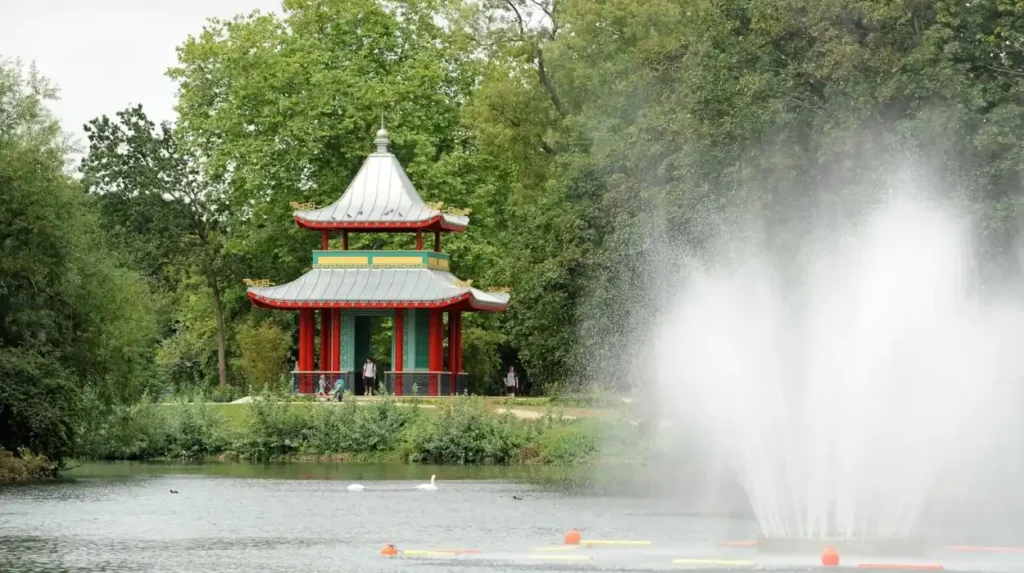
Victoria Park is one of the borough’s most important green spaces. It was established in the 19th century and has a significant historical and architectural landscape. Historic England identifies its historic design and cultural significance.
The park is located north of the main commercial districts and provides a substantial open space for walking and recreation.
Its value for city-break travellers is practical. London sightseeing involves long periods of walking through dense urban areas. A large public park provides a natural location for a break without leaving the borough.
Victoria Park also connects with nearby neighbourhoods such as Bow and Mile End. Visitors can use it as part of a walking itinerary rather than treating it as an isolated attraction.
Mile End provides another connection between green space, canals, historic buildings and residential East London.
For travellers interested in architecture, Victoria Park also contributes to the wider heritage landscape of the borough. Its historic design is part of a larger network of listed and locally significant places.
The Thames provides a second outdoor environment. Riverside routes around Tower Bridge, Wapping, Limehouse and the Isle of Dogs offer changing views of the river, bridges, docks and modern skyline.
Outdoor sightseeing therefore works throughout Tower Hamlets rather than being limited to one park.
How can visitors plan a one-day Tower Hamlets itinerary?
A practical one-day Tower Hamlets itinerary starts with the Tower of London, continues to Tower Bridge and St Katharine Docks, moves through Spitalfields and Brick Lane for food and culture, then finishes with a riverside walk or Canary Wharf.
Start around Tower Hill in the morning. The Tower of London requires substantial time because the complex contains multiple historic buildings and exhibitions.
Continue towards Tower Bridge. Visitors can cross the bridge without entering the attraction, while a paid visit inside provides access to the high-level walkways and Engine Rooms.
Move towards St Katharine Docks for a shorter waterfront break. This section provides a quieter environment before continuing into the East End.
Afterwards, travel towards Spitalfields and Brick Lane. This is the strongest section for lunch, market exploration, independent retail and cultural sightseeing.
Afternoon visitors can continue east towards Whitechapel or travel south towards Canary Wharf.
A Canary Wharf finish provides a modern contrast to the medieval and Victorian architecture experienced earlier.
An alternative route focuses on outdoor experiences. Visitors can start at Tower Bridge, follow the Thames eastwards, explore Wapping and Limehouse, then continue towards the Isle of Dogs.
A second-day itinerary can focus on Victoria Park, Bow, Mile End and Canary Wharf.
Transport choices depend on the exact route. Tower Hamlets is served by Underground, Docklands Light Railway, Elizabeth line, London Overground and local bus services. Walking remains practical for neighbouring attractions.
Visitors should check current transport information and attraction opening times before travelling because operating arrangements change.
Which Tower Hamlets destinations are best for food and evening entertainment?
Brick Lane, Spitalfields, Whitechapel and Canary Wharf provide the strongest combination of food and evening activity, covering South Asian cuisine, international restaurants, cafés, market dining, contemporary venues and waterfront destinations across different parts of Tower Hamlets.
Brick Lane is one of the borough’s best-known food destinations. Its restaurant and café scene reflects the area’s long association with Bangladeshi and wider South Asian communities.
Whitechapel adds further international food choices. Its commercial streets contain restaurants, cafés, bakeries and food businesses serving local communities and visitors.
Spitalfields provides another concentration of restaurants and cafés. Its proximity to Brick Lane makes it easy to combine dining with shopping and cultural exploration.
Canary Wharf provides a different evening environment. Its commercial district contains restaurants, bars, cafés and public spaces surrounded by modern office towers.
The contrast between these areas is useful for city-break planning. Visitors can choose neighbourhood food and independent businesses around Brick Lane or a modern riverside setting around Canary Wharf.
Evening plans should account for individual venue opening times. Markets and shops often operate on different schedules from restaurants and cultural venues.
Visitors should also distinguish between the main attractions and surrounding neighbourhoods. The Tower of London and Tower Bridge have defined visitor operations, while areas such as Brick Lane and Spitalfields function as public urban districts.
This distinction makes Tower Hamlets particularly flexible. A visitor can combine structured sightseeing with unstructured neighbourhood exploration during the same day.
What historical context should visitors understand before exploring Tower Hamlets?
Tower Hamlets developed through successive periods of settlement, royal power, maritime trade, industrialisation, migration and redevelopment, leaving a layered landscape where medieval monuments, Victorian infrastructure, former docks, cultural districts and modern business centres exist together.
Historic England’s Tower Hamlets heritage record identifies four broad historical periods represented in the borough’s heritage: Roman, medieval, post-medieval and 20th-century. Its records include four Roman-period entries, 12 medieval entries, 759 post-medieval entries and 109 20th-century entries in the relevant heritage dataset.
The medieval period is represented strongly by the Tower of London and religious sites.
The post-medieval period brought major changes through trade, industrialisation, population growth and immigration. The East End became increasingly connected to London’s expanding commercial economy.
The docks transformed the riverside. Large-scale maritime infrastructure supported international trade and created employment for surrounding communities.
The 19th and early 20th centuries also produced important civic, religious, commercial and residential buildings.
Brick Lane demonstrates the changing social geography particularly clearly. One building has served Protestant, Jewish and Muslim communities at different points in its history.
The 20th century brought further transformation. Traditional dock activity declined, while new transport infrastructure, housing and commercial development changed the borough’s physical structure.
Canary Wharf represents the most visible stage of this transformation. It replaced much of the former dockland economic function with a global financial and business district.
Understanding this chronology improves the visitor experience. Tower Hamlets is not a collection of unrelated attractions. Its landmarks represent different stages in London’s economic, social and architectural development.
Explore More Area Guide
Tower Hamlets Attractions & Experiences Guide, London 2026
East London Visitor Guide: Explore Tower Hamlets Beyond Sightseeing
How should visitors combine Tower Hamlets with the wider London city centre?
Tower Hamlets works particularly well with central London because Tower Hill borders the City of London, while the Thames, Underground, Docklands Light Railway, Overground and Elizabeth line connect the borough with major destinations across the capital.
The western side of Tower Hamlets sits immediately beside the City of London. This makes it easy to combine Tower Hamlets sightseeing with St Paul’s Cathedral, the City financial district and other central attractions.
Tower Bridge also creates a direct pedestrian connection across the Thames to Southwark. Visitors can therefore combine Tower Hamlets with Borough Market, the South Bank and other riverside destinations.
The Thames creates another natural sightseeing corridor. A visitor can begin at Westminster or South Bank and travel eastwards towards Tower Bridge and Docklands.
Rail transport expands the possibilities further. Underground stations around Tower Hill, Aldgate, Whitechapel and Mile End provide access to central London. The Docklands Light Railway connects the City, Canary Wharf and eastern Docklands.
The Elizabeth line provides another important connection through Whitechapel and the wider London transport network.
For a short city break, this connectivity means visitors do not need to restrict their itinerary to one neighbourhood.
A useful strategy is to group attractions geographically. Tower of London, Tower Bridge and St Katharine Docks form one cluster. Whitechapel, Brick Lane and Spitalfields form another. Canary Wharf and the Isle of Dogs form a third. Victoria Park and Bow provide a northern cluster.
This approach reduces unnecessary travel and creates more time for sightseeing.
What makes Tower Hamlets relevant for future London visitors?
Tower Hamlets remains highly relevant to future London visitors because its heritage assets, transport connections, cultural districts, waterfront regeneration, public spaces and commercial centres continue to support a diverse visitor economy within East London.
The borough’s visitor appeal is based on more than individual landmarks. Its strength comes from the interaction between historic places and modern urban districts.
Historic England’s heritage records show the density of protected and significant buildings across Tower Hamlets. The borough contains scheduled monuments, listed buildings, historic parks, religious buildings, former industrial sites and surviving dock infrastructure.
At the same time, modern development continues to shape Canary Wharf, the Isle of Dogs, Whitechapel and other parts of East London.
This creates an unusually broad visitor proposition.
A history-focused traveller can visit the Tower of London and Tower Bridge. A food-focused traveller can explore Brick Lane and Whitechapel. A culture-focused visitor can explore markets, galleries and historic neighbourhoods. A leisure traveller can use Victoria Park and riverside spaces. A business traveller can combine meetings in Canary Wharf with nearby attractions.
Tower Hamlets also provides an important example of urban regeneration. Former docklands have become major business and residential districts while historic structures remain part of the landscape.
The result is a destination where London’s past and present are visible within a relatively small geographical area.
For a London city break, the most effective approach is therefore to combine major landmarks with neighbourhood exploration. This produces a broader understanding of East London and makes Tower Hamlets more than a stop for one famous attraction.
What are the best visitor destinations in Tower Hamlets?
The best visitor destinations in Tower Hamlets include the Tower of London, Tower Bridge, St Katharine Docks, Brick Lane, Spitalfields Market, Canary Wharf, the Isle of Dogs and Victoria Park. These attractions cover history, culture, food, shopping, architecture and outdoor activities.