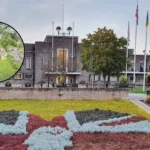
Tower Hamlets is one of London’s strongest destinations for discovering living East End culture. The borough combines historic immigrant neighbourhoods, museums, markets, contemporary art, religious buildings, docklands heritage, food traditions and community spaces. Its cultural identity developed through successive waves of migration, trade, industry, religion and artistic activity.
- What makes Tower Hamlets culturally important to London?
- Which parts of Brick Lane best reveal Tower Hamlets’ multicultural history?
- Why should visitors explore Spitalfields Market and Fournier Street?
- Where can visitors experience contemporary art in Tower Hamlets?
- Which museums explain Tower Hamlets’ social and industrial history?
- Which Tower Hamlets markets offer the strongest cultural experience?
- How does Tower Hamlets’ religious heritage contribute to its culture?
- Where can visitors experience Bengali and Bangladeshi culture?
- How can visitors explore Tower Hamlets’ docklands culture?
- Which places are best for discovering Tower Hamlets’ architecture?
- What is the best way to experience Tower Hamlets culture in one day?
- Why is Tower Hamlets suitable for visitors interested in authentic East London culture?
- How does Tower Hamlets’ cultural identity remain relevant today?
The borough occupies a strategically important part of East London, extending from the City fringe towards the River Thames and Canary Wharf. The area includes Whitechapel, Spitalfields, Bethnal Green, Stepney, Bow, Limehouse, Poplar, Wapping and the Isle of Dogs. Its southern boundary follows the River Thames, while the Tower of London and Tower Bridge form major historic landmarks.
Tower Hamlets’ culture is not concentrated in one museum or attraction. It is distributed across streets, markets, galleries, religious buildings, historic warehouses, waterfronts and community institutions. This makes the borough particularly suitable for visitors who want to understand how London’s East End developed rather than simply visit individual tourist attractions.
What makes Tower Hamlets culturally important to London?
Tower Hamlets is culturally important because its identity combines East End history, migration, markets, religion, trade, art and docklands heritage. Its streets preserve evidence of successive communities, including Huguenots, Jewish migrants and Bengali Londoners, alongside modern creative and business communities.
Tower Hamlets has long been associated with the East End of London. Archaeological evidence demonstrates human activity in the area for thousands of years, while later development connected the borough with the Roman period, medieval London, maritime trade and industrialisation.
Migration is central to the borough’s cultural development. Spitalfields and Brick Lane demonstrate how different communities occupied the same urban landscape over successive periods. French Huguenots arrived from the 1680s and established silk-weaving industries. Jewish communities later became strongly established in the area, followed by Bengali communities whose presence shaped restaurants, businesses, religious institutions and everyday life.
The result is a layered cultural landscape. A single street can contain architectural evidence from several periods and communities.
Visitors therefore experience Tower Hamlets through both formal attractions and ordinary urban spaces. Markets, cafés, shops, places of worship and public streets form part of the cultural experience.
Which parts of Brick Lane best reveal Tower Hamlets’ multicultural history?
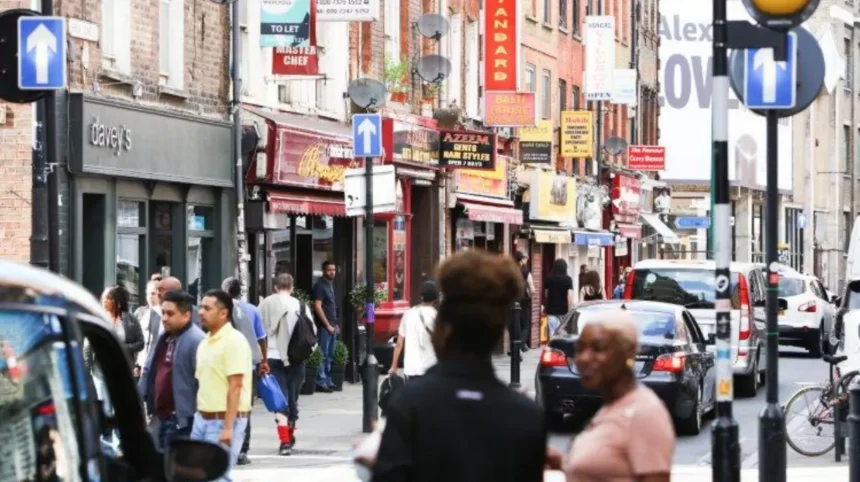
Brick Lane provides one of the clearest cultural experiences in Tower Hamlets, combining historic buildings, markets, food, street art, religious heritage and migrant history. The surrounding streets preserve evidence of French Huguenot, Jewish and Bengali communities and their lasting influence on East London.
Brick Lane is one of the most important places to begin a cultural exploration of Tower Hamlets. The borough’s own cultural trail identifies 20 sites of particular interest around Brick Lane and Spitalfields. These include the Boundary Estate, Old Truman Brewery, Commercial Street, Princelet Street, Brick Lane Jamme Masjid, Christ Church Spitalfields, Old Spitalfields Market, Whitechapel Gallery and Toynbee Hall.
Brick Lane existed by the 1500s, when it was a field path outside the City of London. The street later became associated with brickmaking and urban expansion. Large-scale development accelerated during the late 17th century.
The arrival of French Huguenots transformed Spitalfields into a major centre of silk weaving. Their influence remains visible in the historic houses around Fournier Street and the surrounding streets.
Jewish migration created another important layer. Russian Jewish migrants arrived in large numbers from the 1880s, establishing businesses, shops, workshops and religious institutions.
Bengali migration subsequently reshaped Brick Lane during the 20th century. Restaurants, shops and community institutions established the street as one of London’s most recognisable centres of Bangladeshi culture.
Tower Hamlets Council describes Brick Lane as a historic focal point for the Bangladeshi community and notes its earlier French Huguenot and Jewish associations. The Sunday market itself has origins stretching back to the 18th century.
As you explore the modern street, you are crossing land with a deep heritage. Read about the full [Insert Anchor Text for History Article Here] to understand its origins.
Why should visitors explore Spitalfields Market and Fournier Street?
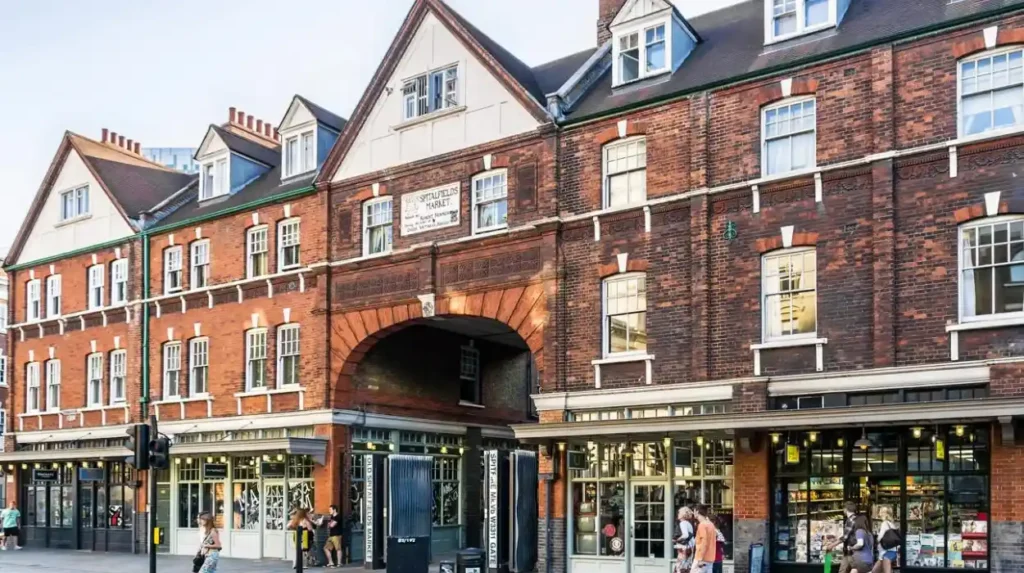
Spitalfields combines historic market culture with preserved Georgian architecture, independent retail, food and contemporary urban activity. Fournier Street, Christ Church Spitalfields and the surrounding lanes show how trade, migration, religion and architecture shaped this part of Tower Hamlets.
Old Spitalfields Market is an important cultural landmark because its present commercial activity sits on a much older market site. The market was licensed by King Charles II in 1682. The surviving market buildings were constructed between 1883 and 1893 and historically served London’s fruit and vegetable trade.
The area changed significantly after the historic wholesale market closed in 1986. Today, retail, food, events and public space have replaced much of the former wholesale function.
Fournier Street provides a different cultural experience. The street was developed during the early 18th century on former market-garden land. Its houses feature classical façades, sash windows and elaborate doorways. Many survive as protected historic buildings.
Christ Church Spitalfields is another major landmark. Designed by Nicholas Hawksmoor, the church was completed in 1729. Its Baroque architecture gives the surrounding streets a distinctive historic character.
Visitors interested in architecture should explore the relationship between the church, Fournier Street, Commercial Street and the narrower lanes around Brick Lane. The concentration of historic structures makes this one of the strongest areas in Tower Hamlets for understanding 18th-century urban development.
Where can visitors experience contemporary art in Tower Hamlets?
Whitechapel Gallery is the borough’s leading destination for contemporary art, presenting international artists alongside programmes connected to East London communities. Its history began in 1901, and its exhibitions, education work and archive connect modern art with the social history of the East End.
Whitechapel Gallery was founded in 1901 by Samuel and Henrietta Barnett to bring high-quality art to East London. The institution was created specifically to enrich the cultural life of local communities.
The gallery has an important record of introducing influential artists and artistic movements to British audiences. Its historical programme included exhibitions involving Pablo Picasso, Jackson Pollock, Mark Rothko, David Hockney, Barbara Hepworth and Frida Kahlo. Picasso’s Guernica was displayed at the gallery in 1939 during its only visit to Britain.
The institution remains focused on contemporary art and ideas. Its present building incorporates the former Whitechapel Public Library and contains nine exhibition spaces, an auditorium, study and studio facilities, a specialist bookshop and café.
The gallery is particularly relevant for visitors interested in how cultural institutions interact with local communities. Its archive contains more than a century of records and provides evidence about artistic, political and social developments in East London.
A visit therefore provides both an art experience and a direct connection with the cultural development of Whitechapel.
Which museums explain Tower Hamlets’ social and industrial history?
Tower Hamlets’ museums explain the borough through ports, docks, education, healthcare, migration and everyday life. The Museum of London Docklands provides the strongest introduction to maritime history, while smaller museums reveal Victorian education, healthcare and immigrant experiences.
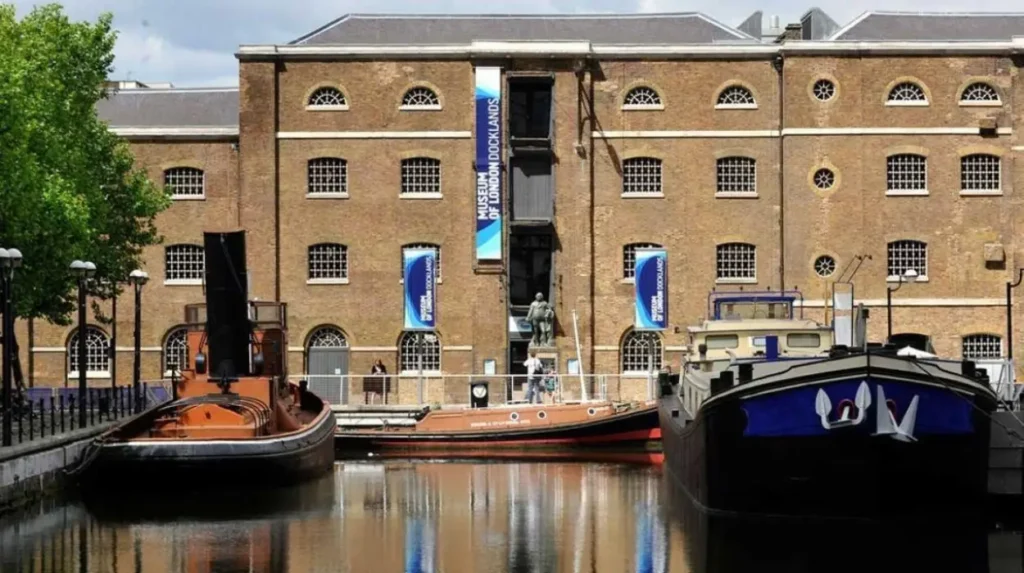
The Museum of London Docklands is central to understanding the relationship between Tower Hamlets and the River Thames. The museum occupies part of a Grade I listed warehouse at West India Docks and documents London’s development as a major port.
The docklands story explains why this part of London developed as an international commercial centre. Warehousing, shipping, trade and employment shaped communities across the borough.
The Ragged School Museum provides another perspective. It explores East London education and social conditions, including the Victorian period.
The Royal London Hospital Museum focuses on healthcare history in the East End from the 18th century onwards. It demonstrates how medicine developed alongside the growth of London’s densely populated neighbourhoods.
Other heritage collections listed by Tower Hamlets include Dennis Severs’ House, the Museum of Immigration and Diversity at 19 Princelet Street and the historic ship SS Robin.
Together, these museums demonstrate that Tower Hamlets culture extends beyond art and architecture. Education, healthcare, migration, work and social reform are equally important parts of the borough’s identity.
Which Tower Hamlets markets offer the strongest cultural experience?
Tower Hamlets has a major concentration of street markets, with examples including Brick Lane, Columbia Road, Roman Road, Whitechapel, Chrisp Street, Petticoat Lane and Watney Market. These markets connect food, shopping, local enterprise, migration and neighbourhood identity.
Markets are among the most accessible ways to experience contemporary Tower Hamlets culture. The council identifies 10 street markets across the borough, including Brick Lane, Bethnal Green Road, Chrisp Street, Columbia Road, Petticoat Lane, Roman Road, Roman Road Square, Sclater Street, Watney Market and Whitechapel Market.
Brick Lane Market is particularly associated with fashion, food, art, vintage goods and the area’s multicultural history. The council records the market’s development from the 18th century and identifies its current role as a major Sunday market.
Columbia Road Flower Market provides a different experience, centred on flowers and plants.
Roman Road Market reflects the historic commercial life of Bow and Bethnal Green. Roman Road Square has a particularly long relationship with local food retail and family-run trading.
Whitechapel Market offers another perspective on the area’s multicultural commercial life.
Markets are especially useful for visitors who want to see culture operating in everyday life rather than only inside formal institutions.
How does Tower Hamlets’ religious heritage contribute to its culture?
Tower Hamlets’ religious heritage reflects centuries of migration and community change. Churches, synagogues, mosques and former religious buildings show how different communities established institutions while adapting older buildings to new cultural and religious needs.
Religious buildings provide some of the clearest physical evidence of Tower Hamlets’ changing population.
The Brick Lane Jamme Masjid is a particularly significant example. The building was constructed in 1744 as a French Huguenot chapel. It became a Methodist chapel in 1819, a synagogue in 1897 and an important mosque in 1976.
Its sequence of uses demonstrates how one building can record multiple stages of local migration and community development.
Christ Church Spitalfields provides a contrasting example of Anglican heritage. Designed by Nicholas Hawksmoor and completed in 1729, it became a major landmark within the planned Georgian neighbourhood.
The area around Princelet Street also preserves evidence of Huguenot and Jewish settlement. Former religious and residential buildings contribute to the architectural record of migration.
For visitors, these sites demonstrate that multiculturalism in Tower Hamlets is not a recent phenomenon. It developed through successive communities occupying, adapting and reshaping the same urban landscape.
Where can visitors experience Bengali and Bangladeshi culture?
Brick Lane and surrounding Spitalfields provide the strongest concentration of Bengali and Bangladeshi cultural experiences in Tower Hamlets. Restaurants, food businesses, shops, religious institutions, community activity and historic migration patterns all contribute to the area’s contemporary Bangladeshi identity.
Bengali migration is one of the defining influences on modern Tower Hamlets. The council’s cultural trail records how Bengali settlers established themselves around Brick Lane after the Second World War. Some had links to the merchant navy, while others entered tailoring and related industries.
Businesses gradually developed around the community. Curry restaurants became particularly associated with Brick Lane and helped establish the street’s modern food identity.
The cultural experience extends beyond restaurants. The Brick Lane Jamme Masjid represents an important Islamic institution within a building that previously served Huguenot, Methodist and Jewish communities.
Visitors can also observe Bengali cultural influence through food shops, businesses, clothing, community organisations and everyday street activity.
This makes Brick Lane useful for understanding migration as an active process rather than simply a historical subject. The neighbourhood demonstrates how communities establish economic networks, religious institutions and cultural traditions while contributing to London’s wider identity.
How can visitors explore Tower Hamlets’ docklands culture?
Tower Hamlets’ docklands culture is best understood around the River Thames, West India Docks, Canary Wharf, Limehouse and historic warehouses. These locations reveal how shipping and international trade transformed East London before regeneration created today’s modern financial district.
The River Thames forms the southern boundary of Tower Hamlets and has been central to the borough’s economic development.
West India Docks were part of London’s international trading infrastructure. Warehouses stored goods arriving by ship before distribution across London and beyond. The surviving dock warehouses now provide a physical connection between historic maritime trade and modern East London.
Canary Wharf represents the later transformation of the docklands. Former industrial and shipping land became a major financial district dominated by high-rise commercial buildings.
This contrast is one of the defining cultural features of Tower Hamlets. Visitors can move between historic warehouses and modern financial architecture within a relatively compact area.
The Museum of London Docklands provides historical context for this transformation, while walking around the docks reveals the physical scale of the former port.
For business travellers and digital nomads, the area also provides a direct connection between London’s historic commercial economy and its contemporary financial sector.
Which places are best for discovering Tower Hamlets’ architecture?
Tower Hamlets has an unusually broad architectural record, ranging from Georgian houses and Baroque churches to Victorian warehouses, industrial buildings, former religious sites and modern skyscrapers. Spitalfields, Whitechapel, Limehouse and Canary Wharf each reveal different stages of urban development.
Spitalfields provides some of the strongest Georgian architecture. Fournier Street contains surviving early 18th-century houses associated with the area’s silk-weaving history.
Christ Church Spitalfields represents English Baroque architecture, while nearby streets preserve historic commercial and residential buildings.
Brick Lane contains buildings associated with former weaving, manufacturing, religious and retail activity. The council’s cultural trail identifies historic structures dating from the 18th century onwards.
Whitechapel provides a mixture of Victorian, Edwardian and modern architecture. Its buildings reflect the area’s transformation from an industrial and residential East End district into a major cultural and commercial location.
Canary Wharf provides the modern counterpart. Its high-rise skyline represents the regeneration of former docklands into an international financial district.
Architecture therefore functions as a chronological guide through Tower Hamlets. Visitors can identify changes in trade, population, technology and economic activity by examining the buildings themselves.
What is the best way to experience Tower Hamlets culture in one day?
A strong one-day cultural route starts in Spitalfields and Brick Lane, continues through Whitechapel, then reaches the docklands. This sequence combines historic architecture, markets, migration heritage, contemporary art and maritime history without limiting the visit to one attraction.
Start around Old Spitalfields Market and walk towards Fournier Street and Christ Church Spitalfields. This introduces Georgian architecture, market history and religious heritage.
Continue towards Brick Lane and explore the surrounding streets. The cultural trail provides a useful framework because it identifies 20 sites between Brick Lane and nearby Spitalfields.
From Brick Lane, continue towards Whitechapel Gallery. The gallery adds contemporary art to the historical experience and demonstrates the continuing importance of culture in East London.
The next stage can focus on Whitechapel’s religious and community heritage before travelling south towards the Thames.
Finish around West India Docks or Canary Wharf. This creates a clear historical progression from Georgian trade and migration to Victorian commerce, modern finance and regenerated docklands.
The route works because each section adds a different cultural dimension rather than repeating the same type of attraction.
Explore More Area Guide
Tower Hamlets Visitor Guide: Streets, Waterfronts & Attractions
Best Places to Discover Across Tower Hamlets, London
Why is Tower Hamlets suitable for visitors interested in authentic East London culture?
Tower Hamlets offers cultural experiences embedded within ordinary neighbourhoods, including markets, shops, places of worship, food businesses, galleries and historic streets. Its culture is therefore experienced through everyday community life as well as established museums and visitor attractions.
The borough’s cultural identity has developed through continuous interaction between communities, businesses, institutions and the built environment.
The official Tower Hamlets cultural trail is particularly valuable because it connects heritage sites rather than presenting them as isolated attractions. Its 20 identified locations include religious buildings, historic streets, markets, galleries, former industrial sites and community institutions.
This approach also helps visitors understand why the borough looks and feels different from many other parts of central London.
Brick Lane demonstrates migration and food culture. Whitechapel Gallery represents contemporary art. Spitalfields illustrates architecture and trade. The Museum of London Docklands explains maritime commerce. Markets demonstrate ongoing local enterprise. Canary Wharf represents economic transformation.
Together, these locations show that Tower Hamlets culture is both historic and contemporary.
How does Tower Hamlets’ cultural identity remain relevant today?
Tower Hamlets’ cultural identity remains relevant because historic neighbourhoods continue to support markets, creative institutions, religious communities, food businesses and commercial activity. Regeneration has added new economic districts without removing the borough’s older cultural and architectural layers.
The borough continues to combine historic communities with contemporary cultural activity.
Whitechapel Gallery demonstrates this continuity particularly clearly. Founded in 1901 to serve East London, it continues to operate as a major contemporary art institution while maintaining programmes connected to local communities.
Markets also preserve a direct link between historic trading practices and modern local enterprise. Tower Hamlets Council continues to support 10 street markets across the borough.
The docklands provide another example of long-term change. Former port infrastructure now sits alongside a major financial centre, demonstrating how the same geography can support different economic functions over time.
For visitors, this makes Tower Hamlets particularly valuable as a cultural destination. Its heritage is not confined to preserved buildings. It remains visible through commerce, food, religion, art, architecture and community activity.
A visit therefore provides a detailed view of how London’s East End developed and how its cultural identity continues to evolve.
What is Tower Hamlets best known for?
Tower Hamlets is best known for its East End heritage, Brick Lane, Spitalfields Market, multicultural communities, historic docklands, contemporary art, markets, religious buildings and diverse food culture.