Tower Hamlets is one of East London’s most historically layered boroughs. It combines the Tower of London, the River Thames, former docks, historic markets, Victorian parks, multicultural neighbourhoods, contemporary Canary Wharf and distinctive streets around Spitalfields, Whitechapel and Bethnal Green.
- What is the Tower of London and why should visitors see it before leaving East London?
- What can visitors see around Tower Bridge and the Thames?
- Why should visitors explore Spitalfields before leaving Tower Hamlets?
- What makes Brick Lane worth visiting before leaving East London?
- What can visitors see at Old Spitalfields Market?
- Which Tower Hamlets markets should visitors consider?
- What is the Museum of London Docklands and why is it important?
- What should visitors see in Canary Wharf?
- Why is Victoria Park worth seeing before leaving East London?
- What should visitors explore around Whitechapel?
- How can visitors experience Tower Hamlets through its historic neighbourhoods?
- What is the best way to combine Tower Hamlets attractions before leaving East London?
- Why does Tower Hamlets matter to the wider East London visitor experience?
- What should visitors prioritise if they have only a few hours?
- What makes Tower Hamlets a memorable final stop in East London?
The borough takes its name from the historical hamlets associated with the Tower of London. Its southern boundary follows a major bend of the River Thames, while its neighbourhoods preserve evidence of Roman occupation, medieval settlement, maritime trade, industrialisation, migration and modern financial development.
For visitors leaving East London, Tower Hamlets provides a practical final sightseeing area because its attractions range from major heritage landmarks to markets, museums, riverside walks and public spaces. The best places to see depend on available time, but the borough supports both a concentrated final visit and a longer full-day itinerary.
What is the Tower of London and why should visitors see it before leaving East London?
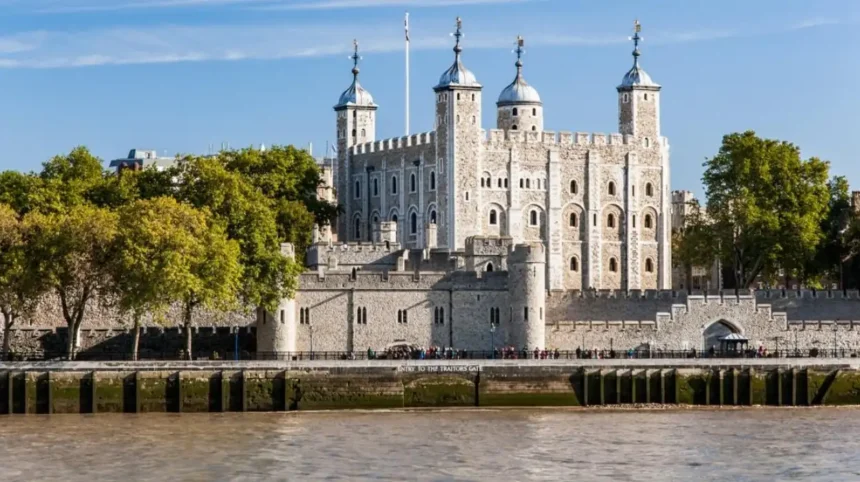
The Tower of London is a World Heritage Site and historic fortress on the River Thames. Its White Tower, medieval defensive walls, royal associations and archaeological remains make it one of Tower Hamlets’ most significant heritage attractions.
The Tower of London is the strongest choice for visitors interested in major English history. William the Conqueror established the original White Tower after the Norman Conquest. The wider fortress developed substantially between the 12th and 14th centuries.
Historic England describes the complex as evolving from a tower keep castle into an enclosure castle. Its functions changed repeatedly. It served as a fortress, royal residence, armoury, arsenal, mint, menagerie, prison and place associated with executions.
The White Tower remains the architectural centre of the complex. Its Norman military design demonstrates the scale of royal power after the conquest of England.
The wider site contains curtain walls, towers, gateways, the moat and later buildings. Several structures have Grade I listed status, reflecting their exceptional architectural and historic importance.
The Tower was inscribed as a UNESCO World Heritage Site in 1988. Historic England identifies it as an important example of Norman military architecture and a major reference point for medieval castle design.
Visitors should allow sufficient time to explore the complex rather than treating it as a quick exterior landmark. Those with limited time can still view the fortress from the surrounding riverside area and continue towards Tower Bridge.
As you explore the modern site, you are crossing land with a deep heritage. Read about the full [Insert Anchor Text for History Article Here] to understand its origins.
What can visitors see around Tower Bridge and the Thames?
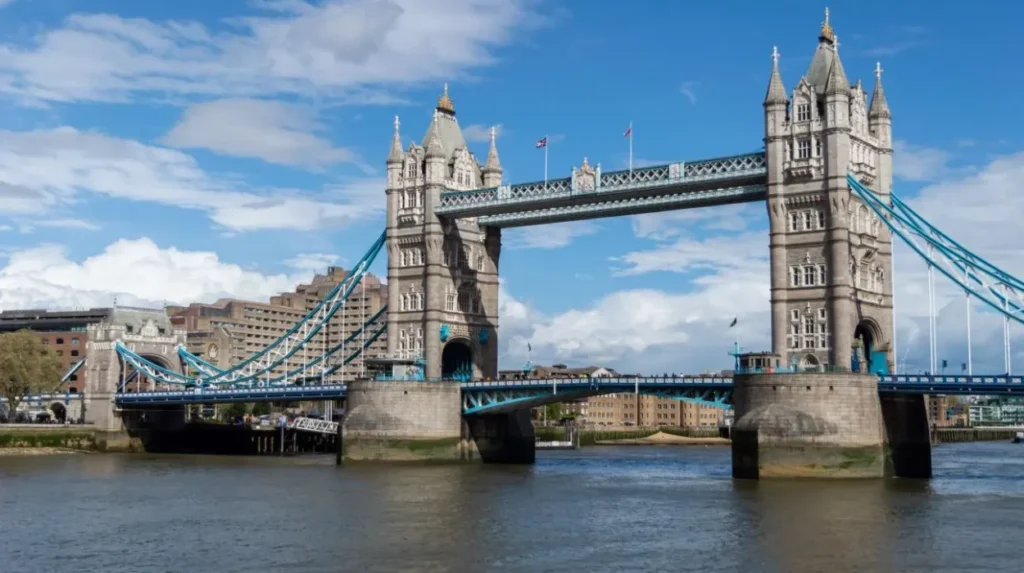
Tower Bridge provides one of the most recognisable riverside settings in Tower Hamlets, connecting the historic Tower area with the wider Thames waterfront. The surrounding walk combines bridges, river views, historic architecture, commercial buildings and access to London’s historic port landscape.
Tower Bridge opened in 1894 and became an important crossing over the River Thames. Its distinctive combination of suspension and bascule engineering makes it a major part of London’s built environment.
The Tower Bridge area works well as an outdoor sightseeing stop because visitors can combine several landmarks within a relatively compact section of the borough. The Tower of London stands immediately to the west, while the Thames provides a continuous visual connection between the historic fortress and the former docklands.
The riverside also illustrates the importance of the Thames to London’s development. The river supported trade, transportation, warehousing and maritime industries for centuries.
For visitors who do not have time for a full attraction visit, walking beside the river provides an efficient way to experience the area. Views towards Tower Bridge, the Tower of London and the City skyline create a concentrated introduction to the relationship between historic East London and modern London.
The riverside route also works well for photography because the architecture changes quickly from medieval masonry to Victorian engineering and modern commercial development.
Why should visitors explore Spitalfields before leaving Tower Hamlets?
Spitalfields combines eighteenth-century architecture, historic markets, religious buildings, immigrant heritage, independent businesses and public art. Its streets provide one of the clearest examples of how different communities shaped the cultural identity of East London over several centuries.
Spitalfields is one of Tower Hamlets’ most valuable areas for visitors who want heritage without visiting a single enclosed attraction.
The neighbourhood developed substantially from the early eighteenth century. Fournier Street contains surviving houses from this period, with classical façades, sash windows and detailed doorways. Many of these buildings are protected heritage assets.
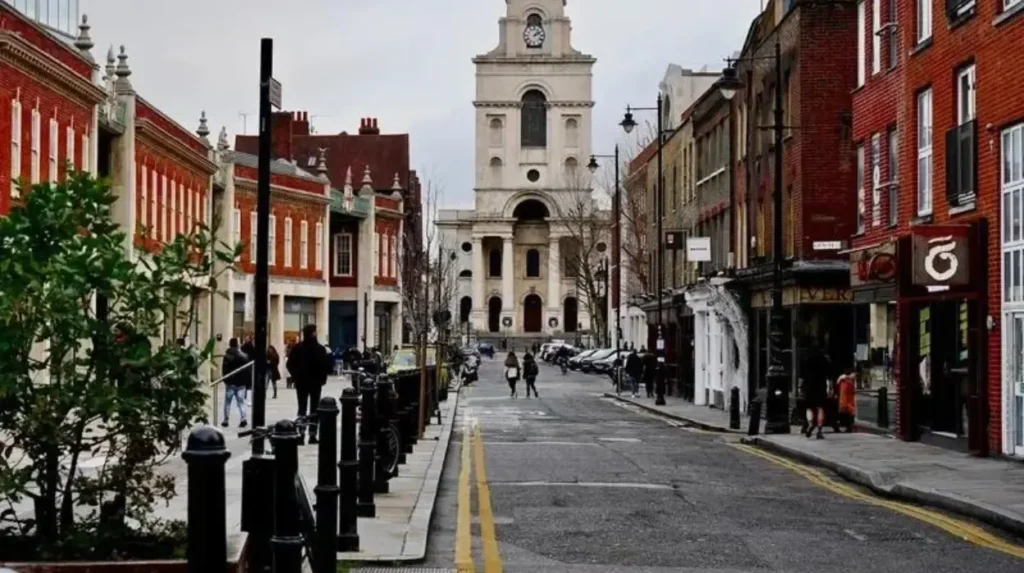
Christ Church Spitalfields is another major landmark. Architect Nicholas Hawksmoor designed the church in 1714, and construction was completed in 1729. Its tower and spire remain prominent features of the local skyline.
Spitalfields also demonstrates the changing religious and cultural identity of East London.
Brick Lane Jamme Masjid provides an especially clear example. The building began as a French Huguenot chapel in 1744. It became a Methodist chapel in 1819, a synagogue in 1897 and a mosque in 1976. The sequence records successive communities within the same historic structure.
The Tower Hamlets cultural trail identifies 20 sites around Brick Lane and Spitalfields. These include Fournier Street, Christ Church, Old Spitalfields Market, Brick Lane, the Old Truman Brewery, Whitechapel Art Gallery and Altab Ali Park.
This concentration makes Spitalfields particularly useful when a visitor wants to experience architecture, migration history, food culture and markets within one walk.
What makes Brick Lane worth visiting before leaving East London?
Brick Lane is a historic East London street known for its market culture, food, fashion, art and strong Bangladeshi heritage. Its surrounding streets also preserve evidence of French Huguenot, Jewish and later migrant communities that shaped modern Tower Hamlets.
Brick Lane is one of the borough’s most recognisable visitor destinations. Tower Hamlets Council identifies its Sunday market as a major part of the local market network.
The market was established in 1888 and developed around fashion, food, household goods, jewellery, vintage items and other goods. The street also became an important centre for the Bangladeshi community.
The significance of Brick Lane extends beyond shopping.
Its historic buildings record successive waves of immigration. The area previously contained French Huguenot and Jewish communities before becoming strongly associated with Bangladeshi settlement. The surviving buildings provide physical evidence of these changes.
Visitors can also connect Brick Lane with nearby Spitalfields. Fournier Street, Commercial Street, Princelet Street and the Old Truman Brewery are all identified within the borough’s cultural trail.
The area is particularly suitable for visitors with limited time because a short walk covers several distinct aspects of East London. The experience combines architecture, food, street markets, religious heritage and contemporary creative activity.
For a final stop before leaving East London, Brick Lane provides a strong connection between the historic East End and its present-day cultural identity.
What can visitors see at Old Spitalfields Market?
Old Spitalfields Market is a historic market site that connects modern retail with centuries of commercial activity. The present market buildings date mainly from the late nineteenth century, while the site itself has operated as a market since the seventeenth century.
The market site received a licence from King Charles II in 1682. The current historic market buildings were constructed between 1883 and 1893. The site later became an important fruit and vegetable market before wholesale trading ended in 1986.
Its current role differs from its historical function. The market environment now supports retail, food, independent businesses and visitor activity.
The surrounding development also demonstrates how historic commercial buildings can be integrated into a modern urban district. Bishop’s Square and nearby offices provide a contemporary setting around the older market structure.
Old Spitalfields Market is therefore useful for visitors interested in the evolution of London markets. It shows how a location can retain its commercial identity while changing its products, architecture and economic role.
Which Tower Hamlets markets should visitors consider?
Tower Hamlets has a substantial network of street markets covering food, clothing, flowers, household goods and specialist products. Brick Lane, Columbia Road, Roman Road, Whitechapel and Chrisp Street provide different examples of the borough’s market culture.
Tower Hamlets Council currently identifies 10 street markets across the borough. They include Brick Lane, Bethnal Green Road, Chrisp Street, Columbia Road, Petticoat Lane, Roman Road Market, Roman Road Square, Sclater Street, Watney Market and Whitechapel Market.
Each market has a different local character.
Columbia Road is particularly associated with flowers and plants. Brick Lane combines food, fashion, art and vintage trading. Whitechapel Market reflects the commercial activity of one of the borough’s major multicultural neighbourhoods.
Roman Road Market serves the Bow and Bethnal Green area and connects contemporary shopping with a historic East London commercial route.
Visitors should check individual market trading days before travelling because markets operate on different schedules. This is especially important for visitors planning a short final stop in Tower Hamlets.
What is the Museum of London Docklands and why is it important?
The Museum of London Docklands explains the development of London’s port, docks, trade and riverside communities. It provides historical context for understanding how the Thames transformed Tower Hamlets and how former industrial docklands became modern residential and financial districts.
The Museum of London Docklands is located at West India Quay in the Docklands area. Its subject matter directly connects with Tower Hamlets’ relationship with the River Thames.
The museum explains London’s development as a major port and commercial centre. This includes the history of docks, trade, shipping and the communities connected with maritime industries.
The museum is particularly relevant after visiting the Tower of London because the two sites represent different periods and functions within the same broader riverside landscape.
The Tower demonstrates medieval and royal power. The Docklands demonstrates the economic importance of maritime trade and industrial infrastructure.
This historical sequence helps visitors understand why warehouses, docks, canals and wharves became such defining features of East London.
The Docklands also provides useful context for Canary Wharf. The modern financial district developed on land once dominated by commercial docks and warehouses.
What should visitors see in Canary Wharf?
Canary Wharf shows the modern transformation of East London’s former docklands into a major financial and commercial district. Visitors can see skyscrapers, public squares, waterside paths, landscaped spaces, public art and Crossrail Place Roof Garden.
Canary Wharf provides a sharp contrast with Spitalfields and the Tower of London.
Its skyline is dominated by high-rise commercial buildings, while the public realm contains parks, squares, waterfront spaces and contemporary artworks. Canary Wharf’s official art material records more than 100 permanent artworks across the estate.
Crossrail Place Roof Garden is one of the most distinctive spaces. Its covered garden uses plants from different regions and sits within the large architectural structure above the transport interchange.
The area is suitable for visitors who want modern architecture rather than historic buildings. It also provides useful options for digital nomads and business travellers because cafés, restaurants, public spaces and transport connections are concentrated within the district.
The waterfront provides another way to experience Canary Wharf. Walking around the docks shows how water remains part of the district’s physical structure despite the transition from industrial shipping to offices and residential development.
Why is Victoria Park worth seeing before leaving East London?
Victoria Park is one of Tower Hamlets’ major green spaces and receives more than 9 million visits annually. Its landscaped grounds, historic features, sports spaces and connection with wider green corridors make it an important outdoor attraction in East London.
Victoria Park provides a completely different experience from the dense urban environments around the Tower and Canary Wharf.
The park covers a substantial area between Bethnal Green, Bow and Hackney. It contains lawns, mature trees, water features, sports facilities and historic landscape features.
Tower Hamlets Council reports more than 9 million annual visits. The park also holds Green Flag and Green Heritage awards.
The park forms part of a wider green corridor linking the River Thames area through Limehouse, Regent’s Canal and Mile End Park towards the Queen Elizabeth Olympic Park.
Its opening hours are generally from 7am until dusk, 365 days a year, subject to specific notices and conditions.
Victoria Park is therefore particularly useful for visitors who want a final outdoor stop, a walking route or a break from built-up sightseeing.
What should visitors explore around Whitechapel?
Whitechapel combines historic streets, markets, cultural institutions, religious heritage and public spaces. It is an important part of Tower Hamlets’ multicultural identity and provides direct connections between historic East End communities and contemporary London.
Whitechapel has long been associated with migration, commerce, healthcare, religious communities and working-class East London history.
The Whitechapel cultural trail connects the area with several heritage locations, including Whitechapel Art Gallery and Altab Ali Park.
Whitechapel Market is another important destination. It forms part of the borough’s current network of street markets and provides a direct connection to local commercial life.
The area also contains significant historic buildings. Historic England records the former London Hospital among Tower Hamlets’ listed historic places.
Visitors interested in architecture should also look beyond the main roads. Historic streets and buildings reveal how different communities established homes, religious institutions, businesses and public facilities in the East End.
Whitechapel works particularly well as a final destination for visitors travelling towards central London because it connects directly with the City and wider transport network.
How can visitors experience Tower Hamlets through its historic neighbourhoods?
Tower Hamlets is best understood through connected neighbourhoods rather than isolated attractions. Spitalfields, Whitechapel, Bethnal Green, Bow, Limehouse and the Isle of Dogs each reveal different stages of East London’s social, commercial, industrial and architectural development.
Spitalfields represents market history, immigrant communities and eighteenth-century architecture.
Whitechapel represents multicultural commerce, historic institutions and the East End’s dense urban fabric.
Bethnal Green combines residential streets, cultural institutions, markets and access to Victoria Park.
Bow connects visitors with historic East London streets and the green corridor around Victoria Park and the Regent’s Canal.
Limehouse provides stronger links with the waterfront, canals and former docklands.
The Isle of Dogs contains Canary Wharf and the modern financial district while retaining the physical geography of the historic docklands.
Tower Hamlets Council describes the borough as an area where old and new development exist together, with the River Thames forming its southern boundary and Canary Wharf representing the modern transformation of the Docklands.
This neighbourhood structure matters because visitors can choose a final experience based on their remaining time. A short visit can focus on Tower Hill and Spitalfields. A longer visit can extend towards Whitechapel, Victoria Park or Canary Wharf.
What is the best way to combine Tower Hamlets attractions before leaving East London?
A practical Tower Hamlets sightseeing route should group nearby attractions rather than crossing the entire borough repeatedly. Tower of London and Tower Bridge suit a riverside start, Spitalfields and Brick Lane suit a heritage walk, while Canary Wharf and Victoria Park provide contrasting final stops.
For a short visit, begin around the Tower of London and walk towards Tower Bridge. Continue north-west towards Spitalfields, where Fournier Street, Christ Church and Old Spitalfields Market provide concentrated heritage attractions.
For a market-focused visit, prioritise Brick Lane and Spitalfields. This route combines food, shopping, architecture and migration history within a compact area.
For a history-focused visit, combine the Tower of London with the Museum of London Docklands. The two attractions explain different stages of Tower Hamlets’ development.
For a modern East London experience, travel towards Canary Wharf. The skyscrapers, public art, roof garden and waterfront demonstrate the transformation of former dockland areas.
For outdoor sightseeing, Victoria Park provides a large green space and a link into wider East London walking routes.
The most efficient itinerary therefore depends on the visitor’s remaining time and preferred subject rather than a single universal route.
Why does Tower Hamlets matter to the wider East London visitor experience?
Tower Hamlets connects many defining elements of East London: Norman royal power, Thames commerce, historic markets, migration, religious diversity, industrial docks, green spaces and modern finance. Its attractions therefore provide a broad introduction to the area’s historical development.
The borough’s importance comes from its continuity.
The Tower of London records medieval royal authority. Spitalfields records commercial expansion and migration. Brick Lane records changing communities and contemporary market culture. Whitechapel records multicultural urban development. The former docks demonstrate London’s maritime economy. Canary Wharf records the transformation into a modern financial district.
The borough also retains substantial heritage protection. Historic England records numerous listed buildings and historic sites across Tower Hamlets, including the Tower of London, Victoria Park, Brick Lane Jamme Masjid and the former London Hospital.
This combination makes Tower Hamlets particularly useful for visitors who want more than a single landmark.
Before leaving East London, visitors can therefore move from medieval architecture to eighteenth-century streets, nineteenth-century markets, twentieth-century migration history and twenty-first-century commercial development within a relatively compact geographical area.
Tower Hamlets is not simply a collection of attractions. It is a record of how East London changed through monarchy, trade, migration, industry, urban regeneration and contemporary culture.
Explore More Area Guide
Tower Hamlets Itinerary: Full Day of East London Sightseeing
How to Spend a Day Exploring Tower Hamlets in East London
What should visitors prioritise if they have only a few hours?
Visitors with limited time should prioritise attractions according to location and interest. The Tower of London suits major heritage, Spitalfields suits architecture and culture, Brick Lane suits markets and food, and Canary Wharf suits modern architecture and waterfront sightseeing.
A two-hour visit works best around the Tower of London and Tower Bridge.
A three-hour visit allows a walk through Spitalfields and Brick Lane after the Tower area.
A half-day provides enough time to combine the Tower area with Spitalfields, Brick Lane or the Museum of London Docklands.
A full day allows visitors to connect the historic centre with Canary Wharf or Victoria Park.
Visitors should also check attraction opening hours, market trading days and temporary closures before travelling. These details change more frequently than the underlying heritage significance of the locations.
The strongest final impression comes from choosing a coherent area rather than attempting to cover every part of Tower Hamlets.
What makes Tower Hamlets a memorable final stop in East London?
Tower Hamlets provides a concentrated view of East London’s history, culture and modern transformation. Its combination of world heritage, markets, historic streets, museums, parks, riverside landscapes and Canary Wharf creates a broad final sightseeing experience.
The borough brings together several major themes of London’s development.
Its Thames waterfront explains the importance of waterborne trade. Its historic buildings show the architectural development of East London. Its markets demonstrate continuing commercial activity. Its religious buildings document changing communities. Its parks provide green infrastructure within a dense urban environment.
The Tower of London gives the borough an internationally recognised heritage landmark. Spitalfields and Brick Lane provide a detailed view of neighbourhood history. The Museum of London Docklands explains the port economy. Canary Wharf demonstrates regeneration and financial development. Victoria Park provides a large-scale green setting.
Tower Hamlets therefore works particularly well as the final part of an East London itinerary because visitors can finish with a clear understanding of how the area developed from historic riverside settlement and trading communities into one of London’s most diverse and economically significant urban districts.
What is the main attraction to see in Tower Hamlets?
The Tower of London is the borough’s most prominent historic attraction. This UNESCO World Heritage Site contains the White Tower, medieval defensive structures, royal history and the Crown Jewels.