Tower Hamlets is an East London borough that combines historic neighbourhoods, major cultural attractions, former docklands, markets, parks, waterways and modern financial districts. It stretches from the City of London and the Tower of London towards Bow, the Isle of Dogs and Canary Wharf.
- What is Tower Hamlets and where is it in London?
- Which Tower Hamlets neighbourhoods should visitors know?
- What is the history of Tower Hamlets?
- What are the main attractions in Tower Hamlets?
- What markets are worth visiting in Tower Hamlets?
- Where can visitors find green spaces in Tower Hamlets?
- How can visitors explore Tower Hamlets by the River Thames?
- What food and cultural experiences define Tower Hamlets?
- How well connected is Tower Hamlets to central London?
- Where can visitors work or spend a quieter afternoon in Tower Hamlets?
- What is the best way to plan a Tower Hamlets visit?
- Why is Tower Hamlets important to understanding modern London?
For visitors, Tower Hamlets is not one single neighbourhood. It contains distinct areas including Spitalfields, Whitechapel, Bethnal Green, Stepney, Mile End, Bow, Poplar, Limehouse, Wapping, Shadwell and the Isle of Dogs. Each area has a different built environment, transport pattern and visitor experience.
The borough also has strong connections with London’s commercial, maritime and industrial development. Its southern boundary follows a large curve of the River Thames, while the eastern and northern parts connect with wider East London.
Its visitor offer ranges from the Tower of London and riverside landmarks to Brick Lane, Columbia Road, Victoria Park, Museum of London Docklands and Canary Wharf. This makes Tower Hamlets useful for visitors who want history, food, shopping, green space and modern London within a relatively compact part of the capital.
What is Tower Hamlets and where is it in London?
Tower Hamlets is an East London borough immediately east of the City of London, extending from historic districts around the Tower of London through Spitalfields, Whitechapel and Bethnal Green to the Docklands, Canary Wharf, Bow and the Isle of Dogs.
The London Borough of Tower Hamlets sits on the eastern side of central London. The City of London borders its western side, while Hackney, Newham and other London boroughs surround its northern and eastern edges.
The River Thames forms much of the southern boundary. This gives Tower Hamlets an unusually strong relationship with London’s historic port, docks and riverside trade.
The borough’s name comes from the historical association between the Tower of London and the small settlements, or hamlets, around it. The area has archaeological evidence dating back thousands of years, while Roman activity, medieval settlement, industrial development and modern regeneration have all shaped its landscape.
Tower Hamlets therefore works best as a collection of connected local areas rather than a single destination. A visitor exploring Spitalfields encounters a different environment from someone walking around Canary Wharf or visiting Victoria Park.
This geographical variety is central to understanding the borough. Historic streets sit close to modern commercial towers. Former docks sit beside residential communities. Markets operate close to major financial centres.
Which Tower Hamlets neighbourhoods should visitors know?
Visitors should understand Tower Hamlets through its main neighbourhoods, including Spitalfields, Whitechapel, Bethnal Green, Stepney, Mile End, Bow, Wapping, Limehouse, Poplar, Shadwell and the Isle of Dogs, because each offers different attractions and surroundings.
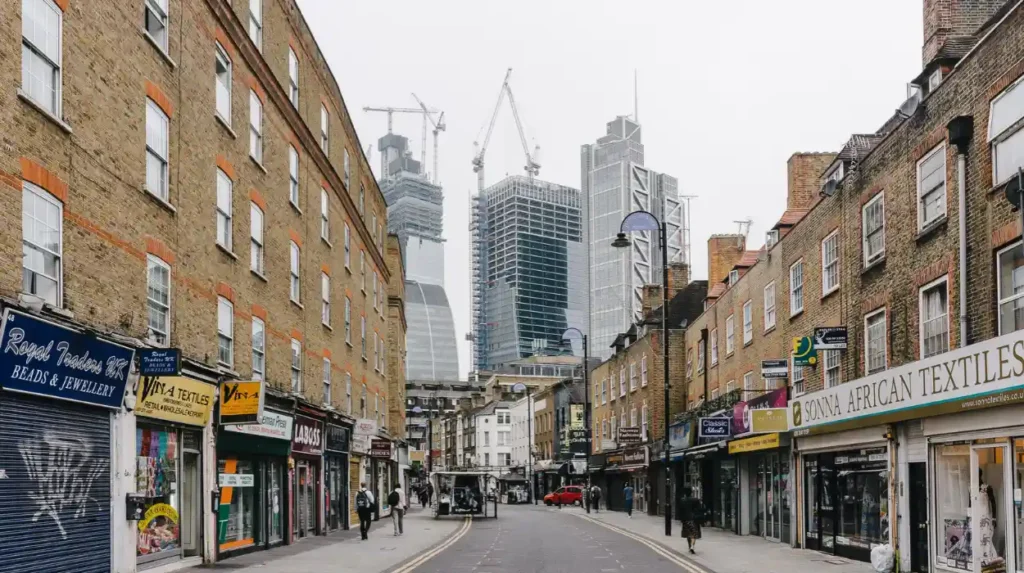
Spitalfields and Brick Lane form one of the borough’s most recognisable visitor districts. The area combines historic buildings, food businesses, independent shops, street markets, galleries and cultural institutions.
Whitechapel lies immediately east of the City. It has strong links with London’s medical, social and immigrant history and provides access to markets, cultural venues and transport connections.
Bethnal Green is known for its museums, residential streets, cafés, parks and proximity to Brick Lane and Columbia Road.
Stepney provides a quieter historic environment. St Dunstan’s Church and surrounding streets reveal the area’s long-established East End identity.
Mile End connects several visitor interests. Mile End Park provides green space, while the Regent’s Canal and nearby attractions create opportunities for walking and cycling.
Bow extends towards the Queen Elizabeth Olympic Park area and provides access to Victoria Park and the waterways around the Lea Valley.
Wapping and Shadwell provide stronger riverside character. Their streets connect with the Thames, historic docks and riverside walking routes.
Limehouse links the historic East End with the Docklands. The area is particularly useful for visitors interested in canals, riverside walks and former industrial landscapes.
The Isle of Dogs contains Canary Wharf and a concentration of modern commercial towers, while Poplar provides access to historic dockland landscapes and newer developments.
What is the history of Tower Hamlets?
Tower Hamlets developed from a landscape of Roman roads, medieval villages, farms and marshes into a major industrial and port district, shaped by migration, docks, manufacturing, housing expansion and twentieth-century regeneration around the River Thames.
The area east of Roman Londinium contained roads, cemeteries, agricultural land and marshland. Archaeological evidence shows activity around places including Spitalfields, Old Ford, Wapping and the Isle of Dogs.
Medieval settlement remained relatively limited compared with the dense urban environment that exists today. Stepney and Bethnal Green developed as important early settlements, while drainage and embankment works gradually made more land suitable for cultivation.
The Tower of London became a major landmark after the Norman Conquest. William the Conqueror developed the White Tower as part of London’s defensive system. The relationship between the Tower and surrounding hamlets eventually influenced the borough’s name.
From the medieval period onwards, industries expanded outside the City of London’s walls. Brewing, textiles, pottery, ship-related industries and other manufacturing activities became increasingly important.
Spitalfields developed a particularly important silk-weaving community. Huguenot refugees and other immigrant groups contributed to the area’s manufacturing economy. Historic England records the development of streets and houses occupied by Huguenot weavers and later Jewish and other immigrant communities.
Brick Lane also reflects this layered history. Historic England records Roman activity, later brickmaking and industrial development, followed by the area’s association with brewing and immigrant communities.
As you explore the modern borough, you are crossing land with a deep heritage. Read about the full to understand its origins.
The nineteenth century brought enormous population growth. Dock expansion, factories and dense housing transformed the East End. Poor sanitation and overcrowding also created severe public-health problems.
Victoria Park was established in response to these conditions. A petition signed by 30,000 residents in 1840 called for a public park for the East End. The park opened in 1845.
The twentieth century brought further industrial change, wartime damage, population movement and dockland decline. Former dock areas later became the setting for major regeneration, particularly around Canary Wharf.
What are the main attractions in Tower Hamlets?
Tower Hamlets contains major London attractions including the Tower of London, Museum of London Docklands, Victoria Park, Brick Lane, Spitalfields Market, Canary Wharf, Tower Bridge approaches and several museums, historic buildings and riverside destinations.
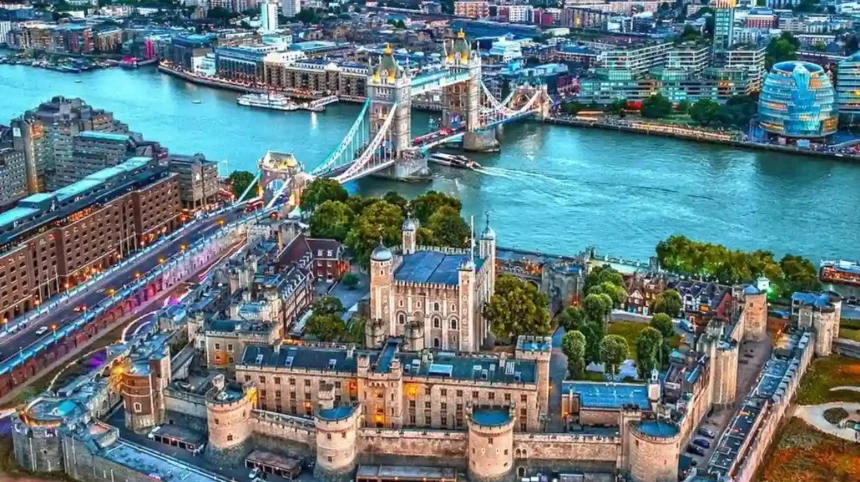
The Tower of London is the borough’s most internationally recognised historic attraction. It is a World Heritage Site and Grade I listed building. Its history includes royal residence, fortress, prison and ceremonial functions.
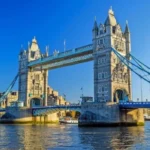
Tower Bridge stands immediately south of the Tower and provides one of London’s best-known river landmarks. Visitors can combine the two attractions with a walk along the Thames.
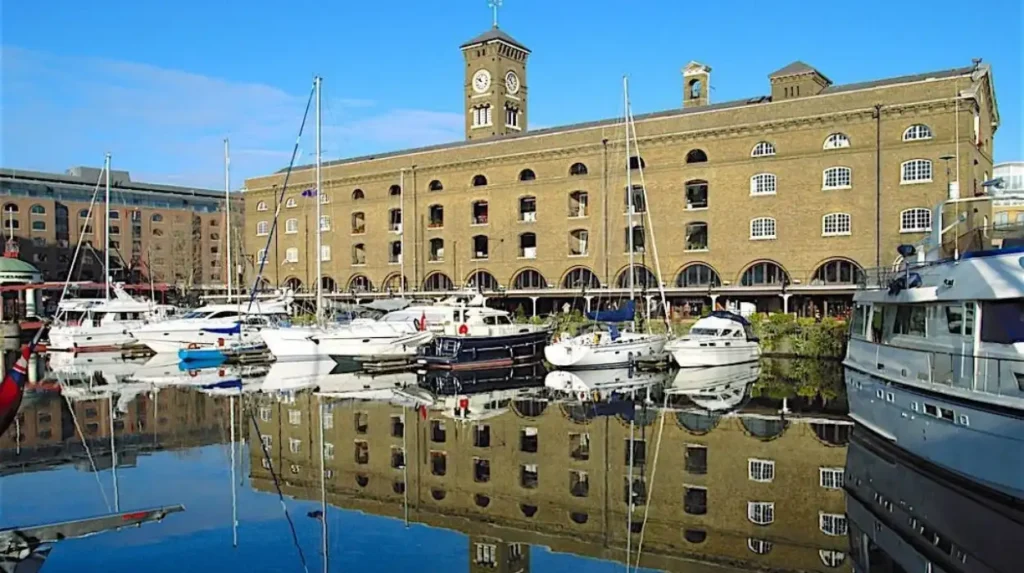
Museum of London Docklands is another major attraction. It occupies part of a historic warehouse at West India Docks and explains London’s relationship with the River Thames, trade and Docklands.
Brick Lane provides a different type of visitor experience. Its importance comes from the combination of historic buildings, food businesses, markets, street activity and cultural diversity.
Spitalfields Market provides another important destination. The current market sits within an area with substantial historic fabric, while Historic England identifies the market’s historic structure as dating from the late nineteenth century.
Canary Wharf provides a modern contrast. Its high-rise towers, public spaces, waterways, shopping areas and transport links demonstrate the transformation of former dockland into a major commercial district.
For visitors interested in less conventional museums, Tower Hamlets also contains institutions and collections connected with East London social history, medicine, immigration, education and maritime activity.
What markets are worth visiting in Tower Hamlets?
Tower Hamlets has a strong market tradition, with Brick Lane, Spitalfields and Columbia Road among the best-known visitor destinations, offering food, clothing, household goods, flowers, independent products and changing weekend activity.
Brick Lane is particularly associated with food, vintage shopping, independent retail and street-market culture. Its surrounding streets also contain significant historic buildings.
Columbia Road Flower Market is located in Bethnal Green and is particularly associated with flowers and plants. The surrounding street also contains independent shops and cafés.
Spitalfields Market provides a more permanent covered market environment. Its location makes it easy to combine with Brick Lane, Liverpool Street and the City of London.
Petticoat Lane is another historic market name associated with the borough. Tower Hamlets Council identifies Petticoat Lane and Columbia Road among its principal markets and local attractions.
Market schedules differ according to location and day. Visitors should check the relevant market’s current opening arrangements before travelling.
Markets are also useful for understanding the borough’s social geography. They are not simply shopping destinations. They reflect the long relationship between trade, migration, food and street commerce in East London.
Where can visitors find green spaces in Tower Hamlets?
Tower Hamlets has more than 120 parks and green spaces, ranging from major landscapes such as Victoria Park and Mile End Park to smaller gardens, squares, nature areas and riverside spaces used for walking and recreation.
Victoria Park is the borough’s largest park at 86 hectares. It opened in 1845 and receives more than nine million visits each year. The park includes lakes, lawns, sports facilities, cafés, historic features and walking routes.
The park also has national heritage significance. Tower Hamlets Council records Victoria Park as a Grade II* registered park and garden.
Mile End Park forms another important green corridor. It includes sports facilities, the Ecology Park and the Arts Pavilion. The park connects with wider walking and cycling routes across East London.
Tower Hamlets Cemetery Park provides a different landscape. It is a local nature reserve with wooded areas, historic burial features and wildlife habitat. The cemetery opened in 1841 and had recorded more than a quarter of a million burials by 1889.
Mudchute Park and Farm on the Isle of Dogs is another notable green destination. It combines open space, nature conservation and a working urban farm environment.
These places give visitors options beyond museums, shopping streets and commercial districts. They also create practical breaks during longer walking itineraries.
How can visitors explore Tower Hamlets by the River Thames?
The River Thames provides a continuous southern edge to much of Tower Hamlets, connecting historic sites, former docks, riverside neighbourhoods, Canary Wharf, Wapping, Limehouse and the Isle of Dogs through walking routes and public transport.
The Thames explains much of Tower Hamlets’ historic development. The river supported docks, warehouses, shipbuilding, trade and international commerce.
Wapping contains historic riverside streets and former dock landscapes. Shadwell and Limehouse continue this connection through docks, canals and riverside paths.
The Isle of Dogs became particularly important during the development of the West India Docks. The area later became the centre of Canary Wharf’s financial district.
Visitors can use the river as a geographical reference point. Walking east or west along riverside routes reveals changes from historic industrial areas to modern commercial developments.
Island Gardens provides another significant riverside viewpoint. The location also forms part of the setting of the Maritime Greenwich World Heritage Site across the Thames.
Riverside exploration works particularly well when combined with public transport. Visitors can walk one section and use the Underground, DLR, Elizabeth line or bus network for the return journey.
What food and cultural experiences define Tower Hamlets?
Tower Hamlets has one of London’s most internationally diverse food and cultural landscapes, particularly around Brick Lane, Whitechapel, Spitalfields and Bethnal Green, where restaurants, cafés, bakeries, markets and community institutions reflect successive migration.
Brick Lane is particularly associated with South Asian food and cultural heritage. The street also demonstrates how religious buildings can reflect successive communities.
Brick Lane Jamme Masjid is a Grade II listed building. Historic England records that the building dates from 1743 and subsequently served different religious communities before becoming part of a mosque.
This layered architecture is important when walking through the area. The same street contains evidence of Huguenot weaving, Jewish settlement, South Asian migration, brewing and contemporary commerce.
Whitechapel also provides a strong cultural and food identity. Visitors find restaurants and shops representing communities from different parts of the world.
Spitalfields adds another layer through its historic streets, market environment, galleries, cafés and restaurants.
Food tourism in Tower Hamlets therefore works best as part of a neighbourhood visit rather than as an isolated restaurant search. A short walk between markets, historic buildings and food streets provides broader context.
How well connected is Tower Hamlets to central London?
Tower Hamlets is strongly connected to central London through Underground, DLR, Elizabeth line, Overground, bus and river services, with stations distributed across neighbourhoods including Whitechapel, Mile End, Bethnal Green, Canary Wharf, Poplar and Wapping.
The transport network is one of the borough’s biggest advantages for visitors. Whitechapel provides Underground and Elizabeth line connections. Mile End connects with the Central, District and Hammersmith & City lines.
Canary Wharf is served by the Jubilee line, Elizabeth line and DLR, creating direct connections with central London, East London and major transport hubs.
The DLR is particularly useful for exploring Docklands. Stations serve areas including Shadwell, Limehouse, Poplar, Canary Wharf and the Isle of Dogs.
London Overground services also provide connections through parts of East London. Transport for London currently operates several rail and Underground networks serving the capital, including the Central, District, Hammersmith & City, Jubilee, Elizabeth line and DLR services.
Bus routes provide additional local coverage. This is important because some attractions are closer to bus stops than rail stations.
Visitors should therefore plan around the nearest attraction rather than treating Tower Hamlets as a single transport zone. A route between Brick Lane and Victoria Park requires a different approach from a journey between the Tower of London and Canary Wharf.
Where can visitors work or spend a quieter afternoon in Tower Hamlets?
Digital nomads and business travellers can use cafés, libraries, public spaces, parks and commercial districts across Tower Hamlets, with Canary Wharf, Spitalfields, Bethnal Green and Whitechapel providing different environments for short working sessions.
Canary Wharf provides the strongest concentration of modern commercial infrastructure. Its offices, retail spaces, cafés, restaurants and transport links support business travel.
Spitalfields and Bethnal Green offer a more independent urban environment. Cafés and public spaces provide options for short laptop sessions, meetings or downtime.
Libraries provide another practical option. Tower Hamlets has public library services distributed across its communities, supporting residents and visitors who need quieter indoor environments.
Victoria Park and Mile End Park work better for breaks than formal work sessions. Their paths, lawns and cafés create opportunities to step away from busy commercial areas.
Business travellers staying near the City can also use Tower Hamlets as an extension of central London. Whitechapel, Spitalfields and Canary Wharf are all connected to wider transport networks.
The main practical consideration is timing. Busy cafés and markets are designed for public activity, while libraries and dedicated workspaces provide more predictable working conditions.
Explore More Area Guide
Tower Hamlets Stopover Guide: Top Places to Visit
Exploring Tower Hamlets Between London Sightseeing Stops
What is the best way to plan a Tower Hamlets visit?
The most effective Tower Hamlets itinerary groups nearby attractions into one geographic route, such as Tower of London and riverside sites, Brick Lane and Spitalfields, or Victoria Park and Mile End, rather than crossing the whole borough repeatedly.
A short visit works best when it focuses on one part of the borough.
For a historic itinerary, start around the Tower of London and continue towards Tower Bridge and the Thames. This keeps the route concentrated around major heritage landmarks.
For food, markets and urban culture, combine Spitalfields with Brick Lane and nearby streets. These destinations sit close enough together for a primarily walking-based visit.
For parks and slower recreation, combine Victoria Park with Mile End Park and the Regent’s Canal. This creates a green-space itinerary with fewer major attractions but more room for walking.
For modern London, focus on Canary Wharf and the Isle of Dogs. Combine high-rise architecture, public spaces, waterways and dockland history.
Visitors with a full day can combine two areas using public transport. Visitors with only a few hours should avoid trying to cover the entire borough.
Weather also affects the best route. Outdoor itineraries work particularly well in good weather, while museums, markets and covered venues provide alternatives during poor conditions.
Why is Tower Hamlets important to understanding modern London?
Tower Hamlets demonstrates how London changed from a medieval settlement landscape into an industrial East End, major port district and modern financial centre, while retaining historic streets, community institutions, markets, parks, waterways and buildings from earlier periods.
The borough’s importance comes from its layered geography. Roman activity survives through archaeological evidence. Medieval settlements remain visible through historic churches and street patterns. Industrial London survives through warehouses, breweries, docks and workers’ housing.
Migration is another defining part of the borough’s history. Spitalfields and Brick Lane demonstrate how successive communities reshaped buildings, businesses, food traditions and religious spaces.
The Docklands provide a clear example of economic transformation. Former port infrastructure became the foundation for new residential, commercial and financial development.
Canary Wharf represents this transformation most visibly. Modern towers now dominate an area once defined by docks and warehouses.
Green spaces provide another important historical response to urban growth. Victoria Park was created because East London’s rapidly growing population needed access to healthier outdoor space.
This combination gives Tower Hamlets particular relevance for visitors interested in how London works as a city. The borough connects royal history, migration, commerce, public health, industrialisation, transport, architecture, finance and recreation within one part of East London.
For travellers, that makes Tower Hamlets more than a collection of individual attractions. It is a geographically compact example of London’s continuing urban development, where historic environments and modern districts remain closely connected.
What is Tower Hamlets known for?
Tower Hamlets is known for historic landmarks, Brick Lane, Spitalfields Market, Victoria Park, the Docklands, Canary Wharf, diverse food, riverside areas and strong transport connections.