Tower Hamlets is one of East London’s most varied photography destinations. The London borough combines historic streets, Victorian architecture, modern towers, working waterways, parks, markets, docklands, canals and riverside landscapes. Its photography locations range from dense urban streets around Whitechapel and Brick Lane to open views across Victoria Park, the Thames and Canary Wharf.
- Where can photographers find the best views in Tower Hamlets?
- Which Tower Hamlets locations are best for architecture photography?
- Where can visitors photograph Brick Lane and Spitalfields?
- What are the best markets for street photography in Tower Hamlets?
- Which parks offer the best photography opportunities in Tower Hamlets?
- Where can photographers capture canals and waterways in Tower Hamlets?
- Where can visitors photograph the River Thames and Canary Wharf skyline?
- Which streets and neighbourhoods are best for distinctive East London photographs?
- What historic structures should photographers look for in Tower Hamlets?
- How can photographers plan a Tower Hamlets photography route?
- What photography rules should visitors know in Tower Hamlets?
- When is the best time to photograph Tower Hamlets?
- Why is Tower Hamlets important for East London photography?
The borough contains 58 conservation areas, covering places with recognised architectural or historical character. These include Brick Lane and Fournier Street, Limehouse Cut, Narrow Street, Island Gardens, Victoria Park, Wapping Pierhead, West India Dock and Wilton’s Music Hall.
Tower Hamlets also has more than 120 parks and green spaces, creating opportunities for landscape, architectural, street and nature photography within a relatively compact part of London.
For photographers, the main attraction is the contrast between different visual environments. A single day can include historic East End terraces, canal reflections, market scenes, dockside architecture, riverside panoramas and contemporary skyscrapers.
Where can photographers find the best views in Tower Hamlets?
Tower Hamlets offers photography locations across historic streets, markets, parks, canals, docks and the River Thames, with distinctive views around Brick Lane, Victoria Park, Limehouse, Wapping, Canary Wharf and Island Gardens. Each area provides different architecture, textures, light and urban compositions.
The best location depends on the type of photograph being planned. Historic architecture is particularly strong around Spitalfields, Whitechapel, Wapping and Limehouse. Markets provide people-focused street photography. Victoria Park provides open landscapes and historic structures. The docklands provide strong geometric compositions.
The council identifies numerous conservation areas because of their architectural and historical character. Conservation areas receive additional planning protection intended to preserve or enhance their appearance.
Water is another defining feature. Tower Hamlets contains sections of the River Thames, Limehouse Cut, the Regent’s Canal, Hertford Union Canal, Limehouse Basin, West India Docks and other waterways. Several of these are recognised by the council as Sites of Importance for Nature Conservation.
This combination makes Tower Hamlets suitable for photographers using everything from wide-angle architectural lenses to standard street lenses and longer focal lengths for distant skyline views.
Which Tower Hamlets locations are best for architecture photography?
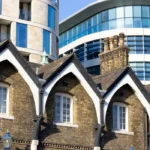
Architecture photography in Tower Hamlets works particularly well around Spitalfields, Brick Lane, Fournier Street, Wapping, Limehouse, West India Dock and Canary Wharf, where historic terraces, churches, warehouses, docks and contemporary towers create contrasting architectural subjects.
Brick Lane and Fournier Street provide some of the strongest historic architectural scenes. The area forms part of a designated conservation area, reflecting its architectural and historical significance.
Fournier Street is especially useful for photographs of historic townhouses and carefully aligned façades. Brick Lane adds a denser streetscape, with shops, signs, market activity and changing commercial frontage.
Wapping offers another architectural character. Wapping Pierhead and Wapping Wall are both within designated conservation areas. The area combines historic riverside buildings with narrow streets and industrial remnants.
Limehouse provides a different visual language. Narrow Street and the Limehouse Cut conservation area connect historic buildings with canals and waterways. Reflections and narrow perspectives work particularly well around these locations.
West India Dock introduces a larger-scale architectural environment. Historic dock structures sit alongside modern commercial and residential buildings. The resulting contrast creates opportunities for symmetrical compositions and wide skyline photographs.
Canary Wharf provides some of the most recognisable modern architecture in Tower Hamlets. Tall buildings, plazas, pedestrian routes and landscaped spaces create strong vertical and geometric subjects.
Photographers should pay attention to building edges, repeated windows, reflections and leading lines. These details help organise complex urban scenes without relying on heavy editing.
Where can visitors photograph Brick Lane and Spitalfields?
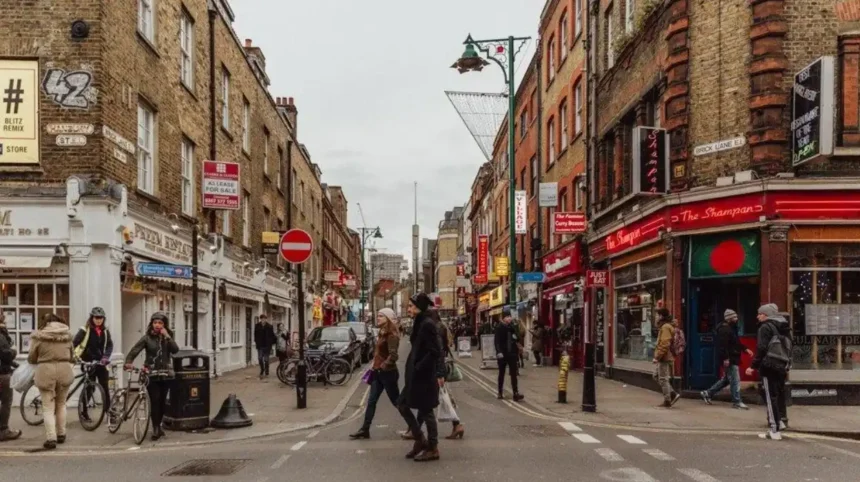
Brick Lane and Spitalfields provide dense East London photography scenes featuring historic buildings, market activity, street art, independent businesses and changing streetscapes. Sunday is particularly useful for market photography because Brick Lane Market operates with food, fashion, art and other stalls.
Brick Lane Market was established in 1888 and remains an important East End market. Tower Hamlets Council describes the market as a centre for fashion, food, art, flea-market goods, jewellery and retro clothing.
The surrounding streets provide opportunities for photographs of façades, shopfronts, signs and pedestrian activity. Sunday provides the strongest concentration of market activity, with the council listing opening hours of 10am to 3pm.
Columbia Road is another useful nearby location. Its Sunday flower market operates from 8am to 2pm. The street contains flower and plant stalls alongside independent shops, galleries, cafés and pubs.
The visual character changes substantially between the quieter early morning and the busy market period. Early visits provide clearer architectural compositions. Later visits provide stronger documentary and street-photography opportunities.
Photographers should respect pedestrians, stallholders and shop entrances. A market is a functioning commercial environment rather than a dedicated photography set.
Spitalfields also provides a strong connection between architecture and East London history. As you explore the modern streetscape, you are crossing land shaped by centuries of migration, trade and urban development. Read the full to understand its origins.
What are the best markets for street photography in Tower Hamlets?
Tower Hamlets markets provide dynamic photography opportunities through stalls, products, shopfronts, architecture and pedestrian activity. Brick Lane, Columbia Road, Chrisp Street and Roman Road each have different trading environments, allowing photographers to capture contrasting aspects of everyday East London life.
Brick Lane is particularly associated with fashion, food, art and flea-market activity. Its historic association with different immigrant communities also forms part of the area’s wider identity.
Columbia Road creates a different photographic environment. Flower stalls introduce strong colour, repetitive arrangements and changing displays. The surrounding Victorian-style streets provide architectural context.
Chrisp Street Market in Poplar provides a neighbourhood-focused environment. The council states that the market dates from Victorian times and operates from Monday to Saturday. Its pedestrianised setting contains food, fruit, vegetables, clothing, household goods and cafés.
Roman Road Market offers another established East London setting. Its location follows a route described by the council as one of England’s oldest known trade routes.
Market photography works best when the image contains context. Instead of photographing an isolated stall, include surrounding architecture, signs or pedestrian movement. This creates a stronger record of the place.
Respecting privacy is important when photographing identifiable people. Avoid obstructing traders, customers or access routes.
Which parks offer the best photography opportunities in Tower Hamlets?
Tower Hamlets has more than 120 parks and green spaces, including Victoria Park, Mile End Park, Mudchute Park, Island Gardens and Boundary Gardens. These spaces provide landscapes, historic features, wildlife, waterways, trees and skyline views for varied outdoor photography.
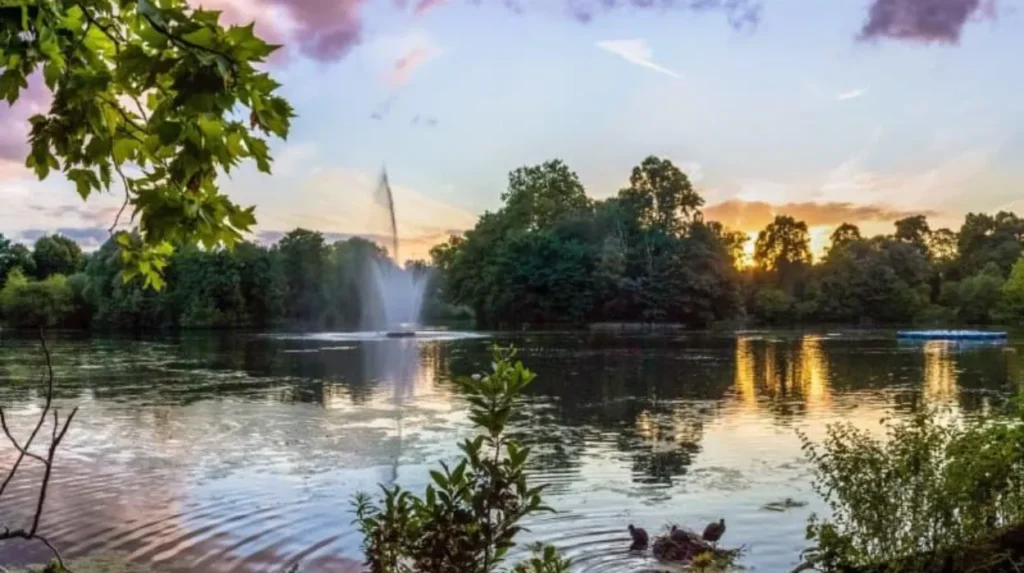
Victoria Park is the borough’s oldest and largest park and receives more than 9 million visits each year. The park opens at 7am and closes at dusk throughout the year.
The park contains historical lakes, the Burdett-Coutts Memorial, a bandstand and two original stone alcoves from London Bridge. These features provide clear subjects for architectural and landscape photography.
Victoria Park is also a registered Grade II* park and garden. Tower Hamlets lists five registered parks and gardens in the borough, including Victoria Park, Boundary Gardens, Island Gardens, Museum Gardens and the Novo Cemetery.
Mile End Park provides a different environment. It includes the Ecology Pavilion, Arts Pavilion, sports facilities and landscaped open space.
Mudchute Park and Farm provides another combination of open landscape and urban surroundings. The council identifies it as a Site of Metropolitan Importance for Nature Conservation.
Photographers should consider park opening times before planning sunrise or evening sessions. Conditions also change seasonally as trees, grass, flowers and water features alter the appearance of the landscape.
Where can photographers capture canals and waterways in Tower Hamlets?
Limehouse Basin, Limehouse Cut, Regent’s Canal, Hertford Union Canal, Shadwell Basin and other waterways provide reflections, bridges, towpaths, boats and industrial architecture. These locations are particularly useful for leading lines, symmetrical compositions and detailed urban landscape photography.
Waterways form an important part of Tower Hamlets’ geography. The council identifies London’s canals, including Regent’s Canal, Limehouse Cut, Limehouse Basin and Hertford Union Canal, as Sites of Metropolitan Importance for Nature Conservation.
Limehouse Basin is particularly useful because water connects the historic dockland environment with modern residential and commercial development.
Limehouse Cut provides narrower compositions. The canal edge, bridges and buildings create strong horizontal and diagonal lines.
Hertford Union Canal connects the Victoria Park area with the wider canal network. Its waterside setting provides quieter views than the busiest central streets.
Shadwell and Hermitage Basins offer another waterside environment. The council identifies the area as a Site of Borough Importance for Nature Conservation.
Water photography benefits from observing reflections rather than simply photographing the water itself. Buildings, bridges, boats and vegetation become secondary subjects reflected on the surface.
Overcast weather also produces useful architectural photographs because softer light reduces harsh contrast on façades. Clear conditions provide stronger reflections and sharper skyline outlines.
Where can visitors photograph the River Thames and Canary Wharf skyline?
The River Thames and Canary Wharf create some of Tower Hamlets’ strongest wide-angle photography opportunities. Island Gardens, riverside paths, dock basins and waterfront spaces provide views combining water, historic structures and modern skyscrapers across changing distances.
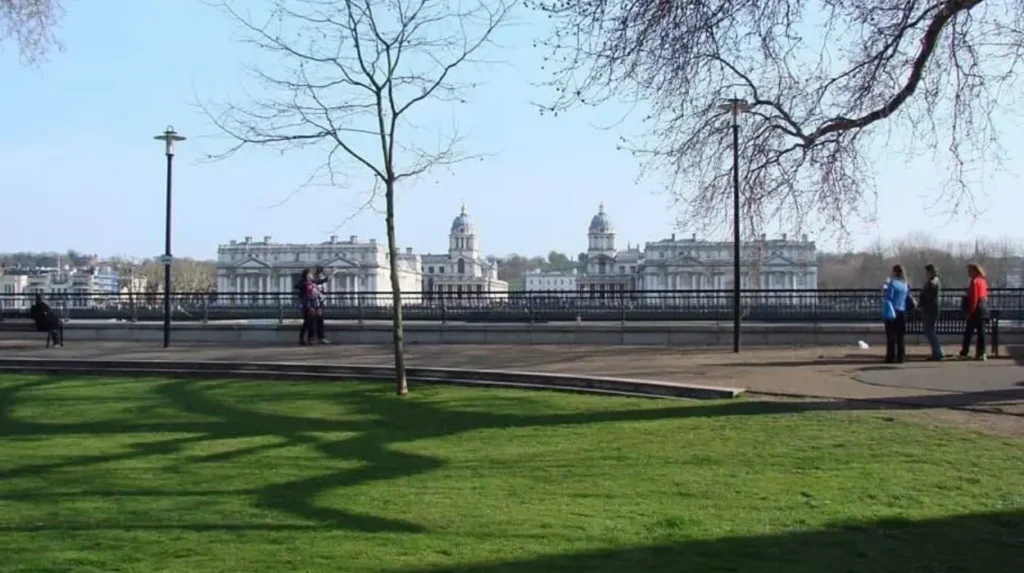
Island Gardens is one of the clearest locations for a Thames-facing composition. The park contains three acres of waterfront parkland and provides views towards Greenwich. The council notes that the view from Island Gardens featured in Canaletto’s eighteenth-century painting A View of Greenwich from the River.
The location also connects with Greenwich through the pedestrian foot tunnel beneath the Thames.
Island Gardens is useful for photographers seeking a broad river composition rather than a tightly framed city street. The river creates foreground space while Greenwich provides the distant architectural context.
Canary Wharf offers a contrasting skyline. Tall commercial buildings create vertical lines and reflective surfaces. Pedestrian areas and landscaped spaces provide foreground subjects.
West India Docks are particularly useful for photographing the relationship between water and high-rise architecture. Reflections can visually connect older dock infrastructure with contemporary towers.
The council identifies West India Dock as a conservation area and Millwall and West India Docks as a Site of Borough Importance for Nature Conservation.
For skyline photography, photographers should look for clear separation between buildings. Slight changes in position can remove overlapping towers and create cleaner compositions.
Which streets and neighbourhoods are best for distinctive East London photographs?
Wapping, Limehouse, Whitechapel, Poplar, Stepney, Bow and Spitalfields each provide distinctive streetscapes. Their differences come from historic housing, churches, markets, docklands, community spaces, canals and modern development, giving photographers varied neighbourhood subjects within one borough.
Whitechapel provides dense streets, historic buildings, markets and commercial activity. Whitechapel High Street and Whitechapel Market are within designated conservation areas.
Stepney offers historic churches, squares, terraces and residential streets. Stepney Green is among the borough’s designated conservation areas.
Limehouse provides narrow streets, waterside architecture and historic buildings. Narrow Street is a recognised conservation area.
Wapping provides riverside character and historic dockside architecture. Wapping Pierhead and Wapping Wall are designated conservation areas.
Poplar introduces another layer of East London architecture. Chrisp Street Market, Lansbury and surrounding residential areas provide streetscape photography linked to post-war planning and earlier community development.
Bow and the streets around Victoria Park provide Victorian terraces, park-facing architecture and long urban vistas. The Victoria Park conservation area documentation identifies Victorian terraces, park vistas and architectural and historic interest as defining characteristics.
These areas are particularly suitable for photographers interested in documenting how different architectural periods exist beside one another.
What historic structures should photographers look for in Tower Hamlets?
Historic photography subjects in Tower Hamlets include churches, market buildings, Victorian terraces, dock structures, conservation areas, historic gardens and surviving industrial features. Victoria Park, Brick Lane, Wapping, Limehouse and Stepney contain particularly strong examples of the borough’s architectural history.
Tower Hamlets’ heritage is visible through both individual buildings and wider streetscapes. The council uses conservation areas to protect places with special architectural or historical interest.
Victoria Park demonstrates the importance of nineteenth-century public landscape design. Parliament passed the Act establishing the park in 1841, and James Pennethorne prepared its initial design.
The park was created in response to the lack of public parkland in the East End. Its original design included a grand entrance, perimeter drive, trees and grassland, followed by a boating lake.
Tower Hamlets also contains historic squares. The council records sixteen designated London squares, including Albert Gardens, Arbour Square, Carlton Square, Ford Square, Stepney Green Gardens, Tredegar Square and Trinity Square Gardens.
These spaces are valuable photographic subjects because their layout creates deliberate relationships between buildings, gardens, streets and public space.
Photographers should distinguish between photographing an architectural feature and entering private property. Public viewpoints do not automatically provide permission to enter restricted areas.
How can photographers plan a Tower Hamlets photography route?
A practical Tower Hamlets photography route should group locations by geography and visual theme. A market route can cover Spitalfields and Brick Lane, while a waterside route can connect Limehouse, Wapping and the Thames before continuing towards Canary Wharf.
A historic architecture route can begin around Whitechapel and continue towards Spitalfields and Brick Lane. This route concentrates on conservation areas, market streets, historic façades and dense urban scenes.
A waterways route can focus on Limehouse Basin, Limehouse Cut and nearby dockland streets. The route can then continue towards Wapping and the Thames.
A modern architecture route works well around West India Docks and Canary Wharf. Wide spaces allow photographers to step back from tall buildings and capture complete façades.
A parks route can focus on Victoria Park, Mile End Park and nearby canal spaces. This combination provides landscape photography, historic features and water.
Island Gardens provides a separate riverside option. Its Greenwich-facing view gives photographers a different perspective from the Canary Wharf skyline.
Transport planning matters because Tower Hamlets has dense streets alongside larger open spaces. Photographers carrying heavy equipment benefit from reducing unnecessary backtracking.
The strongest route depends on the intended subject. Market photography requires trading hours. Park photography requires opening times. Waterfront photography requires attention to weather, visibility and daylight.
What photography rules should visitors know in Tower Hamlets?
Visitors should check local restrictions before organised photography, commercial shoots or filming in parks. Tower Hamlets Council states that film location work is managed by its Film Office and advises photographers to contact the office when permissions are required.
Casual photography in public areas is different from an organised commercial shoot. Visitors should check current rules before bringing models, lighting equipment, large crews or commercial production equipment into managed spaces.
Tower Hamlets Council specifically states that filming and photography location work in its parks is managed through The Film Office and advises photographers to contact the relevant service to secure locations and necessary permissions.
Park byelaws also apply to public walks, pleasure grounds and open spaces. The council maintains a list covering locations such as Victoria Park, Shadwell Basin, Stepney Green, Tobacco Dock, Tower Hamlets Cemetery and Wapping areas.
Photographers should also avoid blocking paths, entrances or commercial operations. Markets require particular consideration because traders depend on clear access for customers.
Tripods and other equipment can affect pedestrian movement in narrow streets. A compact setup is more practical around busy markets and pavements.
For architectural photography, checking whether a viewpoint is public or private is important. A visually attractive courtyard, rooftop or building entrance does not automatically provide public access.
Explore More Area Guide
Tower Hamlets Architecture: Historic Buildings and Modern Landmarks
Tower Hamlets Waterfront: Thames Views, Walks and Attractions
When is the best time to photograph Tower Hamlets?
The best photography time depends on the subject. Early morning suits quiet streets and architecture, market hours suit documentary photography, daylight suits parks and façades, while late afternoon and evening provide changing light across waterways, docks and Canary Wharf buildings.
Early morning is useful around historic streets because pedestrian traffic is lower. It also creates clearer views of façades and street geometry.
Market photography requires a different schedule. Brick Lane Market operates on Sundays from 10am to 3pm, while Columbia Road Flower Market operates from 8am to 2pm on Sundays.
Victoria Park opens from 7am until dusk, making early outdoor photography possible throughout the year.
Island Gardens provides a broad waterfront view, so visibility is important. Haze, cloud and atmospheric conditions change the appearance of distant Greenwich and the Thames.
Canary Wharf works in both daylight and after dark because illuminated buildings become prominent against the evening sky. Photographers should check access arrangements and local conditions when planning evening sessions.
Seasonal changes also influence photographs. Spring brings fresh vegetation, summer produces longer daylight, autumn changes park colours, and winter exposes more architectural structure through reduced foliage.
Why is Tower Hamlets important for East London photography?
Tower Hamlets is important for East London photography because its compact geography contains historic East End streets, major waterways, protected landscapes, markets, docklands, public parks and modern skyscrapers. This creates a concentrated record of London’s architectural and urban transformation.
The borough’s photographic value comes from contrast rather than one single landmark.
Historic streets around Spitalfields and Brick Lane document changing commercial and residential patterns. Wapping and Limehouse retain strong relationships with waterways and dockland development. Victoria Park represents nineteenth-century public park design. Canary Wharf represents modern high-density commercial development.
The council identifies 58 conservation areas, showing the scale of protected architectural and historic character across the borough.
Its parks network contains more than 120 parks and green spaces, while Victoria Park alone receives more than 9 million visits annually.
Waterways add another layer. The River Thames, canals, basins and docks create natural dividing lines and reflective surfaces across the urban environment. Several are formally recognised for nature conservation value.
For visitors, this means Tower Hamlets can be photographed through several interconnected themes: architecture, markets, waterways, parks, heritage, street life and skyline development.
The borough therefore works particularly well as a photography destination for visitors who want to document different periods of East London within one geographical area. Its streets and public spaces provide a direct visual connection between historic urban development and contemporary London.
What are the best photography locations in Tower Hamlets?
The best photography locations include Brick Lane, Fournier Street, Victoria Park, Limehouse Basin, Wapping, Island Gardens, West India Docks and Canary Wharf. These areas cover architecture, markets, parks, waterways and skyline views.