Tower Hamlets is one of East London’s most geographically varied boroughs. It combines the Tower of London, Tower Bridge, historic Spitalfields, Brick Lane, Canary Wharf, Victoria Park, Mile End, Limehouse and the Isle of Dogs. Its southern edge follows a major bend of the River Thames, while its northern areas connect with Hackney and Newham.
- What are the main highlights of Tower Hamlets?
- How should you divide Tower Hamlets into sightseeing areas?
- How can you explore the Tower of London and Tower Bridge efficiently?
- What should you see around Spitalfields and Brick Lane?
- Which Tower Hamlets markets should you include?
- Where can you experience Tower Hamlets’ green spaces?
- What is the best way to explore Tower Hamlets’ docklands?
- What should you see in Canary Wharf?
- How can you combine Tower Hamlets attractions into a one-day itinerary?
- How can you explore Tower Hamlets if you only have half a day?
- How can you travel around Tower Hamlets efficiently?
- What should digital nomads and business travellers see in Tower Hamlets?
- Why is Tower Hamlets important for understanding East London?
- How can you avoid missing the main highlights of Tower Hamlets?
The borough is also one of London’s most historically layered areas. Roman roads, medieval settlements, nineteenth-century docks, Victorian public parks, immigrant communities and modern financial districts all remain visible in the built environment. Tower Hamlets Council describes the area as the heart of London’s East End and highlights its combination of ancient and modern attractions.
A well-planned visit therefore works best as a route rather than as a list of disconnected attractions. The most efficient approach is to group nearby sights into geographical sections. Tower Hill and Wapping suit a riverside heritage route. Spitalfields and Brick Lane suit a cultural and market route. Bethnal Green and Victoria Park provide museums and green space. Limehouse and Canary Wharf create a contrasting docklands and modern architecture route.
What are the main highlights of Tower Hamlets?
The main highlights of Tower Hamlets include the Tower of London, Tower Bridge, Brick Lane, Spitalfields, Victoria Park, Museum of London Docklands, Canary Wharf, Columbia Road and historic riverside areas such as Wapping and Limehouse.
These attractions represent the borough’s major historical, cultural, architectural, commercial and recreational identities.
The Tower of London is a nearly 1,000-year-old fortress, royal palace and former prison. It stands beside the Thames at the western edge of Tower Hamlets. The historic complex also houses the Crown Jewels.
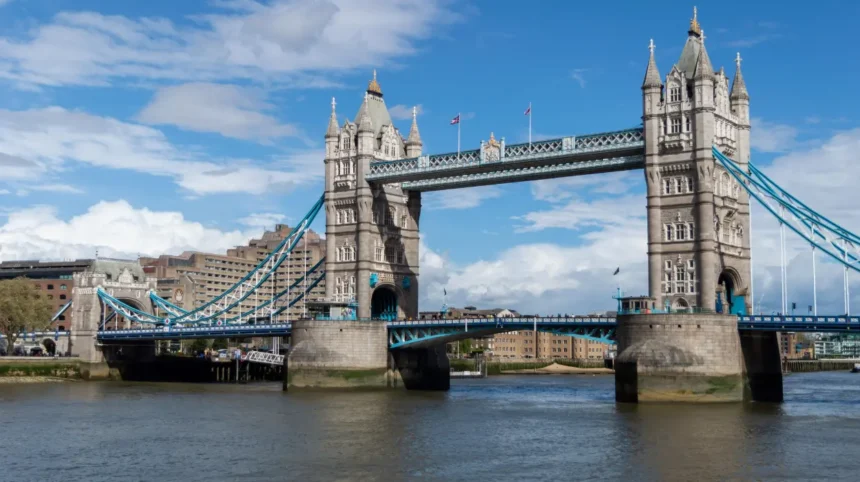
Tower Bridge is another defining landmark. The Victorian bridge connects Tower Hamlets with Southwark and remains an important working crossing over the River Thames. Visitors can enter the bridge and see its high-level walkways and historic machinery.
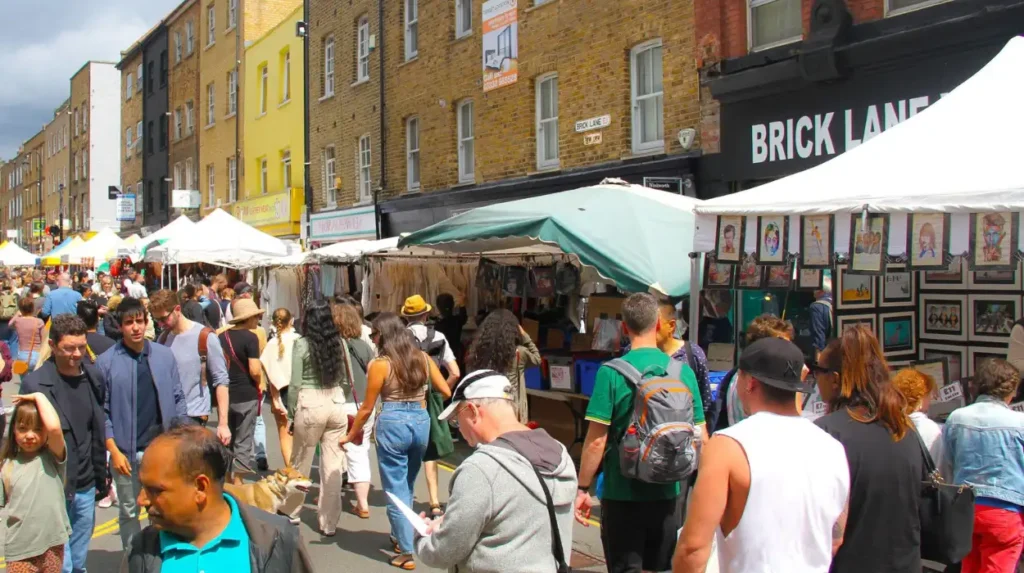
Brick Lane provides a different type of landmark. The street is closely associated with the Bangladeshi community, international food, markets, street art and the former Truman Brewery. Tower Hamlets Council identifies Brick Lane as one of the East End’s most iconic streets.
Victoria Park provides the borough’s principal large green space. At 86 hectares, it is the largest park in Tower Hamlets and receives more than nine million visits each year.
The Museum of London Docklands, now branded London Museum Docklands, explains the development of London’s port, river trade and dock communities. Its free galleries cover 400 years of London Docklands history.
These attractions should not be treated as one compact sightseeing cluster. They occupy different parts of the borough, so route planning saves considerable travelling time.
How should you divide Tower Hamlets into sightseeing areas?
Divide Tower Hamlets into connected sightseeing zones: Tower Hill and Wapping for major landmarks, Spitalfields and Brick Lane for culture, Bethnal Green and Victoria Park for museums and parks, and Limehouse and Canary Wharf for docklands.
This geographical approach reduces unnecessary backtracking.
The western section around Tower Hill contains the Tower of London, Tower Bridge and access towards St Katharine Docks. It is suitable for visitors prioritising major London landmarks.
Spitalfields and Brick Lane form another compact cultural area. The streets contain historic buildings, markets, religious sites, restaurants, independent businesses and street art.
Bethnal Green connects naturally with Brick Lane and Victoria Park. The area is useful for combining cultural attractions with open space.
Limehouse occupies the southern-central part of the borough. Limehouse Basin connects the Regent’s Canal with the Thames and provides a direct link between the historic canal network and the former docklands.
Canary Wharf lies farther east on the Isle of Dogs. It has a dense concentration of modern towers, public spaces, waterfront routes, shops, restaurants and transport connections.
This zoning system also works for short visits. A traveller with only half a day can concentrate on one area rather than attempting to cross the entire borough.
How can you explore the Tower of London and Tower Bridge efficiently?
Start at Tower Hill for the Tower of London, continue towards the Thames and St Katharine Docks, then walk towards Tower Bridge before following the riverside east or returning by public transport from Tower Hill.
The Tower of London requires dedicated time because its grounds contain multiple historical attractions. Visit London recommends allowing at least three hours for the castle.
Tower Hill Underground station provides a practical starting point. From there, the Tower of London is directly accessible. Tower Bridge stands close to the eastern side of the Tower complex.
The two attractions work well together because both are concentrated around the same section of the Thames.
St Katharine Docks adds another historical layer. The dock opened in 1828 after a major redevelopment that demolished about 1,250 houses and the medieval hospital of St Katharine. The original commercial docks later closed in 1968 and were subsequently regenerated as a marina and visitor destination.
A riverside walk then provides views towards modern City and Docklands architecture.
As you explore the modern site, you are crossing land with a deep heritage. Read about the full [Insert Anchor Text for History Article Here] to understand its origins.
The western route is particularly useful for first-time visitors because it establishes the historical foundation of Tower Hamlets before moving towards its later industrial and multicultural areas.
What should you see around Spitalfields and Brick Lane?
Explore Brick Lane, Spitalfields Market, Fournier Street, Christ Church Spitalfields, the Old Truman Brewery and nearby cultural sites to experience Tower Hamlets’ historic East End, immigrant heritage, markets, food culture, architecture and street art.
Brick Lane is one of the borough’s most recognisable cultural destinations. Its history includes French Huguenot and Jewish communities, followed by the development of a strong Bangladeshi presence. Today, the street combines food, retail, markets, art and community activity.
The surrounding streets contain important historic architecture.
Fournier Street developed in the early eighteenth century. Many of its grand eighteenth-century houses survive, including buildings with sash windows and elaborate entrances.
Christ Church Spitalfields provides another important architectural landmark. Its position near Brick Lane makes it easy to incorporate into a walking route.
The Old Truman Brewery represents the transition from industrial East End to contemporary creative district. Brewing began on the site around 1666, Joseph Truman acquired the site in 1679, and the brewery later expanded substantially. Brewing ended there in 1988. The site was subsequently redeveloped for offices, arts, shopping and media uses.
The council’s cultural trail identifies 20 sites around Brick Lane and Spitalfields, including Boundary Estate, Redchurch Street, Brick Lane Market, Sclater Street, Old Truman Brewery, Princelet Street, Brick Lane Mosque, Christ Church Spitalfields, Fournier Street, Whitechapel Gallery and Altab Ali Park.
This makes the area suitable for a detailed walking itinerary rather than a brief stop.
Which Tower Hamlets markets should you include?
Include Brick Lane Market for vintage goods and international food, Columbia Road Flower Market for plants and flowers, and Petticoat Lane for traditional East End market culture, while checking individual market days before travelling because schedules vary.
Markets provide a practical way to experience the commercial history of East London.
Brick Lane Market is particularly useful for visitors combining shopping, food and architecture. The wider area includes indoor and outdoor markets, vintage clothing, jewellery, antiques, fabrics and street food.
Columbia Road Flower Market is another major destination. It specialises in flowers, plants and gardening products and is particularly associated with its weekly Sunday market. Visit London recommends checking market schedules before travelling because street markets operate on specific days.
Petticoat Lane represents another long-established East End market destination. Tower Hamlets Council lists it alongside Columbia Road as one of the borough’s notable markets.
Market visits should therefore be scheduled around opening days rather than treated as interchangeable daily attractions.
A Sunday itinerary can prioritise Columbia Road and then continue towards Brick Lane and Spitalfields. A different weekday route can focus on museums, architecture, parks and the riverside.
Where can you experience Tower Hamlets’ green spaces?
Visit Victoria Park for the borough’s largest historic park, then consider Mile End Park, Island Gardens and smaller registered gardens for additional green space, water views, historic features, recreation and quieter breaks between urban attractions.
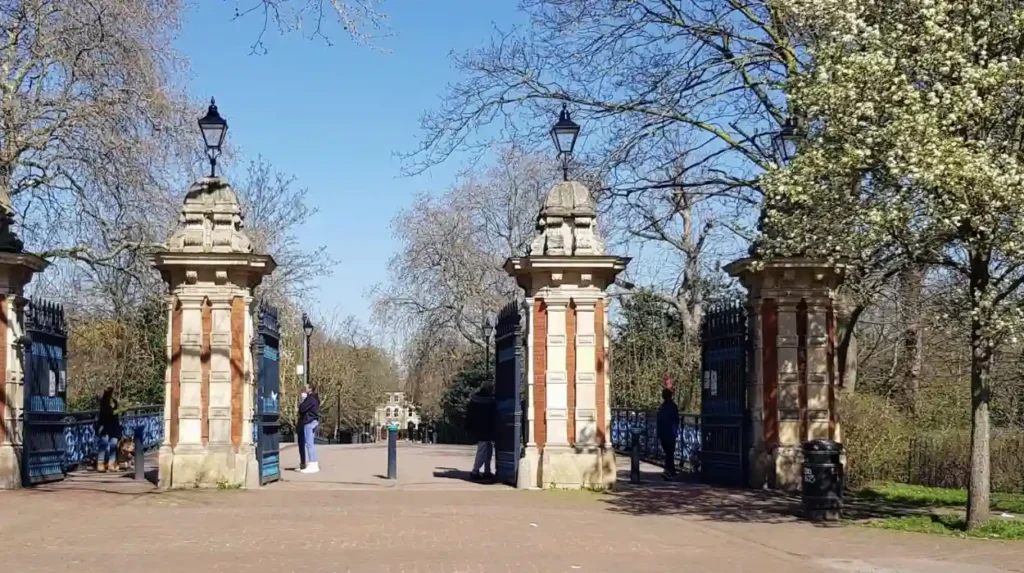
Victoria Park is the essential green-space stop. It opened in 1845 and was created in response to severe overcrowding, poor sanitation and limited access to open space in the East End. A petition signed by 30,000 local residents supported the creation of a public park in 1840.
The park covers 86 hectares and includes lakes, historic monuments, sports facilities, gardens, a bandstand, cafés and open lawns. It forms part of a wider green corridor connecting towards Limehouse, Mile End and Queen Elizabeth Olympic Park.
Mile End Park provides another substantial green area. It contains Mile End Stadium, an Ecology Park and the Arts Pavilion.
Island Gardens provides a different experience on the Isle of Dogs. Its position beside the Thames provides views towards Greenwich and the historic waterfront.
Tower Hamlets has five nationally registered parks and gardens. These include Victoria Park at Grade II*, plus Boundary Gardens, Island Gardens, Museum Gardens and the Novo Cemetery at Grade II.
These spaces are valuable for visitors who want to balance intensive sightseeing with walking, photography, recreation or a quiet break.
What is the best way to explore Tower Hamlets’ docklands?
Explore the docklands through Limehouse Basin, Wapping, the Museum of London Docklands, West India Quay and Canary Wharf to understand how maritime trade shaped Tower Hamlets before the area developed into a modern commercial and residential district.
Docklands history is fundamental to understanding the borough.
The construction of enclosed docks transformed the nineteenth-century East End. West India Docks and St Katharine Docks were built to improve cargo handling and reduce delays and theft. The developments also displaced existing communities and contributed to severe overcrowding in nearby areas.
Limehouse became particularly important because the Regent’s Canal opened in 1820, linking the docklands with the national canal network. Limehouse Cut also opened in 1770 and remains an important part of the historic waterway system.
The Museum of London Docklands provides the most direct museum-based introduction to this history. Its free galleries cover 400 years of the river, port and people of London Docklands.
West India Quay then provides a visual connection between historic warehouses and modern Canary Wharf.
The docklands route is particularly effective because the physical landscape still reveals the function of the area. Water basins, warehouses, canals, wharves and modern office towers sit within the same wider district.
What should you see in Canary Wharf?
Explore Canary Wharf for modern architecture, public spaces, waterfront paths, shopping, restaurants, art and transport connections, then compare its high-rise financial district with the historic docks and warehouses that shaped the surrounding Isle of Dogs.
Canary Wharf represents the modern commercial identity of Tower Hamlets.
The district is centred on large office towers and public spaces around the former West India Docks. Its skyline contrasts directly with older docklands buildings and riverside warehouses.
Canary Wharf also provides an efficient transport interchange. Transport for London lists the Underground, DLR and Elizabeth line at Canary Wharf, alongside buses and Santander Cycles.
This makes the area practical for visitors using it as a starting point or endpoint.
The waterfront provides opportunities for walking and photography. Public spaces around the docks create views across water towards the surrounding skyline.
Canary Wharf is also useful for digital nomads and business travellers because the district contains extensive commercial facilities, cafés, restaurants and transport connections.
For leisure visitors, the key value is contrast. A morning spent around Tower Hill and Wapping can be followed by an afternoon around Canary Wharf. The transition demonstrates how the same waterfront evolved from maritime commerce to international finance.
How can you combine Tower Hamlets attractions into a one-day itinerary?
A practical one-day route starts at Tower Hill, continues through the Tower of London and Tower Bridge, moves to Spitalfields and Brick Lane, then finishes around either Victoria Park or Canary Wharf according to available time and transport.
Start in the west at Tower Hill. Visit the Tower of London and allow several hours if entering the castle.
Continue towards Tower Bridge and St Katharine Docks. This section provides concentrated views of historic and modern London architecture.
After the riverside section, travel north towards Spitalfields. Explore Fournier Street, Christ Church Spitalfields and the surrounding historic streets before entering Brick Lane.
Allow time for food or market browsing around Brick Lane. The area provides numerous choices across international cuisines, reflecting the borough’s diverse communities. Tower Hamlets Council specifically identifies Turkish, Japanese, Argentinian and other cuisines alongside its established Bangladeshi food culture.
If the itinerary finishes in the afternoon, continue towards Victoria Park. If modern architecture and waterfront views are the priority, travel towards Canary Wharf instead.
This route works because each stage represents a distinct part of Tower Hamlets rather than repeating similar attractions.
How can you explore Tower Hamlets if you only have half a day?
For a half-day visit, choose one concentrated route: Tower Hill and Tower Bridge for major landmarks, Brick Lane and Spitalfields for culture, or Canary Wharf and the docklands for modern architecture and waterfront scenery.
Half-day visitors should avoid crossing the borough repeatedly.
The Tower Hill route is suitable for visitors who want globally recognised London landmarks. The Tower of London and Tower Bridge sit close enough to form one concentrated sightseeing area.
The Brick Lane route suits visitors prioritising food, markets, architecture, street art and East End history.
The Canary Wharf route suits visitors interested in modern architecture, commercial districts and docklands regeneration.
Victoria Park also works as a half-day destination, especially for visitors who prefer open space and walking.
Choosing one route creates more time for each attraction and reduces travel between distant neighbourhoods.
How can you travel around Tower Hamlets efficiently?
Use London Underground, DLR, Elizabeth line, buses, walking and cycling according to the route, with Tower Hill, Whitechapel, Bethnal Green, Mile End, Limehouse and Canary Wharf providing important transport points across the borough.
Tower Hamlets has an extensive public transport network.
Canary Wharf is particularly well connected. Its station serves the Jubilee line, DLR and Elizabeth line, while bus services and Santander Cycles provide additional options.
The Elizabeth line also connects Whitechapel and Canary Wharf with central London and destinations beyond the borough. TfL’s network map shows Whitechapel and Canary Wharf as key stations on the line.
Walking is practical within individual sightseeing zones. Brick Lane, Spitalfields and nearby historic streets form a compact pedestrian area.
Cycling is useful for longer connections between parks, canals and docklands.
Public transport is most efficient when used to move between zones, while walking is most effective within each zone.
Visitors should check current TfL service information before travelling because engineering works, station closures and accessibility conditions change.
What should digital nomads and business travellers see in Tower Hamlets?
Digital nomads and business travellers can use Canary Wharf, Whitechapel, Spitalfields and Brick Lane for cafés, restaurants, transport links, cultural attractions and work-friendly environments, while nearby parks provide convenient breaks between meetings or remote working sessions.
Canary Wharf has the strongest concentration of business infrastructure. Its transport interchange links three major rail systems, making it practical for meetings and short periods of downtime.
Whitechapel provides a different environment with cultural institutions, restaurants, independent businesses and strong transport links.
Brick Lane and Spitalfields provide food, cafés, creative businesses and cultural attractions. The Old Truman Brewery has developed into a mixed arts, media, shopping and office destination.
Victoria Park provides a major outdoor alternative. Its large lawns, paths and recreational areas create space away from dense commercial districts.
Business travellers can therefore select attractions according to the location of their meetings rather than travelling across the borough unnecessarily.
Explore More Area Guide
Tower Hamlets in One Day: Attractions, Markets and Landmarks
Tower Hamlets Winter Experiences | East London Guide
Why is Tower Hamlets important for understanding East London?
Tower Hamlets explains East London through its combination of Roman and medieval settlement, docks, migration, industry, public parks, markets, cultural institutions and financial development, creating a continuous landscape where historic communities and modern London exist together.
The borough’s history extends thousands of years. Tower Hamlets Council records prehistoric activity and archaeological evidence from the Stone and Bronze Ages. Roman roads and cemeteries later formed part of the landscape east of Londinium.
The medieval period established settlements including Stepney and Bethnal Green.
The industrial era transformed the borough through docks, manufacturing, transport and population growth.
Migration also became central to the area’s identity. Tower Hamlets Council states that more than 137 languages are spoken across the borough and that residents were born in more than 200 countries.
This diversity remains visible through food, religious buildings, markets, community institutions and neighbourhood architecture.
The twentieth and twenty-first centuries introduced further transformation through docklands regeneration and the development of Canary Wharf.
For visitors, this history provides a framework for understanding why Tower Hamlets contains such different landscapes within one borough.
How can you avoid missing the main highlights of Tower Hamlets?
Avoid missed highlights by planning geographically, checking attraction schedules, combining nearby landmarks, allowing dedicated time for major museums and historic sites, and selecting one or two secondary areas rather than attempting every destination in one day.
Start by identifying the primary purpose of the visit.
For landmark sightseeing, prioritise the Tower of London and Tower Bridge.
For culture, prioritise Spitalfields, Brick Lane and nearby galleries.
For parks, prioritise Victoria Park and Mile End Park.
For docklands history, prioritise the Museum of London Docklands, Limehouse and West India Quay.
For modern London, prioritise Canary Wharf.
Check market schedules before travelling because destinations such as Columbia Road Flower Market and Brick Lane Market have specific trading patterns.
Check museum opening times and ticket requirements before setting out. The Tower of London recommends substantial visiting time, while London Museum Docklands currently operates daily from 10am to 5pm.
Most importantly, group attractions by location. Tower Hamlets rewards visitors who understand its geography. A route built around connected neighbourhoods produces more sightseeing time and less unnecessary travel.
The result is a structured exploration of East London that covers historic landmarks, markets, cultural streets, parks, museums, docks and modern architecture without treating the borough as a single compact attraction zone.
What are the main attractions in Tower Hamlets?
The main attractions include the Tower of London, Tower Bridge, Brick Lane, Spitalfields, Victoria Park, London Museum Docklands, Canary Wharf, Columbia Road Flower Market, Limehouse and Wapping. These destinations represent the borough’s historic, cultural, green and modern identities.