Spitalfields is one of East London’s most historically significant neighbourhoods. Located within the London Borough of Tower Hamlets, the area combines centuries-old architecture, traditional markets, independent retailers, cultural institutions and a diverse food scene. Its streets reflect the influence of French Huguenot refugees, Jewish communities, Bangladeshi migration and generations of East End residents.
- What Makes Spitalfields an Important Historic Neighbourhood in East London?
- How Did Spitalfields Develop Through Different Historical Periods?
- Which Historic Streets Should Visitors Explore in Spitalfields?
- What Architectural Landmarks Can Visitors Discover in Spitalfields?
- Christ Church Spitalfields
- Dennis Severs’ House
- Historic Georgian houses
- The former Huguenot chapel on Brick Lane
- Why Is Old Spitalfields Market an Essential Visitor Attraction?
- What Cultural Attractions Can Visitors Explore Around Spitalfields?
- Where Can Visitors Find Independent Shops and Traditional Markets in Spitalfields?
- What Food and Dining Experiences Define Spitalfields?
- Bangladeshi restaurants on Brick Lane
- Street food at Old Spitalfields Market
- Independent cafés
- Traditional and contemporary food culture
- How Can Visitors Plan a Walking Tour of Spitalfields?
- How Can Visitors Reach Spitalfields Using Public Transport?
- Why Does Spitalfields Remain Important to East London’s Cultural Identity?
For visitors, Spitalfields offers an opportunity to explore London’s architectural heritage while experiencing its contemporary creative culture. Historic streets such as Fournier Street and Princelet Street sit close to Brick Lane, Old Spitalfields Market and Christ Church Spitalfields. The neighbourhood also connects easily with Liverpool Street, Shoreditch and the City of London.
Exploring Spitalfields provides a valuable introduction to East London’s social history, commercial development, religious heritage and changing urban identity. Its compact street network makes it suitable for walking tours, independent shopping, cultural visits and food-focused itineraries.
What Makes Spitalfields an Important Historic Neighbourhood in East London?
Spitalfields is a historic East London neighbourhood in Tower Hamlets, recognised for its Huguenot heritage, Georgian architecture, traditional markets and multicultural identity. Its streets preserve evidence of centuries of migration, manufacturing, religious activity and commercial development.
Spitalfields takes its name from St Mary Spittel, a medieval priory and hospital established in 1197. The religious institution provided accommodation and care before disappearing following the Dissolution of the Monasteries in the sixteenth century. Its name survived through the surrounding district.
The neighbourhood developed outside the historic boundaries of the City of London. Its location encouraged commercial activity, settlement and manufacturing. Markets attracted traders, while residential streets accommodated merchants, craftspeople and working families.
Spitalfields became particularly important during the late seventeenth century. French Protestant refugees, known as Huguenots, settled in the neighbourhood after religious persecution intensified in France. They brought specialist silk-weaving knowledge and established a significant textile industry.
The neighbourhood subsequently welcomed other migrant communities. Jewish families established businesses, religious institutions and educational organisations. Bangladeshi communities later shaped the identity of Brick Lane through restaurants, shops and cultural activities.
Today, Spitalfields combines residential streets, commercial buildings, cultural venues and independent businesses. Its historic environment remains an important part of East London’s architectural and cultural landscape.
How Did Spitalfields Develop Through Different Historical Periods?
Spitalfields developed from a medieval religious settlement into a major market and textile district. Its transformation involved Huguenot silk production, Jewish migration, commercial expansion and Bangladeshi settlement, creating the multicultural neighbourhood visitors experience today.
The earliest recorded development of Spitalfields centres on the medieval priory and hospital of St Mary Spittel. Established in 1197, the institution influenced the area’s name and early identity.
By the seventeenth century, Spitalfields had become an increasingly active commercial settlement. Markets operated near the City of London, supplying food and other goods to London’s expanding population.
The arrival of French Huguenot communities
The Revocation of the Edict of Nantes in 1685 intensified persecution against French Protestants. Thousands of Huguenots left France, and many settled in London. Spitalfields became a major centre for these refugees because of its developing textile economy.
The Huguenots introduced specialist silk-weaving techniques. Wealthier master weavers occupied substantial houses, while skilled workers used upper-floor rooms and attic workshops for textile production.
According to the London Museum, more than 10,000 silk looms operated around the Spitalfields market area by 1810. Fournier Street, Princelet Street and Wilkes Street became closely associated with this industry.
Jewish and Bangladeshi settlement
The decline of the silk industry during the nineteenth century changed the neighbourhood’s economy. Competition from imported French silk affected local manufacturing, encouraging residents to move into other trades.
Jewish immigrants from Eastern Europe established communities in Spitalfields during the nineteenth century. They opened workshops, shops, schools and synagogues. Some former Huguenot religious buildings became Jewish places of worship.
During the twentieth century, Bangladeshi migration further transformed the area. Brick Lane developed into an important centre for Bangladeshi restaurants, grocery shops, textile businesses and community organisations.
These successive migrations created a distinctive cultural landscape. Historic buildings, religious institutions and commercial streets provide visible evidence of the neighbourhood’s changing population.
For a deeper understanding of the people and events behind these surviving landmarks, explore \(Insert Anchor Text for Spitalfields History Article Here\).
Which Historic Streets Should Visitors Explore in Spitalfields?
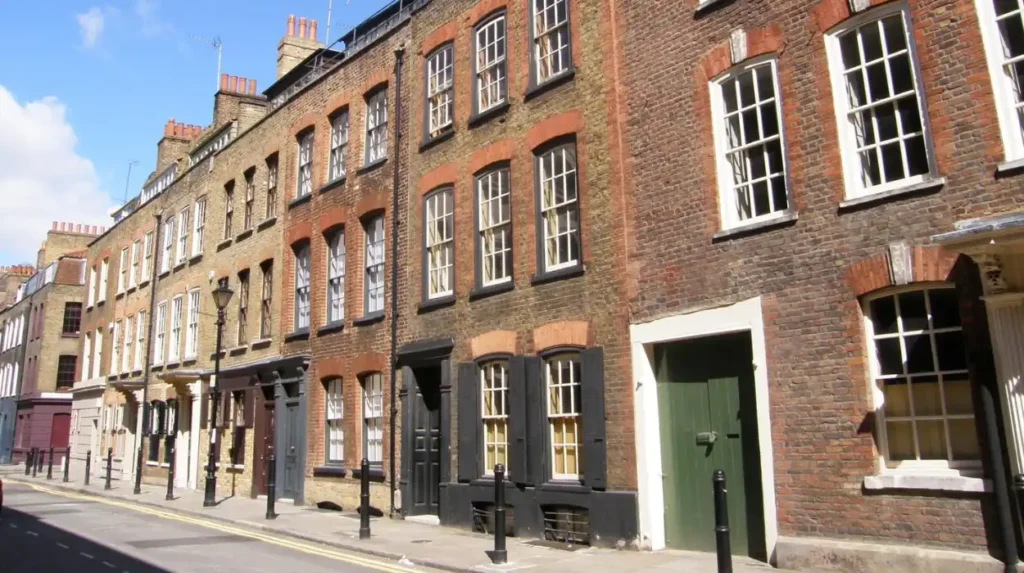
Fournier Street, Princelet Street, Wilkes Street, Elder Street and Commercial Street are important historic routes through Spitalfields. Their surviving Georgian houses, former workshops, religious buildings and traditional commercial premises reveal the neighbourhood’s architectural development.
Walking through Spitalfields is one of the most effective ways to understand its historic character. Many buildings retain original architectural details, including brick façades, sash windows, decorative doorways and distinctive rooflines.
Fournier Street
Fournier Street is among the neighbourhood’s best-known historic streets. Its Georgian houses reflect the prosperity of eighteenth-century silk merchants and master weavers.
The buildings feature tall windows, elegant entrances and upper-floor spaces associated with textile production. Several properties retain architectural features that demonstrate the relationship between residential life and manufacturing.
Fournier Street also provides a useful starting point for exploring Christ Church Spitalfields and Brick Lane.
Princelet Street
Princelet Street preserves buildings associated with Huguenot and Jewish communities. Number 19 Princelet Street is particularly significant because it served as a merchant’s house, a silk-weaving property and later a synagogue.
The building dates from 1719 and is Grade II* listed. Its history illustrates how residential properties adapted to changing economic and religious requirements.
Wilkes Street
Wilkes Street contains historic residential architecture associated with Spitalfields’ textile industry. Its buildings contribute to the area’s wider Georgian streetscape.
Visitors should look for traditional brickwork, period windows and the proportions of the surviving houses. These details help explain how wealthy merchants and skilled textile workers occupied the same neighbourhood.
Elder Street
Elder Street offers another opportunity to examine historic residential architecture. Its Georgian buildings reflect the planned development of Spitalfields during the eighteenth century.
The street also demonstrates the importance of preserving original building layouts and architectural details within a modern city.
Commercial Street
Commercial Street forms an important boundary through the neighbourhood. Its wider road and substantial buildings reflect later commercial and transport development.
The street connects visitors with Old Spitalfields Market, historic residential areas and nearby Whitechapel. It also provides convenient walking access towards Liverpool Street and Shoreditch.
What Architectural Landmarks Can Visitors Discover in Spitalfields?
Spitalfields contains important architectural landmarks representing Georgian domestic design, eighteenth-century religious architecture and Victorian commercial construction. Christ Church Spitalfields, Dennis Severs House, historic merchant residences and Old Spitalfields Market are essential stops for architecture enthusiasts.
The neighbourhood’s architectural character reflects its changing population and economic development. Its buildings range from modest residential properties to substantial religious and commercial structures.
Christ Church Spitalfields
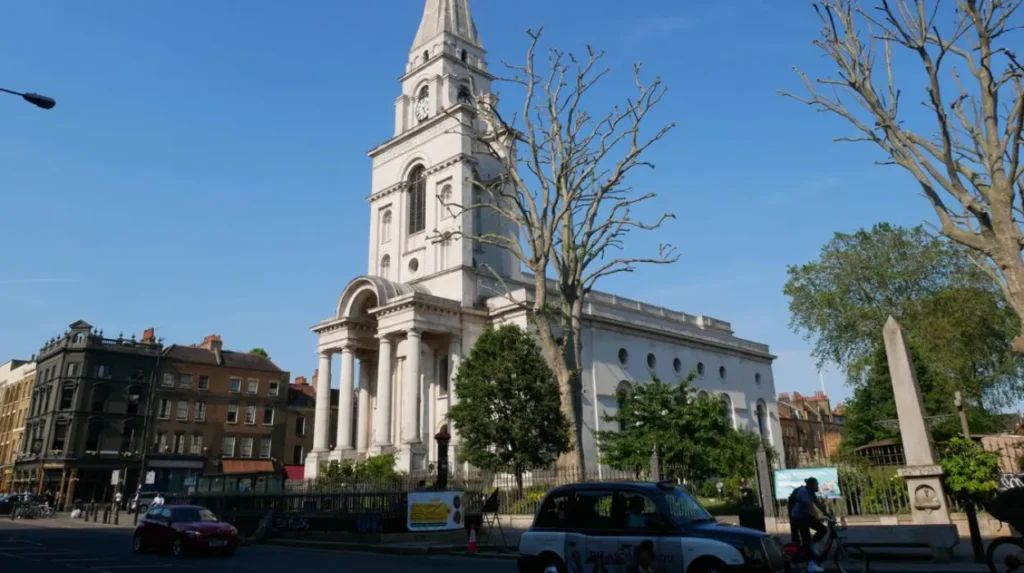
Christ Church Spitalfields is one of East London’s most recognisable historic buildings. Designed by architect Nicholas Hawksmoor, the Anglican church was constructed between 1714 and 1729.
The church opened on 5 July 1729 as part of the Fifty New Churches Act of 1711. This legislation supported the construction of churches for London’s growing population.
Its architectural design features a prominent tower, classical proportions, substantial columns and a distinctive stone exterior. Hawksmoor’s design creates a strong architectural presence among the surrounding Georgian buildings.
The church underwent major restoration, completed in 2004. Its redeveloped crypt opened in 2015, providing additional community and cultural facilities. Visitors can explore its religious heritage, architectural significance and connection with Spitalfields’ Huguenot population.
Dennis Severs’ House
Dennis Severs’ House at 18 Folgate Street is a distinctive historic attraction. The property is an eighteenth-century house transformed into an immersive historical experience.
Dennis Severs purchased the neglected building in 1979. He developed an interpretation of domestic life centred on an imaginary Huguenot family living in the property from 1724.
The house contains period-inspired interiors, furnishings and domestic details. Its rooms represent different historical periods and provide an interpretation of eighteenth- and nineteenth-century life.
The Spitalfields Trust took responsibility for the property in 1999 and continues to maintain it. Visitors should check its official booking arrangements before planning a visit because access operates through scheduled experiences rather than unrestricted entry.
Historic Georgian houses
Spitalfields contains numerous Georgian residential properties. These buildings provide evidence of the neighbourhood’s prosperity during the period of silk manufacturing.
Their architectural details include decorative doorways, brick façades, sash windows and attic spaces. The houses demonstrate how domestic architecture supported the working requirements of merchant families and textile production.
The former Huguenot chapel on Brick Lane
The building at 59 Brick Lane has a particularly interesting religious history. It originally served as a Huguenot chapel before becoming a Methodist place of worship and subsequently a synagogue.
The building is now home to the Brick Lane Jamme Masjid, also known as the Brick Lane Mosque. Its changing religious functions demonstrate the influence of successive migrant communities on the neighbourhood.
Why Is Old Spitalfields Market an Essential Visitor Attraction?
Old Spitalfields Market is a historic covered market at 16 Horner Square, E1 6EW. It combines independent retail businesses, food traders, specialist markets and historic Victorian architecture, making it a central destination for visitors exploring East London.
Old Spitalfields Market is one of the area’s most recognisable attractions. Its commercial history extends back to the seventeenth century, when the market served London’s growing demand for fresh produce.
In 1682, King Charles II granted a Royal Charter to John Balch, a silk thrower, allowing him to hold a market on Thursdays and Saturdays.
The market expanded during the following centuries. Its importance increased as London’s population grew and demand for food distribution increased.
Victorian market architecture
A major building project began in 1876 under Robert Horner, a former market porter who acquired a lease on the market. The principal market building was completed in 1893 at a cost of £80,000.
The City of London Corporation acquired direct control in 1920 and extended the market buildings in 1928.
The original fruit and vegetable market eventually relocated to Leyton in 1991. The historic Spitalfields site subsequently developed into a destination for independent retail, food businesses and cultural activities.
Shopping and independent traders
The contemporary market supports independent businesses, designers, artists and specialist retailers. Visitors encounter fashion, accessories, artwork, homeware, vintage products and handmade goods.
The market also provides an opportunity to discover smaller businesses that operate outside traditional high-street retail chains.
Food and dining
The Kitchens area brings together food traders offering different cuisines. Visitors can find street food, casual meals, refreshments and takeaway options.
The surrounding market also contains restaurants, cafés and specialist food businesses. This makes the destination suitable for combining shopping with lunch or an afternoon break.
Market opening hours
Old Spitalfields Market operates throughout the week. Its published general opening schedule is:
- Monday, Tuesday, Wednesday and Friday: 10am–8pm.
- Thursday: 8am–6pm.
- Saturday: 10am–6pm.
- Sunday: 10am–5pm.
Individual traders, restaurants and events operate their own schedules. Visitors should check the market’s official visitor information before travelling.
What Cultural Attractions Can Visitors Explore Around Spitalfields?
Spitalfields provides access to cultural attractions connected with immigration, architecture, religion, art and East End community life. Brick Lane, the Jamme Masjid, Whitechapel Gallery and the neighbourhood’s historic houses offer complementary experiences.
The cultural identity of Spitalfields extends beyond its architecture. Its streets reflect the experiences of communities that established businesses, religious institutions and creative organisations in East London.
Brick Lane
Brick Lane is one of the most recognisable streets in East London. It connects Spitalfields with the wider Shoreditch and Whitechapel areas.
The street is particularly associated with Bangladeshi culture, restaurants, food businesses and independent shops. Visitors encounter traditional curry houses, bakeries, fashion retailers and grocery stores.
Brick Lane also contains examples of religious and architectural heritage. The Jamme Masjid represents the changing religious history of the neighbourhood.
Street art adds another dimension to the area. Murals and independently produced artworks reflect the creative identity of contemporary East London.
Whitechapel Gallery
Whitechapel Gallery is an important contemporary art institution near Spitalfields. Established in 1901, it has a long history of presenting modern and contemporary art.
The gallery hosts exhibitions, educational activities, public programmes and cultural events. Its location makes it a useful addition to a walking itinerary covering Brick Lane and Whitechapel.
Visitors should consult its exhibition programme to identify current displays and admission arrangements.
19 Princelet Street
The historic property at 19 Princelet Street provides another connection with East London’s migration history.
Built in 1719, it originally served as a merchant’s residence and was associated with the Ogier family, who were Huguenot silk merchants. A synagogue was established within the property in 1870 for a Jewish community that had arrived from Poland.
The building subsequently served as a place of worship and community activity for more than a century. Its history represents the transition between different immigrant communities in Spitalfields.
Tower Hamlets cultural trail
Tower Hamlets Council promotes a cultural trail covering important heritage locations around Brick Lane and Spitalfields.
Its 20 identified sites include Christ Church Spitalfields, Old Spitalfields Market, Fournier Street, Princelet Street, Brick Lane Jamme Masjid, Whitechapel Gallery and Altab Ali Park.
The trail provides a structured way to understand the relationship between historic buildings, migration and contemporary East End culture.
Where Can Visitors Find Independent Shops and Traditional Markets in Spitalfields?
Spitalfields offers independent shopping through Old Spitalfields Market, Brick Lane and surrounding commercial streets. Visitors find vintage clothing, handmade products, specialist food, contemporary fashion, artwork and independent retailers within walking distance.
Shopping is an important part of the Spitalfields visitor experience. The area combines traditional market trading with modern independent retail.
Old Spitalfields Market is the main destination for visitors seeking products from independent designers and specialist traders. Its changing stalls provide opportunities to discover handmade goods, fashion accessories, artwork and homeware.
Brick Lane offers a different retail environment. Its shops include vintage clothing businesses, independent fashion retailers and specialist food stores. The street is particularly suitable for visitors interested in second-hand clothing and distinctive local products.
The surrounding streets also contain smaller businesses. Commercial Street and nearby Shoreditch provide access to contemporary fashion, design-led retail and creative businesses.
Specialist market experiences
Old Spitalfields Market hosts specialist trading events throughout the year. Its Thursday Antiques Market attracts visitors interested in vintage objects, collectibles and historical household products.
The market also promotes vinyl trading events and occasional themed activities. These events create additional reasons to visit beyond everyday shopping.
Visitors should check the official market calendar because specialist trading schedules differ from the standard daily market.
What Food and Dining Experiences Define Spitalfields?
Spitalfields has a diverse food culture shaped by traditional East End businesses, Bangladeshi restaurants, independent cafés and contemporary street-food traders. Brick Lane and Old Spitalfields Market are particularly important destinations for exploring local dining.
Food is central to the identity of Spitalfields. The neighbourhood’s restaurants and food businesses reflect successive waves of migration and commercial development.
Bangladeshi restaurants on Brick Lane
Brick Lane is strongly associated with Bangladeshi cuisine. Restaurants serve dishes such as chicken curry, lamb bhuna, biryani and tandoori specialities.
The street developed its reputation through generations of Bangladeshi-owned food businesses. These restaurants remain an important part of East London’s culinary identity.
Street food at Old Spitalfields Market
The Kitchens at Old Spitalfields Market provides a convenient dining destination. Food traders serve different styles of street food, offering visitors a choice of casual meals under the historic market roof.
The surrounding restaurants provide additional options for longer meals and social dining.
Independent cafés
Spitalfields and its neighbouring streets contain independent coffee shops and cafés. These venues provide refreshments, breakfast options and informal places to work.
Visitors exploring the neighbourhood during the day can combine café visits with market shopping and architectural sightseeing.
Traditional and contemporary food culture
The neighbourhood’s food scene demonstrates how migration influences local businesses. Traditional Bangladeshi restaurants operate alongside contemporary food traders and independent cafés.
This combination gives visitors an opportunity to explore both established East End food traditions and newer dining businesses.
How Can Visitors Plan a Walking Tour of Spitalfields?
A walking tour of Spitalfields connects its historic streets, Georgian houses, religious landmarks, markets and cultural attractions. Visitors can explore the main neighbourhood highlights within a half-day itinerary, starting at Liverpool Street or Old Spitalfields Market.
Spitalfields is suitable for independent walking because many attractions sit close together. A planned route helps visitors understand the area’s architectural development while avoiding unnecessary travel between locations.
Suggested half-day walking itinerary
Stop 1: Old Spitalfields Market
Begin at Old Spitalfields Market. Explore its historic architecture, independent shops and food stalls. Allow approximately 45–60 minutes.
Stop 2: Fournier Street
Walk towards Fournier Street to examine Georgian houses associated with the Huguenot silk industry. Allow approximately 15–20 minutes.
Stop 3: Christ Church Spitalfields
Visit the church and examine its distinctive Hawksmoor architecture. Check visiting arrangements and scheduled services before entering.
Stop 4: Princelet Street
Continue towards Princelet Street to discover historic merchant houses and buildings associated with Jewish and Huguenot communities.
Stop 5: Folgate Street
Explore the exterior of Dennis Severs’ House at 18 Folgate Street. Visitors interested in the interior experience should arrange admission in advance.
Stop 6: Brick Lane
Finish the walk on Brick Lane. Explore its restaurants, independent shops, street art and cultural landmarks.
This route provides a practical introduction to Spitalfields’ heritage and contemporary identity. Visitors interested in longer walks can continue towards Whitechapel Gallery or Shoreditch.
Explore More Area Guide
Discover Spitalfields: East London’s Historic Streets and Markets
Tower Hamlets for Slow Travel: Best East London Neighbourhoods
How Can Visitors Reach Spitalfields Using Public Transport?
Spitalfields is accessible through Liverpool Street, Aldgate East and Shoreditch High Street stations. These transport connections provide Underground, Elizabeth line, National Rail and London Overground services, making the neighbourhood convenient for domestic and international visitors.
Liverpool Street is one of the most convenient transport hubs for reaching Spitalfields.
It provides connections through the Central, Circle, Hammersmith & City and Metropolitan Underground lines, alongside the Elizabeth line and National Rail services.
A short walk connects Liverpool Street Station with Old Spitalfields Market.
Aldgate East Underground Station is another useful arrival point. It provides access through the District and Hammersmith & City lines.
Shoreditch High Street Overground Station also serves visitors approaching from the north and east of London.
Travelling by bus
Several London bus services operate around the neighbourhood. Routes serving Liverpool Street and nearby streets provide connections with other parts of East London and central London.
Visitors should use Transport for London’s journey planner to identify suitable routes, service changes and accessible travel options.
Walking from neighbouring areas
Spitalfields connects conveniently with several nearby destinations.
Shoreditch is accessible towards the north, while Whitechapel lies to the east. Liverpool Street and the City of London sit towards the west.
These connections make Spitalfields suitable for visitors combining several East London attractions within one day.
Why Does Spitalfields Remain Important to East London’s Cultural Identity?
Spitalfields remains important because its historic buildings, markets and cultural institutions preserve evidence of East London’s changing communities. Its architectural conservation and independent businesses support heritage tourism while maintaining the neighbourhood’s contemporary economic and social identity.
Spitalfields represents several centuries of urban development. Its buildings demonstrate how migration, manufacturing, religion and commerce shaped the East End.
The surviving Georgian houses are particularly important because they preserve the architectural character of the Huguenot textile district. Historic properties provide evidence of how residential buildings accommodated specialist manufacturing.
The market represents another important part of the area’s identity. Its transformation from a wholesale produce centre into a destination for independent retail and food businesses demonstrates how historic commercial spaces adapt to changing economic conditions.
Heritage conservation
The preservation of historic buildings supports architectural tourism and protects important examples of London’s built environment.
The Spitalfields Trust works to protect historic properties and promote awareness of the neighbourhood’s architectural heritage. Its work includes the preservation of significant buildings such as Dennis Severs’ House.
Community and cultural continuity
Spitalfields also demonstrates the importance of migration in shaping London’s neighbourhoods.
Huguenot, Jewish and Bangladeshi communities contributed to the area’s commercial, religious and cultural development. Their influence remains visible through surviving buildings, food businesses and community institutions.
Future relevance for visitors
Spitalfields continues to attract tourists, researchers, photographers, architecture enthusiasts and independent shoppers.
Its combination of historic architecture and contemporary businesses provides a strong foundation for sustainable cultural tourism. Preserving historic buildings while supporting local businesses remains important to the neighbourhood’s long-term identity.
Visitors who explore Spitalfields gain an understanding of East London that extends beyond individual landmarks. The streets, buildings and markets collectively explain how the area developed into one of London’s most recognisable historic neighbourhoods.
Where is Spitalfields located in London?
Spitalfields is located in East London within the London Borough of Tower Hamlets. It sits close to Liverpool Street, Shoreditch, Whitechapel and the City of London.