Tower Hamlets is one of the most historically significant boroughs in East London. It offers visitors a direct connection to traditional East End life through historic street markets, British Bangladeshi heritage, Victorian architecture, independent businesses, working-class history and long-established community institutions. The borough includes neighbourhoods such as Whitechapel, Spitalfields, Bethnal Green, Bow, Poplar, Limehouse and Stepney.
- What Makes Tower Hamlets an Important Centre of Traditional East End Culture?
- Where Can Visitors Experience Traditional Bengali Culture in Brick Lane?
- Which Historic East End Markets Should Visitors Explore in Tower Hamlets?
- Why Is Old Spitalfields Market Important to East End Heritage?
- Where Can Visitors Discover the History of London’s Docklands?
- What Can Visitors Learn About Victorian Working-Class Life at the Ragged School Museum?
- Where Can Visitors Explore East London’s Huguenot and Jewish Heritage?
- Fournier Street and Huguenot Architecture
- Explore Jewish Heritage in Whitechapel
- Understand the Layers of Religious Architecture
- Which Cultural Landmarks Help Visitors Understand Bengali Heritage in Whitechapel?
- Where Can Visitors Experience Traditional East London Street Life at Columbia Road Flower Market?
- Which Cultural Institutions Preserve the Local History of Tower Hamlets?
- Where Can Visitors Experience Traditional Community Life in Chrisp Street Market?
- Which East End Cultural Venues Showcase Contemporary Local Creativity?
- How Can Visitors Plan a Traditional East End Cultural Walking Tour?
- Start at Old Spitalfields Market
- Walk Towards Fournier Street
- Explore Brick Lane
- Continue Towards Whitechapel
- Finish at Whitechapel Gallery
- What Is the Best Time to Experience Traditional East End Culture?
- Why Does Traditional East End Culture Remain Important to Tower Hamlets Today?
Traditional East End culture is not limited to historic buildings or museums. It remains visible in everyday activities, including shopping at family-run market stalls, eating traditional Bengali food, visiting historic pubs, exploring religious landmarks and attending community events. These experiences demonstrate how successive generations of migrants, traders, workers and local families have shaped the area’s identity.
For tourists and leisure travellers, Tower Hamlets provides opportunities to explore London’s cultural diversity beyond the major attractions of central London. Its streets reveal the influence of French Huguenot refugees, Jewish immigrants, British Bangladeshis and dock workers. Contemporary galleries, independent shops and cultural centres also demonstrate how traditional communities continue to influence modern East London.
Understanding the borough requires exploring both its historical foundations and its present-day communities. The following destinations provide some of the best opportunities to experience traditional East End culture in Tower Hamlets.
What Makes Tower Hamlets an Important Centre of Traditional East End Culture?
Tower Hamlets represents traditional East End culture through its historic markets, migrant communities, working-class heritage, religious landmarks and independent businesses. Its neighbourhoods preserve centuries of cultural exchange, particularly through Bengali, Jewish and Huguenot influences that remain visible in everyday local life.
The London Borough of Tower Hamlets occupies an important position east of the City of London. Its development is closely connected to the River Thames, the historic London docks, manufacturing industries and international migration.
The borough was formed in 1965 through the merger of the former metropolitan boroughs of Bethnal Green, Poplar and Stepney. These historic districts developed distinct identities through employment, housing, religion and community traditions.
During the 17th century, French Protestant refugees known as Huguenots settled in Spitalfields. Many brought specialist silk-weaving skills and established textile businesses. Their influence remains visible in the historic houses and streets around Fournier Street.
Jewish communities subsequently established themselves across parts of Whitechapel and Spitalfields. During the 20th century, migration from Bangladesh, particularly from the Sylhet region, strengthened the area’s Bengali identity.
Today, Tower Hamlets combines these historical influences with contemporary cultural activity. Brick Lane, Whitechapel Market, Roman Road and Chrisp Street provide examples of places where local traditions remain connected to everyday commerce.
The borough also supports cultural institutions, archives and community organisations that document its changing identity. These resources help visitors understand why traditional East End culture represents a combination of different communities rather than one single historical tradition.
Where Can Visitors Experience Traditional Bengali Culture in Brick Lane?
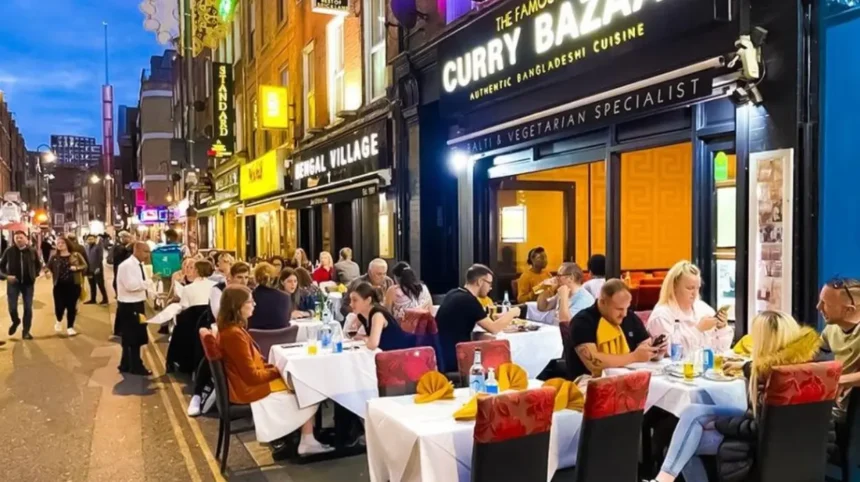
Brick Lane is one of the most recognisable destinations for experiencing British Bangladeshi culture in East London. Visitors encounter Bengali restaurants, traditional food businesses, cultural organisations, religious landmarks, independent shops and street markets that reflect generations of migration and community development.
Brick Lane is located in the E1 district of Tower Hamlets. It is widely associated with the British Bangladeshi community and is an important cultural destination for visitors exploring the East End.
The street has experienced several stages of migration. French Huguenot refugees arrived during the late 17th century, followed by Jewish communities and, later, Bengali migrants. Each community contributed to the area’s commercial, religious and cultural development.
The London Borough of Tower Hamlets identifies Brick Lane as a historic centre of the Bangladeshi community. Its restaurants, food businesses and cultural venues continue to attract visitors from across London and beyond.
Explore Traditional Bengali Food
Food is one of the most accessible ways to experience Brick Lane’s cultural identity.
Visitors can explore traditional Bengali and South Asian dishes, including:
- Chicken tikka masala and traditional curry dishes.
- Biryani prepared with aromatic rice and spices.
- Tandoori dishes cooked in clay ovens.
- Vegetable curries and lentil preparations.
- Bengali sweets and traditional desserts.
Brick Lane is also known for its historic beigel shops. These businesses reflect the area’s earlier Jewish community and its contribution to East London’s food culture.
Discover Banglatown’s Cultural Identity
The term Banglatown describes the cultural and commercial identity associated with Brick Lane and the surrounding streets.
Bengali-language signs, community organisations, restaurants and cultural events demonstrate the continuing influence of British Bangladeshi residents.
Academic research by sociologist Claire Alexander examines how Brick Lane became an important cultural heartland for the British Bangladeshi community. The research also explores how residents understand belonging, identity and the changing use of public spaces.
Visitors should explore the area respectfully and recognise that Brick Lane is an active residential and commercial neighbourhood, not simply a tourist attraction.
Which Historic East End Markets Should Visitors Explore in Tower Hamlets?
Tower Hamlets preserves traditional market culture through historic trading streets and community marketplaces. Brick Lane, Whitechapel, Petticoat Lane and Roman Road offer different experiences, including clothing, fresh produce, household goods, street food and independent retail businesses.
Street markets are among the strongest representations of traditional East End culture. They developed around local demand for affordable food, clothing, household products and everyday necessities.
Tower Hamlets Council recognises ten street markets across the borough. These include Brick Lane, Bethnal Green Road, Chrisp Street, Columbia Road, Petticoat Lane, Roman Road, Roman Road Square, Sclater Street, Watney Market and Whitechapel Market.
Brick Lane Market
Brick Lane Market is particularly popular for vintage clothing, second-hand products, antiques, street food and independent creative businesses.
The market developed from earlier trading activity and became an established Sunday destination. Tower Hamlets Council records its establishment in 1888 and lists Sunday trading from 10am to 3pm.
Visitors can explore clothing stalls, handmade products, jewellery and international food. The surrounding streets also contain independent shops and businesses connected to the area’s creative economy.
Whitechapel Market
Whitechapel Market provides a more everyday neighbourhood shopping experience.
Located along Whitechapel Road, it offers fresh fruit, vegetables, spices, clothing, jewellery and household products. The market operates from Monday to Saturday, generally between 8am and 6pm.
Its selection of South Asian ingredients and cultural clothing reflects the diverse communities living and working in the surrounding neighbourhood.
Petticoat Lane Market
Petticoat Lane is associated with the historic clothing and textile trade of East London.
The market developed during the 18th century and became particularly connected with Jewish traders and shoppers during the late 19th century. The London Archives records its operation from the 1750s and its historic association with clothing and leather goods.
Visitors interested in traditional East End commerce can explore its clothing stalls, accessories and affordable fashion businesses.
Roman Road Market
Roman Road Market is located in Bow and serves the surrounding residential communities.
Its history is connected to the growth of Bethnal Green and the local silk-weaving population. The council identifies the area as a historic marketplace where some traders have maintained family connections across generations.
It provides an opportunity to experience everyday local shopping rather than exclusively visitor-focused retail.
Why Is Old Spitalfields Market Important to East End Heritage?
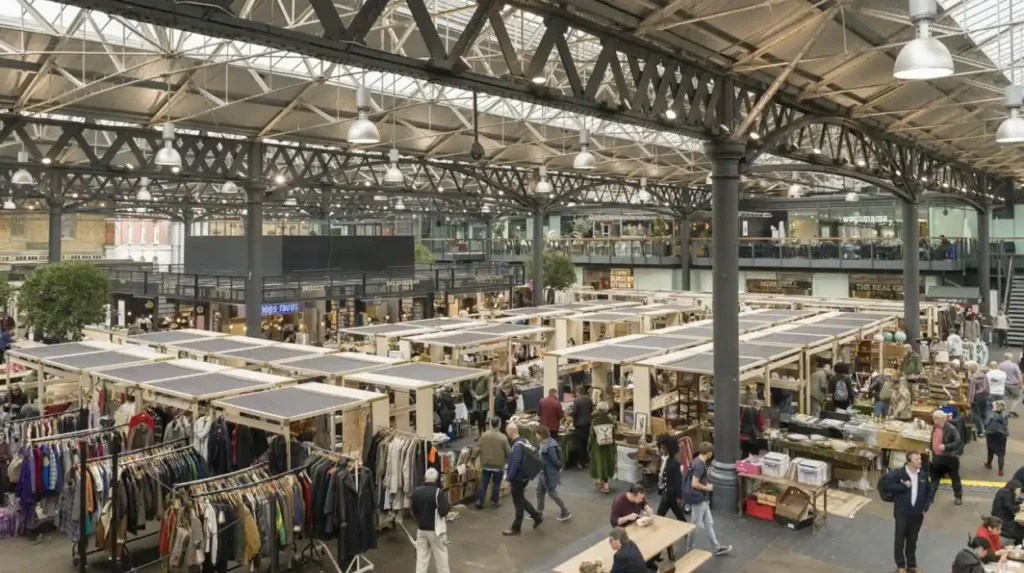
Old Spitalfields Market connects contemporary shopping with more than three centuries of East London trading history. Its historic market setting, independent traders, food businesses and surrounding Huguenot architecture make it an important destination for understanding the area’s commercial and cultural development.
Old Spitalfields Market is situated at 16 Horner Square, near Liverpool Street Station.
Its history dates to 1682, when King Charles II granted a Royal Charter allowing a regular market to operate in Spitalfields. The market originally supplied fresh produce to London’s growing population.
The surrounding neighbourhood attracted French Huguenot refugees during the late 17th century. These settlers established silk-weaving businesses and built residential properties that remain part of Spitalfields’ architectural heritage.
The fruit and vegetable market eventually relocated to Leyton in 1991. The historic site subsequently developed into a destination for independent retail, food businesses and creative traders.
Explore Independent Traders
The market brings together independent retailers, artisans, designers and food businesses.
Visitors can discover:
- Handmade crafts and decorative products.
- Vintage clothing and accessories.
- Independent fashion businesses.
- Jewellery and artwork.
- International street food and speciality dishes.
The market provides a modern retail experience while retaining its historic commercial setting.
Discover the Historic Architecture
The Victorian market structure is an important part of the visitor experience.
Its roof, brickwork and historic architectural details reflect the area’s former role in London’s wholesale produce trade.
Visitors should also explore nearby streets, particularly Fournier Street, where historic Huguenot houses demonstrate the architectural influence of the area’s French Protestant community.
The market operates throughout the week, although individual traders and food businesses follow different opening schedules. Checking the official visitor information before travelling helps visitors plan their visit.
Where Can Visitors Discover the History of London’s Docklands?
London Museum Docklands is one of the most important cultural destinations for understanding Tower Hamlets’ maritime and industrial heritage. Its permanent galleries explain the development of London’s port, international trade, slavery, dock employment, wartime experiences and the transformation of Docklands.
Located at No. 1 Warehouse, West India Quay, London Museum Docklands occupies a historic warehouse connected to the former West India Docks.
The museum explains how the River Thames supported London’s development as an international trading centre.
For centuries, the docks brought together merchants, sailors, dock workers and migrants from different parts of the world. Their activities shaped the employment patterns, population and cultural identity of East London.
The museum contains nine free galleries exploring different periods and subjects connected to Docklands. These include trade expansion, slavery, Victorian dock life, wartime experiences and the redevelopment of the area.
Explore Sailortown
Sailortown recreates aspects of a Victorian street in the historic docklands.
It helps visitors understand the environment experienced by sailors and workers during the 19th century.
The gallery explores the relationship between maritime employment, commercial activity and residential life.
Understand London’s Connection to Global Trade
The museum’s collections explain how goods transported through the docks connected London with international markets.
Its London, Sugar and Slavery gallery examines London’s historical involvement in the transatlantic slave trade and the economic consequences of slavery.
This history is essential to understanding the development of the port and the wider British economy.
Discover the Modern Docklands
The museum also explains the redevelopment of Docklands following the decline of traditional port activities.
The transformation of former industrial areas into offices, residential developments and commercial districts demonstrates how East London has changed economically.
The museum is open daily from 10am to 5pm, and general admission to its galleries is free. The museum recommends allowing at least one hour for a visit.
What Can Visitors Learn About Victorian Working-Class Life at the Ragged School Museum?
The Ragged School Museum preserves the history of free education and working-class childhood in Victorian East London. Its historic classrooms, canal-side warehouse buildings and educational exhibitions explain how poverty, overcrowding and limited schooling affected local families during the 19th century.
The Ragged School Museum is located on Copperfield Road beside Regent’s Canal in Mile End.
The museum occupies three historic buildings that once formed London’s largest ragged school. Ragged schools were charitable educational institutions that provided free schooling for children from poor families.
Thomas Barnardo established his first ragged school in London in 1867 after witnessing the severe poverty and lack of educational opportunities affecting children in the East End.
The Copperfield Road Free School opened in 1877 and educated thousands of local children before closing in 1908. The buildings were subsequently used for industrial purposes before local residents campaigned to preserve them. The museum opened in 1990.
Experience a Victorian Classroom
The reconstructed classroom provides an understanding of historical teaching methods.
Visitors can learn about the educational environment experienced by children more than a century ago.
The museum’s educational programme also allows school groups to experience historical lessons in an authentic setting.
Understand Poverty and Social Reform
The museum documents the relationship between poverty, education and social reform.
Victorian East London experienced overcrowded housing, disease and limited access to formal education. Charitable institutions attempted to provide essential services to disadvantaged families.
The museum therefore offers an important perspective on the social conditions that shaped traditional working-class East End communities.
Where Can Visitors Explore East London’s Huguenot and Jewish Heritage?
Spitalfields and Whitechapel preserve important evidence of East London’s historic migrant communities. Visitors can explore Huguenot houses, former Jewish neighbourhoods, religious buildings and historic streets to understand how successive generations influenced local architecture, employment and cultural traditions.
East London’s cultural identity developed through successive waves of migration. Spitalfields and Whitechapel provide some of the clearest examples of this history.
Fournier Street and Huguenot Architecture
Fournier Street is one of the most significant historic streets in Spitalfields.
Its Georgian houses reflect the prosperity of French Huguenot silk weavers who settled in the neighbourhood from the late 17th century.
These buildings provide evidence of the area’s former textile industry and the economic contribution of refugee communities.
Christ Church Spitalfields, designed by architect Nicholas Hawksmoor and completed in 1729, is another major landmark.
Its architectural presence reflects the expansion of the neighbourhood during the early 18th century.
Explore Jewish Heritage in Whitechapel
Whitechapel and surrounding streets became important centres of Jewish settlement, particularly during the late 19th and early 20th centuries.
Jewish immigrants arriving from Eastern Europe established businesses, religious institutions and community organisations.
Sandy’s Row Synagogue is an important surviving landmark associated with this history.
Visitors can also explore the former Jewish commercial landscape around Petticoat Lane and the wider Spitalfields area.
Understand the Layers of Religious Architecture
Brick Lane provides a particularly clear example of changing religious identity.
The building now used as the Brick Lane Jamme Masjid originally served as a Huguenot church, completed in 1744. It later became associated with the Methodist community and subsequently served as a synagogue before becoming a mosque.
Its architectural history demonstrates how different communities have adapted and reused the same urban spaces over time.
As visitors explore these modern streets, they are crossing places shaped by centuries of migration. Read the full \(History of Tower Hamlets and the Traditional East End\) to understand the origins of its historic neighbourhoods, industries and communities.
Which Cultural Landmarks Help Visitors Understand Bengali Heritage in Whitechapel?
Whitechapel offers visitors an opportunity to understand Bengali heritage through community landmarks, memorials, cultural organisations and historic streets. Altab Ali Park, the Shahid Minar and the surrounding Bengali East End walking route provide important connections to migration and cultural identity.
Whitechapel is an important destination for exploring the history of the British Bangladeshi community.
Its streets contain cultural landmarks that represent migration, political identity, community organisation and the contribution of Bengali residents to East London.
Altab Ali Park
Altab Ali Park is a significant public space near Whitechapel Road.
It is named after Altab Ali, a young Bangladeshi garment worker who was murdered in a racist attack in 1978.
His death became an important moment in the history of anti-racist activism in East London.
The park contains memorial features that commemorate his life and recognise the wider struggle against racial discrimination.
Shahid Minar
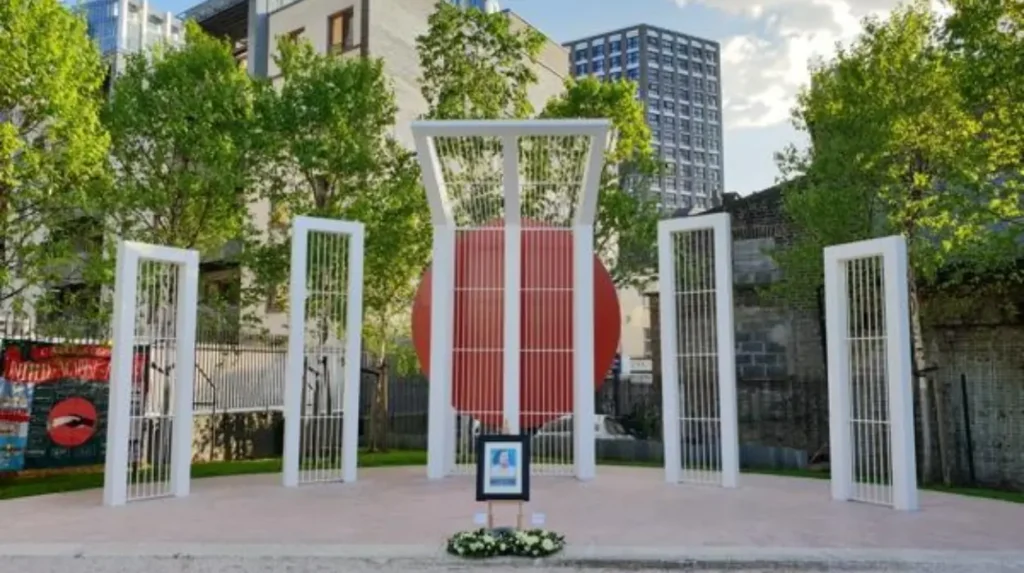
The Shahid Minar in Altab Ali Park commemorates those killed during the Bengali Language Movement of 1952 in what was then East Pakistan.
The original movement demanded recognition of Bengali as an official language.
The memorial connects London’s Bengali community with an important event in Bangladesh’s cultural and political history.
Follow the Bengali East End Walking Route
Tower Hamlets Council provides a walking route called Exploring Banglatown and the Bengali East End.
The route connects landmarks such as St Botolph’s Church, Wentworth Street, Toynbee Hall, Altab Ali Park, the Shahid Minar, Brick Lane and London Jamme Masjid.
It provides a structured way to understand the development of Bengali culture and its relationship with the wider East End.
This route is particularly useful for visitors interested in migration history, community identity and the relationship between historical buildings and contemporary neighbourhoods.
Where Can Visitors Experience Traditional East London Street Life at Columbia Road Flower Market?
Columbia Road Flower Market is a historic Sunday destination in Bethnal Green, known for independent traders, family-run businesses, Victorian shopfronts and seasonal flowers. It offers visitors an opportunity to experience traditional East London market culture alongside local shopping.
Columbia Road is situated in Bethnal Green, close to Shoreditch and Brick Lane.
The flower market has been part of East London life for more than 150 years. Its Sunday trading tradition brings together flower sellers, plant businesses and visitors from across the capital.
The market features cut flowers, dried flowers, houseplants, herbs, bulbs, succulents and garden plants. Some trading families have maintained their presence across several generations.
Explore Traditional Flower Trading
Visitors can observe traders arranging flowers and displaying seasonal plants.
The selection changes throughout the year, with spring bulbs, summer flowers, autumn plants and Christmas trees appearing at different times.
This seasonal activity connects the market with traditional horticultural commerce.
Discover Independent Shops
Columbia Road also contains independent businesses, including galleries, cafés, vintage retailers and specialist homeware shops.
These businesses help preserve the street’s distinctive retail character beyond the Sunday market.
The market generally operates every Sunday from approximately 8am to 3pm. Arriving early provides a wider selection of plants and flowers, while later visits often encounter busier crowds and reduced stock.
Which Cultural Institutions Preserve the Local History of Tower Hamlets?
Tower Hamlets Local History Library and Archives provides one of the most valuable resources for researching traditional East End culture. Its historic documents, photographs, maps, newspapers and community collections explain the development of neighbourhoods and generations of local residents.
Located at 277 Bancroft Road in Mile End, Tower Hamlets Local History Library and Archives is dedicated to preserving the borough’s documentary heritage.
The collection includes historical material dating back to 1384.
Visitors and researchers can explore original documents, photographs, maps, plans, newspapers, rare publications and audiovisual material.
The archives cover the history of the former boroughs of Bethnal Green, Poplar and Stepney, which became part of Tower Hamlets in 1965.
Research Family and Community History
The archives support visitors researching family connections and historical residents.
Their collections provide information about migration, employment, housing, local businesses and changing neighbourhoods.
This makes the institution particularly valuable for people interested in the personal histories behind traditional East End communities.
Discover Historic Photographs and Maps
Historical photographs and maps help visitors understand how Tower Hamlets developed.
They provide evidence of former streets, industrial buildings, markets and residential areas.
Researchers can also examine original records in the reading room and explore digital resources through the archive service.
Attend Heritage Events
The institution supports exhibitions, educational workshops and community heritage projects.
These activities connect historical research with contemporary residents and visitors.
Its collections demonstrate that East End heritage is preserved through documentary evidence as well as historic buildings and physical landmarks.
Where Can Visitors Experience Traditional Community Life in Chrisp Street Market?
Chrisp Street Market in Poplar represents the everyday community culture of the East End. Its pedestrianised shopping environment, traditional market stalls, independent businesses and local food outlets provide insight into the commercial traditions and social identity of East London.
Chrisp Street Market is situated in Poplar, an area historically associated with London’s docklands and working-class communities.
The market dates back to Victorian times and developed as a local shopping destination serving nearby residential neighbourhoods.
Unlike markets that primarily attract tourists, Chrisp Street retains an important everyday community function. Residents use its shops and stalls for regular shopping, food and household purchases.
The market is located within a pedestrianised shopping area. Its traditional trading environment reflects the relationship between local commerce and community life.
Visitors can explore fresh food, clothing, household products and independent retail businesses. The surrounding area also contains examples of post-war urban development and historic Poplar architecture.
Chrisp Street is particularly relevant to visitors interested in understanding how traditional East End markets continue to serve residential communities.
The market operates from Monday to Saturday. Its location also makes it suitable for combining a visit with a wider exploration of Poplar and the historic docklands.
Which East End Cultural Venues Showcase Contemporary Local Creativity?
Tower Hamlets combines traditional community heritage with contemporary cultural activity. Whitechapel Gallery, Rich Mix and the creative spaces around Brick Lane provide opportunities to explore exhibitions, independent artists, international influences and cultural programmes connected to East London’s diverse communities.
Traditional East End culture continues to develop through galleries, independent creative businesses and community arts organisations.
These venues demonstrate how historic neighbourhoods accommodate contemporary artistic expression while maintaining connections with local communities.
Whitechapel Gallery
Whitechapel Gallery was established in 1901 by Canon Samuel and Henrietta Barnett.
Its original purpose was to make significant artistic work accessible to the people of East London.
The gallery has presented international exhibitions, supported emerging artists and developed educational programmes for local communities.
Its historical significance includes hosting Pablo Picasso’s Guernica in 1939 during the painting’s first and only visit to Britain.
The gallery continues to support artists and audiences through exhibitions, public programmes and community initiatives.
Rich Mix
Rich Mix is a cultural and creative venue in the Bethnal Green Road area.
It provides space for film screenings, music, performances, exhibitions and community activities.
Its programme reflects the multicultural character of East London and provides opportunities to experience creative work from different communities.
Visitors interested in contemporary Bengali, British Asian and international cultural expression can explore its events programme before visiting.
Old Truman Brewery
The Old Truman Brewery occupies the former site of the historic Truman brewing operation on Brick Lane.
The brewery’s East End history dates back to the 17th century. Joseph Truman purchased a brewery on the site in 1679, and the business expanded during the following century.
After the brewery closed in the 1980s, its buildings developed into a centre for creative businesses, exhibitions, markets and cultural events.
The site demonstrates how former industrial buildings have been adapted for contemporary cultural and commercial activities.
How Can Visitors Plan a Traditional East End Cultural Walking Tour?
Visitors can experience several important Tower Hamlets heritage destinations through a walking itinerary connecting Spitalfields, Brick Lane, Whitechapel and Bethnal Green. Combining historic streets, markets, food businesses and cultural institutions provides a comprehensive introduction to traditional East End life.
A structured walking tour helps visitors understand the relationship between historic communities and contemporary neighbourhoods.
The following itinerary combines major cultural attractions with traditional commercial streets.
Start at Old Spitalfields Market
Begin at Old Spitalfields Market near Liverpool Street Station.
Explore its historic market structure, independent traders and food businesses. Allow approximately 45–60 minutes for shopping and refreshments.
Walk Towards Fournier Street
Continue towards Fournier Street and Christ Church Spitalfields.
Explore the Georgian architecture and historic buildings associated with the Huguenot silk-weaving community.
This section introduces visitors to the area’s early migrant history.
Explore Brick Lane
Walk towards Brick Lane to experience Bangladeshi restaurants, street food, independent shops and historic market activity.
Visitors should allow additional time on Sundays when the street market operates.
Continue Towards Whitechapel
Proceed towards Whitechapel Road and the surrounding historic streets.
Explore Whitechapel Market, Altab Ali Park and the Shahid Minar.
These destinations explain the development of the Bengali community and the history of anti-racist activism in East London.
Finish at Whitechapel Gallery
End the cultural tour at Whitechapel Gallery.
Explore its exhibitions and learn about the relationship between artistic expression and East London’s diverse communities.
Visitors should check individual venue schedules before travelling. Some attractions require advance booking, and market trading hours differ between weekdays and weekends.
Explore More Area Guide
Spitalfields Guide: Historic Streets & Markets | East London
Discover Spitalfields: East London’s Historic Streets and Markets
What Is the Best Time to Experience Traditional East End Culture?
Sunday is particularly suitable for visitors interested in traditional East End markets, especially Brick Lane and Columbia Road. Weekdays provide a different experience through local shopping, historic neighbourhoods, galleries, museums and everyday community activities.
The best visiting day depends on the cultural experiences included in the itinerary.
Sunday is ideal for exploring Brick Lane Market and Columbia Road Flower Market. Both destinations attract significant numbers of visitors and offer opportunities to experience traditional market trading.
Weekdays provide opportunities to explore Whitechapel Market and Roman Road Market while experiencing the normal shopping routines of local residents.
Visitors interested in historical exhibitions should check the opening schedules of London Museum Docklands, Whitechapel Gallery and the Ragged School Museum.
Seasonal events also influence the cultural experience. Religious celebrations, Bengali cultural programmes, exhibitions and community festivals provide additional opportunities to understand local traditions.
For a quieter visit, mornings on weekdays are generally more suitable for exploring historic streets and architectural landmarks.
Why Does Traditional East End Culture Remain Important to Tower Hamlets Today?
Traditional East End culture remains important because it preserves the borough’s collective identity, supports independent businesses and maintains connections between generations. Historic markets, community organisations, cultural institutions and migrant heritage continue to shape Tower Hamlets’ social and economic development.
Tower Hamlets has experienced considerable urban and economic change. Former industrial areas have developed into residential, commercial and cultural districts.
However, traditional East End institutions remain important to the borough’s identity.
Preservation of Cultural Identity
Historic streets, religious landmarks and community memorials preserve evidence of migration and social change.
Brick Lane represents the continuing influence of the British Bangladeshi community, while Spitalfields preserves architectural evidence of its Huguenot past.
Whitechapel reflects the historical contribution of Jewish communities and the continuing cultural development of the Bengali East End.
Support for Independent Businesses
Traditional markets provide trading opportunities for independent businesses and family-run enterprises.
Markets such as Roman Road, Whitechapel and Chrisp Street support local shopping and maintain commercial activity within residential neighbourhoods.
Their economic contribution extends beyond tourism because residents depend on these markets for everyday purchases.
Education and Historical Understanding
Museums, galleries and archives preserve information about working-class life, migration, industrial development and community history.
These institutions help younger generations understand the experiences of previous residents.
They also provide visitors with historical context that is often missing from conventional sightseeing itineraries.
Future Relevance of East End Heritage
The future of traditional East End culture depends on the continued protection of historic buildings, support for local businesses and participation from established and newer communities.
Urban regeneration brings investment and new opportunities, but it also creates challenges involving affordability, commercial change and the preservation of local identity.
Maintaining the relationship between heritage and contemporary community life remains essential to the cultural character of Tower Hamlets.
What is Tower Hamlets famous for?
Tower Hamlets is famous for its traditional East End culture, historic markets, Bengali heritage, Brick Lane, Spitalfields architecture and former London Docklands. It also has a rich history of migration, trade and working-class communities.