Tower Hamlets is an East London borough where large public parks, canal towpaths, riverside spaces, historic markets and sports facilities sit close to dense neighbourhoods and major commercial districts. Its leisure landscape combines green space with waterways, cultural destinations, community recreation and traditional shopping streets.
- What makes Tower Hamlets a major leisure destination in East London?
- Which parks should you visit in Tower Hamlets?
- Where can you find the best walks in Tower Hamlets?
- How can you combine Tower Hamlets parks with local history?
- Which markets are worth visiting in Tower Hamlets?
- What can you do at Victoria Park?
- What recreational activities are available at Mile End Park?
- Where can you experience nature and wildlife in Tower Hamlets?
- Which leisure areas are best around the Isle of Dogs?
- How can digital nomads and business travellers use Tower Hamlets for leisure?
- What is the best way to plan a day of leisure in Tower Hamlets?
- Why are Tower Hamlets parks important for the future of urban leisure?
The borough has more than 120 parks and green spaces. These range from major landscapes such as Victoria Park and Mile End Park to smaller gardens, recreation grounds, churchyards and pocket parks. Fourteen Tower Hamlets parks currently hold Green Flag Awards, while the council also records London in Bloom awards across its green-space network.
For visitors, this creates a leisure area that works across different types of trips. A traveller can combine a morning walk, an afternoon market visit and an evening beside the Thames. Residents can use the same network for running, cycling, outdoor exercise, sports, nature observation and informal recreation.
What makes Tower Hamlets a major leisure destination in East London?
Tower Hamlets combines more than 120 parks and green spaces with canals, riverside paths, markets, sports facilities and community recreation. Victoria Park, Mile End Park, Mudchute, Brick Lane and Columbia Road form key leisure destinations.
Tower Hamlets occupies a strategically important part of East London. The borough extends from areas around the City of London towards the Isle of Dogs, the River Thames, Victoria Park and the eastern edge of the central London area.
Its leisure offer reflects this geography. Northern parts of the borough provide large parks and canal routes. Central areas contain markets, independent shops and neighbourhood gardens. Southern districts provide dockside spaces, Thames paths and views towards Canary Wharf and Greenwich.
The borough’s green-space network is also important for biodiversity. The council identifies several Sites of Importance for Nature Conservation, including London’s canals, the River Thames and Bow Creek, Tower Hamlets Cemetery Park, Mudchute Park and Farm, Mile End Park and Victoria Park.
This means leisure in Tower Hamlets is not limited to formal attractions. Walking beside a canal, visiting a community garden, using an outdoor gym or exploring a local market all form part of the borough’s wider recreational environment.
Which parks should you visit in Tower Hamlets?
Victoria Park, Mile End Park, Mudchute Park and Farm, Island Gardens, Millwall Park and King Edward Memorial Park provide different forms of recreation, including walking, sport, playgrounds, wildlife observation, picnicking and riverside relaxation.
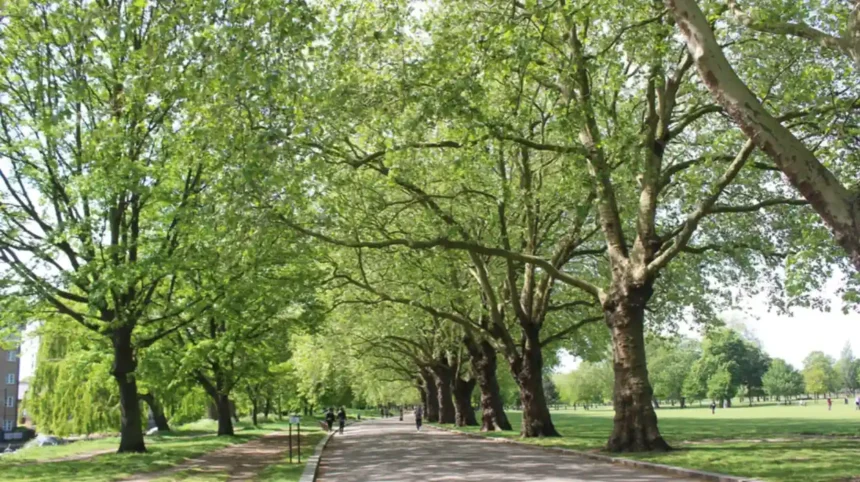
Victoria Park is the borough’s largest and oldest public park. It covers about 86 hectares and opened in 1845. The council describes it as London’s oldest public park and records more than nine million visits each year.
The park contains lakes, lawns, historic features, sports facilities, playgrounds, a skate space, an outdoor gym, picnic areas and refreshment facilities. Sports provision includes football pitches, cricket facilities, tennis courts and a bowling green.
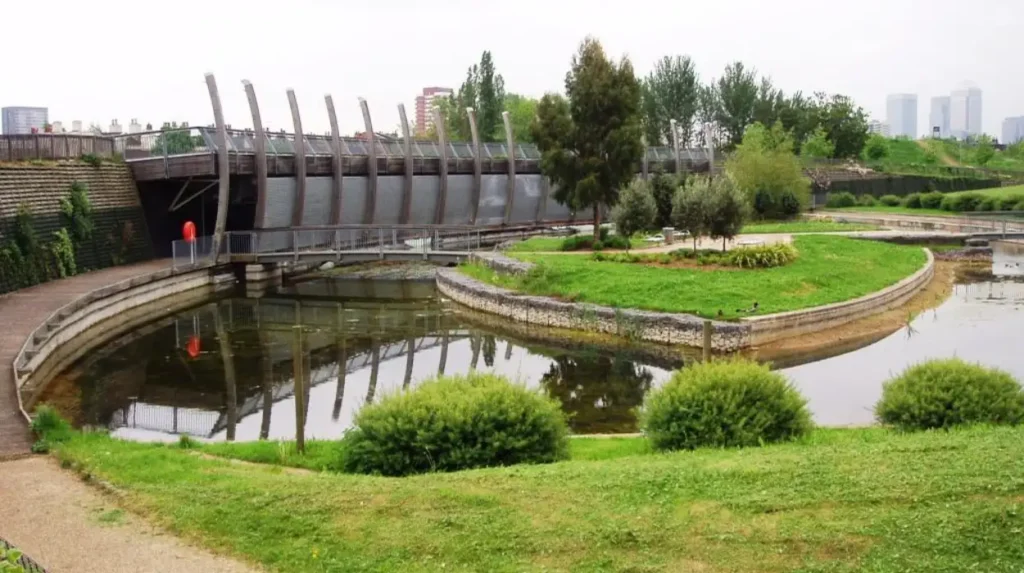
Mile End Park provides a different landscape. It is a 32-hectare linear park extending between Victoria Park and Limehouse Basin. The park includes the Art Pavilion, Ecology Pavilion, children’s facilities, sports areas, an outdoor gym, a climbing wall and a skate park.
Mudchute Park and Farm occupies 32 acres on the Isle of Dogs. It operates as a community charity with a working farm, stables, nursery and educational activities. Entry is free, and the site is open every day.
Millwall Park provides football, cricket, bowls, children’s play areas, walking paths, seating, trees and meadow planting. It connects with Mudchute Park and Farm and Island Gardens, creating a wider recreational landscape around the Isle of Dogs.
King Edward Memorial Park provides another riverside green space in Shadwell. The council’s nature-conservation records also identify the park as a site of local importance.
Where can you find the best walks in Tower Hamlets?
Tower Hamlets offers walking routes through parks, canals, historic neighbourhoods and riverside areas. The council publishes half-hour to one-hour walks covering Bethnal Green, Bromley-by-Bow, the Isle of Dogs, Poplar, Shadwell, Spitalfields, Stepney and Victoria Park.
Walking is one of the simplest ways to experience Tower Hamlets because different environments connect within relatively short distances.
The council’s one-hour walking programme provides eight routes linked to the borough’s Local Area Partnerships. The routes include Bethnal Green, Bromley-by-Bow, Isle of Dogs, Poplar, Shadwell, Spitalfields, Stepney and Victoria Park.
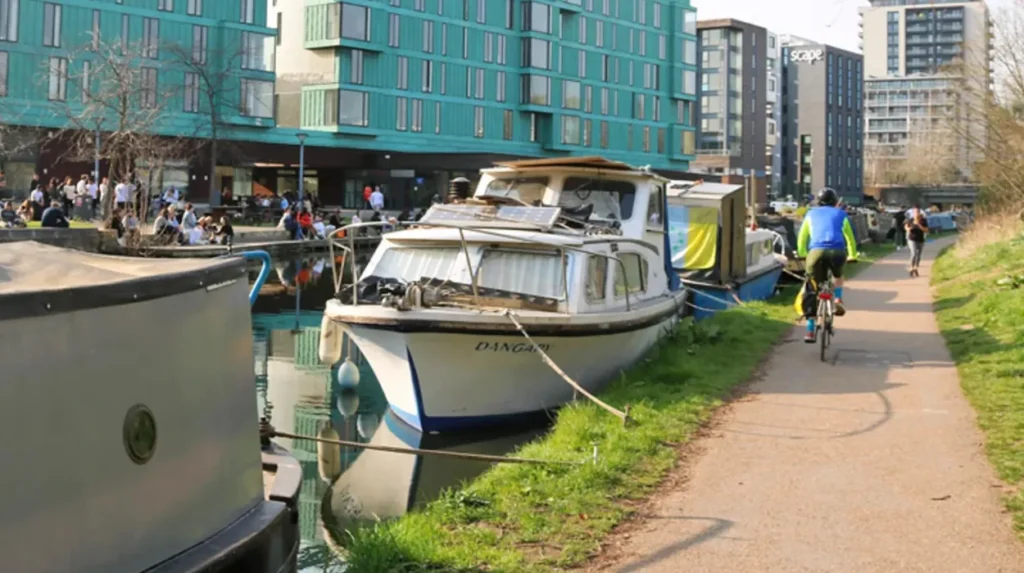
Canal walking is particularly significant. Regent’s Canal passes through Mile End and connects towards Limehouse Basin. Hertford Union Canal links the canal network around Victoria Park and Mile End Park.
The council’s walking routes also combine green space with heritage. A Stepney route follows a canal towpath before entering Mile End Park and passing sporting and ecological areas.
A Bromley-by-Bow route reaches Limehouse Basin, where the modern marina sits alongside historic infrastructure. Limehouse Basin opened in 1820 as an interchange between the River Thames and Regent’s Canal.
Riverside walking provides another experience. Parts of the Thames Path pass through Shadwell and the Isle of Dogs, although access conditions vary along the riverfront. The council’s water-space study identifies stronger continuous access along several canals than along some sections of the Thames.
Cyclists should use designated cycleways and remain aware of pedestrians on shared paths. Canal towpaths can become busy, especially around popular parks and transport connections.
How can you combine Tower Hamlets parks with local history?
Tower Hamlets parks preserve layers of East London history, from Victorian public gardens to former docklands landscapes and post-war park development. Visiting these spaces alongside historic streets provides context for understanding how industry, housing and recreation shaped the borough.
The borough’s parks are closely connected with its historical development. Victoria Park was created in the nineteenth century to provide public recreation for East London’s growing population.
Other parks emerged from different circumstances. Bartlett Park was developed in the 1950s as part of the Lansbury Estate and featured in the Festival of Britain period. Island Gardens opened in 1895 on land preserved to protect views towards Greenwich. King Edward Memorial Park opened in 1922 after land was purchased through public subscription.
Mile End Park has an industrial and wartime background. The modern 32-hectare linear park was created on land affected by Second World War bombing and now connects Victoria Park with Limehouse Basin.
As you explore the modern leisure landscape, you are crossing land shaped by centuries of East London development. Read about the full [Insert Anchor Text for History Article Here] to understand its origins.
This historical context explains why Tower Hamlets contains such varied leisure landscapes. Former industrial land became parks. Former docklands became public waterfronts and commercial districts. Historic market streets continue to support shopping and food alongside modern leisure destinations.
Which markets are worth visiting in Tower Hamlets?
Columbia Road Flower Market, Brick Lane Market and the markets around Spitalfields provide major shopping and leisure experiences in Tower Hamlets. They combine flowers, food, vintage goods, fashion, antiques, crafts and independent retail within walkable East London neighbourhoods.
Columbia Road Flower Market is one of the borough’s most recognisable market destinations. It takes place every Sunday on Columbia Road in Bethnal Green. The market sells flowers, plants and gardening products, while the surrounding street contains independent shops, cafés, restaurants, galleries and delis.
Brick Lane provides a broader market environment. The area is associated with street stalls, vintage retail, food, fashion and independent businesses. Visit London’s market guide identifies Brick Lane as a major East London street market with antiques, fabrics, collectables and international cuisine.
Old Spitalfields Market sits close to Brick Lane and provides an indoor market setting beneath a historic roof. The wider Spitalfields area also connects directly with Liverpool Street, Brick Lane and surrounding shopping streets.
Market schedules differ by location and operator. Visitors should check current opening information before travelling, particularly for specialist markets and seasonal events.
Markets also work well as part of a walking itinerary. A visitor can begin around Spitalfields, continue along Brick Lane and then walk north towards Columbia Road. This creates a leisure route combining food, retail, architecture and street activity.
What can you do at Victoria Park?
Victoria Park supports walking, sports, outdoor exercise, family recreation, nature observation and organised activities across its 86 hectares. Its lakes, historic features, sports pitches, playgrounds, skate space and trails make it one of Tower Hamlets’ principal leisure destinations.
Victoria Park is designed for both active and passive recreation.
Visitors can use its walking paths for informal exercise and explore its tree trails. The council provides three tree-trail guides covering world trees, heritage trees and a children’s trail. Orienteering courses are also available at easy, medium and hard levels.
Sports facilities include football pitches, cricket wickets and practice nets, tennis courts and a bowling green. An outdoor gym provides another option for exercise.
The park also provides family facilities. Play areas, a skate space and refreshment facilities support different age groups and activity levels.
The park’s opening arrangements are seasonal and operational. The council states that Victoria Park opens at 7am and closes at dusk, 365 days a year, with entrance information displayed at park gates.
Barbecues are not permitted in Tower Hamlets parks and open spaces. Visitors should also avoid feeding wildlife because the council states that this encourages vermin.
What recreational activities are available at Mile End Park?
Mile End Park combines walking, sports, climbing, skating, outdoor fitness, children’s play, arts and ecology. Its 32-hectare linear layout connects Victoria Park with Limehouse Basin and creates a continuous recreational corridor through central Tower Hamlets.
Mile End Park is one of Tower Hamlets’ most varied leisure spaces.
The park contains the Mile End Park Leisure Centre and Stadium, which provides indoor and outdoor sports facilities. The leisure centre includes a large gym, an eight-lane 25-metre swimming pool and a family or teaching pool. Outdoor provision includes football pitches, tennis courts, hockey pitches, netball facilities and an athletics stadium.
The Mile End Climbing Wall provides another dedicated activity. The site supports climbing and physical-development programmes.
A skate park provides space for skateboarding and other wheeled activities. The Active Zone at Wennington Green contains outdoor gym equipment for cardio, strength and conditioning.
The Art Pavilion and Ecology Pavilion add cultural and environmental elements. The Art Pavilion hosts free exhibitions, while the Ecology Park provides habitats and landscaped areas.
The park also supports the weekly Mile End parkrun. The council describes it as a free weekly 5km community event held every Saturday, with advance registration required. Participants can walk, jog or run.
Where can you experience nature and wildlife in Tower Hamlets?
Tower Hamlets contains important urban habitats across parks, canals, cemeteries, wetlands and riverside spaces. Mudchute Park and Farm, Tower Hamlets Cemetery Park, Mile End Park, Victoria Park and the canal network provide accessible settings for experiencing urban biodiversity.
Nature is an established part of the borough’s leisure infrastructure.
Tower Hamlets Cemetery Park and Mudchute Park and Farm are identified by the council as local nature reserves. The council describes them as important examples of nature conservation and community involvement.
The borough also protects Sites of Importance for Nature Conservation. These include London’s canals, the River Thames and Bow Creek, the Lea Valley, Tower Hamlets Cemetery Park, Mudchute Park and Farm, Mile End Park and several smaller habitats.
Canal routes provide opportunities to observe water-associated species. Council walking information notes sightings of swans, coots, moorhens, ducks and geese along the Regent’s Canal.
Visitors should treat wildlife areas as protected environments. Feeding wildlife is discouraged in Tower Hamlets parks. Dogs should remain under control and visitors should follow local signage.
The ecological value of these spaces also affects future urban planning. Green corridors provide habitat connections while giving residents and visitors places for exercise and outdoor recreation.
Which leisure areas are best around the Isle of Dogs?
The Isle of Dogs combines Mudchute Park and Farm, Millwall Park, Island Gardens, dockside paths and waterfront views. These spaces support walking, sport, family recreation, wildlife observation and outdoor breaks close to Canary Wharf’s commercial district.
The Isle of Dogs provides one of Tower Hamlets’ clearest combinations of urban development and green space.
Mudchute Park and Farm occupies 32 acres and provides a working-farm environment within a highly urbanised part of East London. It includes animals, stables, educational activities and community facilities.
Millwall Park sits nearby and provides sports pitches, children’s play facilities, paths, seating and meadow planting. The park is linked with Mudchute and Island Gardens.
Island Gardens provides a formal riverside landscape with views towards Greenwich across the Thames. The council lists it as a Grade II registered park and garden, reflecting its historic landscape significance.
The area also provides access to dockside environments around Canary Wharf, Millwall and West India Docks. Some waterfront routes have access restrictions, so visitors should follow current pedestrian signs and public-access routes.
For business travellers based around Canary Wharf, this part of Tower Hamlets provides convenient options for outdoor walking and short recreational breaks.
How can digital nomads and business travellers use Tower Hamlets for leisure?
Tower Hamlets provides leisure options close to major employment districts, transport hubs and mixed-use neighbourhoods. Parks, cafés, markets, canals and public spaces allow visitors to combine workday downtime with walking, food, shopping and outdoor recreation.
Canary Wharf is the borough’s largest concentration of modern commercial development. Its location beside parks, docks and the Thames creates opportunities for short outdoor breaks during a working day.
Mile End, Bethnal Green, Spitalfields and the Isle of Dogs also provide different environments for people staying in East London.
Digital nomads can combine independent cafés with nearby walking routes. A work session in the Spitalfields area can be followed by a walk through Brick Lane and towards Columbia Road. A stay around Mile End provides access to the park, Regent’s Canal and leisure facilities.
Business travellers can use shorter council walking routes when time is limited. The official one-hour walking programme is particularly relevant because its routes cover eight areas of Tower Hamlets and integrate parks, gardens, waterways and community destinations.
Leisure planning should still account for opening hours. Parks, markets, sports facilities and community venues operate on different schedules.
Explore More Area Guide
Tower Hamlets: Main Highlights, Attractions and Sightseeing Guide
Tower Hamlets in One Day: Attractions, Markets and Landmarks
What is the best way to plan a day of leisure in Tower Hamlets?
A practical Tower Hamlets leisure day can combine one major park, one walking route and one market or waterfront destination. Victoria Park suits green-space days, while Mile End, Spitalfields, Brick Lane and the Isle of Dogs support different combinations.
A Victoria Park itinerary can begin with a morning walk and continue with the tree trails, sports areas or playgrounds. The route can then extend towards the surrounding East London neighbourhoods.
A Mile End itinerary can combine the park, Regent’s Canal and Limehouse Basin. The linear layout makes it suitable for walking between different attractions rather than treating the park as an isolated destination.
A market-focused day can centre on Spitalfields, Brick Lane and Columbia Road. Columbia Road Flower Market operates on Sundays, making Sunday a particularly relevant day for combining the three areas.
An Isle of Dogs itinerary can combine Mudchute Park and Farm, Millwall Park and Island Gardens. This route provides green space, wildlife, sport and riverside scenery close to Canary Wharf.
Visitors should check current opening hours, event schedules and access arrangements before travelling. Market days, sports bookings, seasonal facilities and park operations can change.
Why are Tower Hamlets parks important for the future of urban leisure?
Tower Hamlets’ parks provide recreation, biodiversity, walking routes, sports facilities and community space within a densely developed part of London. Their future importance comes from combining environmental functions with everyday access to outdoor activity.
Urban leisure increasingly depends on accessible green infrastructure. Tower Hamlets demonstrates how parks can perform several functions at once.
Victoria Park provides large-scale recreation and attracts millions of annual visits. Mile End Park connects neighbourhoods through a linear green corridor. Mudchute combines agriculture, education, wildlife and community activity. Smaller gardens and open spaces provide local access close to residential areas.
The council’s nature-conservation framework recognises the environmental importance of many of these locations. Protected sites include canals, rivers, parks, cemetery landscapes, community gardens and docklands habitats.
The borough’s park history also demonstrates long-term adaptation. Former industrial land, burial grounds, estate landscapes and docklands sites have been incorporated into modern recreational networks.
For visitors, the implication is straightforward. Tower Hamlets is not simply a destination for one famous park or one market. It is a connected leisure landscape where green space, waterways, markets, heritage and recreation operate across the borough.
The strongest leisure itineraries use these connections. Walking links parks with markets. Canal routes connect green spaces with historic districts. Dockside paths connect urban architecture with waterfront recreation. Markets connect shopping with food and neighbourhood exploration.
This network gives Tower Hamlets a broad and durable leisure offer for tourists, residents, digital nomads and business travellers.
What are the best parks to visit in Tower Hamlets?
Victoria Park, Mile End Park, Mudchute Park and Farm, Millwall Park and Island Gardens are major leisure spaces in Tower Hamlets, offering walking, sport, playgrounds, nature, picnicking and riverside recreation.