Tower Hamlets is one of London’s strongest market districts, combining historic street trading, covered markets, independent shops, food stalls and modern retail destinations. The borough contains ten council-recognised street markets, including Brick Lane, Columbia Road, Petticoat Lane, Whitechapel, Chrisp Street, Roman Road, Watney and Bethnal Green.
- What makes Tower Hamlets a major market and shopping destination?
- Which Tower Hamlets markets should visitors visit first?
- What can visitors buy at Brick Lane Market?
- Why is Old Spitalfields Market important for visitors?
- What is Columbia Road Flower Market known for?
- What should visitors know about Petticoat Lane Market?
- What can visitors find at Whitechapel Market?
- What is Roman Road Market like for visitors?
- Which local markets are useful for everyday shopping?
- Where can visitors find independent shops in Tower Hamlets?
- Where can visitors find modern shopping in Tower Hamlets?
- How can visitors plan a Tower Hamlets market shopping day?
- How do Tower Hamlets markets connect shopping with local history?
- What should visitors know before shopping in Tower Hamlets?
- Why are Tower Hamlets markets important for East London tourism?
Its shopping landscape changes significantly between neighbourhoods. Spitalfields and Brick Lane focus on fashion, vintage goods, food and independent retail. Columbia Road centres on flowers, plants and small shops. Petticoat Lane has longstanding links with textiles and fashion. Whitechapel and Roman Road combine everyday shopping with established market traditions. Canary Wharf provides a contrasting modern retail environment with hundreds of shops, restaurants, cafés and services.
For visitors, this variety makes Tower Hamlets suitable for several types of shopping trip. A single Sunday can combine Columbia Road Flower Market, Brick Lane and Spitalfields. A weekday visit can focus on Whitechapel, Roman Road or Canary Wharf. Market schedules differ, so checking current opening arrangements before travelling remains important.
What makes Tower Hamlets a major market and shopping destination?
Tower Hamlets combines ten recognised street markets with historic covered markets, independent shopping streets and major retail centres. Its market network spans fashion, food, flowers, household goods, textiles, antiques, crafts and everyday produce across East London.
The London Borough of Tower Hamlets describes ten street markets operating across the borough. These include Brick Lane, Bethnal Green Road, Chrisp Street, Columbia Road, Petticoat Lane, Roman Road, Roman Road Square, Sclater Street, Watney Market and Whitechapel Market.
The markets perform different roles. Some primarily serve local residents with fruit, vegetables and household goods. Others attract visitors searching for vintage fashion, art, flowers, street food and specialist products.
The borough also contains major covered and retail destinations. Old Spitalfields Market provides a central indoor shopping environment close to Brick Lane. Canary Wharf offers a modern commercial district with extensive branded retail, food and leisure facilities.
Tower Hamlets therefore works as a market destination rather than a single market location. Visitors should treat each neighbourhood as a separate shopping environment.
Which Tower Hamlets markets should visitors visit first?
Visitors should begin with Brick Lane, Old Spitalfields Market, Columbia Road Flower Market and Petticoat Lane for distinctive shopping. Whitechapel, Roman Road, Chrisp Street and Watney Market provide broader local-market experiences across different parts of the borough.
Brick Lane is particularly suitable for visitors interested in fashion, food, art and vintage goods. Tower Hamlets Council identifies its Sunday market as a destination for fashion, food and art, with the market established in 1888.
Old Spitalfields Market provides a covered alternative. It combines market stalls, independent businesses, restaurants and cafés. Its location near Commercial Street makes it practical to combine with Brick Lane during the same visit.
Columbia Road Flower Market is different in purpose. It specialises in flowers, plants and gardening products. The surrounding street contains about 60 independent shops, including galleries, delis, vintage clothing stores, garden shops and antique retailers.
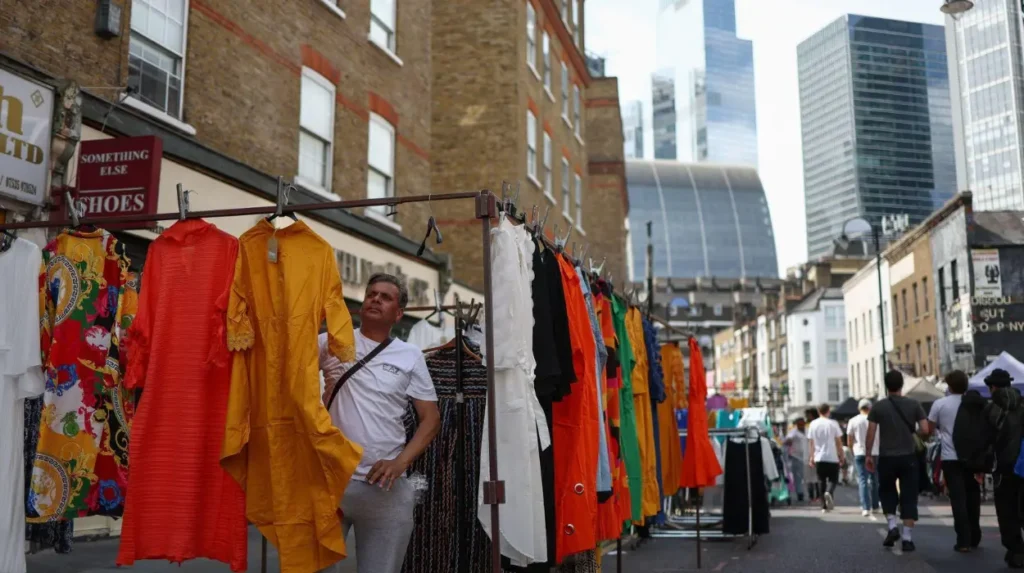
Petticoat Lane has a strong textile and fashion identity. The present market operates principally around Middlesex Street and neighbouring streets. The council identifies fashion, textiles and leather goods among its main products.
What can visitors buy at Brick Lane Market?
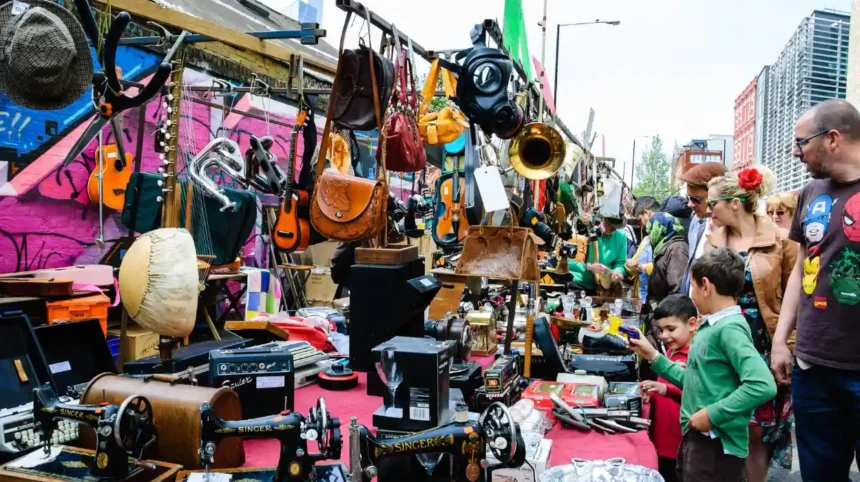
Brick Lane Market offers fashion, vintage clothing, food, antiques, jewellery, art, household goods and collectables. Its surrounding independent shops and the Old Truman Brewery add indoor markets, food halls, restaurants, galleries and specialist retail to the main street market.
Brick Lane runs through the historic East End between Whitechapel and Shoreditch. The street is closely associated with the Bangladeshi community and has also reflected earlier French Huguenot and Jewish settlement.
The Sunday market is the main council-operated street market experience. Tower Hamlets Council currently lists Sunday trading from 10am to 3pm.
The wider Brick Lane area extends beyond those council stalls. The Old Truman Brewery contains indoor retail and food venues. Visit London identifies markets within the brewery complex offering vintage clothing, fashion, jewellery, antiques and street food.
This makes Brick Lane useful for visitors who want both market browsing and independent shopping. The surrounding streets also contain cafés, restaurants, specialist food businesses and creative venues.
As you explore the modern market district, you are crossing land with a deep heritage. Read about the full to understand its origins.
Why is Old Spitalfields Market important for visitors?
Old Spitalfields Market combines a historic market setting with independent traders, shops, food businesses and restaurants. Its location beside Commercial Street makes it one of the most convenient places to combine covered shopping with Brick Lane and Spitalfields streets.
The site has a much longer market history than its current retail format suggests. Tower Hamlets records state that the earlier market was licensed by King Charles II in 1682. The present Victorian market buildings were constructed between 1883 and 1893.
The historic market originally operated as a fruit and vegetable market. It closed in 1986 before the site was redeveloped into its current retail and commercial environment.
Today, visitors encounter a mixture of independent traders and food businesses. The official Spitalfields Traders Market describes the destination as a seven-day-a-week market with independent stallholders offering handcrafted and distinctive products.
Its position also makes it valuable as a starting point. Visitors can walk towards Brick Lane, Commercial Street, Fournier Street and other historic streets within Spitalfields.
What is Columbia Road Flower Market known for?
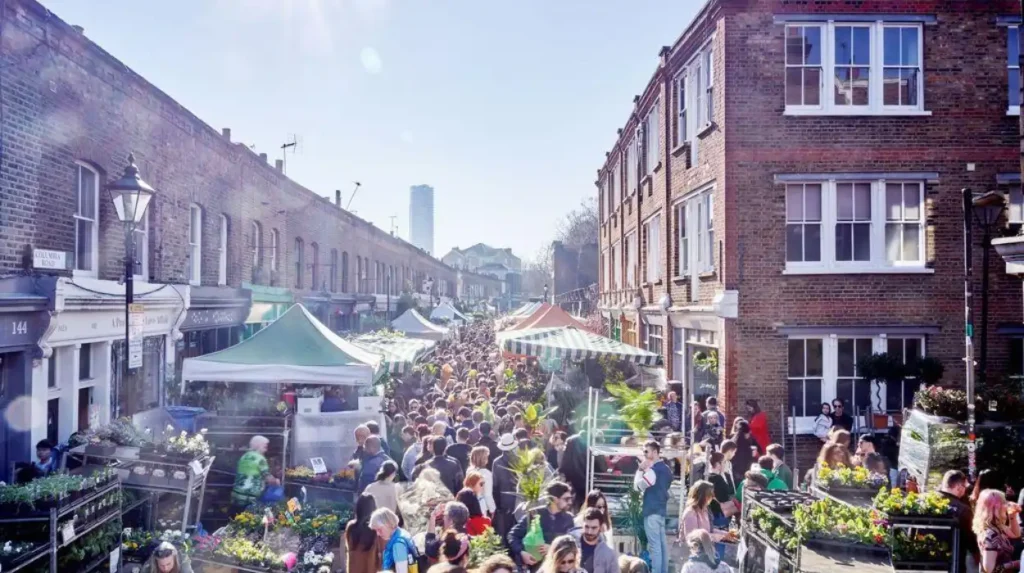
Columbia Road Flower Market is a Sunday market specialising in flowers, plants and gardening products. The surrounding street adds independent shops, galleries, cafés, delis, vintage retailers and antique businesses, creating a broader shopping destination beyond the market stalls.
Columbia Road Flower Market operates every Sunday. Tower Hamlets Council lists its market hours as 8am to 2pm, while Visit London gives an approximate closing time of 3pm. Visitors should therefore check current arrangements before travelling.
The market has more than 150 years of local history. Tower Hamlets records its origins in 1869, when the site operated as a food hall. The outdoor market later developed into a Sunday market and evolved towards flowers and plants.
The surrounding shops are an important part of the experience. Visit London identifies around 60 independent businesses along Columbia Road. These include art galleries, garden shops, antique shops, vintage clothing retailers, delis and cafés.
Columbia Road is therefore particularly useful for visitors interested in homeware, gardening, photography, independent retail and food.
What should visitors know about Petticoat Lane Market?
Petticoat Lane Market is a historic East End shopping destination centred on Middlesex Street and nearby streets. It is strongly associated with textiles, fashion and leather goods, while weekday trading around Wentworth Street adds food and everyday shopping.
The name creates some confusion because Petticoat Lane itself no longer exists as an official street name. The main market operates around Middlesex Street and a network of nearby roads.
Tower Hamlets traces its textile tradition to the eighteenth century. French Huguenot refugees settled in the East End and contributed to textile trading traditions. Eastern European Jewish communities later continued aspects of the market culture.
The Sunday market currently operates from 9am to 3pm according to the council. Its wider footprint includes streets such as Wentworth Street, Goulston Street, Cobb Street and Leyden Street.
The area also operates a weekday street-food market. Tower Hamlets lists weekday food trading around Goulston Street, Wentworth Street and Bell Lane from 8am to 4pm.
This makes the area useful beyond Sunday shopping.
What can visitors find at Whitechapel Market?
Whitechapel Market is a long-established street market along Whitechapel Road selling fresh produce, vegetables, spices, fashion, cultural clothing and jewellery. It provides a practical local shopping experience alongside the wider retail and food businesses of Whitechapel.
The market operates from Monday to Saturday. Tower Hamlets currently lists trading hours of 8am to 6pm. Whitechapel and Aldgate East provide nearby Underground and rail connections.
Whitechapel has a particularly strong connection with the borough’s multicultural identity. The market serves local residents while also attracting visitors exploring the East End.
The shopping environment extends beyond the stalls. Whitechapel Road contains food businesses, cafés, restaurants and independent retailers. The wider area connects towards Aldgate, Spitalfields and Brick Lane.
For visitors, Whitechapel works well as part of a longer walking route rather than an isolated shopping stop.
What is Roman Road Market like for visitors?
Roman Road Market is a traditional East London street market operating on Tuesdays, Thursdays and Saturdays. Visitors find clothing, household products, toys, cosmetics, jewellery and food, with nearby independent businesses adding further shopping opportunities.
Roman Road follows one of the oldest known trading routes in England, according to Tower Hamlets Council. The modern market retains a broad everyday retail character.
The council lists trading from 8am to 6pm on Tuesday, Thursday and Saturday. St Stephen’s Road adds an area for bread, pastries and hot food. A retro-style extension operates on the third Saturday of each month.
The surrounding Roman Road area also contains cafés, restaurants and independent businesses. This makes the district suitable for visitors who want a less concentrated market experience.
Roman Road also connects naturally with Bow and Mile End. Bow Road and Mile End stations provide access to the area, while Bow Church provides DLR connections.
Which local markets are useful for everyday shopping?
Bethnal Green Road, Chrisp Street, Roman Road Square, Watney Market and Whitechapel Market provide everyday shopping alongside specialist destinations. Their stalls commonly include fresh produce, clothing, household goods and food for local residents.
Bethnal Green Market operates along Bethnal Green Road from Monday to Saturday. The council lists clothing, fruit and vegetables among its products. Its location near York Hall and the wider Bethnal Green shopping district makes it easy to combine with other attractions.
Chrisp Street Market serves Poplar and occupies a pedestrianised setting. It has Victorian origins and offers fruit, vegetables, clothing, linen and household products. Cafés and traditional pie-and-mash businesses form part of the surrounding food offer.
Roman Road Square Market, also known as Globe Town Market, operates from Monday to Saturday. The council records its origins in 1800, when the area developed to serve silk weavers in Bethnal Green.
Watney Market sits between Whitechapel and Shadwell. It focuses on community shopping, with fruit, vegetables, fashion, cultural clothing, household goods and other products.
These markets demonstrate that Tower Hamlets shopping is not limited to visitor-focused destinations.
Where can visitors find independent shops in Tower Hamlets?
Independent shops are concentrated around Brick Lane, Spitalfields, Columbia Road and Roman Road. The borough identifies more than 150 unusual and independent shops selling vintage fashion, design, gifts, jewellery, music, homeware and specialist products.
Tower Hamlets Council’s Quirky Shopping Guide highlights more than 150 independent and unusual shops across East London. Its examples include retro and vintage fashion, design stores, gift shops and jewellery retailers.
The concentration around markets is important. Visitors can move from stalls to permanent shops without changing neighbourhood.
Brick Lane provides vintage fashion, independent food businesses and creative retail. Columbia Road adds garden shops, antiques, galleries and delis. Spitalfields provides independent market traders and specialist retailers.
This pattern supports a shopping trip based on discovery rather than a single commercial centre.
Digital nomads also find useful facilities around the same districts. Tower Hamlets’ Idea Stores provide public computers and free Wi-Fi alongside library services and community facilities.
Where can visitors find modern shopping in Tower Hamlets?
Canary Wharf provides Tower Hamlets’ largest modern retail environment, combining major brands, department-store shopping, cafés, restaurants and services across an accessible business district. It offers a clear contrast with the borough’s traditional street markets.
Canary Wharf is designed around offices, retail, restaurants, public spaces and transport connections. Its current shopping guide includes major fashion, beauty, technology, food and lifestyle brands.
The estate contains more than 300 shops, cafés, bars, restaurants, health facilities and wellness services according to Canary Wharf’s published information.
The shopping environment differs substantially from Brick Lane. Canary Wharf focuses on established brands and planned retail spaces. Brick Lane and Columbia Road focus more strongly on independent traders and open-air market culture.
Visitors staying near Canary Wharf can therefore experience both modern retail and traditional East End markets within the same borough.
How can visitors plan a Tower Hamlets market shopping day?
The most efficient market day groups destinations by geography and opening schedule. A Sunday route can combine Columbia Road, Brick Lane, Spitalfields and Petticoat Lane, while weekday routes suit Whitechapel, Roman Road, Bethnal Green, Chrisp Street or Canary Wharf.
Sunday provides the greatest concentration of specialist markets. Columbia Road opens from the morning, while Brick Lane and Petticoat Lane operate later. Old Spitalfields provides a covered shopping option during the same wider East End visit.
A practical eastern route can focus on Roman Road and Chrisp Street. These markets operate on multiple weekdays and Saturdays, making them easier to visit outside the weekend.
Whitechapel and Watney Market provide another weekday option. Their locations support a broader exploration of the Whitechapel and Shadwell districts.
Canary Wharf works separately because its retail environment is not dependent on traditional street-market hours. It suits visitors combining shopping with business-district sightseeing, riverside walking and dining.
The key planning principle is to match the market with its trading day rather than expecting every market to operate daily.
How do Tower Hamlets markets connect shopping with local history?
Tower Hamlets markets are closely connected to the borough’s East End history, migration, trade and industrial development. Spitalfields, Brick Lane, Petticoat Lane, Columbia Road and Roman Road each retain physical or commercial links with earlier forms of local trading.
Spitalfields developed as a major market site centuries before its present retail format. Brick Lane reflects successive French, Jewish and Bangladeshi communities. Petticoat Lane developed strong textile associations. Columbia Road evolved from a nineteenth-century market into a specialist flower destination. Roman Road follows an ancient trading route.
Markets also contribute to the local economy. Tower Hamlets describes its markets as important to local communities and economies, while its conservation strategy identifies markets as contributors to social cohesion and affordable goods.
This historical continuity gives visitors more context for what they see. A market stall is part of a wider commercial tradition rather than simply a temporary retail event.
Explore More Area Guide
1980s Romford Life: Liberty II, Woolworths, and Snooker Boom in Romford 2026
Tower Hamlets Leisure Guide: Parks, Walks & Markets
What should visitors know before shopping in Tower Hamlets?
Visitors should check trading days, opening times and individual market arrangements before travelling. Bring reusable bags, allow time for walking and compare nearby stalls and shops. Sunday specialist markets are particularly busy, while weekday markets offer broader local shopping.
Market schedules differ across Tower Hamlets. Brick Lane and Columbia Road concentrate their main council market activity on Sunday, while Whitechapel, Bethnal Green and Chrisp Street trade Monday to Saturday. Roman Road trades Tuesday, Thursday and Saturday.
Opening times also vary. Columbia Road starts early, while several weekday markets operate into the afternoon or early evening. Published times can change because of special events, seasonal arrangements or operational decisions.
Visitors should also distinguish between a council street market and nearby independent markets. Brick Lane, for example, contains several different market environments around the Old Truman Brewery.
Transport is another consideration. Tower Hamlets has extensive Underground, Overground, DLR and Elizabeth line connections. This makes it practical to visit different shopping districts without relying on a car.
Why are Tower Hamlets markets important for East London tourism?
Tower Hamlets markets connect tourism with independent retail, local food, community commerce and East London heritage. Their geographic spread allows visitors to experience contrasting shopping districts, from historic street stalls and flowers to contemporary brands and covered markets.
The borough’s market network supports different visitor interests. Food-focused travellers can explore Brick Lane and Spitalfields. Fashion shoppers can visit Brick Lane and Petticoat Lane. Plant enthusiasts can focus on Columbia Road. Visitors seeking everyday produce can explore Whitechapel, Roman Road, Bethnal Green, Chrisp Street and Watney.
This variety also supports repeat visits. Different markets operate on different days, while the surrounding independent shops provide additional reasons to return.
Tower Hamlets’ shopping identity therefore rests on diversity rather than one dominant retail centre. The combination of traditional markets, specialist streets, independent businesses and Canary Wharf creates a broad retail landscape within East London.
For tourists, the result is a shopping itinerary that can also introduce the borough’s architecture, communities, food culture and historical development. For residents and digital workers, the same districts provide practical shopping, cafés, public facilities and local services.
Tower Hamlets remains particularly valuable for visitors who want to see how traditional London market culture operates alongside modern urban retail. Its markets preserve long-established trading patterns while supporting contemporary independent businesses and large commercial destinations.
What are the best markets to visit in Tower Hamlets?
The main visitor-focused markets include Brick Lane Market, Old Spitalfields Market, Columbia Road Flower Market and Petticoat Lane Market. Each has a different focus, covering vintage fashion, food, flowers, textiles, antiques and independent retail.