Key Points
- A 19-year-old male motorcyclist lost his life following a collision with street furniture at Gallows Corner in Romford, East London.
- Metropolitan Police officers on patrol had indicated for the rider to pull over after observing that the motorcycle was travelling without registration plates on the A12.
- According to police statements, the motorcyclist failed to stop when signalled by officers, with the crash occurring shortly afterwards.
- Emergency services, including London’s Air Ambulance and the London Ambulance Service, attended the scene; however, the teenager was pronounced dead at the location.
- Next of kin have been informed, and standard procedural referrals regarding incidents following police contact have been initiated.
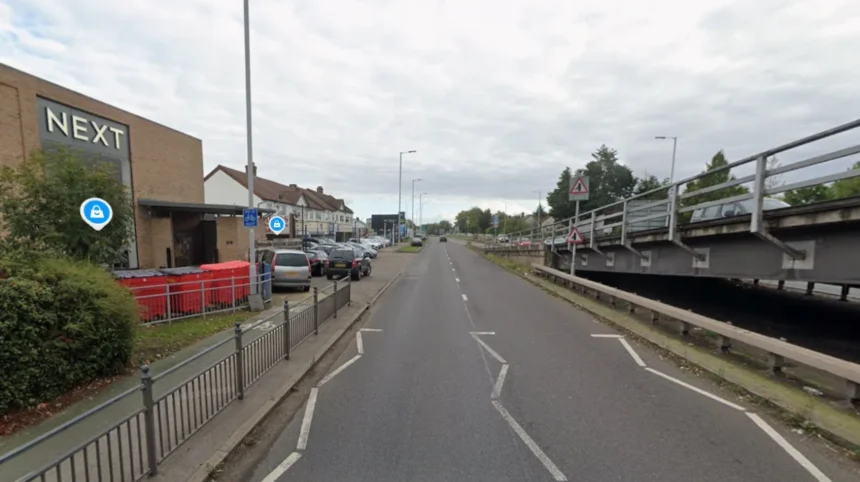
Gallows Corner (East London Times) October 26, 2026 – A 19-year-old motorcyclist has died following a fatal collision with street furniture on the A12 towards Gallows Corner in East London after failing to stop for police officers. As reported by the news outlet MyLondon, Metropolitan Police officers on patrol observed the teenager riding a motorcycle without visible registration plates and indicated for him to pull over. According to official police statements, the rider failed to stop as requested, and a short time later, the fatal collision occurred near the busy junction.
Emergency medical teams, including crews from the London Ambulance Service and an emergency response team from London’s Air Ambulance, were dispatched to the scene in an effort to save the young man’s life. Despite the extensive efforts of first responders, the 19-year-old was pronounced dead at the scene. Police confirmed that the young man’s next of kin have been informed of his death.
What Led to the Fatal Incident at Gallows Corner?
According to accounts provided by law enforcement officials to local media, the incident unfolded when uniformed Metropolitan Police officers observed a motorcycle travelling along the A12 towards the Gallows Corner roundabout without any registration plates attached. Recognizing the vehicle was being operated without valid legal identifiers, patrolling officers activated their lights to signal for the rider to safely pull over to the side of the road.
As reported by MyLondon, the motorcyclist did not adhere to the signal and failed to bring the vehicle to a halt. Officers maintained observation as the rider continued along the route; however, shortly after the initial request to stop was made, the vehicle lost control and collided with street furniture located along the thoroughfare near Gallows Corner.
How Did Emergency Services Respond to the Scene?
Following the impact, officers immediately requested urgent medical assistance at the location, calling upon both ground and air medical response units. Paramedics from the London Ambulance Service arrived rapidly, joined by an air ambulance crew dispatched to provide specialized critical care.
Responders worked to stabilize the teenager at the roadside, providing advanced life support. However, owing to the severity of the injuries sustained in the collision, resuscitation attempts were unsuccessful, and the 19-year-old was pronounced deceased at the scene. Police cordons were established surrounding the site to facilitate the emergency response and protect evidence for subsequent technical investigations.
Background of the Particular Development
Gallows Corner is a well-known, high-volume junction situated in Romford within the London Borough of Havering, connecting major arterial routes including the A12 (Eastern Avenue / Colchester Road) and the A127 (Southend Arterial Road). The junction features a complex roundabout layout and a temporary flyover originally erected in the 1970s, which has long been a subject of local transport discussions and safety reviews due to its traffic density and complex engineering.
Under standard operational protocols within the United Kingdom, whenever a member of the public dies or suffers serious injury following direct or indirect contact with police officers—such as an un-followed or short-duration pursuit or an indicated stop—the incident is subject to formal notification and review. The Independent Office for Police Conduct (IOPC) is typically notified by the police force’s internal Professional Standards Directorate to determine whether an independent investigation into the circumstances of the police contact is required.
Prediction: How Will This Development Affect Local Residents and Transport Users?
The fatal crash and the subsequent investigation are expected to impact several local stakeholder groups in distinct ways:
- Local Commuters and Drivers: The closure of key lanes or entire sections surrounding the A12 and Gallows Corner junction during police forensic collision investigations routinely causes significant traffic delays across Havering and surrounding East London boroughs. Transport for London (TfL) and local authorities may implement temporary diversions, affecting morning and evening travel times.
- The Local Community: Incidents involving young drivers and serious casualties often renew community discussions regarding road safety, vehicle compliance, and youth driver education across East London neighborhoods.
- Law Enforcement and Oversight Bodies: The formal review procedures following the incident will require the Metropolitan Police to examine the timeline of events leading up to the crash. Depending on the findings of any oversight reviews, standard operational procedures regarding vehicle stops for unregistered motorbikes may be evaluated or reinforced to maintain safety standards for both the public and officers.