
Tower Hamlets is one of East London’s most varied destinations for outdoor photography. The borough combines historic parks, Victorian architecture, working waterways, former docklands, modern skyscrapers, public art and traditional East End streets. Its location along the River Thames also provides opportunities to photograph riverside landscapes, changing city skylines and historic waterfront buildings.
- What Makes Tower Hamlets an Interesting Destination for Outdoor Photography?
- Which Parks in Tower Hamlets Offer the Best Outdoor Photography Opportunities?
- Where Can Photographers Capture Waterfront Views and Canal Landscapes in Tower Hamlets?
- Where Can Visitors Photograph Canary Wharf’s Modern Architecture and Public Spaces?
- Modern Skyscrapers and Dockside Reflections
- Crossrail Place Roof Garden
- Public Art and Landscaped Squares
- Which Historic Streets and Architectural Areas Are Suitable for Outdoor Photography?
- Where Can Visitors Find Public Art and Street Photography Locations in Tower Hamlets?
- What Wildlife and Nature Photography Opportunities Are Available in Tower Hamlets?
- What Is the Best Time of Day for Outdoor Photography Around Tower Hamlets?
- How Can Photographers Plan an Outdoor Photography Route Around Tower Hamlets?
- Route One: Victoria Park and Regent’s Canal
- Route Two: Limehouse Basin and Canary Wharf
- Route Three: Spitalfields and Brick Lane
- Route Four: Island Gardens and Mudchute
- What Photography Equipment Is Useful for Exploring Tower Hamlets?
- What Should Visitors Know Before Photographing Public Spaces in Tower Hamlets?
- Why Is Outdoor Photography Important for Understanding Tower Hamlets?
From the open green spaces of Victoria Park to the contemporary architecture of Canary Wharf, photographers can explore different subjects within a relatively compact area. The borough also includes distinctive neighbourhoods such as Wapping, Limehouse, Spitalfields, Whitechapel and the Isle of Dogs. Each location has its own architectural character and photographic opportunities.
Outdoor photography around Tower Hamlets covers several disciplines, including landscape photography, architectural photography, street photography, wildlife photography and urban documentary photography. Visitors can use natural light, reflections, textures, historic structures and public spaces to create photographs that document the borough’s environment and identity.
What Makes Tower Hamlets an Interesting Destination for Outdoor Photography?
Tower Hamlets offers a combination of historic streets, riverside landscapes, green spaces, canals and contemporary architecture. Its photographic appeal comes from the contrast between traditional East End neighbourhoods, former industrial docklands, public art and modern developments around Canary Wharf.
Tower Hamlets is a London borough situated in East London, north of the River Thames. It includes several historically significant neighbourhoods and waterfront districts. The borough’s geographical position connects central London with the Isle of Dogs, the River Lea and the wider Docklands area.
The borough’s landscape reflects centuries of urban development. Historic warehouses, Victorian terraces and former maritime buildings stand alongside modern residential developments and commercial skyscrapers. These different architectural periods provide a wide range of outdoor photographic subjects.
Photography opportunities also extend beyond buildings. Parks, canals, gardens and riverside walkways provide natural environments for landscape and wildlife photography. Victoria Park, Mile End Park and Mudchute Park and Farm offer green surroundings within a densely developed urban area.
The London Borough of Tower Hamlets recognises several important nature conservation sites, including London’s canals, the River Thames, Mudchute Park and Farm, Victoria Park and Tower Hamlets Cemetery Park. These designations demonstrate the environmental importance of the borough’s green and blue spaces.
Photographers can explore different subjects according to their interests. Landscape photographers can concentrate on water and vegetation. Architecture photographers can focus on warehouses and skyscrapers. Street photographers can explore markets, public spaces and historic neighbourhoods.
Which Parks in Tower Hamlets Offer the Best Outdoor Photography Opportunities?
Victoria Park, Mile End Park, Island Gardens, Mudchute Park and Farm, and Tower Hamlets Cemetery Park provide varied outdoor photography opportunities. These locations feature lakes, woodland, landscaped gardens, wildlife, historic structures and open landscapes across the borough.
Tower Hamlets contains several public parks with different environmental and architectural characteristics. These spaces provide alternatives to the busy streets and commercial districts of East London.
Victoria Park
Victoria Park, East London
Victoria Park is one of the most established green spaces in East London. It opened in 1845 to provide public recreation for the growing population of the East End.
The park covers approximately 86 hectares and is the largest park in Tower Hamlets. It attracts more than nine million visitors annually, according to the local council. towerhamlets.gov.uk
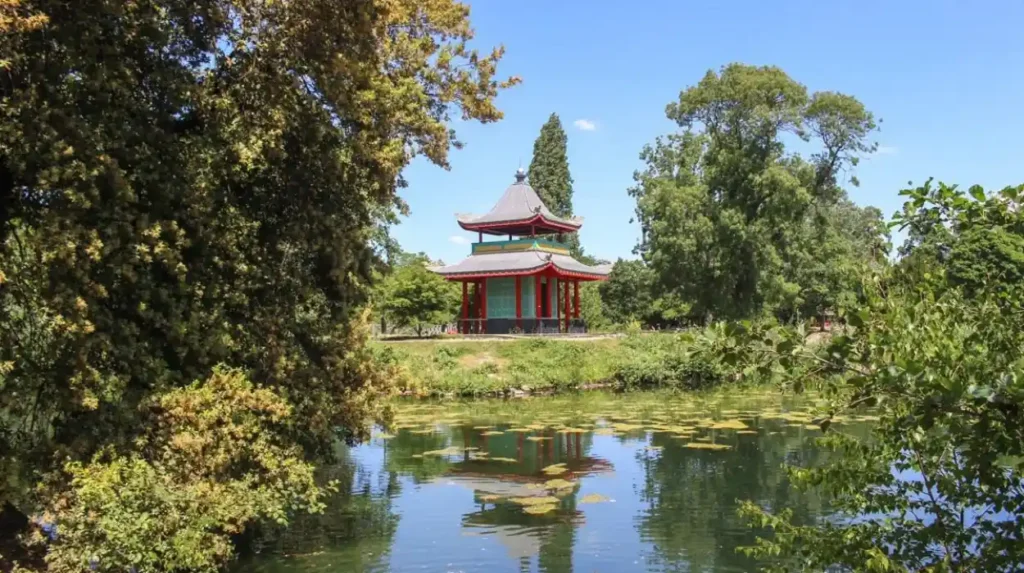
Its boating lake, Chinese Pagoda, historic fountains, mature trees and open lawns provide different photographic compositions.
The Chinese Pagoda is a recognisable architectural feature beside the boating lake. Photographers can frame the structure against the water, surrounding trees and seasonal vegetation.
The lake also provides opportunities for wildlife photography. Ducks, swans and other waterbirds regularly use the water. Early morning conditions offer softer natural light and fewer people around popular viewpoints.
The park’s open lawns provide opportunities for wide-angle landscape photography. Seasonal changes also influence the appearance of its trees, flowerbeds and planted areas.
Mile End Park
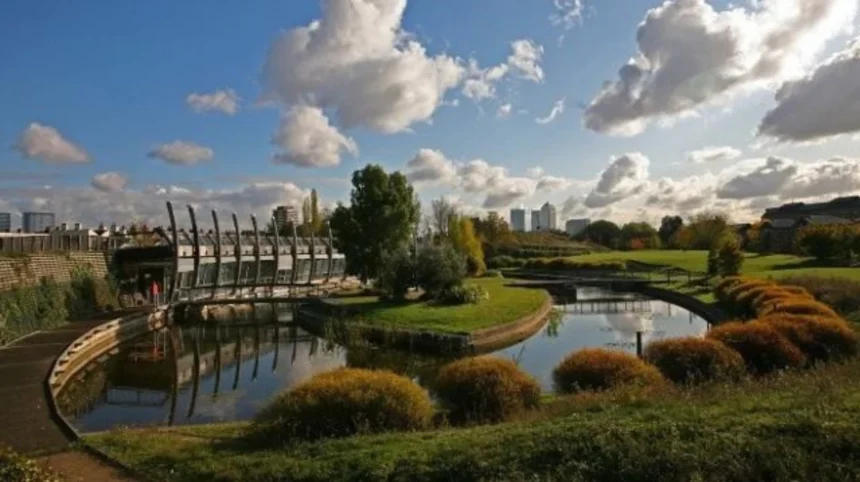
Mile End Park is a 32-hectare linear park following the Regent’s Canal between Victoria Park and Limehouse Basin.
Its landscape includes grassland, woodland, planted areas, ponds and recreational spaces. The Green Bridge, which opened in July 1999, crosses Mile End Road and connects different sections of the park. Architect Piers Gough designed the structure. towerhamlets.gov.uk
Photographers can use the Green Bridge as a subject for architectural photography. Its elevated position also provides views across sections of the park.
The canal offers opportunities to photograph narrowboats, towpaths, bridges and reflections. The combination of greenery and urban infrastructure provides a distinct East London setting.
The park’s Arts Park includes an art mound used for outdoor art displays. This area provides opportunities to photograph public installations within a landscaped environment.
Island Gardens
Island Gardens is a riverside park at the southern end of the Isle of Dogs. It provides three acres of waterfront parkland and views across the Thames towards Greenwich.
The park is particularly significant for landscape photography because its viewpoint resembles the composition of Canaletto’s eighteenth-century painting, A View of Greenwich from the River. The Royal Naval College, Queen’s House and Greenwich waterfront form the principal subjects across the river.
Photographers can capture the historic Greenwich skyline from the northern bank of the Thames. The river provides a foreground that separates the viewer from the architectural composition.
The park also contains benches, lawns and tree-lined paths. These features create opportunities for foreground framing and environmental photography.
The Greenwich Foot Tunnel is accessible from the park. Its entrance and surrounding riverside environment provide additional architectural subjects.
Mudchute Park and Farm
Mudchute Park and Farm combines open countryside-style landscapes with an urban skyline.
The park provides opportunities to photograph farm animals, grassland, trees and open spaces. Its location on the Isle of Dogs also creates views towards the surrounding residential and commercial developments.
This contrast makes Mudchute useful for environmental and urban landscape photography. Photographers can include natural foreground elements with Canary Wharf’s buildings in the background.
Wildlife and animal photography are additional subjects. Visitors should respect animal boundaries and follow farm access rules.
Tower Hamlets Cemetery Park
Tower Hamlets Cemetery Park provides a woodland environment with historic gravestones, mature trees and natural habitats.
The former Victorian cemetery is now an important nature conservation area. Its woodland paths, old memorials and vegetation provide opportunities for documentary, nature and architectural detail photography.
Photographers can focus on the textures of weathered stone, tree trunks, woodland light and seasonal plants. The location also provides a quieter environment than the borough’s commercial districts.
Respectful photography is important because the site is both a historic burial ground and a public nature reserve.
Where Can Photographers Capture Waterfront Views and Canal Landscapes in Tower Hamlets?
Limehouse Basin, Regent’s Canal, Shadwell Basin, Wapping and the River Thames provide distinctive waterfront photography locations. These places feature narrowboats, historic dock structures, marina reflections, riverside walkways and changing views of East London’s historic and modern architecture.
Tower Hamlets has a strong relationship with London’s waterways. The River Thames, Regent’s Canal, Limehouse Cut and former commercial docks influenced the borough’s industrial and maritime development.
These waterways now provide accessible outdoor spaces for photographers. Their bridges, boats, warehouses and waterside paths create opportunities for landscape and architectural photography.
Limehouse Basin
Limehouse Basin is a marina connecting the Regent’s Canal with the River Thames. It was originally known as Regent’s Canal Dock and opened in 1820.
The basin historically transferred cargo between seagoing vessels and inland canal boats. It became an important part of London’s commercial transport network.
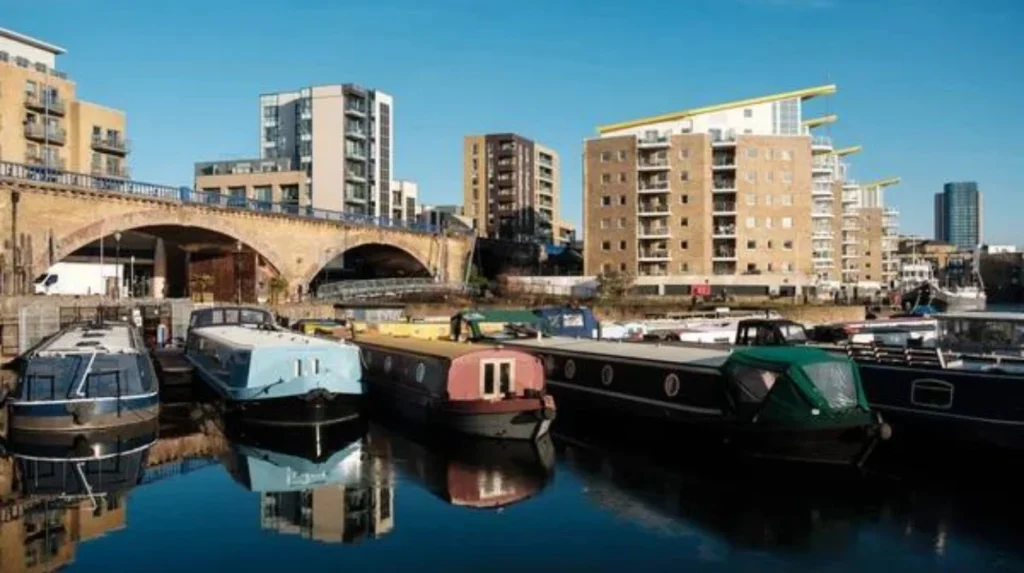
Today, its marina contains narrowboats, yachts and visiting pleasure craft. The surrounding environment includes modern residential buildings, historic infrastructure and waterside walkways. Canal & River Trust+1
Photographers can capture boats reflected in the water, bridges crossing the basin and the Docklands Light Railway viaduct. The mixture of traditional boats and modern buildings provides opportunities for contrasting architectural compositions.
The Canal & River Trust identifies a one-mile circular walking route around Limehouse Basin. This route provides a practical option for photographers who want to explore the marina without committing to a longer walk. Canal & River Trust
Regent’s Canal
Regent’s Canal provides a continuous waterside environment through several parts of East London.
The canal was completed in 1820 and connected Limehouse with the wider inland waterway network. It originally transported goods such as coal, timber, food and building materials. Canal & River Trust
The Tower Hamlets section provides opportunities to photograph narrowboats, historic bridges, canal-side buildings and waterside vegetation.
The towpath between Victoria Park and Mile End Park is particularly useful for combining nature and urban photography. Reflections, passing boats and brick structures create changing compositions along the route.
Photographers should pay attention to the relationship between the canal and its surroundings. A wide-angle lens captures the waterway and built environment, while a longer focal length isolates individual boats, architectural details and wildlife.
Shadwell Basin and Wapping
Shadwell Basin offers a quieter dockside environment within the historic Wapping district.
The basin forms part of the borough’s former dockland landscape. Its water, pedestrian bridges, surrounding buildings and residential waterfront create opportunities for urban landscape photography.
Nearby Wapping contains historic warehouses, cobbled streets and riverside architecture. Wapping Pierhead Conservation Area preserves an important part of this historic townscape.
The conservation area’s four- and five-storey warehouse buildings provide a distinctive architectural subject. Historic streets also contain traditional brickwork, older residential buildings and views towards the Thames.
Photographers can explore the relationship between the old warehouse buildings and newer waterfront developments. The area also provides opportunities for documentary photography focused on the changing character of London’s historic docklands.
The River Thames and Thames Path
The River Thames forms the southern boundary of much of Tower Hamlets. Its northern riverbank provides several opportunities for outdoor photography.
The Thames Path connects riverside locations through St Katharine Docks, Wapping, Limehouse and Canary Wharf. It provides access to different views of the river and the surrounding built environment.
Photographers can capture passing boats, bridges, river traffic and historic waterfront buildings. The changing river conditions also influence reflections, light and the appearance of the skyline.
The route between Tower Bridge and Canary Wharf is identified by Love Tower Hamlets as one of the borough’s notable riverside walks.
The Thames also provides opportunities for long-exposure photography. A tripod and slower shutter speed produce smoother water effects, subject to safe positioning and local access conditions.
Where Can Visitors Photograph Canary Wharf’s Modern Architecture and Public Spaces?
Canary Wharf provides outdoor photography opportunities through its glass skyscrapers, landscaped dockside spaces, public art, pedestrian bridges and Crossrail Place Roof Garden. The district combines contemporary commercial architecture with historic dockland waterways and landscaped public areas.
Canary Wharf is a major commercial district on the Isle of Dogs. It developed on former West India Docks land and is now recognised for its modern high-rise buildings and waterfront public spaces.
Its architecture creates a different photographic environment from the historic streets of Wapping and Spitalfields.
Modern Skyscrapers and Dockside Reflections
The Canary Wharf skyline contains tall office buildings with glass, steel and contemporary architectural designs. Their façades reflect surrounding buildings, clouds and changing daylight.
Photographers can use the dockside walkways to frame buildings above the water. Reflections create symmetrical compositions, particularly when the water is relatively calm.
West India Quay is another useful location for architectural photography. Its waterfront setting combines former warehouse buildings with contemporary commercial development.
The contrast between older dock infrastructure and modern skyscrapers illustrates the area’s transformation from a major commercial port into a business district.
Crossrail Place Roof Garden
Crossrail Place Roof Garden is a landscaped public garden above Canary Wharf’s Elizabeth line station.
The garden contains winding paths, exotic plants, trees and a distinctive timber lattice roof. Its planting represents vegetation from different parts of the Eastern and Western hemispheres.
The Prime Meridian passes through the garden, influencing the arrangement of its planting. The design also reflects Canary Wharf’s historic connections with international maritime trade. visitlondon.com+1
Photographers can concentrate on architectural details, plant textures, patterns created by the roof and the relationship between natural vegetation and modern infrastructure.
The garden provides a sheltered environment for photography. Its combination of greenery and architectural structure makes it a useful location for botanical and architectural compositions.
Public Art and Landscaped Squares
Canary Wharf includes public spaces such as Jubilee Park and Montgomery Square. These areas combine landscaping, seating, pedestrian routes and contemporary urban design.
Public art installations provide additional subjects for outdoor photography. Sculptures and installations create opportunities for close-up compositions, geometric framing and photographs that include surrounding architecture.
The district also hosts outdoor events and activities in selected public spaces. These create opportunities for documentary photography, although visitors should respect event restrictions and the privacy of individuals.
Photographers should check local estate information before organising commercial shoots or using tripods and specialist equipment in managed public areas.
Which Historic Streets and Architectural Areas Are Suitable for Outdoor Photography?
Spitalfields, Brick Lane, Fournier Street, Wapping and Limehouse provide historic streetscapes with Georgian townhouses, Victorian buildings, traditional shopfronts, religious architecture and former warehouses. These locations suit photographers interested in architectural details and East London’s cultural history.
Tower Hamlets contains an extensive collection of historically significant streets and buildings. The borough has 58 conservation areas, which are designated for their special architectural or historic interest.
These areas provide opportunities to document historic buildings and the changing urban character of East London.
Brick Lane and Spitalfields
Brick Lane is one of the most recognisable streets in the East End. It is known for its markets, restaurants, independent businesses, street culture and historic architecture.
Its changing commercial environment provides opportunities for documentary street photography. Photographers can capture shopfronts, street signs, market activity, architectural details and public artwork.
The surrounding Spitalfields district contains several historic streets. These include Fournier Street, Princelet Street and Hanbury Street.
The Brick Lane and Fournier Street Conservation Area preserves an important collection of historic buildings and street patterns. The council identifies Christ Church Spitalfields and the Truman’s Brewery chimney as local landmarks.
Photographers can explore the contrast between traditional brick façades and the area’s contemporary creative businesses.
Fournier Street
Fournier Street is particularly suitable for architectural photography. The street contains eighteenth-century townhouses with classical façades, sash windows and decorative doorways.
Much of the street developed after 1718. Its buildings reflect the architectural character of Georgian Spitalfields and the area’s historical association with textile production and migration.
The surrounding area also contains Christ Church Spitalfields, designed by architect Nicholas Hawksmoor. Construction began in 1714, and the church was completed in 1729. towerhamlets.gov.uk
Photographers can focus on the repetition of townhouse façades, historic entrances, windows and brickwork.
The nearby streets offer further opportunities to photograph the relationship between historic buildings and modern commercial activity.
Wapping’s Historic Streets
Wapping offers a different architectural environment from Spitalfields. Its streets reflect the area’s historic maritime and industrial development.
Wapping High Street and Wapping Pierhead contain historic warehouse buildings and former dockside structures. Narrow passages and glimpses of the river create opportunities for layered architectural compositions.
St John of Wapping is another notable historic landmark. Its surviving tower dates from the eighteenth century and forms part of the area’s historic streetscape.
The council’s Wapping Pierhead conservation documentation identifies important views towards the church tower and historic buildings along Wapping High Street.
Limehouse and Narrow Street
Limehouse provides a combination of historic residential architecture, former industrial structures and waterfront development.
Narrow Street runs close to Limehouse Basin and contains buildings associated with the area’s maritime history.
Photographers can capture brick façades, traditional architectural details, riverside pubs and views towards the marina. The nearby Docklands Light Railway infrastructure also creates opportunities for urban photography.
The area’s architectural character is particularly useful for documenting the relationship between London’s industrial past and contemporary residential development.
As you explore the modern waterfront, you are crossing land shaped by centuries of maritime trade and industrial activity. Read about the full [History of Limehouse and Tower Hamlets’ Historic Docklands] to understand the origins of these streets, waterways and surviving buildings.
Where Can Visitors Find Public Art and Street Photography Locations in Tower Hamlets?
Brick Lane, Spitalfields, Canary Wharf and Mile End Park provide different environments for public art and street photography. Their murals, sculptures, market activity, independent businesses and pedestrian spaces offer opportunities to document East London’s creative and everyday urban culture.
Public art is an important part of the visual identity of several Tower Hamlets neighbourhoods. It appears in commercial districts, landscaped public spaces and community environments.
Brick Lane Street Art
Brick Lane is an established location for street art photography. Its surrounding streets contain murals, painted walls, changing artworks and independent commercial spaces.
The area’s creative character attracts visitors interested in urban culture and contemporary art. Hanbury Street and nearby streets provide opportunities to photograph large-scale wall paintings and smaller artistic details.
Street art changes over time. New work appears, existing pieces are altered and some murals disappear through redevelopment or maintenance.
Photographers should therefore treat street art as a changing part of the urban environment rather than a permanent collection.
Close-up photography captures paint textures and artistic details. Wider compositions show how artwork interacts with surrounding buildings, pavements and street activity.
Canary Wharf Public Art
Canary Wharf contains public spaces with sculptures and contemporary installations. These artworks provide subjects for photographers interested in the relationship between art and modern architecture.
Montgomery Square and the surrounding pedestrian areas offer opportunities to capture installations within landscaped urban environments.
Photographers can experiment with different perspectives to include sculptures, office buildings and public spaces within one composition.
Mile End Park Outdoor Art
Mile End Park’s Arts Park provides another outdoor environment for photography. Its art mound has been used to display outdoor artworks.
The landscaped setting creates opportunities to photograph installations alongside trees, grassland and the surrounding urban environment. The park’s elevated areas also provide views across sections of the green space and Regent’s Canal.
These locations demonstrate how public art photography in Tower Hamlets extends beyond traditional galleries and commercial streets.
What Wildlife and Nature Photography Opportunities Are Available in Tower Hamlets?
Tower Hamlets provides wildlife photography opportunities through its parks, woodland areas, canals, gardens and riverside habitats. Victoria Park, Mudchute Park and Farm, Mile End Park and Tower Hamlets Cemetery Park support different combinations of birds, insects, trees and other urban wildlife.
Wildlife photography is an important part of outdoor photography in East London. The borough contains green corridors and waterways that provide habitats within a heavily developed urban environment.
The council identifies several sites of metropolitan and borough importance for nature conservation. These include Victoria Park, Mudchute Park and Farm, Mile End Park, London’s canals and Tower Hamlets Cemetery Park.
Bird Photography Around Water
Victoria Park and Limehouse Basin provide opportunities to photograph waterbirds.
Ducks, swans, geese and other birds use these environments for feeding, resting and nesting. Photographers can capture birds swimming, taking flight or interacting with their surroundings.
A telephoto lens helps capture wildlife without approaching animals too closely. Early morning conditions also provide softer light and reduced recreational activity around some waterside locations.
Woodland and Insect Photography
Tower Hamlets Cemetery Park provides woodland habitats suitable for close-up nature photography.
Its vegetation, fallen leaves, historic trees and woodland paths create opportunities for seasonal compositions. Insects and other small wildlife also provide subjects for macro photography.
Mile End Park has a varied habitat structure that includes woodland, grassland, ponds and planted areas. The council’s biodiversity information records more than 400 beetle species in the park, including the rare streaked bombardier beetle.
These habitats make the park relevant to photographers interested in biodiversity and urban ecology.
Seasonal Nature Photography
Different seasons change the appearance of Tower Hamlets’ parks and waterways.
Spring provides opportunities to photograph emerging vegetation and flowering plants. Summer produces dense green landscapes and longer daylight hours. Autumn introduces changing leaf colours, while winter reveals tree structures and clearer views through woodland.
Photographers should avoid disturbing nesting birds, damaging vegetation or leaving designated paths in sensitive habitats.
What Is the Best Time of Day for Outdoor Photography Around Tower Hamlets?
Early morning and late afternoon provide useful natural lighting conditions for outdoor photography around Tower Hamlets. Golden hour creates warmer light, blue hour highlights illuminated buildings, and overcast conditions help photographers capture architectural details and street scenes.
The best photography time depends on the subject, weather and location.
Natural light changes throughout the day. Understanding these changes helps photographers select appropriate locations and camera settings.
Early Morning Photography
Early morning is useful for photographing Victoria Park, Regent’s Canal and Limehouse Basin.
The lower number of visitors provides clearer compositions around popular viewpoints. Softer sunlight also reduces strong shadows across buildings and landscapes.
Morning light works particularly well for water reflections and wildlife photography. Photographers can capture boats, birds and vegetation before recreational activity increases.
Golden Hour Photography
Golden hour describes the period shortly after sunrise or before sunset when sunlight appears warmer and produces longer shadows.
This lighting is suitable for photographing historic buildings around Wapping and Spitalfields. It also creates warm highlights across Canary Wharf’s glass façades.
Photographers can use side lighting to reveal architectural textures, brickwork and building details.
Blue Hour and Evening Photography
Blue hour occurs around twilight when the sky develops darker blue tones while artificial lights become visible.
Canary Wharf is particularly suitable for evening architectural photography. Illuminated office buildings, dockside reflections and pedestrian spaces provide different visual subjects.
Limehouse Basin also offers evening photography opportunities through reflections from surrounding buildings and boats.
Love Tower Hamlets identifies early evening as a suitable period for its Limehouse Basin to Canary Wharf walking route because the buildings begin reflecting across the docks as the lights appear. Love Tower Hamlets
Overcast Weather
Cloudy weather provides softer lighting conditions for architectural and street photography.
It reduces harsh sunlight and helps preserve detail across building façades. Overcast conditions are also suitable for photographing street art, historic brickwork and woodland environments.
Rain creates additional photographic opportunities through reflections on pavements and roads. Photographers should protect their equipment and avoid placing camera equipment where it obstructs public access.
How Can Photographers Plan an Outdoor Photography Route Around Tower Hamlets?
Photographers can plan a route by grouping nearby locations according to their subjects and transport connections. Combining Victoria Park with Regent’s Canal, or Limehouse Basin with Wapping and Canary Wharf, reduces unnecessary travel and provides varied photographic opportunities.
Tower Hamlets contains several photography locations that are accessible through walking routes and public transport.
A planned route helps visitors photograph different subjects within one visit. It also provides flexibility when weather conditions or lighting change.
Route One: Victoria Park and Regent’s Canal
Start at Victoria Park and photograph the boating lake, Chinese Pagoda and landscaped areas.
Continue towards the Regent’s Canal and follow the towpath towards Mile End Park. This section provides opportunities to photograph narrowboats, bridges, vegetation and canal-side architecture.
Finish at Mile End Park’s Arts Park or continue towards Limehouse Basin.
Love Tower Hamlets identifies this as an established walking route connecting Victoria Park with the Regent’s Canal. Love Tower Hamlets
Route Two: Limehouse Basin and Canary Wharf
Start at Limehouse Basin and photograph the marina, boats and surrounding buildings.
Continue towards West India Quay, where historic dockland architecture meets modern commercial development.
Finish around Canary Wharf’s dockside spaces and Crossrail Place Roof Garden.
The route combines historic waterways, contemporary architecture and landscaped public areas. The local visitor guide identifies it as a walking route with opportunities to photograph footbridges, dock reflections and the Canary Wharf skyline. Love Tower Hamlets
Route Three: Spitalfields and Brick Lane
Begin around Old Spitalfields Market and continue towards Fournier Street.
Photograph Georgian buildings, historic doorways and Christ Church Spitalfields before exploring Brick Lane.
Continue towards Hanbury Street and the surrounding streets to photograph street art, commercial activity and traditional East End architecture.
This route suits photographers interested in street photography, cultural heritage and historic buildings.
Route Four: Island Gardens and Mudchute
Begin at Island Gardens and photograph the Greenwich waterfront across the Thames.
Continue towards the Greenwich Foot Tunnel entrance and explore the surrounding riverside environment.
Move towards Mudchute Park and Farm for photographs of open landscapes, farm animals and the Canary Wharf skyline.
This route combines riverside photography with nature and urban landscape subjects.
What Photography Equipment Is Useful for Exploring Tower Hamlets?
A versatile camera setup helps photographers capture Tower Hamlets’ different environments. A wide-angle lens suits architecture and landscapes, a standard zoom supports street photography, and a telephoto lens helps capture distant buildings, wildlife and details.
Photographers do not need extensive equipment to explore the borough. A camera or smartphone with suitable exposure controls is sufficient for many outdoor subjects.
However, different environments benefit from different equipment.
Wide-Angle Lenses
Wide-angle lenses are useful for photographing:
- Canary Wharf’s skyscrapers.
- Historic warehouse façades.
- Victoria Park’s open landscapes.
- The Greenwich skyline from Island Gardens.
- Canal bridges and waterfront scenes.
They allow photographers to include more of the surrounding environment within a composition.
Standard Zoom Lenses
A standard zoom lens provides flexibility for everyday street and travel photography.
It works well around Brick Lane, Spitalfields, Wapping and Canary Wharf. Photographers can use it to capture buildings, public art, markets and street details without frequently changing equipment.
Telephoto Lenses
Telephoto lenses are useful for photographing birds, distant architectural features and skyline details.
They also help photographers isolate specific subjects within busy public spaces.
Tripods and Other Accessories
Tripods support long-exposure photography, especially around the Thames and Canary Wharf’s waterfront.
A polarising filter helps manage reflections on glass and water, although the effect depends on the angle of the light.
Extra batteries, memory cards and weather protection are useful for longer outdoor photography sessions.
Photographers using tripods or specialist equipment should check the relevant site’s rules, particularly in privately managed public spaces and commercial estates.
Explore More Area Guide
Discover Canary Wharf’s Changing Waterfront and Modern Architecture
Tower Hamlets Heritage Guide to Victorian Buildings and Historic Streets
What Should Visitors Know Before Photographing Public Spaces in Tower Hamlets?
Visitors should check park opening times, public access arrangements, photography restrictions and weather conditions before exploring Tower Hamlets. Respecting wildlife, residents, private property and other visitors helps photographers capture the borough responsibly and without disrupting public activities.
Most outdoor photography locations in Tower Hamlets are accessible through public parks, pedestrian routes and public streets. However, individual sites have different access arrangements.
Victoria Park opens at 7am and closes at dusk throughout the year. Island Gardens is a public riverside park with access to the Greenwich Foot Tunnel. Crossrail Place Roof Garden also provides free public access, subject to its operating arrangements. towerhamlets.gov.uk+2
Visitors should consider several practical points before taking photographs.
Check opening times: Parks and managed gardens have different opening arrangements. Check official council information before travelling.
Respect private property: Not every publicly accessible-looking space allows unrestricted commercial photography. Check estate management rules before organising professional shoots.
Protect wildlife: Avoid approaching nesting birds, disturbing animals or damaging sensitive habitats.
Respect other visitors: Avoid blocking narrow pathways, entrances and pedestrian bridges with tripods or other equipment.
Check weather conditions: Rain, wind and changing daylight influence camera settings and photography opportunities.
Consider public events: Markets, performances and community activities create additional photographic subjects. However, photographers should respect individual privacy and event-specific restrictions.
The London Borough of Tower Hamlets publishes information about its parks, open spaces and park byelaws. Visitors should consult these resources when planning photography sessions. towerhamlets.gov.uk+1
Why Is Outdoor Photography Important for Understanding Tower Hamlets?
Outdoor photography documents Tower Hamlets’ changing urban landscape, historic architecture, natural environments and cultural identity. It provides a visual record of how East London combines its maritime heritage, established neighbourhoods, modern developments and public green spaces.
Photography allows visitors to examine the borough beyond its best-known commercial destinations.
Historic buildings around Spitalfields and Wapping document earlier periods of East London’s development. Former docks and canals demonstrate the importance of maritime trade and industrial transport.
Canary Wharf represents a later phase of urban regeneration. Its commercial buildings and landscaped waterfront spaces illustrate the transformation of former dockland areas.
Green spaces provide another important part of this urban environment. Victoria Park, Mile End Park and Tower Hamlets Cemetery Park demonstrate the importance of public landscapes and nature conservation within a densely developed borough.
These different environments create opportunities for photographers to document architecture, biodiversity, public art and everyday community activity.
The borough’s photographic appeal also has future relevance. New developments, changing public spaces and environmental improvements continue to influence its appearance. Photographs provide a useful visual record of these changes over time.
For tourists, outdoor photography offers a practical way to explore different parts of East London. For residents, it provides opportunities to document familiar neighbourhoods from new perspectives. For professional photographers, the combination of historic and contemporary environments creates varied subjects within one London borough.
Ultimately, Tower Hamlets offers a broad selection of outdoor photography locations. Its parks, waterways, historic streets, public artworks and modern waterfront developments make it a significant destination for exploring the visual character of East London.
What are the best places for outdoor photography in Tower Hamlets?
The best places include Victoria Park, Canary Wharf, Limehouse Basin, Island Gardens, Brick Lane, Wapping and Mile End Park. These locations offer scenic landscapes, historic architecture, waterfront views, street art and modern skyscrapers.