Tower Hamlets is one of London’s most distinctive visitor destinations, combining historic East End streets, major landmarks, multicultural neighbourhoods, working markets, museums, contemporary galleries, riverside spaces and the modern financial district of Canary Wharf. The London borough occupies a strategic position east of the City of London and extends from the historic Tower area to the Docklands and the Queen Elizabeth Olympic Park area.
- Why is Tower Hamlets worth exploring for a local London experience?
- What historical background helps visitors understand Tower Hamlets?
- Which Tower Hamlets markets give tourists the strongest local experience?
- Which historic streets and neighbourhoods should tourists explore?
- Which museums and cultural sites should visitors include?
- Where can tourists experience Tower Hamlets’ food and independent shopping culture?
- Which parks and outdoor spaces are best for a break from urban sightseeing?
- How can visitors explore Canary Wharf without missing Tower Hamlets’ local character?
- What is the best way to plan a Tower Hamlets walking itinerary?
- How can digital nomads and business travellers use Tower Hamlets during downtime?
- How should first-time tourists experience Tower Hamlets responsibly?
- Why will Tower Hamlets remain important for London tourism?
For tourists seeking local London experiences, Tower Hamlets provides a useful alternative to a purely central-London itinerary. Visitors can move between centuries of history within a relatively compact area. Brick Lane reflects successive migrant communities. Whitechapel preserves market and cultural traditions. The former docks explain the development of modern Docklands. Canary Wharf represents the financial transformation of the Thames waterfront.
The borough also has an unusually strong market culture. Tower Hamlets Council identifies ten street markets, including Brick Lane, Columbia Road, Petticoat Lane, Whitechapel, Chrisp Street, Roman Road, Roman Road Square, Watney Market, Bethnal Green Road and Sclater Street.
This combination makes Tower Hamlets particularly suitable for travellers interested in food, architecture, shopping, photography, museums, public art, heritage and everyday London life rather than only conventional tourist attractions.
Why is Tower Hamlets worth exploring for a local London experience?
Tower Hamlets is worth exploring because it combines historic East End neighbourhoods, multicultural communities, famous landmarks, markets, museums, parks, waterways and Canary Wharf within one London borough, creating varied visitor experiences beyond central London.
Tower Hamlets forms part of London’s East End and has a long connection with migration, commerce, manufacturing, shipping and urban development. The council describes the borough as the heart of the East End and records archaeological evidence extending back thousands of years.
The borough’s geography also explains its visitor appeal. The River Thames forms its southern boundary, while areas such as Whitechapel, Spitalfields, Bethnal Green, Stepney, Poplar, Limehouse and Canary Wharf provide distinct urban environments.
The visitor experience changes significantly between neighbourhoods. Spitalfields and Brick Lane combine historic streets with independent retail and food businesses. Whitechapel combines markets, contemporary art and migration history. Poplar and Limehouse retain strong connections with the docks and waterways. Canary Wharf provides modern architecture, public spaces and financial-district attractions.
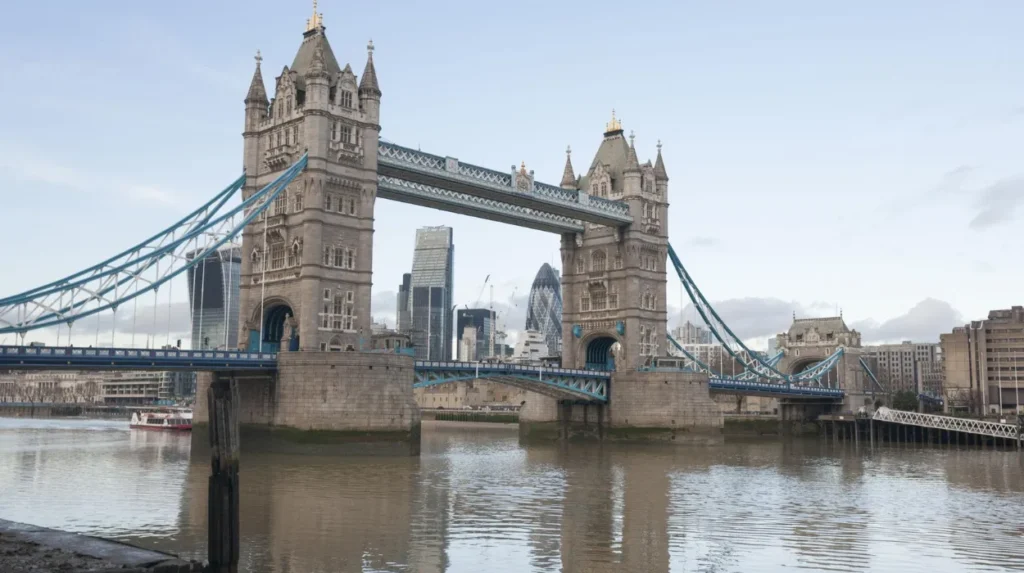
Tower Hamlets also contains internationally recognised landmarks. Tower Bridge opened in 1894 and remains a working bridge across the Thames. Its visitor experience includes high-level walkways and Victorian engine rooms.
The result is a destination where tourists can combine major London landmarks with neighbourhood exploration during the same visit.
What historical background helps visitors understand Tower Hamlets?
Tower Hamlets developed through Roman settlement, medieval communities, migration, docks, industry, markets and post-war regeneration, creating an urban landscape where historic streets, religious buildings, markets, warehouses and modern skyscrapers stand close together.
Understanding this history makes the modern borough easier to interpret. Tower Hamlets takes its name from its historic relationship with the Tower of London and the surrounding hamlets. Archaeological evidence confirms human activity in the wider area for thousands of years.
The Thames shaped the borough’s economic development. Dock construction transformed areas such as Wapping, Limehouse, Poplar and the Isle of Dogs into major maritime districts. The Limehouse Cut opened in 1770, while the Regent’s Canal opened in 1820. Commercial Road was established in 1810 to connect the City with the docks.
Migration is another essential part of the story. Different communities settled in the East End across several centuries. Tower Hamlets has historic associations with Huguenot, Jewish, Irish, Bangladeshi, Chinese, Caribbean, African and other communities.
Brick Lane provides a particularly clear example. Tower Hamlets Council records French Huguenot and Jewish settlement before the street became strongly associated with the Bangladeshi community.
Markets also developed alongside population growth and commercial activity. Roman Road has a long trading history, while Whitechapel Market has operated in different forms for centuries. The council records the Whitechapel hay market from 1665.
As you explore the modern borough, you are crossing land shaped by centuries of migration, trade and urban change. Read the full to understand its origins.
Which Tower Hamlets markets give tourists the strongest local experience?
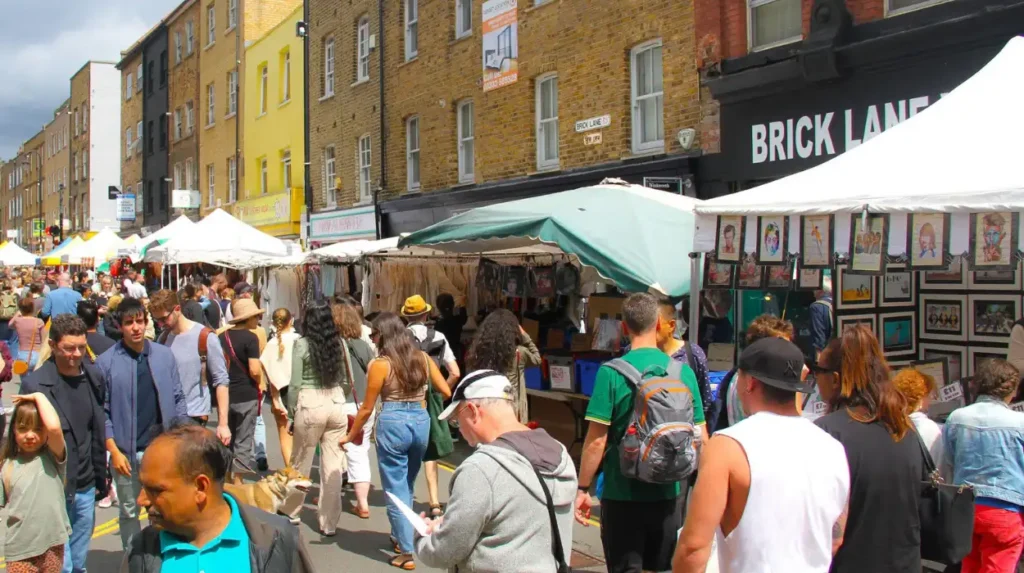
Tower Hamlets markets provide some of the clearest opportunities to experience everyday East London through food, clothing, flowers, household goods, art, textiles and independent trading, with Brick Lane, Columbia Road, Whitechapel and Roman Road offering distinct market environments.
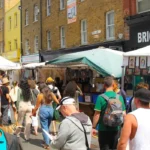
Markets are central to Tower Hamlets’ identity. The council currently identifies ten street markets across the borough. Their locations and trading schedules vary, so visitors should check official information before travelling.
Brick Lane Market
Brick Lane Market operates on Sundays and combines fashion, food, art, vintage goods and household products. The council records its establishment in 1888 and identifies the street as a significant focal point for the Bangladeshi community.
Brick Lane is particularly useful for visitors interested in combining market shopping with independent food businesses, street photography, murals and historic architecture.
Columbia Road Flower Market
Columbia Road Flower Market operates on Sundays and specialises in flowers and plants. The surrounding street contains independent shops, galleries, cafés and pubs. The council lists approximately 60 independent shops around the market area.
The market provides a different experience from Brick Lane because its focus is horticultural rather than general street trading.
Whitechapel Market
Whitechapel Market operates six days a week, from Monday to Saturday, and sells fresh produce, fish, clothing, cultural goods, jewellery, household products and street food. The council reported more than 80 traders in 2025.
Whitechapel Market was named Best Large Outdoor Market at the 2025 Great British Markets Awards. The council also reported £9.3 million of investment in market infrastructure and the surrounding public realm since 2021.
Roman Road Market
Roman Road Market trades on Tuesdays, Thursdays and Saturdays. It sells clothing, household goods, toys, cosmetics and jewellery, alongside food stalls. Its location connects the visitor experience with the historic Bow and Bethnal Green area.
For travellers seeking a less landmark-focused experience, these markets provide direct contact with the commercial and social character of East London.
Which historic streets and neighbourhoods should tourists explore?
Historic streets in Tower Hamlets reveal different layers of East London through surviving street patterns, markets, religious buildings, warehouses, terraces and independent businesses, particularly around Spitalfields, Brick Lane, Whitechapel, Wapping, Limehouse, Stepney and Bethnal Green.
Spitalfields provides a strong starting point because it connects market history, architecture, independent retail and the City of London. Old Spitalfields Market has roots in the historic market economy of the area and now combines retail, food and market activity.
Brick Lane continues south from Spitalfields towards Whitechapel and provides one of the borough’s most recognisable cultural corridors. Its architectural and commercial landscape reflects successive communities.
Whitechapel provides another important route. Whitechapel Road connects markets, transport infrastructure, religious buildings, restaurants, galleries and historic institutions. The area has long been associated with migration and working-class East London.
Wapping offers a different atmosphere. Historic warehouses and dock-related architecture demonstrate the importance of the Thames to London’s trading economy. The riverfront also provides walking opportunities around former industrial sites.
Limehouse is important for visitors interested in canals and maritime history. The Limehouse Cut is one of London’s historic waterways and opened in 1770 as a connection between the River Thames and the Lee Navigation system.
Bethnal Green combines residential streets, markets, cultural institutions and green spaces. Its location also makes it convenient for visitors moving between Brick Lane, Victoria Park and the central East End.
These areas are best understood as connected neighbourhoods rather than isolated attractions. Walking between them reveals changes in architecture, land use, retail and community identity.
Which museums and cultural sites should visitors include?
Tower Hamlets has museums, galleries and cultural institutions covering docklands, design, childhood, contemporary art and local heritage, allowing visitors to understand both the borough’s historical development and its continuing role in London’s cultural landscape.
The Museum of London Docklands is one of the most important institutions for understanding the borough’s relationship with the Thames. Its collections explain London’s port, docks, trade and Docklands transformation.
The museum is particularly relevant to visitors exploring Canary Wharf, Limehouse, Poplar and the Isle of Dogs because these districts were deeply connected to the port economy.
Young V&A in Bethnal Green provides another cultural experience. The museum is located on Cambridge Heath Road and offers free general admission. Its three principal galleries are Imagine, Play and Design.
The institution is especially relevant to families and visitors interested in design, toys, childhood and creative learning.
Whitechapel Gallery provides a contemporary art experience in the historic East End. Founded in 1901 by Samuel and Henrietta Barnett, the gallery was established to bring major art to people in East London.
Its historical importance is substantial. The gallery presented Pablo Picasso’s Guernica in Britain in 1939 and later exhibited major artists including Jackson Pollock, Mark Rothko, David Hockney, Frida Kahlo and Cindy Sherman.
The gallery remains an active contemporary arts institution. Its 2026 programme includes exhibitions, film programmes and projects connected with its 125th anniversary.
Tower Hamlets Local History Library and Archives adds another layer for visitors interested in detailed research. Its collections include historic documents dating from 1384, maps, plans, photographs and newspaper cuttings.
Where can tourists experience Tower Hamlets’ food and independent shopping culture?
Visitors can experience Tower Hamlets’ food and independent shopping culture through Brick Lane, Spitalfields, Whitechapel, Columbia Road, Roman Road and surrounding streets, where specialist food, fashion, vintage goods, design products and locally focused businesses create varied retail experiences.
Food is closely connected with the borough’s migration history. Brick Lane is particularly associated with Bangladeshi restaurants and food businesses, while Whitechapel and surrounding streets provide South Asian, Middle Eastern, African and other international food options.
Visitors should distinguish between markets and permanent businesses. Markets provide temporary stalls and changing trader selections. Independent shops and restaurants provide more consistent experiences but operate according to individual opening schedules.
Tower Hamlets Council’s quirky shopping guide identifies more than 150 independent and unusual shops across East London. These include vintage fashion, design, gifts, jewellery, vinyl, musical instruments and specialist retail.
Spitalfields is useful for combining food with independent retail. Brick Lane is suited to visitors seeking a mixture of street culture, food, fashion and vintage shopping.
Columbia Road provides a stronger combination of flowers, independent shops, cafés, galleries and antiques. Roman Road offers a more neighbourhood-focused commercial environment.
For tourists, the important distinction is that local shopping in Tower Hamlets is not concentrated inside one shopping centre. It is distributed through high streets, markets, covered market spaces and independent premises.
This distribution makes walking an important part of the experience. Visitors can combine food stops, shops, architecture and public spaces within one route.
Which parks and outdoor spaces are best for a break from urban sightseeing?
Tower Hamlets provides substantial green and open space, including Victoria Park, Mile End Park, Tower Hamlets Cemetery Park and smaller historic gardens, giving visitors opportunities for walking, recreation, landscape photography and quiet breaks between cultural attractions.
Victoria Park is the borough’s best-known large green space. It opened in 1845 and was created in response to severe overcrowding and poor health conditions in the East End.
The park was historically significant because it was planned specifically for the surrounding working population. Its design included formal landscaping, a boating lake and recreational space.
Today, Victoria Park contains historic features including lakes, a bandstand, the Burdett Coutts Memorial and original stone alcoves from London Bridge.
Mile End Park provides another important outdoor route. It includes landscaped areas, sports facilities, the Art Pavilion and ecological features. The park also hosts community events, arts activities and outdoor programmes.
Tower Hamlets Cemetery Park offers a different experience. The cemetery opened in 1841 and became a significant burial ground. By 1889, more than 250,000 burials had taken place there. It later became an open space and local nature reserve.
Historic gardens also form part of the borough’s green infrastructure. Tower Hamlets Council identifies 52 publicly accessible historic open spaces in the London Inventory of Historic Green Spaces.
These spaces are particularly useful for tourists who want to break up museum visits and long urban walks.
How can visitors explore Canary Wharf without missing Tower Hamlets’ local character?
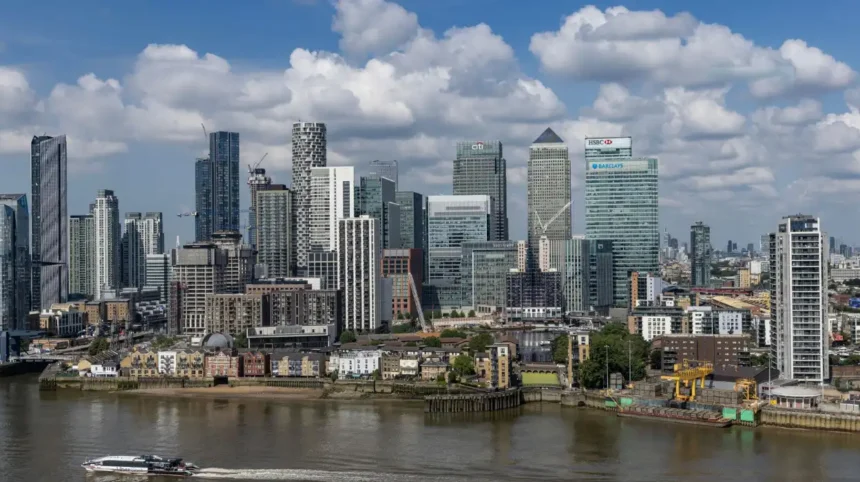
Canary Wharf demonstrates Tower Hamlets’ transformation from docklands to a major financial district, combining skyscrapers, public art, shopping, restaurants, waterside spaces and transport connections with surviving evidence of the historic port landscape.
Canary Wharf occupies the Isle of Dogs, an area historically dominated by docks and maritime commerce. The modern district emerged through major regeneration of former dockland areas.
Its skyscrapers provide one of London’s most recognisable modern skylines. The contrast with nearby Limehouse, Poplar and historic East End streets demonstrates the scale of economic and physical change across Tower Hamlets.
Visitors can explore the district through its public spaces, riverside routes, restaurants, shops and cultural installations. The area also provides connections to other parts of London through the Underground, Docklands Light Railway, Elizabeth line and river services.
The Museum of London Docklands is particularly useful when visiting Canary Wharf because it explains the historical context behind the modern district.
The most effective approach is to treat Canary Wharf as part of the wider Tower Hamlets story rather than as a separate business district. The docks created the economic landscape. Regeneration replaced much of the former industrial environment with offices, residential buildings, retail space and public infrastructure.
This creates a useful historical sequence for visitors: maritime trade, dock decline, redevelopment and financial-sector growth.
The contrast is one of the borough’s strongest educational features because historic warehouses, canals and dock basins remain close to modern towers.
What is the best way to plan a Tower Hamlets walking itinerary?
A practical Tower Hamlets itinerary should group nearby attractions into geographic routes, allowing visitors to combine markets, historic streets, museums, food, green spaces and riverside areas without repeatedly crossing the borough or relying on long journeys between disconnected locations.
A central East End route can begin around Spitalfields and move towards Brick Lane, Whitechapel and Aldgate. This route combines historic streets, markets, food businesses, independent shops and galleries.
A Bethnal Green route can combine Bethnal Green Market, Young V&A and Victoria Park. This option works particularly well for families and visitors interested in design, local shopping and outdoor space.
A Whitechapel cultural route can combine Whitechapel Market, Whitechapel Gallery and surrounding historic streets. Visitors can then continue towards Brick Lane or Spitalfields.
A Docklands route can focus on Limehouse, the Museum of London Docklands and Canary Wharf. This route provides the clearest contrast between historic maritime infrastructure and modern financial architecture.
A riverside route can include the Tower of London and Tower Bridge before continuing eastwards along the Thames. Tower Bridge provides internal access to its towers, walkways and historic engine rooms.
Visitors should check market trading days before building an itinerary around a specific market. Brick Lane and Columbia Road, for example, have Sunday-focused trading schedules, while Whitechapel Market operates Monday to Saturday.
The borough is well suited to public transport and walking. Visitors should use Underground, Overground, DLR, Elizabeth line and bus connections according to their starting point and destination.
How can digital nomads and business travellers use Tower Hamlets during downtime?
Tower Hamlets suits digital nomads and business travellers because it combines transport connectivity, cafés, libraries, public spaces, cultural venues, markets and riverside environments, allowing short periods of free time to become productive work sessions or local exploration.
Canary Wharf is particularly relevant to business travellers because it is one of London’s major financial and commercial centres. The surrounding district has extensive hospitality, retail, dining and transport infrastructure.
Whitechapel and Spitalfields provide a different working environment. Independent cafés, restaurants, galleries and public spaces create alternatives to conventional business-district settings.
Tower Hamlets’ Idea Stores also provide useful community facilities. Council information describes Idea Stores as places offering free Wi-Fi, public computers, reading areas and activities.
These facilities are relevant to visitors who need short periods of online access, quiet study or public workspace.
For downtime, a business traveller can combine a work session with a short visit to Whitechapel Gallery, a market walk, a meal around Brick Lane or an evening walk beside the Thames.
The borough’s transport network also supports short itineraries. Whitechapel, Canary Wharf, Bethnal Green, Aldgate, Aldgate East and other stations provide connections into central London and across East London.
This makes Tower Hamlets practical for visitors who have only a few hours between meetings.
Explore More Area Guide
Best Tower Hamlets Neighbourhoods for Leisure Travellers | East London 2026
Tower Hamlets Tourist Guide: Historic Streets & Markets 2026
How should first-time tourists experience Tower Hamlets responsibly?
Responsible tourism in Tower Hamlets means supporting independent businesses, respecting residential communities, following market and park rules, protecting historic sites, using public transport where practical and treating culturally significant neighbourhoods as living communities rather than tourist attractions.
Tower Hamlets is a residential borough as well as a visitor destination. Tourists should therefore respect residents, places of worship, community facilities and private property.
Markets operate as working commercial spaces. Visitors should follow trader instructions, avoid obstructing stalls and respect queues.
Photography also requires consideration. Public streets provide extensive opportunities for architectural and street photography, but visitors should avoid intrusive photography of individuals, particularly children and private activities.
Religious and cultural sites require additional respect. Tower Hamlets contains mosques, churches, synagogues and other religious institutions reflecting its long history of migration and settlement.
Visitors should also support local businesses where possible. Independent cafés, market traders, restaurants, galleries and specialist shops contribute directly to the borough’s visitor economy.
Parks require responsible behaviour. Tower Hamlets Council specifically advises visitors not to feed wildlife because feeding encourages vermin.
Sustainable exploration also benefits from walking and public transport. Many attractions sit along connected routes, reducing the need for private-car travel.
Responsible tourism therefore strengthens the same local character that attracts visitors to Tower Hamlets.
Why will Tower Hamlets remain important for London tourism?
Tower Hamlets will remain important to London tourism because its established markets, historic East End communities, cultural institutions, Docklands heritage, riverside landmarks, green spaces and modern financial district create a continuously evolving visitor destination.
The borough has a strong combination of permanent heritage and changing cultural activity. Historic markets continue to trade while new businesses and cultural programmes enter established neighbourhoods.
Whitechapel Market illustrates this continuity. It retains centuries of market history while supporting new traders and receiving investment in infrastructure.
Whitechapel Gallery provides another example. Founded in 1901, it remains an active contemporary arts institution while maintaining its historical role within East London. Its 2026 programme marks its 125th anniversary.
The borough’s public spaces also remain important. Victoria Park, Mile End Park and other green areas provide recreation alongside cultural and commercial destinations.
Meanwhile, Canary Wharf continues to represent the economic transformation of London’s former docklands.
This mixture gives Tower Hamlets strong long-term relevance for tourists. Visitors can return at different times and encounter different exhibitions, markets, businesses and public events while still experiencing the borough’s established historic structure.
For travellers seeking local London experiences, the central value of Tower Hamlets lies in this combination of history and contemporary life. It is not simply a collection of attractions. It is a functioning London borough where markets, homes, workplaces, cultural institutions, waterways and historic landmarks operate alongside one another.
That combination makes Tower Hamlets one of the most information-rich areas of East London for visitors who want to understand how London developed and how its neighbourhoods continue to change.
What is Tower Hamlets best known for?
Tower Hamlets is best known for its East End heritage, multicultural communities, historic markets, Brick Lane, Whitechapel, Spitalfields, Canary Wharf, the River Thames and major cultural attractions.