The Romford Market Place hotel development is a mixed-use regeneration scheme centred on the former Debenhams site, featuring a new hotel, residential towers, retail space, and enhanced public realm. First images and draft plans emerged in late 2025, with public consultation events held in October 2025 and planning discussions continuing into 2026. The project forms part of Havering Council’s wider Romford town centre regeneration and aims to transform a long-vacant retail block into a modern hospitality and residential quarter overlooking the historic market square.
- What is the Romford Market Place hotel development?
- Why is the former Debenhams site being redeveloped now?
- What do the first images and draft plans show?
- How does the hotel fit into Romford’s wider regeneration plans?
- What are the key components of the proposed hotel scheme?
- How will the development affect Romford Market and surrounding businesses?
- What planning and consultation processes are involved?
- What are the likely impacts on housing and local population?
- How does the design respond to the Romford Conservation Area?
- What role does the hotel play in East London’s tourism and business travel?
- What are the next steps and timeline for the project?
- What does the Romford Market Place hotel development mean for East London’s future?
What is the Romford Market Place hotel development?
The Romford Market Place hotel development is a residential-led, mixed-use redevelopment of the former Debenhams site at Swan Walk and Market Place in Romford town centre. The scheme includes a new Class C1 hotel, two residential blocks, ground-floor commercial and retail units, a landscaped communal courtyard, and a freestanding commercial building within a widened, landscaped Swan Walk.
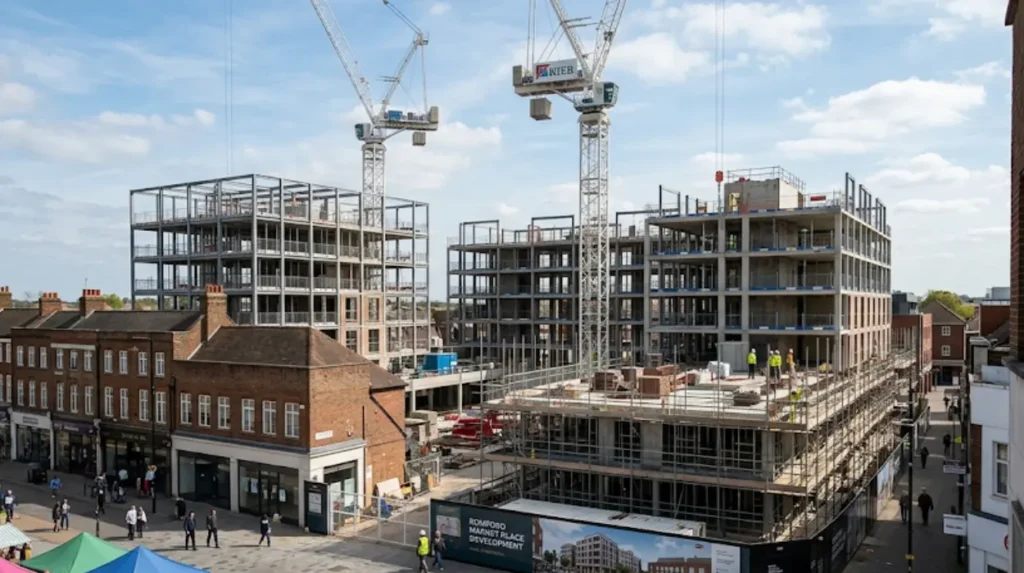
The site sits at the heart of Romford’s primary shopping and civic area, directly adjacent to Romford Market and within the Romford Conservation Area. Historically, the block housed department store retail at ground level with upper floors later used for various commercial purposes before the Debenhams closure. The current proposals replace the vacant building with a taller, modern structure that maintains active frontages onto Market Place while introducing new housing and hospitality uses.
The development is being progressed by the owners of The Liberty Shopping Centre in parallel with other high-rise residential towers nearby. Together, these projects will visibly change Romford’s skyline and intensify activity around the market square. The hotel element is intended to support town centre vitality by attracting visitors, overnight guests, and associated spending in local shops, restaurants, and cultural venues.
Why is the former Debenhams site being redeveloped now?
The former Debenhams site is being redeveloped now because long-term retail decline left the building vacant and underused, while Havering Council’s regeneration strategy prioritises comprehensive town centre renewal. The site has been identified for years as a key opportunity location within the Romford Development Framework and subsequent masterplanning work.
Department store closures across the UK, including Debenhams’ collapse, created large empty units in town centres that no longer suit contemporary retail patterns. In Romford, the Swan Walk and Market Place block became an “eyesore” and a drag on footfall and investment. Council officers and elected members have repeatedly highlighted the need to bring forward mixed-use schemes that combine housing, jobs, and improved public spaces.
By 2025, preparatory work on site assembly, design, and policy alignment allowed developers to move from concept to public consultation. The timing aligns with broader housing delivery targets, tourism and hospitality growth strategies, and infrastructure improvements such as upgraded transport links and public realm works in Romford. The regeneration programme explicitly frames the Debenhams site as central to unlocking value for the wider town centre.
What do the first images and draft plans show?
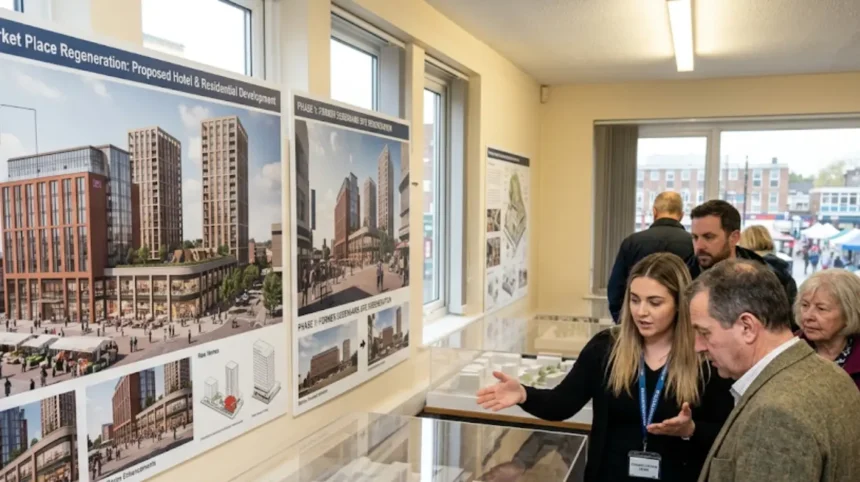
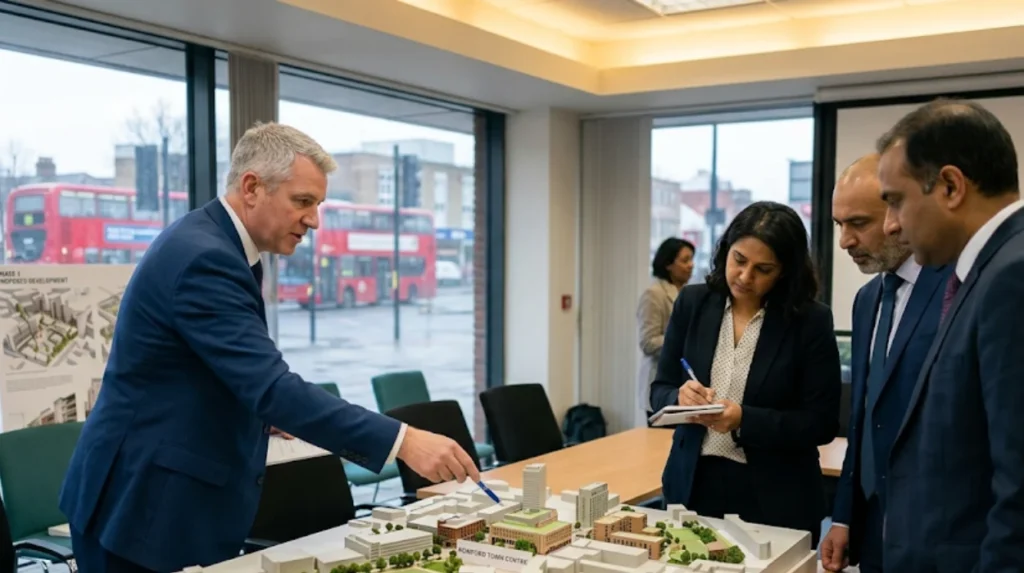
First images and draft plans show a new building of similar height to the former Debenhams store, with a hotel fronting Market Place, two residential towers to the rear, and a new public courtyard and plaza. Visualisations depict a contemporary façade with active ground-floor retail and restaurant uses, a clearly defined hotel entrance, and improved pedestrian connections along Swan Walk.
The proposed layout includes:
- A Class C1 hotel with bedrooms and associated amenities on upper floors facing Market Place.
- Class E commercial and retail space at street level to maintain a busy, shopfront-dominated streetscape.
- Two residential blocks set behind the hotel, arranged around a communal amenity podium and landscaped courtyard.
- A freestanding Class E commercial building within a new public plaza, designed to host cafes, small shops, or community uses.
- Widening and landscaping of Swan Walk to create a more attractive, pedestrian-friendly route between the market and the Liberty Centre.
Architectural drawings and perspective images circulated during the October 2025 public consultation illustrate material palettes, window patterns, and rooflines intended to respond to the conservation area context while expressing a modern identity. The images emphasise transparent ground floors, generous pavements, and new seating and planting in the public realm.
How does the hotel fit into Romford’s wider regeneration plans?
The hotel is a core component of Romford’s wider regeneration plans, which aim to transform the town centre into a denser, more diverse, and more visitor-friendly urban quarter. Havering Council’s Romford Development Framework and subsequent masterplan documents identify Market Place and Swan Walk as priority zones for intensification, improved public spaces, and new housing and employment uses.
Romford’s regeneration strategy focuses on:
- Increasing residential capacity in and around the town centre to support local services and reduce reliance on commuting.
- Diversifying the economy beyond traditional retail by adding hospitality, leisure, creative, and professional uses.
- Enhancing the public realm through better streets, squares, lighting, and landscaping to encourage walking and lingering.
- Leveraging transport improvements, including Elizabeth line services and upgraded bus interchange facilities, to attract visitors and investors.
The Market Place hotel directly supports these objectives by adding overnight accommodation for business travellers, tourists, and visitors to local events such as Romford Market, cultural festivals, and sports fixtures. The associated residential component increases the local population, helping to sustain shops and services. The public plaza and improved Swan Walk contribute to the council’s goal of creating a more welcoming, legible, and connected town centre.
What are the key components of the proposed hotel scheme?
The proposed hotel scheme comprises a Class C1 hotel, ground-floor retail and commercial units, two residential towers, a communal amenity podium, a new public plaza, and enhanced pedestrian routes. Each component serves a distinct function while collectively delivering a mixed-use urban block.
The Class C1 hotel will occupy the Market Place frontage, with bedrooms and ancillary facilities such as a reception, lounge, and possibly a restaurant or bar on upper levels. Ground-floor Class E units provide active frontages, ensuring continuous street-level activity and interaction with market visitors. The two residential blocks at the rear deliver family homes and smaller units, accessed via secure entrances and sharing a communal podium with gardens, play space, and seating.
The freestanding commercial building in the new plaza adds a focal point and extra capacity for cafes, small retailers, or community uses. Landscaping throughout the site introduces trees, planting beds, and permeable surfaces to improve microclimate and visual quality. Widening of Swan Walk and new pedestrian crossings enhance connectivity between the market, the Liberty Centre, and surrounding neighbourhoods.
How will the development affect Romford Market and surrounding businesses?
The development is expected to increase footfall and spending around Romford Market by adding hotel guests, new residents, and improved public spaces that attract more visitors. More people living, staying, and socialising in the immediate area typically benefits market traders, independent shops, cafes, and restaurants through higher footfall and longer dwell times.
During construction, temporary disruptions such as scaffolding, deliveries, and altered pedestrian routes may affect some businesses. However, the long-term design intentions focus on reinforcing the market’s role as a hub by improving sightlines, entrances, and the overall environment. The hotel’s restaurant, bar, and lobby areas can act as additional destinations that channel visitors into the market and adjacent streets.
The new public plaza and widened Swan Walk provide space for periodic events, pop-up stalls, and outdoor seating that can complement the existing market offer. The mix of uses also diversifies the types of visitors, including business travellers and tourists, who may use the market for leisure, gifts, or local experiences rather than just weekly shopping.
What planning and consultation processes are involved?
The development is subject to Havering Council’s planning process, including public consultation, officer assessment, and determination by the Strategic Planning Committee or delegated officers. The site falls within the Romford Conservation Area and is governed by local plan policies on town centre regeneration, housing delivery, design quality, and heritage.
Public consultation events in October 2025 allowed residents, businesses, and stakeholders to view draft plans, ask questions, and submit feedback. The Havering Daily reported that the proposals were presented as part of a “comprehensive regeneration programme” for the Debenhams site and wider town centre. Feedback from these sessions informs design refinements before formal planning applications are submitted or amended.
Planning officers prepare detailed reports assessing traffic, heritage, design, affordable housing, sustainability, and other material considerations. These reports are then considered by the Strategic Planning Committee, which can approve, refuse, or approve subject to conditions. The committee’s agenda and decision notices are published on Havering Council’s democracy portal, ensuring transparency and public access to documentation.
What are the likely impacts on housing and local population?
The development will add new residential units to Romford town centre, increasing the local population and supporting demand for schools, transport, and local services. The two residential blocks form a significant part of the scheme, delivering a range of family homes and smaller units aimed at different household types.
Adding housing in the town centre supports policy goals to create more sustainable, less car-dependent living patterns. New residents are more likely to walk, cycle, or use public transport for daily trips, reducing congestion and carbon emissions. A larger local population also helps sustain shops and services that might otherwise struggle in a predominantly office- and retail-based town centre.
The communal amenity podium, courtyard, and any associated play spaces provide shared facilities for residents, contributing to quality of life. Depending on final planning conditions, a proportion of the homes may be designated as affordable housing, supporting local need and social diversity. The presence of both market-rate and affordable homes can create a more mixed and resilient community.
How does the design respond to the Romford Conservation Area?
The design responds to the Romford Conservation Area by maintaining the existing building height, using a contemporary but context-sensitive façade, and preserving key views and street patterns. The Romford Conservation Area designation recognises the historic and architectural significance of the town centre, including the market square, historic pub fronts, and traditional street layouts.
Architectural proposals respect the established building line along Market Place and Swan Walk, avoiding over-dominant massing that would overwhelm nearby heritage assets. Materials, window proportions, and rooflines are calibrated to complement surrounding buildings while signalling a modern intervention. The retention of active ground floors aligns with the conservation area’s historic character as a busy commercial core.
Heritage assessments prepared as part of the masterplan process evaluate impacts on listed buildings, conservation area character, and archaeological potential. These reports inform design adjustments to ensure that the new development enhances rather than detracts from the area’s special interest. The public plaza and landscaped Swan Walk also aim to improve the setting of heritage assets by reducing clutter and improving pedestrian experience.
Explore More Help & Resources
Fatberg Discovered East London Sewer Size Location and Cause
Global Switch London Data Centre Fire What Happened
What role does the hotel play in East London’s tourism and business travel?
The hotel plays a role in East London’s tourism and business travel by providing mid-scale accommodation in an outer-London town centre well connected to central London and key employment hubs. Romford’s location on the Elizabeth line and mainline rail services makes it accessible from central London, Stratford, and Essex, supporting both leisure and business trips.
Visitors attending events in East London, including sports fixtures, cultural festivals, and exhibitions, often seek more affordable or less congested options than central hotels. A Romford-based hotel can capture this demand while dispersing economic benefits across the wider region. Business travellers visiting industrial and logistics sites in Havering, Barking, Dagenham, and neighbouring boroughs also benefit from proximate accommodation.
The hotel’s restaurant, bar, and meeting spaces can host local events, networking functions, and community activities, further embedding the development in the town’s social and economic life. By linking to Romford’s transport network, the hotel supports a broader pattern of visitor flows that include day trips to central London attractions and longer stays exploring East London’s diverse neighbourhoods.
What are the next steps and timeline for the project?
The next steps include finalising design details, submitting or amending planning applications, and progressing through Havering Council’s determination process before construction begins. Public consultation in October 2025 marked the transition from concept to detailed proposal, with subsequent work focused on addressing feedback and technical assessments.
Key milestones typically include:
- Submission of a full or amended planning application with supporting reports on transport, heritage, environment, and design.
- Formal public notification, statutory consultations, and officer site visits.
- Strategic Planning Committee consideration and decision, potentially with conditions on affordable housing, design, or infrastructure contributions.
- Pre-construction works such as site clearance, utilities diversions, and temporary traffic management.
- Main construction phases for the hotel, residential blocks, public plaza, and landscaping, followed by fit-out and opening.
Exact timelines depend on planning outcomes, funding arrangements, and market conditions. However, the project’s alignment with council priorities and the urgency of bringing forward vacant town centre sites suggest sustained momentum. Once completed, the new hotel and homes will become a permanent feature of Romford’s evolving town centre landscape.
What does the Romford Market Place hotel development mean for East London’s future?
The Romford Market Place hotel development signifies a shift towards denser, mixed-use town centres in outer East London, where housing, hospitality, and improved public spaces replace declining retail formats. It exemplifies how local authorities and developers are reimagining town centres as places to live, work, and visit rather than purely to shop.
For East London, the project reinforces Romford’s role as a major suburban hub with strong transport links, growing residential capacity, and an expanding visitor economy. The combination of hotel, homes, and public realm improvements supports long-term economic resilience and social vitality. As similar schemes emerge across the region, Romford’s experience will inform best practice on design, community engagement, and delivery.
Over time, the development will contribute to a more balanced, sustainable urban pattern in East London, reducing pressure on central areas while enhancing local opportunities. The presence of a modern hotel and new residential community at Market Place will help Romford compete more effectively for investment, talent, and visitors in a rapidly changing metropolitan landscape.
What is the Romford Market Place hotel development?
The Romford Market Place hotel development is a mixed-use regeneration project on the former Debenhams site in Romford town centre. Plans include a new hotel, residential buildings, retail and commercial space, landscaped public areas, and improved pedestrian routes linking Market Place with Swan Walk.