
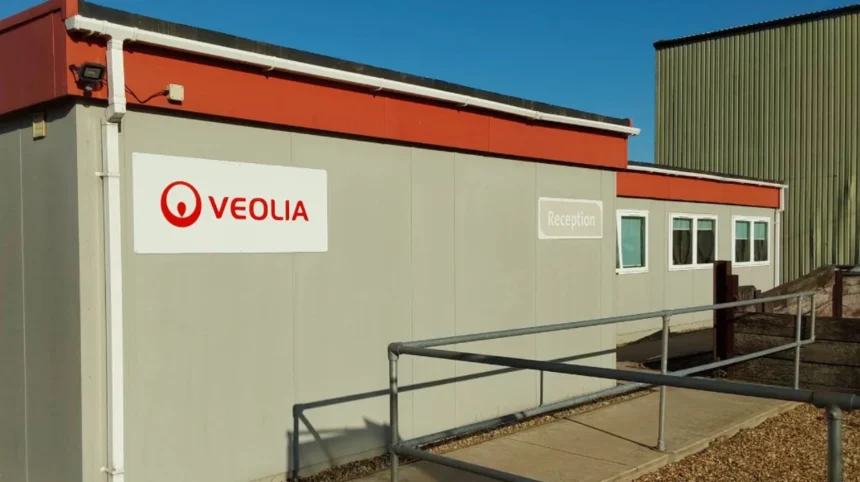
East London is set for a major overhaul of its waste management system after plans were unveiled to redevelop two key waste transfer stations with the aim of increasing recycling rates and reducing the amount of rubbish sent for incineration. The proposals form part of a long-term strategy by the East London Waste Authority (ELWA) and its new contractor, Veolia, to modernise waste facilities serving hundreds of thousands of residents across the capital.
The redevelopment focuses on two major waste transfer stations in Barking & Dagenham and Havering, both of which play a crucial role in handling household waste collected from East London boroughs. If approved, the upgraded facilities will feature improved sorting technology capable of recovering more recyclable materials before waste is transported for further processing.
The plans are designed to support London’s wider environmental ambitions by moving away from waste disposal through incineration and towards a more circular economy, where materials are reused and recycled wherever possible. Officials say better recycling infrastructure will reduce carbon emissions while helping East London meet future sustainability targets.
Veolia was recently awarded a £183 million contract by the East London Waste Authority to manage waste reception, transport, recycling and reuse services across the region. The agreement will run for just over ten years from late 2027, with the option of a further extension, and includes significant investment in modernising existing waste sites.
According to ELWA, the new facilities will incorporate advanced equipment capable of separating recyclable materials more efficiently than current systems. This should allow a greater proportion of household waste to be recovered rather than being sent to energy-from-waste plants or landfill.
The East London Waste Authority serves four boroughs—Barking & Dagenham, Havering, Newham and Redbridge—covering a population of more than one million people. As these boroughs continue to grow through new housing and regeneration projects, waste volumes are also expected to increase, making investment in modern infrastructure increasingly important.
The proposals also support the objectives of the East London Joint Waste Plan, which seeks to minimise waste production, improve recycling performance and ensure sufficient waste management capacity across the region over the coming decades. The strategy encourages facilities that prioritise recycling while reducing reliance on landfill and incineration.
As part of the redevelopment, the upgraded sites are expected to improve operational efficiency and make greater use of modern technology, helping recover valuable materials such as plastics, metals, paper and cardboard before residual waste is processed. This aligns with London’s target of creating a more resource-efficient circular economy.
Environmental benefits are expected to extend beyond higher recycling rates. By recovering more reusable materials locally, the facilities could reduce transport emissions and lower the environmental impact associated with waste disposal. Modern site layouts are also intended to improve operational safety and minimise disruption for surrounding communities.
The redevelopment proposals remain subject to the planning process, with detailed assessments considering environmental impacts, traffic, site design and local community concerns before any construction begins.
If approved, the upgraded waste centres would represent one of the biggest investments in East London’s recycling infrastructure in recent years. Supporters believe the project will help the region manage growing waste volumes more sustainably while reducing dependence on incineration and increasing the amount of material returned to productive use.