SHARJAH, UAE – The Emirate of Sharjah has received international recognition for its pioneering approach to early childhood care and education, following its inclusion as the only Arab case study in UNESCO’s 2026 Global Report on Early Childhood Care and Education.
The recognition highlights Sharjah’s comprehensive model, which integrates early learning, healthcare, nutrition, child protection, family empowerment and institutional development within a coordinated framework aimed at ensuring children’s well-being and supporting their development from the earliest years.
As part of its growing strategic partnership with UNESCO, Sharjah was also selected as the first city in the Arab region to participate in the pilot implementation of UNESCO’s Early Childhood Care and Education – Progress Assessment Tool for Transformation (ECCE-PATT). The Emirate was selected among five leading entities worldwide, alongside Morocco, Côte d’Ivoire, Uzbekistan and Kigali, Rwanda.
The assessment tool evaluates early childhood systems across four key dimensions: policy and governance, access and participation, quality and relevance, and workforce development. Sharjah’s system achieved Level Three, classified as the “Aligned Stage”, out of four levels, reflecting the maturity of its institutional framework and the integration of its services, while providing a foundation for continued development and improvement.
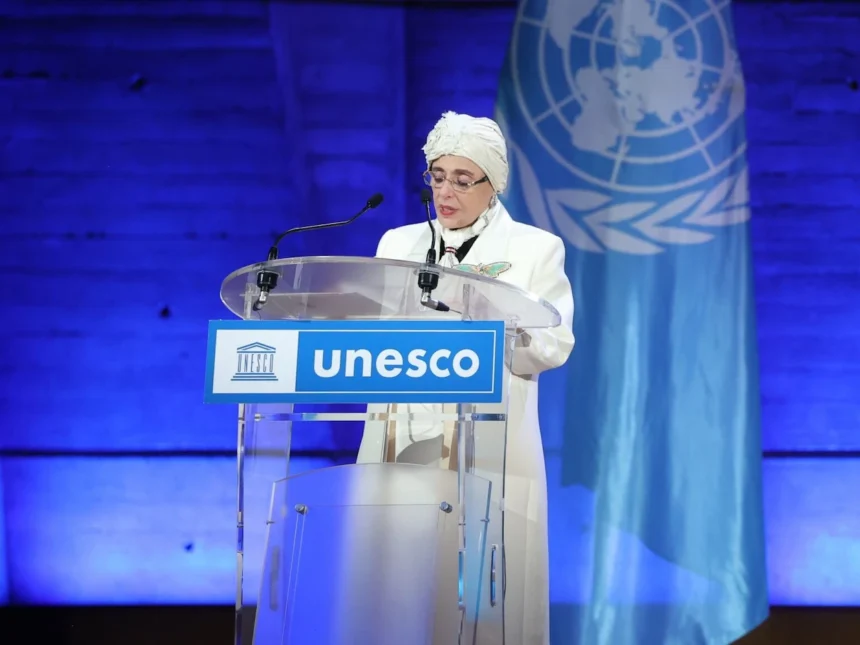
The Emirate’s participation in the report launch also coincides with the announcement of its acceptance of UNESCO’s proposal to establish the UNESCO Sheikh Dr. Sultan Al Qasimi Global Award for Early Childhood Education.
The proposed award, announced through a message by Her Highness Sheikha Jawaher bint Mohammed Al Qasimi, Chairperson of the Sharjah Family and Community Council, is intended to recognise individuals, institutions and initiatives that make significant contributions to advancing early childhood education and care and expanding access to quality services worldwide.
The award is proposed to be presented every two years, with a prize value of US$100,000, funded by the Government of Sharjah, in addition to logistical support.
An integrated model for early childhood development
Sharjah’s approach is built around three interconnected strategic pillars: integrated care, education and development services; a supportive environment for children’s growth and learning; and effective governance, excellence and international partnerships.
The Emirate currently operates a network of 37 government nurseries, with a total capacity of 4,000 children aged between three months and four years, under the supervision of the Sharjah Education Academy. These nurseries provide safe and stimulating learning environments that support children’s linguistic, cognitive, social and emotional development.
To ensure continuity in children’s educational journey, Sharjah has also established six early childhood centres for the 2026–2027 academic year, connecting nursery education with kindergarten and preparing children for the transition to formal schooling. The integrated approach also extends to health and nutrition through initiatives such as the “Baba Sultan Healthy Food Ambassadors” programme, alongside a healthy food project providing balanced meals to children in government nurseries. The Government of Sharjah covers 50 per cent of meal costs to support families.
Putting children and families at the centre
Sharjah’s early childhood framework places particular emphasis on strengthening the Arabic language and national identity, empowering parents and families, promoting early intervention and inclusive education, and safeguarding children’s physical, psychological and social well-being.
Arabic has been adopted as the principal language of teaching and communication in government nurseries, reflecting the importance of the early years in shaping children’s cultural and linguistic identity.
The Emirate also implements specialised programmes to support parents and strengthen the partnership between families and educational institutions, alongside systems for early identification of developmental, educational and behavioural challenges and the provision of appropriate interventions.
A growing strategic partnership with UNESCO
The international recognition builds on Sharjah’s longstanding cooperation with UNESCO, including its hosting of the 2023 Regional Conference on Early Childhood Care and Education in Arab States.
The conference, organised in partnership with national institutions, resulted in the “Sharjah Recommendations”, which established a regional framework for developing early childhood policies and services across the Arab region through 2030.
As a practical extension of these recommendations, Sharjah established the Sharjah Centre of Excellence in Early Childhood, affiliated with the Sharjah Education Academy. The centre is being developed in partnership with UNESCO as a regional platform for research, knowledge production, capacity-building, policy development and innovation in early childhood care and education.
The partnership also reflects Sharjah’s commitment to strengthening international cooperation and sharing evidence-based practices that address the developmental priorities of Arab countries.
Through its integrated approach and expanding international partnerships, Sharjah continues to strengthen its position as a regional reference point in early childhood care and education, contributing to global efforts to improve children’s opportunities for learning, development and well-being.