
The Middle East remains one of the world’s most strategically important regions, not only politically but also economically. As tensions and conflicts continue across different parts of the region, economists and international observers are warning about the growing impact on global markets, energy prices, investment confidence, and long-term economic stability.
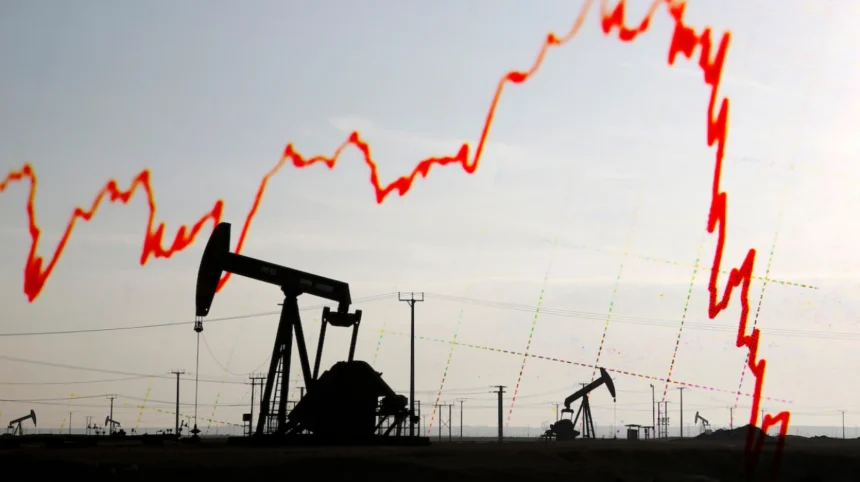
Over the past year, geopolitical uncertainty in the Middle East has contributed to increased volatility in oil and shipping markets. Analysts say that even limited escalations can quickly influence global energy prices due to the region’s central role in oil production and international trade routes.
According to international energy estimates, the Middle East accounts for nearly one-third of global oil production, making stability in the region closely connected to worldwide economic performance. Any disruption affecting transportation routes or energy infrastructure can place immediate pressure on fuel prices, manufacturing costs, and inflation rates in both developed and developing economies.
One of the main concerns for global markets remains the security of major maritime trade corridors. Shipping routes linked to the Gulf region continue to carry large volumes of oil, gas, and commercial goods toward Europe and Asia. Rising tensions in these areas have increased insurance costs for shipping companies and contributed to concerns over supply chain reliability.
Economic analysts note that prolonged instability could also affect investor confidence across emerging markets. International companies often delay expansion plans or reduce investment activity during periods of geopolitical uncertainty, particularly in regions dependent on foreign capital and international trade.
In addition to energy markets, the conflict environment has placed additional pressure on food security and transportation costs. Rising fuel prices frequently affect agricultural production, import costs, and logistics networks, leading to higher consumer prices in several countries already struggling with inflation.
Regional economies are also facing domestic financial challenges linked to instability. Tourism sectors in parts of the Middle East have experienced fluctuations as travelers become more cautious during periods of regional tension. At the same time, businesses operating in affected areas continue to face higher operational and security costs.
International organizations including the World Bank and the International Monetary Fund have repeatedly emphasized the importance of regional stability for maintaining global economic confidence. Economists warn that uncertainty in strategic regions often extends beyond local borders and can rapidly influence global financial systems.
At the diplomatic level, governments and international institutions continue to call for political dialogue and de-escalation efforts aimed at preventing wider economic consequences. Experts argue that long-term solutions require not only security measures but also economic cooperation, investment in development, and stronger regional partnerships.
Some analysts believe that economic diversification strategies currently being pursued by several Gulf economies may help reduce vulnerability to future regional shocks. Increased investment in technology, renewable energy, tourism, and infrastructure is viewed as part of broader efforts to strengthen long-term economic resilience.
Despite ongoing uncertainty, many economists remain cautiously optimistic that international cooperation and diplomatic engagement can help reduce the risk of deeper global economic disruption. However, they warn that continued instability in the Middle East is likely to remain a major concern for global markets throughout the coming years.
As geopolitical tensions continue to evolve, the economic consequences of regional conflicts are increasingly being felt far beyond the Middle East itself. From rising energy costs to shifting investment patterns, the region’s stability remains closely tied to the future of the global economy.