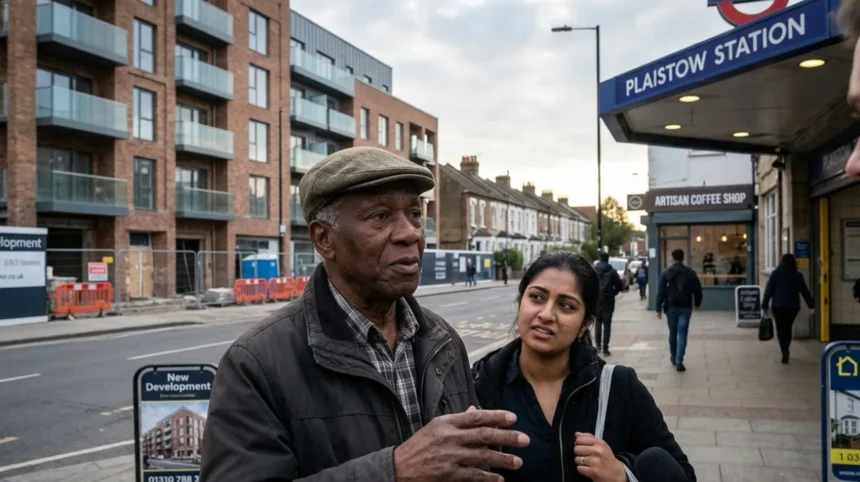
Plaistow is undergoing active gentrification driven by new housing developments, Elizabeth line transport links, and estate agent predictions positioning it as “the next Hackney,” while long-term residents report rising rents, new coffee shops and flats near the station, and mixed feelings about affordability losing ground to modernization.
- What Is Plaistow and Where Is It Located in East London?
- Why Do Estate Agents Call Plaistow the Next Hackney?
- What New Housing Developments Are Transforming Plaistow?
- How Have Property Prices and Rents Changed in Plaistow?
- What Transport Improvements Connected Plaistow to Central London?
- What Do Long-Term Residents Say About Gentrification in Plaistow?
- What Community and Cultural Projects Are Opening in Plaistow?
- What Are Nearby Cultural Attractions and Amenities?
- How Does Crime Affect Plaistow’s Gentrification Narrative?
- What Demographic Shifts Accompany Gentrification in Plaistow?
- What Are the Economic Implications of Plaistow’s Transformation?
- What Does the Future Hold for Plaistow as Gentrification Continues?
- How Does Plaistow Compare to Other East London Neighbourhoods?
- What Actions Can Residents Take to Influence Gentrification?
What Is Plaistow and Where Is It Located in East London?
Plaistow is a district in the London Borough of Newham in East London, postcode E13, situated between West Ham and Upton Park on the Elizabeth line, with a ward population of 13,478 according to the 2021 Census.
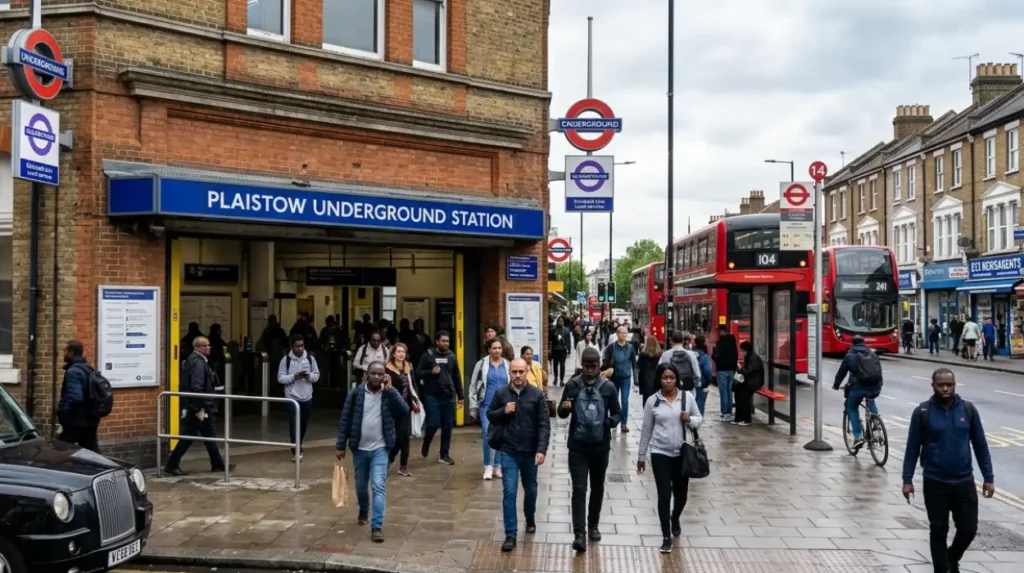
Plaistow sits approximately 5 miles east of Central London. The area falls within Newham’s 8 Community Neighbourhoods. Plaistow Underground Station opened in 1877 as part of what is now the Elizabeth line (formerly Crossrail), providing direct 20-minute access to Stratford International and under 30-minute commutes to the City.
The ward covers 3.337 square kilometres with a population density of 4,109 people per km² as of 2024. Ethnic composition from the 2021 Census shows 9,190 White residents, 1,692 Black residents, 1,212 Asian residents, and 924 Mixed/multiple ethnic group residents. Christians number 6,706, Muslims 575, and 4,627 report no religion.
Why Do Estate Agents Call Plaistow the Next Hackney?
Nathan Khider, owner of Nathan K Real Estate, ranked Plaistow top of his 2026 investment list because young buyers are priced out of Hackney, where house prices surged 833% from 1995 to 2020, while Plaistow remains affordable with ongoing regeneration.
Hackney’s transformation serves as a gentrification benchmark. The area now features flat whites, posh saunas, and numerous sandwich shops, populated by young creatives originally from Surrey. A Hackney Council study found 45% of residents believe the area has become more unequal.
Savills data confirms Hackney house prices rose 833% between 1995 and 2020. Khider states: “Young people are being priced out of Hackney, which has become gentrified and really expensive. Instead, Mile End, Plaistow, Canning Town and Stratford offer much better value for money”.
East London remains desirable due to ongoing regeneration and affordability compared to pricier areas. First-time buyers and investors are shifting to these areas for better value.
What New Housing Developments Are Transforming Plaistow?
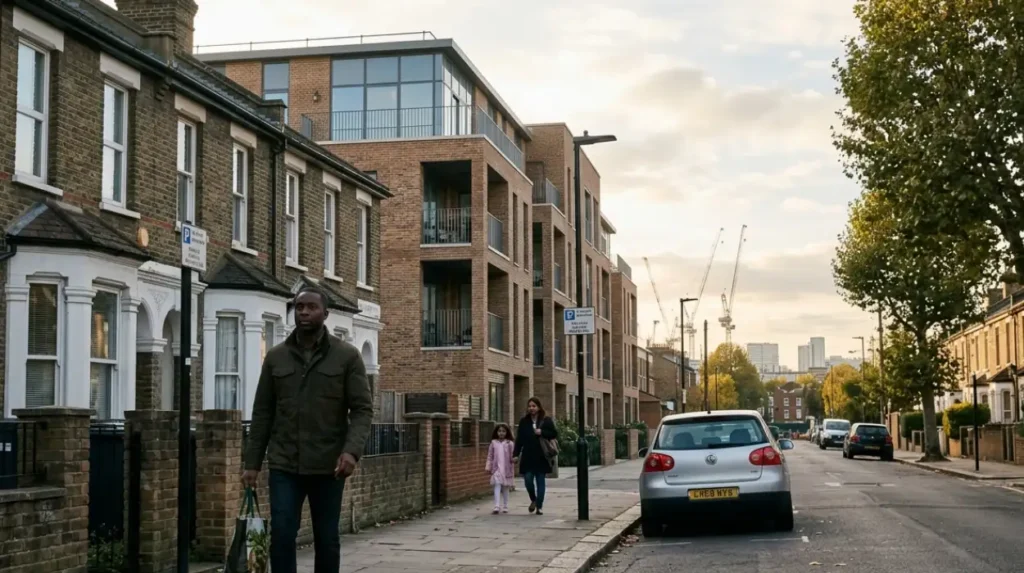
Plaistow Hub delivers 182 private rent apartments in two buildings (100 homes over 23 floors on London Road, 82 homes over 15 floors at Valetta Grove), with a 2-bedroom apartment costing £2,600 monthly, while profits fund 112 affordable homes elsewhere in Newham.
Plaistow Hub stands next to Plaistow Underground Station at London Road, E13 0DN. The development includes 1-bed, 2-bed, and 3-bedroom homes plus a new community hub with a library, supermarket, gym, and café. Construction completed in August 2023.
All 182 apartments at Plaistow Hub are market rent. The homes generate profit funding 112 affordable units across Newham.
A separate “shared living” scheme at Ashburton Terrace gained approval recommendation in December 2025. Property developer Lichfields plans a nine-storey block with 175 co-living studio flats, equivalent to 97 traditional homes. This development includes no affordable housing designation; instead, the developer pays £1,340,000 to the council for affordable housing elsewhere.
Historical property data shows the average price in Plaistow over the last year is £395,339, with terraced properties averaging £444,229 and flats £284,736. Overall prices rose 2% from the previous year.
How Have Property Prices and Rents Changed in Plaistow?
Average house prices in Plaistow sit at £408,931, up 2% yearly, while average asking rent reaches £2,175 per month in May 2026, with 1-bedroom flats at £1,556 and 2-bedroom flats at £2,254.
Rightmove data shows overall historical sold prices in Plaistow over the last year were 2% up on the previous year and 1% up on the 2022 peak of £404,329. Semi-detached properties fetch £415,000.
Private rental prices in Newham show an average monthly rent of £1,906 in January 2026, up 8.6% from £1,755 in January 2025. For terraced properties specifically, rents rose 8.8%. Flats and maisonettes in Newham average £342,000 sale price, down 6.5% annually.
Plaistow’s average asking rent of £2,175 pcm exceeds the Newham borough average. Median rent sits at £2,000 pcm. Properties spend an average 152 days on market for 2-bedroom units.
First-time buyers in Newham paid an average £390,000 in December 2025, down from £413,000 in December 2024. Mortgage-backed home purchases averaged £407,000.
What Transport Improvements Connected Plaistow to Central London?
Plaistow Station joined the Elizabeth line in May 2022, delivering 20-minute journeys to Stratford International and under 30-minute commutes to the City, making Plaistow attractive to young professionals working in Central London.
The Elizabeth line (Crossrail) tunnels run beneath Plaistow, with the station having originally opened in 1877. The new Elizabeth line service significantly improved connectivity compared to the previous Central line and District line access.
Stratford International sits 20 minutes away, providing access to High Speed 1 trains. The City of London remains under 30 minutes away. This proximity to major employment hubs drives first-time buyer interest.
The Green Line running route connects Docklands and the City through Plaistow, offering a dedicated running path.
What Do Long-Term Residents Say About Gentrification in Plaistow?
Resident Terri Bloore, living in Plaistow for five years, describes it as a “perfect green oasis” with increasing gentrification that remains affordable, praising new coffee shops and flats while treasuring the halal butcher and DIY store that maintain local character.
Bloore states: “I love running along the Green Line in the Summer which connects the Docklands and the City – Plaistow is right in the middle, so a perfect green oasis from the hustle and bustle”. She observes modern flats near the station, trendy coffee shops, and a gym frequented by families and young professionals.
Bloore lives close to Plaistow Library and the old Arts College, describing the architecture as “pretty stunning”. From her window, she enjoys views of Canary Wharf towers.
She states: “I have to say though, my favourite place is the Halal butcher and the DIY store which sells all manner of knick-knacks – everything from washing-up bowls to shoes”. These traditional businesses contrast with upscale additions.
Bloore confirms Plaistow stays accessible despite gentrification signs, with new flats and amenities emerging without Hackney-level price tags. She has witnessed increasing gentrification while the area remains affordable.
Explore More Help & Resources
Hackney Lime Bike Price: How It Works & Where to Find One
Kennedy Road Footbridge Opens What East London Walkers Gain
What Community and Cultural Projects Are Opening in Plaistow?
Create London and Newham Council are transforming 31-35 Stock Street, a disused 19th-century warehouse, into a cultural and community workspace with affordable studio space, a café, and maker spaces, opening in 2027 after October 2025 construction began.
The Council invested £1,015,000 following successful Levelling Up Fund bids. Create London launched a capital fundraising campaign to raise the remaining £1.3m needed. The project has a 25-year lease.
Phase 1 enabling works complete in summer 2026, with further phases following. The building will provide flexible events space, a working yard, and versatile maker spaces. It fills a gap in art and architecture provision and vocational training in Newham.
The space will enable local community and grassroots groups to host their own programmes. During public consultation, one resident strongly supported the plans, saying they “will help to regenerate an old building and will bring more life into the neighbourhood”.
Newham is creating a new space for small businesses in a long vacant building, creating opportunities for enterprise and employment.
What Are Nearby Cultural Attractions and Amenities?
Plaistow sits within reach of the new V&A Stores, Sadler’s Wells East, Olympic Park, and Westfield shopping centre, all within 20 minutes, while local amenities include Plaistow Library, the old Arts College, a halal butcher, and a DIY store.
The V&A Museum’s East London branch (V&A Stores) and Sadler’s Wells East theatre anchor the cultural regeneration. The Olympic Park sits nearby, providing green space and recreational facilities. Westfield Stratford City offers major retail with the behemoth размеры noted by residents.
Plaistow Library and the old Arts College feature stunning architecture that residents appreciate. These heritage buildings contrast with modern developments.
From certain windows, residents see Canary Wharf towers, creating a striking mix of old and new.
How Does Crime Affect Plaistow’s Gentrification Narrative?
Plaistow recorded 1,842 crime incidents in December 2024, with violent crime (493 incidents) and anti-social behaviour (290 incidents) as the top categories, placing it among London’s hotspot neighbourhoods alongside Stratford, West Ham, and East Ham.
The iLiveHere crime statistics for December 2024 show violent crime represents the largest category, followed by anti-social behaviour. Other theft numbered 194 incidents, vehicle crime 173, and shoplifting 134.
Public order offences numbered 110, theft from the person 99, criminal damage and arson 98, and drugs 80. Robbery reached 66 incidents, burglary 62, and bicycle theft 24.
Plaistow appears among hotspot neighbourhoods for top offence types including theft, violent crime, vehicle crime, and knife offences. This crime profile is typical for urban areas, where violent crime usually dominates incident counts due to broad categorization.
Residents report being priced out of safer, gentrified areas, accepting some crime risk for affordability.
What Demographic Shifts Accompany Gentrification in Plaistow?
The 2021 Census shows Plaistow ward has 13,478 residents with 6,358 males and 7,120 females, 8,315 aged 18-64, and 38% of the population aged 20-39, with one-person households comprising 46% of residents.
Age distribution shows 3,065 residents aged 0-17 years, 8,315 aged 18-64 years, and 2,098 aged 65+ years. The 20-29 age group numbers 1,406, while 30-39 years totals 2,068.
Country of birth data shows 10,226 UK-born residents, 1,115 EU-born, 798 from Middle East & Asia, 627 from Africa, and 497 from other countries.
One-person households comprise 46% of the population, higher than the London average of 29%. This indicates increasing single professional occupancy, characteristic of gentrifying areas.
The main age band is 20-39 years at 38%, exceeding the London average of 33%. This young adult concentration signals incoming professionals.
What Are the Economic Implications of Plaistow’s Transformation?
Gentrification creates a dual economy where new affluent residents access modern amenities while long-term residents face rising rents, with 45% of Hackney residents reporting increased inequality serving as a cautionary example for Plaistow.
The 8.6% annual rent increase in Newham directly impacts affordability. Market-rate developments like Plaistow Hub generate profits funding affordable housing elsewhere rather than on-site.
The shared living scheme at Ashburton Terrace pays £1,340,000 instead of providing affordable units, demonstrating the offset model. This approach critics argue delays affordable housing delivery.
First-time buyer prices averaging £390,000 remain lower than Central London but rising. The 2% annual price increase indicates steady appreciation.
Property developers claim co-living schemes “meet the needs of local people in Newham” by providing single working persons housing without shared private sector renting. Critics note these schemes exclude affordable designations.
What Does the Future Hold for Plaistow as Gentrification Continues?
If Plaistow follows Hackney’s trajectory, house prices could surge 833% over 25 years, but Council investment in community assets like the Stock Street arts hub aims to prevent the 45% inequality increase reported by Hackney residents.
The Stock Street cultural workspace opening in 2027 represents intentional community preservation. Neighbourhood investment projects deliver community assets and improve vibrant streets.
Newham’s Youth Safety Strategy 2025-2028 includes an IFD pilot available to families in East Ham and Plaistow, addressing inequality through youth support.
Estate agents predict continued East London desirability due to ongoing regeneration and affordability. The area’s position as “unfashionable” currently protects affordability but signals imminent change.
The Levelling Up Fund investment of £1,015,000 in Stock Street demonstrates government commitment to community-led regeneration. This approach contrasts with purely market-driven development.
Resident voices like Terri Bloore’s provide crucial perspective on balancing modernization with local character preservation. Community consultation on Plaistow Place included online events and feedback opportunities, showing resident engagement mechanisms.
How Does Plaistow Compare to Other East London Neighbourhoods?
Plaistow offers better value than Mile End, Canning Town, and Stratford according to estate agents, while remaining more affordable than fully gentrified Hackney, positioning it in the early-to-mid gentrification phase.
Canning Town and Stratford sit near major transport hubs but have higher price points. Mile End has experienced significant gentrification pressure.
East Ham and West Ham appear alongside Plaistow in crime hotspot lists, indicating similar socio-economic profiles. These areas share Elizabeth line access and regeneration potential.
Hackney’s 833% price increase from 1995-2020 provides the trajectory blueprint. Plaistow’s current £408,931 average price sits significantly below Hackney levels.
The 2026 investment ranking places Plaistow above Canning Town and Stratford, signaling developer confidence.
What Actions Can Residents Take to Influence Gentrification?
Residents can participate in Newham Council’s Community Neighbourhood programme, attend strategic development committee meetings on housing proposals, and support community-led projects like the Stock Street arts hub through Create London’s fundraising campaign.
Newham’s 8 Community Neighbourhoods include Plaistow, with downloadable booklets containing census data and People Powered Places programme information. The council provides neighbourhood investment project details with timelines and involvement opportunities.
The strategic development committee decides on major housing proposals like the Ashburton Terrace scheme. Public consultation on Plaistow Place included online events on March 13 and 16, 2021.
Create London’s £1.3m capital fundraising campaign accepts donations and grants from public funding bodies, trusts, foundations, individuals, and corporations. Supporting these initiatives strengthens community-led development.
Is Plaistow Becoming Gentrified?
Yes, Plaistow is undergoing visible gentrification driven by new housing developments, improved transport links through the Elizabeth line, and rising interest from young professionals priced out of Hackney and Stratford. New cafés, gyms, and apartment towers near Plaistow Station reflect the area’s transformation, while long-term residents report rising rents and changing demographics.