The London Borough of Tower Hamlets is an administrative local authority district in East London, encompassing 7.63 square miles on the north bank of the River Thames. It bridges the historic East End and the ultra-modern financial district of Canary Wharf. As you explore the modern site, you are crossing land with a deep heritage. Read about the full [Insert Anchor Text for History Article Here] to understand its origins.
- What are the primary historical landmarks to visit in Tower Hamlets?
- Which cultural markets and street food hubs define East London’s culinary scene?
- Where can visitors experience contemporary art and architectural innovation in the borough?
- What green spaces and outdoor attractions are accessible to travellers in Tower Hamlets?
- How does the borough’s multicultural heritage influence modern visitor experiences?
- What transport infrastructure facilitates travel throughout Tower Hamlets?
What are the primary historical landmarks to visit in Tower Hamlets?
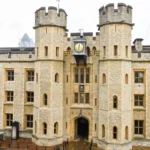
The Tower of London, a UNESCO World Heritage Site originally founded by William the Conqueror in 1066, serves as Tower Hamlets’ premier historical anchor, drawing millions of global visitors annually to view the Crown Jewels and explore medieval fortifications.
The architectural evolution of the Tower of London spans the White Tower, built from Caen stone in the 1070s, to extensive defensive curtain walls added by subsequent monarchs including Henry III and Edward I. Beyond royal incarceration, the fortress functioned as a royal residence, a menagerie, and the home of the Royal Mint.
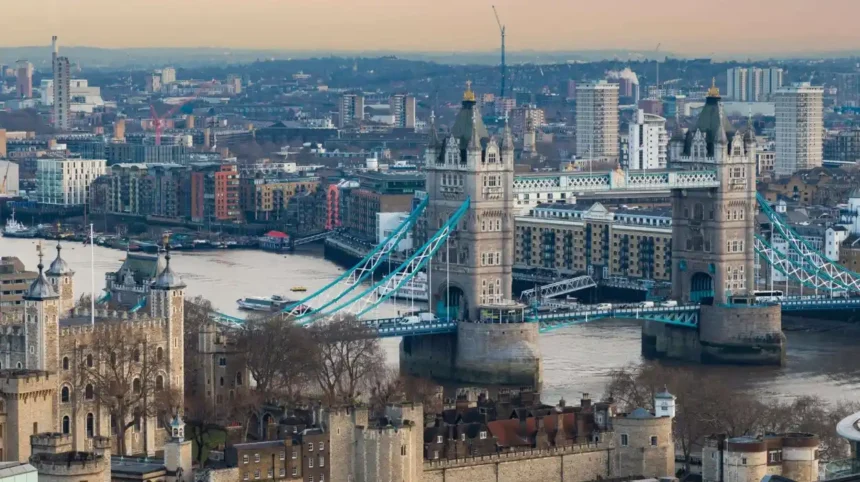
Adjacent to the fortress stands Tower Bridge, a combined bascule and suspension bridge engineered by Sir John Wolfe Barry and Horace Jones, opened in 1894. The bridge towers rise 65 metres above the River Thames, featuring high-level glass floor walkways that offer panoramic views of the Pool of London.
Further east within the borough lies Trinity Buoy Wharf, home to London’s only lighthouse, built in 1864. This maritime structure housed experimental electrical works by scientist Michael Faraday. These historical assets demonstrate the borough’s transition from a medieval royal stronghold and maritime gateway into a globally recognized cultural hub.
Which cultural markets and street food hubs define East London’s culinary scene?
Brick Lane Market, Spitalfields Market, and Petticoat Lane Market form the tripartite commercial foundation of East London, offering visitors diverse retail stalls, antique trades, and authentic global street food every weekend.
Spitalfields Market operates within a historic Victorian market hall redesigned in 2005, hosting independent designers, vintage clothing stalls, and corporate food pop-ups seven days a week. The surrounding area preserves traces of 17th-century Huguenot silk weaver houses, particularly along Fournier Street, where tall attic windows allowed maximum sunlight for textile craftsmanship.
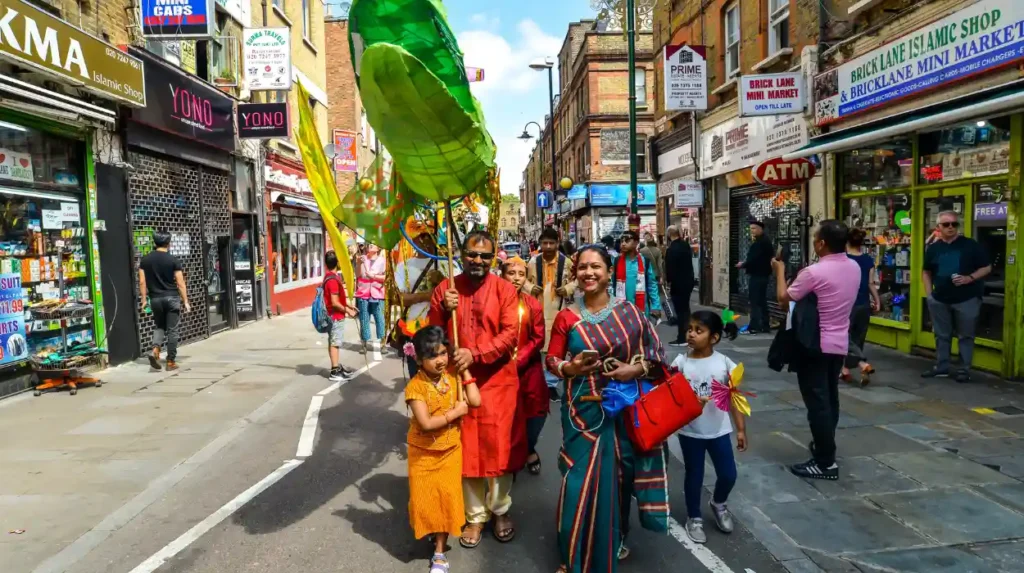
A short walk south leads to Brick Lane, globally celebrated for its South Asian restaurant clusters and Sunday markets. The locale features two distinct historic brewery complexes: the Truman Brewery site, now repurposed for alternative retail and art exhibitions, and the adjacent Boiler House food hall.
Petticoat Lane Market, operating along Middlesex Street, maintains a trading heritage stretching back over four centuries, specializing in textiles, leather goods, and household merchandise. These markets reflect the successive waves of immigration that have shaped the demographic and economic profile of East London for generations.
Where can visitors experience contemporary art and architectural innovation in the borough?
Whitechapel Gallery, the Victoria Miro gallery spaces, and the skyscrapers of Canary Wharf represent the dual evolution of East London toward world-class avant-garde exhibition spaces and vertical architectural density.
Founded in 1901, the Whitechapel Gallery brought fine art to the East End working classes, famously hosting Pablo Picasso’s Guernica in 1939. The institution occupies a Grade II listed building designed by architect Charles Harrison Townsend, featuring distinctive Arts and Crafts terracotta facades.
In stark contrast, Canary Wharf contains over 30 completed commercial skyscrapers, including One Canada Square, which stands at 235 metres and held the title of the United Kingdom’s tallest building for over a decade following its completion in 1991. The district hosts public art collections comprising over 70 sculptures and installations across its open plazas and subterranean malls, such as the crossrail place roof garden designed by Foster + Partners.
This juxtaposition of philanthropic Victorian galleries and post-industrial corporate towers establishes Tower Hamlets as a primary engine for modern urban design and artistic expression in the United Kingdom.
What green spaces and outdoor attractions are accessible to travellers in Tower Hamlets?
Victoria Park, Mudchute Park and Farm, and Mile End Park provide extensive open-air recreation across Tower Hamlets, balancing the high urban density that reaches over 16,000 residents per square kilometre.
Victoria Park, locally known as “Vicky Park,” spans 86 hectares and was opened to the public in 1845 following an Act of Parliament. The park includes two large lakes, historic alcoves salvaged from the old London Bridge, and modern sporting facilities that host major music festivals and community events each summer.
Mudchute Park and Farm covers 32 acres on the Isle of Dogs, operating as one of Europe’s largest urban farms. It houses over 100 animals, including rare breeds of sheep, pigs, cattle, and llamas, providing educational agricultural access within sight of the Canary Wharf financial skyline.
Mile End Park stretches across linear green spaces following the Regent’s Canal, featuring an ecology park, climbing wall facilities, and art installations. These green infrastructures offer vital ecological corridors and leisure zones for both international tourists and local residents.
How does the borough’s multicultural heritage influence modern visitor experiences?
The East London Mosque and thebanglatown district along Brick Lane demonstrate the deep cultural impact of the British Bangladeshi community, which constitutes the largest single ethnic demographic in Tower Hamlets at 32 percent.
The East London Mosque, located on Whitechapel Road, accommodates over 7,000 worshippers and forms one of the largest Islamic centres in Europe. Established initially through a trust in 1910 and expanded into its current modernist facility in 1985, the institution serves as a central pillar for community welfare, educational outreach, and architectural tourism.
The surrounding commercial strip features specialized grocers, textile emporiums, and culinary institutions serving regional Sylheti cuisine. Annual festivals, such as the Boishakhi Mela held in Victoria Park, draw hundreds of thousands of attendees to celebrate Bengali New Year with parades, music, and traditional food stalls.
This living cultural heritage provides travellers with immersive global experiences without leaving the capital, cementing East London’s status as a dynamic mosaic of international traditions.
Explore more Area Guide
Best Riverside Experiences & Walking Routes – Tower Hamlets 2026
Exploring Tower Hamlets Like a Local Visitor Guide | Tower Hamlets 2026
What transport infrastructure facilitates travel throughout Tower Hamlets?
The London Underground, the Docklands Light Railway (DLR), and the Elizabeth Line provide high-capacity transit connectivity, linking Tower Hamlets directly to central London, Heathrow Airport, and international rail terminals.
The London Underground serves the northern and central sections of the borough via the District, Hammersmith & City, and Central lines, with key interchanges at Whitechapel, Mile End, and Aldgate East.
The Docklands Light Railway, an automated light metro system opened in 1987, connects Bank and Tower Gateway to Canary Wharf, the Isle of Dogs, and London City Airport.
The Elizabeth Line, introduced in 2022, provides high-speed subterranean rail transit through Whitechapel station, reducing travel times to central London hubs like Bond Street to under ten minutes.
River bus services operated by Uber Boat by Thames Clippers further supplement the transit network via piers at Canary Wharf, Tobacco Dock, and the Tower of London, offering scenic water-based transit options for leisure travellers across the metropolitan area.
What is the geographic scope and location of Tower Hamlets?
Tower Hamlets is an administrative local authority district spanning 7.63 square miles on the north bank of the River Thames in East London, bridging the historic East End and the Canary Wharf financial district.